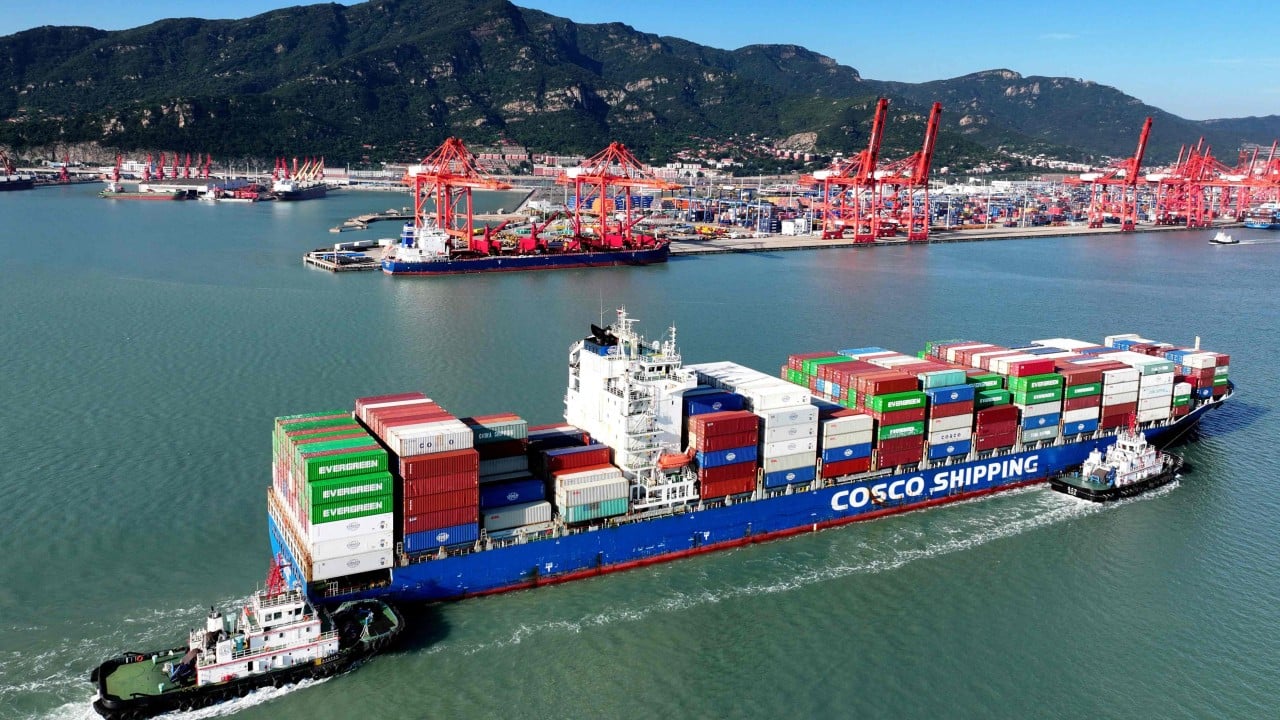
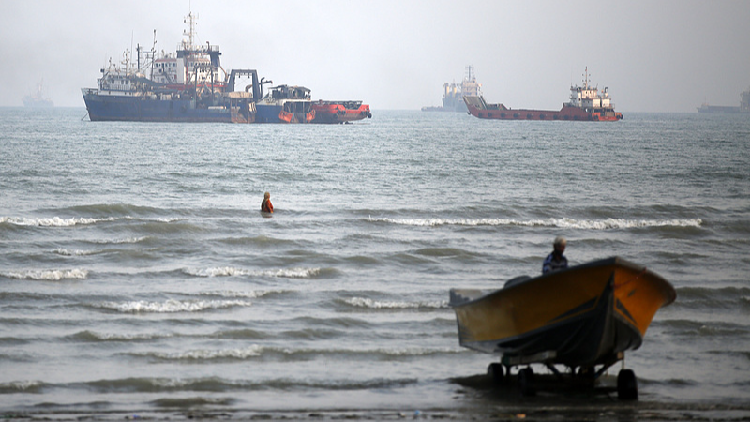
Cosco Shipping Heavy Industry, the shipbuilding and maintenance arm of state-owned China Cosco Shipping, has completed IPO guidance registration, clearing a step toward a domestic listing as it seeks to benefit from a global shipbuilding boom. The unit specialises in cargo and container vessels.
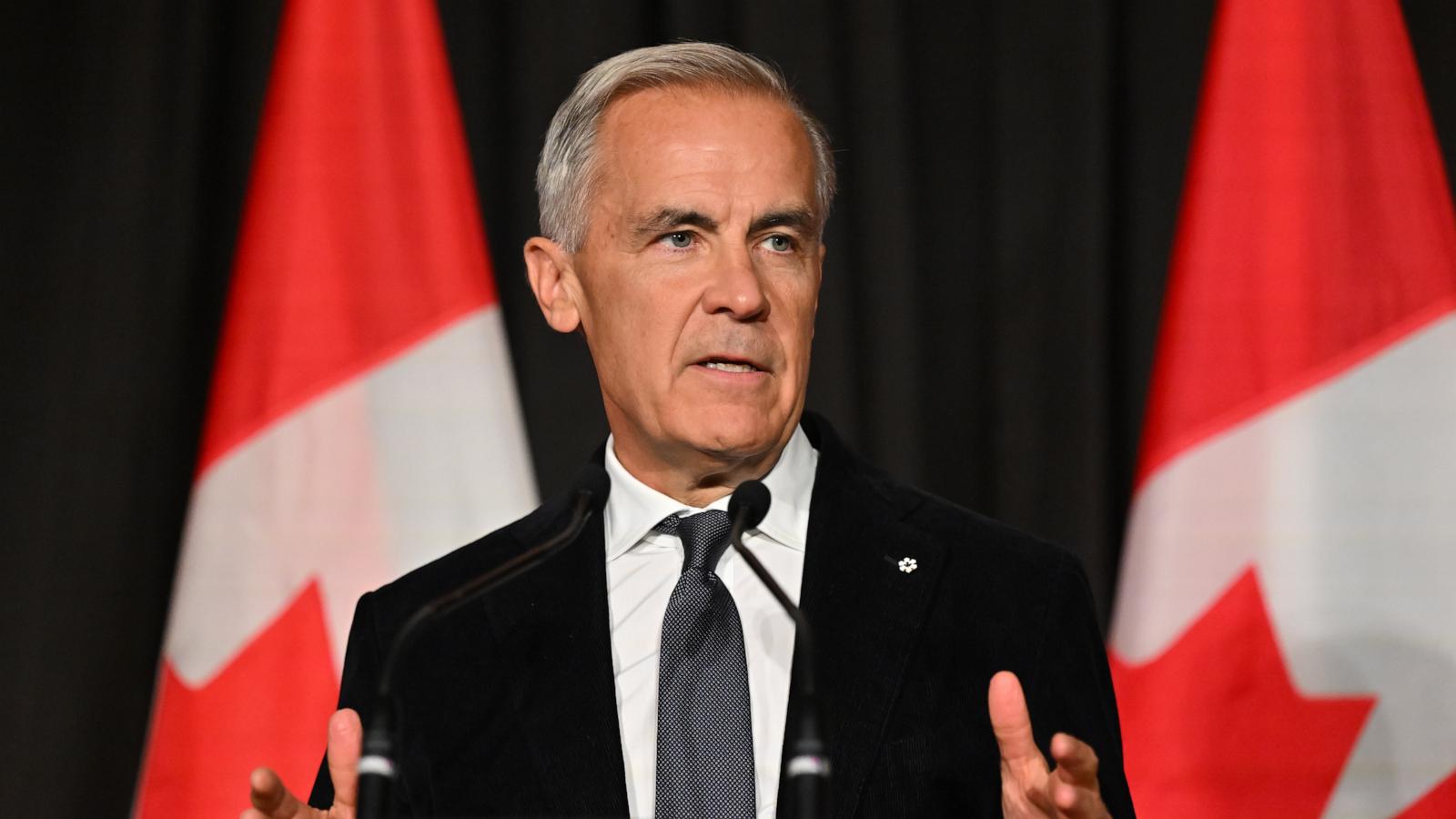
Canadian Prime Minister Mark Carney is courting some of the world’s biggest investors as he seeks to reduce Canada’s economic dependence on the United States amid an escalating trade war with President Donald Trump.
The 2026 China International Fair for Trade in Services closed in Beijing after attracting exhibitors from more than 90 countries, regions and international organizations and generating over 1,200 outcomes in seven categories. The fair also produced product launches, major projects and cooperation deals, including six signed by Norway, the guest country of honor.
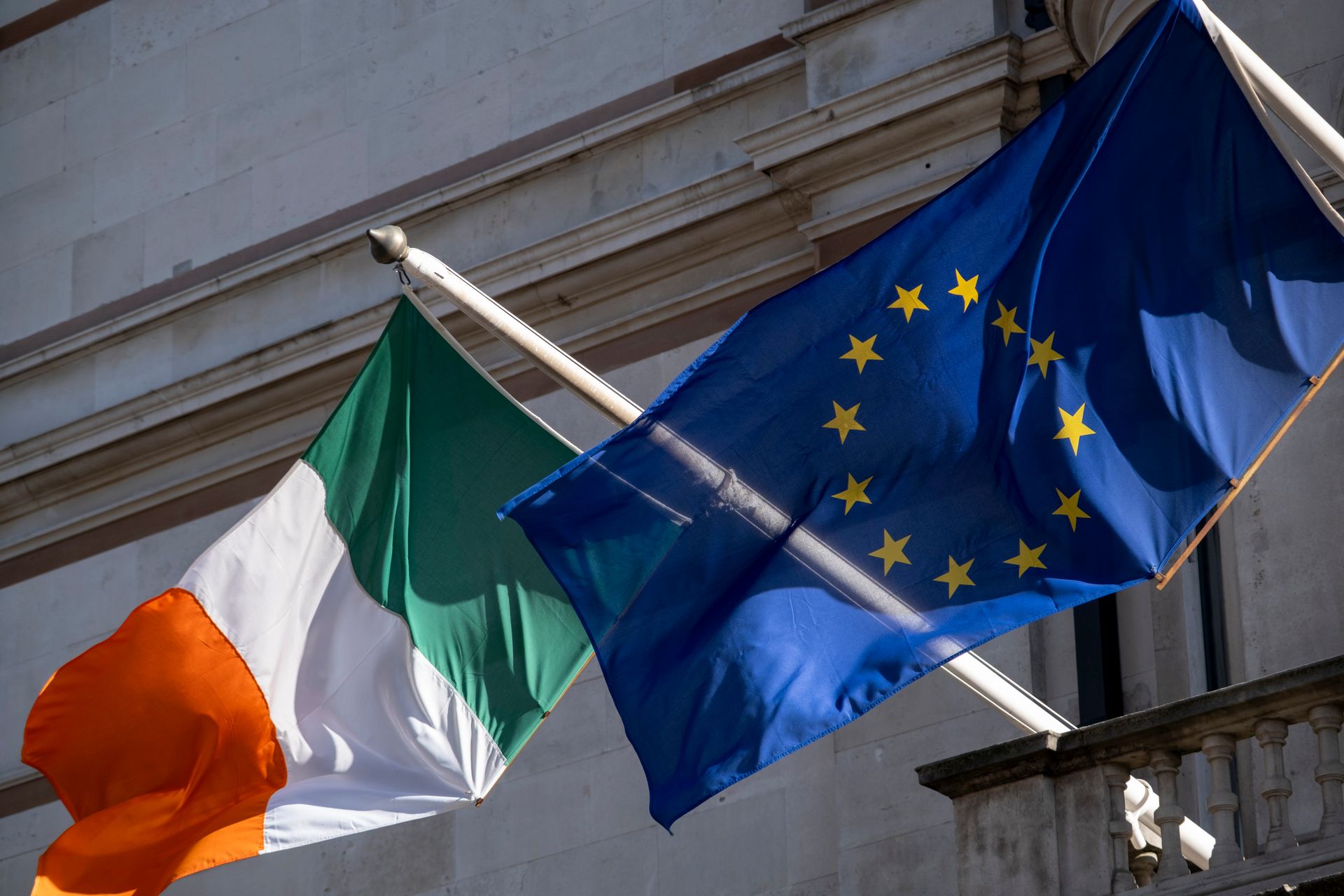
While attending a golf tournament in Ireland, US President Donald Trump said Washington would remove its 10 percent tariff on Irish whiskey. The Irish Whiskey Association welcomed the announcement, though no timetable for lifting the duty was immediately given.
On a golf course he owns in Doonbeg, Donald Trump presented Shane Lowry with the Irish Open trophy and offered an unexpected favor: removing tariffs on Irish whiskey.
President Donald Trump says he plans to remove the 15% tariff on Irish whiskey. At the Irish Open trophy ceremony Sunday, he said everyone had asked him about the issue, including some golfers.
President Donald Trump said the US would remove its tariffs on Irish whiskey. He announced the move Sunday while attending a golf tournament at his family’s course in western Ireland.
Qatar is intensifying efforts to attract Chinese companies as conflict involving Iran disrupts Gulf trade routes. The move adds urgency to Chinese businesses’ broader push to diversify supply chains and operate closer to customers. WareOne chief executive Sheikh Khalifa bin Salman Al Thani said supply-chain diversification was already advancing worldwide.
The Middle East conflict has raised security concerns over traditional shipping through the Bab al-Mandeb strait and the Suez Canal. As climate change melts more Arctic ice and extends the navigable season, a South Korean container ship has reached the UK via the route. Its viability as an alternative remains uncertain amid potential geopolitical and environmental tensions.
Rosatom CEO Alexey Likhachev said BRICS countries would eventually lead not only in energy production and consumption but also in nuclear power generation. He cited India’s forecast that energy use will rise 2.5-fold by 2050, with nuclear facilities totaling up to 100 GW to be built by 2047.
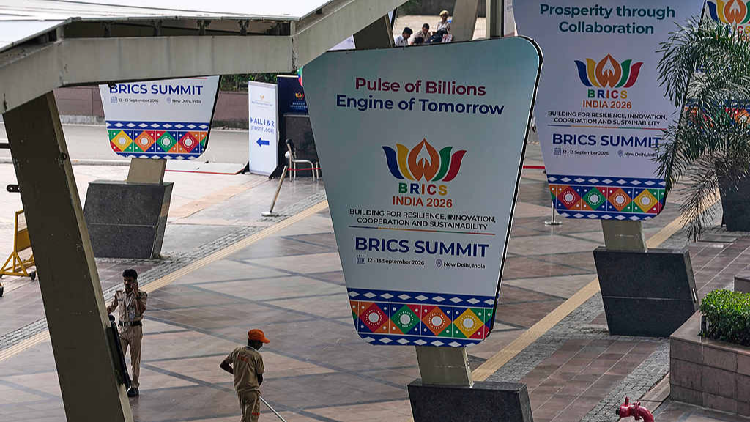
As the 2026 BRICS Summit takes place in India, the article argues that the expanded grouping should turn its larger scale and potential into sustainable growth. It calls for fewer trade barriers, coordinated customs and payment systems, stronger industrial and supply-chain cooperation, and deeper economic integration through higher-standard openness. Xi Jinping’s trade and investment facilitation proposals are presented as a practical route forward.
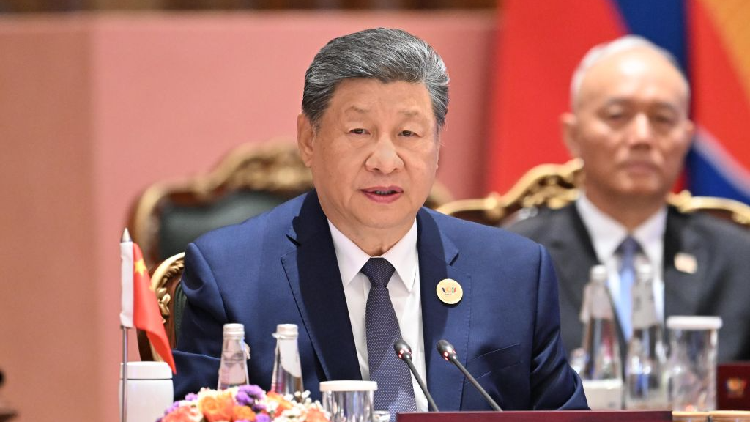
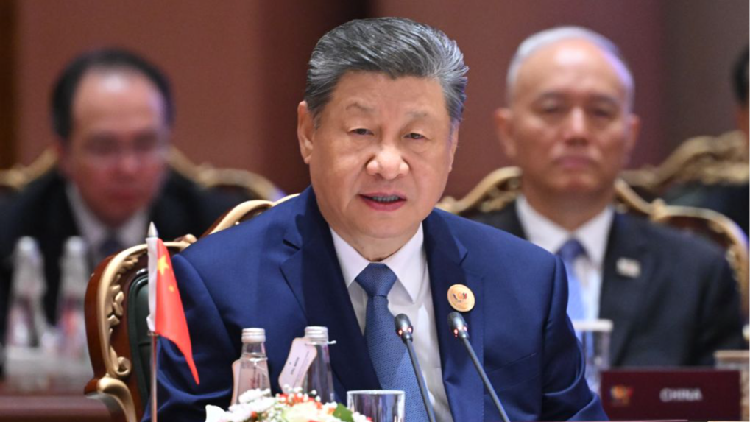
Chinese President Xi Jinping addressed Session II of the 18th BRICS Summit in New Delhi on Sunday, proposing five initiatives for “greater BRICS” cooperation covering AI, trade and investment facilitation, the digital industry, smart manufacturing and talent development. He said the grouping should draw on its links with emerging markets and the Global South, uphold openness and win-win cooperation, keep industrial and supply chains stable and unobstructed, and promote integrated markets.
Xi Jinping made his first visit to India in seven years for the BRICS summit and held a roughly 40-minute meeting with Narendra Modi. Analysts describe the shift in ties as a tactical easing driven partly by shared pressure, not a strategic reset, with border disputes unresolved. The summit’s New Delhi Declaration urged maximum restraint over the Iran war without naming the US, Israel or Iran.
China-India relationsBRICS summitXi Jinping visitIran war
Kremlin spokesman Dmitry Peskov said the BRICS summit’s final declaration incorporated provisions important to Russia, including joint settlement centers, a joint investment platform and a common platform for settlements in national currencies.
China plans to host the BRICS Forum on Trade in Services in 2027 during its chairship of the group, President Xi Jinping said. He also proposed a BRICS special economic zone partnership to coordinate policies and promote open development and economic and trade cooperation.
Chinese President Xi Jinping told the second session of the 18th BRICS Summit in New Delhi that BRICS countries should rally the Global South, defend multilateralism, international law and the United Nations, reform global financial institutions, and deepen cooperation on development, security, climate governance and artificial intelligence.
Chinese President Xi Jinping unveiled initiatives on Sunday spanning areas including AI and trade to deepen cooperation among the “Greater BRICS” emerging economies. Beijing is seeking to turn the grouping into a practical platform for development across the Global South.
Chinese President Xi Jinping said at a meeting of BRICS leaders and partner countries that China will keep opening up, promoting high-quality Belt and Road cooperation and sharing development opportunities with countries around the world.
Chinese President Xi Jinping proposed five initiatives to deepen “greater BRICS” cooperation in AI, trade and investment facilitation, digital industries, smart manufacturing and talent development at the group’s summit in New Delhi. He also urged Global South countries to strengthen multilateralism, reform international institutions and advance global AI governance.
At the 18th BRICS Summit in New Delhi, Chinese President Xi Jinping urged members to lead innovation-driven development, uphold peace and stability, promote mutual learning among civilizations and improve global governance. Global South observers said China has played an important role in BRICS and expressed confidence that it will guide expanded cooperation toward deeper, higher-quality engagement. They also expect China’s 2027 chairmanship to consolidate the group’s enlarged framework.
The roughly 0.5 per cent hit to Canada’s GDP from Donald Trump’s tariffs could be more than offset if oil prices rise above US$100 a barrel. Prices that fell over the summer have rebounded as peace recedes, while recent successes by Iran’s Houthi allies point to high prices lasting.
Saudi oil shipments to Asia would take about 100 days round trip if the Bab el-Mandeb Strait were closed, according to Japanese Shipowners’ Association data cited by Asahi. Ships would need to travel via the Suez Canal and Cape of Good Hope, raising transport costs. The usual Hormuz route takes 40 days, while Bab el-Mandeb takes 40–50 days.
Bahrain says it will not attend an Oman meeting proposed by Iran to discuss safe shipping through the Strait of Hormuz, insisting it will not join a gathering involving Iran until diplomatic relations are restored. Tehran calls the meeting a sign of good intentions and says it will brief participants on consultations with Oman.
Iran and Oman have reached a final agreement on a shipping route through the Strait of Hormuz, Tasnim reported, citing a source. The deal will soon be announced in the presence of Persian Gulf foreign ministers. Tasnim stressed that it was concluded exclusively between Iran and Oman; the inbound route will run entirely through Iranian territorial waters, while part of the outbound route will also do so.
An Iranian source told the semi-official Tasnim news agency on Saturday that an understanding between Iran and Oman does not mean the Strait of Hormuz will reopen immediately, but creates a basis for a possible reopening.
A senior Iranian official said Saturday that Monday’s planned meeting between Iran and Gulf states in Oman will provide an opportunity to discuss issues including the Strait of Hormuz, but is not expected to produce a signed agreement on the blockaded waterway.
The conflict in Iran is pushing up energy, shipping and material costs, with El Niño making conditions worse. Retail clothing consumers are now poised to feel the impact.
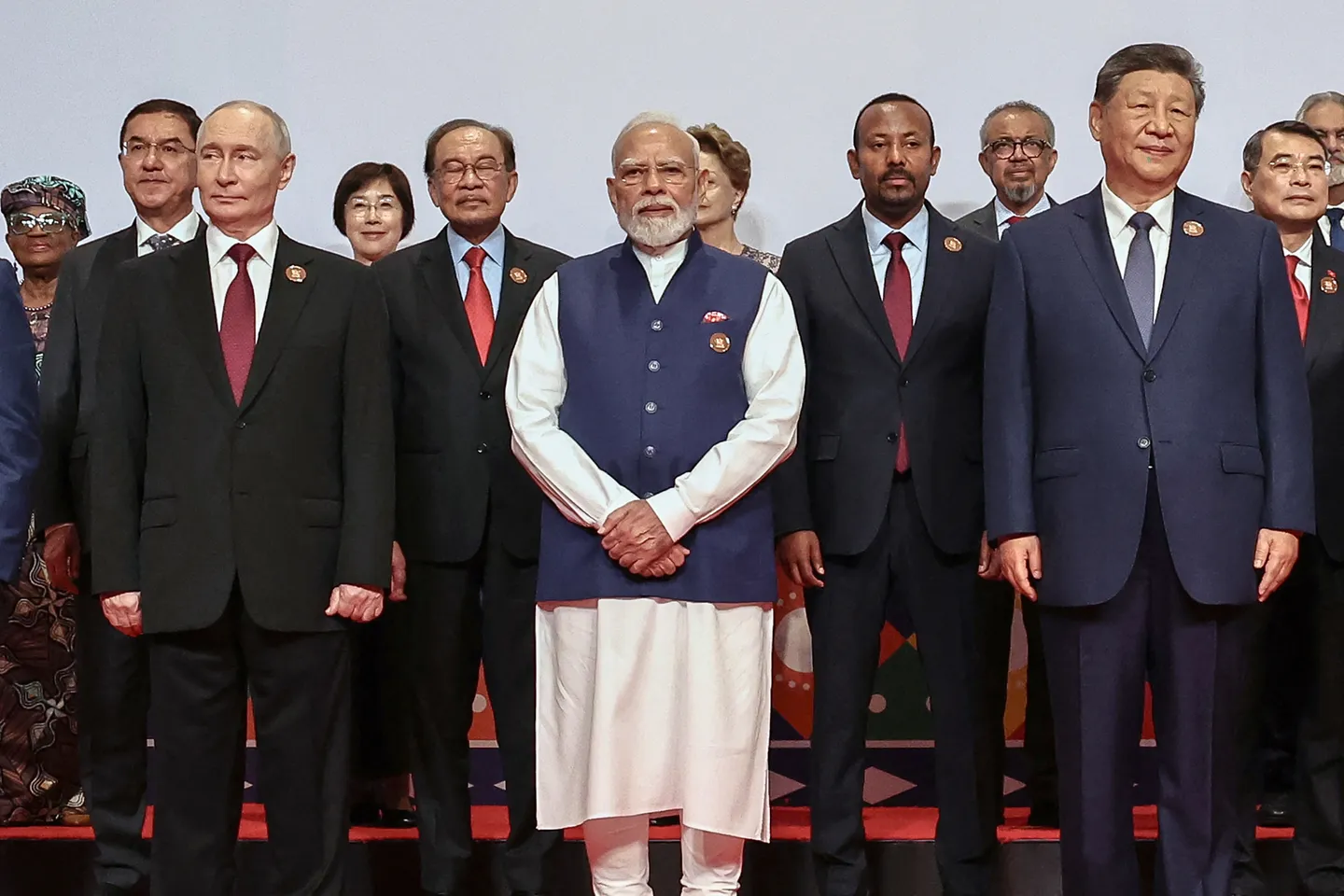
During talks with Russian President Vladimir Putin on the sidelines of the BRICS summit in New Delhi, Ethiopian Prime Minister Abiy Ahmed said bilateral relations were developing successfully and trade between the two countries continued to grow. He also pointed to expanding links in trade and investment.
Russian President Vladimir Putin said trade between Russia and Ethiopia more than tripled by the end of 2025 and continues to grow. He also highlighted humanitarian cooperation, noting that more than 20,000 Ethiopian citizens have received their education in Russia.
US companies receiving refunds after the Supreme Court struck down President Donald Trump’s import tariffs are putting the temporary windfall to a range of creative uses.
BRICS is using mechanisms including the New Development Bank to channel financing into infrastructure, clean energy and digital transformation across the Global South. The group has expanded its partnerships, while intra-BRICS merchandise trade rose from $84.2 billion in 2003 to $1.17 trillion in 2024. Xi Jinping urged members to promote a fairer international order.
Chinese President Xi Jinping addressed the first session of the 18th BRICS Summit in New Delhi on September 12. He called on BRICS to stand on the right side of history and help make the international order fairer, while proposing a BRICS initiative on AI-empowered new industrialization and deeper cooperation in AI, research, applications and supply chains.
Chinese President Xi Jinping spoke at the first session of the 18th BRICS Summit in New Delhi on Saturday. He urged BRICS countries to stand on the right side of history, advance innovation-led development, protect peace and stability, promote mutual learning among civilizations and improve global governance toward a fairer international order and a shared future for humanity.
The Delhi Declaration adopted at the 18th BRICS summit calls for adequate Palestinian representation in all relevant international organizations and backs Palestine’s full UN membership. BRICS members reaffirmed that a just and lasting Israeli-Palestinian settlement can only come through peaceful means and recognition of Palestinians’ legitimate rights, including self-determination and return.
The New Delhi Declaration says BRICS members are gravely concerned about conditions in Gaza and the West Bank. They condemned politicizing or militarizing humanitarian assistance, starvation as a method of warfare, attacks on civilians and civilian infrastructure, and obstruction of aid, while reaffirming support for UNRWA and calling for respect for Jerusalem’s religious sites and access rights.
Chinese President Xi Jinping said in New Delhi that BRICS has become the world’s most influential cooperation platform for emerging markets and developing countries. Addressing the first session of the 18th BRICS Summit, Xi urged members to deepen cooperation in areas including artificial intelligence, uphold peace and stability, and help make the international order more just and equitable.
Chinese President Xi Jinping said at the 18th BRICS Summit in New Delhi that BRICS countries should stand firmly on the right side of history. He urged them to lead in innovative development, peace and stability, civilizational exchange and global governance, while steering the international order toward greater justice and equity and building a community with a shared future for humanity.
BRICS members unanimously approved a joint declaration on Saturday voicing deep concern about the war in the Middle East. They called for maximum restraint and backed a multilateral approach that respects national perspectives.
The Delhi Declaration adopted at the 18th BRICS summit says member states are deeply concerned about the continued escalation of tensions in the Middle East. Participants called for protecting civilians and civilian infrastructure, urged dialogue and diplomacy toward lasting regional peace, and stressed maintaining the smooth flow of global trade, supply chains and energy under international law.
BRICS leaders said in the New Delhi Declaration adopted at the group’s 18th summit that they will continue developing cross-border payment mechanisms and promoting the use of national currencies. They called for further discussions aimed at practical payment solutions that are fast, low-cost, accessible, efficient, transparent and secure, while respecting national priorities and recognizing that no single approach fits all countries.
The New Delhi Declaration adopted at the 18th BRICS summit reaffirms the members’ commitment to reforming global governance through a fairer and more effective multilateral system. The states highlighted the UN’s central role and pledged to uphold multilateralism, multipolarity and international law, including the UN Charter.
The leaders of BRICS member states and governments adopted the New Delhi Declaration of the group’s 18th summit, Indian Prime Minister Narendra Modi announced. He said no member had raised objections and that the 2026 declaration was unanimously approved.
Chinese President Xi Jinping urged BRICS to act as a peacemaker in the Middle East conflict during an address to the bloc’s summit in New Delhi on Saturday.
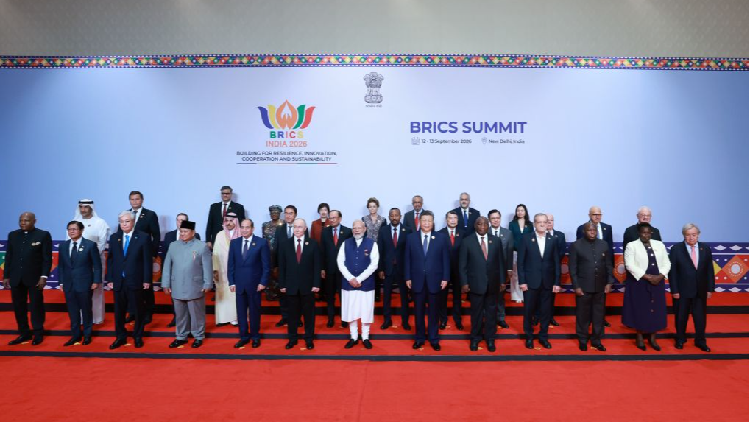
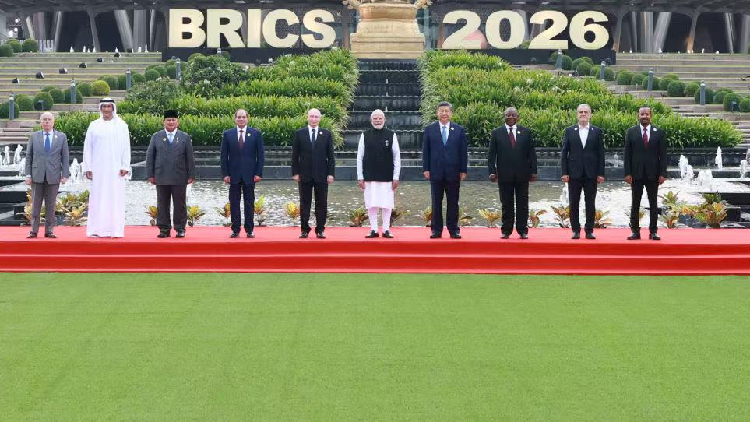
BRICS leaders are meeting in New Delhi for a summit centred on trade, investment and global conflicts. As wars and tensions with the United States challenge the bloc, it is seeking a larger role in shaping the global agenda for emerging and developing countries.
Speaking at the 18th BRICS Summit in New Delhi, Xi Jinping said the group has become the world’s most influential platform for cooperation among emerging markets and developing countries. He urged members to deepen AI cooperation, uphold peace and stability, promote civilizational exchanges and help guide the international order toward greater justice and equity.
Donald Trump’s efforts to weaken BRICS through tariffs and economic pressure may instead encourage countries to reduce their dependence on US-centred markets, finance and the dollar. BRICS is not a unified anti-US alliance, but its diverse members are cautiously expanding local-currency trade and payment links to limit their exposure to American leverage.
Leaders of the 11-member BRICS bloc are meeting in New Delhi on Saturday to expand economic cooperation and seek a larger role for emerging powers in global affairs. Wars in Ukraine and the Middle East are testing the group’s ability to stay united.
The BRICS cooperation mechanism, formally launched in 2006, opened a new chapter in cooperation among major emerging economies. As the world undergoes profound changes, BRICS is amplifying Global South countries’ calls for better governance, greater security and the right to development.
Russian President Vladimir Putin said business circles are showing strong interest in deepening economic cooperation among BRICS countries. He said members of the BRICS Business Council had offered initiatives to expand practical cooperation, with ambitious multilateral projects taking shape.
The New Delhi Declaration adopted at the 18th BRICS summit says the group should promote a just, fair, stable and predictable environment for mutually beneficial sustainable development amid unilateral protectionist measures. Members also stressed the need for resilient, reliable and stable supply chains attentive to developing countries’ modernization needs.
The New Delhi Declaration adopted at the BRICS summit calls for reliable, responsible, diversified, resilient, fair, sustainable and just supply chains for critical minerals. The group says these minerals are vital to zero- and low-emission energy technologies, energy security and resilient energy supplies, while resource-rich countries retain sovereignty over their resources.
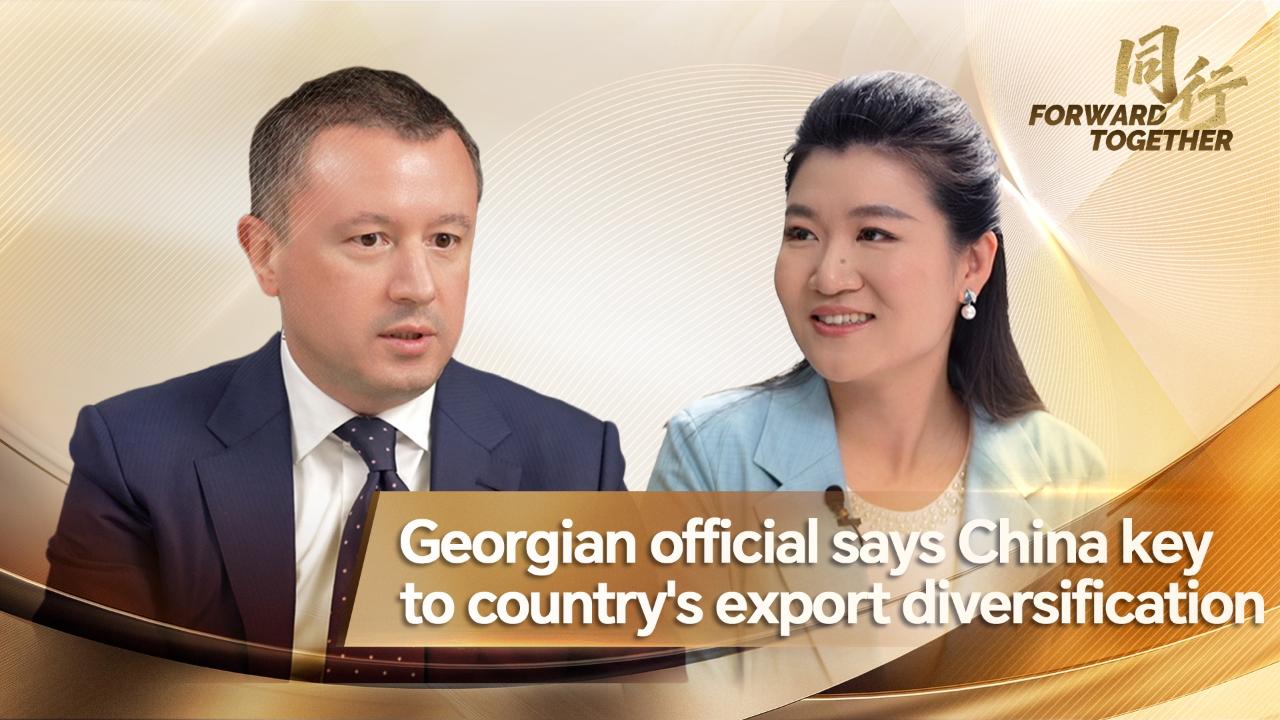
Georgia’s Deputy Economy Minister Irakli Nadareishvili called China a core partner, citing $2.3 billion in bilateral trade last year and the countries’ comprehensive strategic partnership. He identified AI, the digital economy and services as future growth areas, alongside Georgia’s Middle Corridor infrastructure, renewable energy and undersea cable projects.
The BRICS countries called for the removal of unilateral economic and secondary sanctions that violate international law and the UN Charter in the Delhi Declaration adopted at their 18th summit. They said such measures harm the human rights of ordinary people in targeted states, including rights to development, health and food security, while widening the digital divide and worsening environmental challenges.
The New Delhi Declaration adopted at the 18th BRICS summit says unilateral tariffs and non-tariff measures threaten global trade. Member states warned that trade restrictions inconsistent with WTO rules could further reduce commerce, disrupt supply chains, deepen economic disparities and create uncertainty, while pledging to strengthen the multilateral trading system.
Russian President Vladimir Putin told the BRICS summit that the IMF, World Bank and WTO were created under entirely different political and economic conditions, making reform of global economic governance institutions long overdue. He said the institutions are struggling to adapt as business activity increasingly shifts toward emerging markets.
The 2026 China International Fair for Trade in Services is being held in Beijing, drawing participants from 90 countries, regions and international organizations. More than 1,800 companies are exhibiting on-site, with this year's event focusing on services that help businesses expand overseas.
South African President Cyril Ramaphosa called on BRICS to increase investment in manufacturing and value addition, urging developing economies to move beyond supplying raw commodities. He said expanded BRICS cooperation could help the Global South build a more resilient, diversified and inclusive economy through stronger industrial, energy, infrastructure and logistics partnerships.
Officials from Norway, Georgia and Zimbabwe said the 2026 China International Fair for Trade in Services in Beijing gives countries a platform to present distinctive services and products, explore the Chinese market and deepen cooperation in trade, technology and culture. Norway is this year’s guest country of honor, while Georgia is exhibiting with a national pavilion for the first time.
A bionic fish swimming freely in water at the 2026 CIFTIS has drawn visitors’ attention. The display highlights how Chinese technology is using intelligent sensing and biomimetic propulsion to make robots move more like living creatures.
China and Seychelles have signed an early harvest arrangement under an economic partnership agreement. China will remove tariffs on all tariff lines for Seychelles products, while Seychelles will further open its market to Chinese goods. China said it also plans to pursue similar agreements with other African countries that maintain diplomatic ties with Beijing.
Canada’s buy-local movement remains strong as shoppers respond to escalating tensions and tariffs from the United States. But economists and retailers warn that higher costs could gradually reach consumers through business inputs and packaging, with shelf prices potentially rising in the coming weeks.
President Vladimir Putin said Russia supports bringing more participants into the New Development Bank of BRICS. Meeting bank President Dilma Rousseff on the sidelines of the BRICS summit, he also cited Moscow’s proposal for investment and digital platforms to expand the bank’s capabilities.
Russian President Vladimir Putin said the BRICS New Development Bank is acting energetically and making a substantial contribution to the organization’s growth. He made the remarks during a meeting in New Delhi with bank President Dilma Rousseff.
Leaders of the 11 BRICS members are meeting in New Delhi as US tariffs and the seventh-month US-Israel war with Iran disrupt trade and energy supplies. The summit will test the bloc’s cohesion over Tehran’s call to condemn Washington and explore whether BRICS can expand the Global South’s influence in the world economy.
The U.S. Commerce Department finalized steep duties on solar cells and panels imported from India, Indonesia and Laos, saying producers dumped low-priced goods in the United States and received unfair government subsidies.
Peru has completed the domestic procedures needed for a protocol updating its free trade agreement with China to take effect. The move comes as new U.S. tariff barriers add pressure on some Peruvian exports and is expected to deepen trade and economic ties between the two countries.
Trade fairs and expos are an important part of China’s strategy to expand business-to-business trade and services across the Global South. By connecting Chinese manufacturers and suppliers with international buyers, the events create opportunities for new partnerships and sales.
Peru is waiting for India to respond to a counterproposal as negotiations on a free trade agreement enter their final stage. Trade Minister Rogers Valencia said Lima hopes to sign the deal in 2027.
Winemakers in Ontario’s Niagara region are preparing for President Donald Trump’s promised ban on Canadian alcohol imports to the U.S. Pillitteri Estates Winery shipped its ice wine four months earlier than usual, while buyers are storing it until closer to Christmas.
Trade turnover between Russia and Malaysia increased 12.9% in 2025, which President Vladimir Putin described as a good pace. He said Moscow places strong importance on cooperation with Kuala Lumpur in education, science, technology and tourism.
The European Union abandoned a proposed export duty on aluminium scrap because of concerns that it could complicate the final signing of a free trade agreement with India, people familiar with the discussions said.
Ukraine has exported 630,000 metric tons of agricultural products since September began, including 380,000 tons of grain, the Agriculture Ministry said. Road, rail and Danube shipments rose from August, but Russia’s continued blockade of Black Sea ports leaves exports at only 40% of full capacity. The government is expanding financing, storage and loan support for farmers.
Trade & sanctionsUkraineagricultural exportsBlack Sea blockadefood transport
Speaking at the BRICS Business Forum, Russian President Vladimir Putin said the group does not want to turn inward or work against anyone and is ready to cooperate with all partners. He said the forum could boost trade and economic ties and advance projects in infrastructure, logistics, finance and technology.
Speaking at the BRICS Business Forum, Russian President Vladimir Putin said robust business ties within the group strengthen international relations. He argued that BRICS is creating a growth platform governed by its own rules, while the West is trying to recover lost leadership through any means, including what he called unsavory methods.
Russian President Vladimir Putin urged BRICS members to strengthen practical business cooperation and “business diplomacy.” He said their shared task was to realize the grouping’s potential for the benefit of member countries and their peoples, including by facilitating partnerships, payments, trade and investment.
Speaking at the BRICS Business Forum, Russian President Vladimir Putin said the group’s economic rules were not imposed by the Western “Golden Billion.” He said BRICS was building a sustainable platform for global growth, without externally dictated rules or imposing anything on others.
The cost of transporting oil in the largest tankers reached record levels this week after the biggest wave of attacks on shipping since the U.S.-Iran war began in late February.
Russia’s foreign trade surplus grew by $1.816 billion year on year in July 2026 to $13.594 billion, Central Bank data shows. The surplus was up $1.276 billion from June. Exports reached $45.01 billion and imports $31.415 billion.
BRICS cooperation is presented as creating practical opportunities for the Global South through renewable energy, cross-border digital platforms, a proposed grain exchange and a stronger role for developing countries in AI governance. The 18th BRICS Summit will be held in New Delhi on September 12-13, with Chinese President Xi Jinping attending at Indian Prime Minister Narendra Modi’s invitation.
The New Development Bank plans to raise the share of projects financed in local currencies from 30% to more than 45% by 2031. Established by Brazil, Russia, India, China and South Africa, the bank has approved 139 projects worth about $42.9 billion and is expanding into green infrastructure, digitalization and AI to reduce developing countries’ reliance on the US dollar.
BRICSNew Development BankGlobal Southlocal-currency financing
A CGTN survey of 12,250 people in 41 countries, conducted as the 18th BRICS Summit begins, found that more than six in 10 respondents believe the bloc has become more influential in international affairs. Sixty-three percent approved of its contribution to global governance, while 61.6% said expanded BRICS cooperation could make the international order fairer. Support for local-currency settlement and a more diversified monetary system reached 65.6%.
The Russian Direct Investment Fund, BRICS Pay JSC and BRICS Pay India agreed to develop the BRICS Pay project in India and cooperate on cross-border payments within the BRICS framework. The partners will explore links with India’s payment infrastructure, prepare pilot projects and consider using national currencies to support trade and investment flows.
Azerbaijan’s State Oil Fund, SOFAZ, helped launch the China-ASEAN investment council. It is the only founding member from outside East and Southeast Asia, reflecting Azerbaijan’s position on the trade corridor linking Asia and Europe.
Indian Prime Minister Narendra Modi and Russian President Vladimir Putin welcomed the Innoprom India international industrial exhibition, held in India for the first time, and highlighted its importance for expanding trade and industrial ties. They also toured the exhibition and spoke with participants, India’s Foreign Ministry said.
From small locally owned shops to national retailers, Canadian grocery stores are preparing for changes in the coming weeks as tariffs on some American goods take effect and reshape what appears on their shelves.
Finance ministers and central bank governors from BRICS countries are calling for reforms to institutions including the IMF and World Bank, seeking greater influence for emerging-market economies.
Europe spent a record €7.3 billion on Russian Arctic gas in the first eight months of the year, exceeding the total for 2025. Scotland’s Seapeak and the Greek-linked Dynagas dominate the Arctic shipping network, with vessels tied to them handling 72% of Yamal LNG exports.
Officials from Norway, Georgia and Zimbabwe said at the 2026 China International Fair for Trade in Services that the event offers countries an important platform to present distinctive services and products, explore the Chinese market, and expand cooperation in trade, technology and culture.
Mexico and the United States are rushing to conclude a bilateral trade agreement before the U.S. midterm elections in under eight weeks, six sources familiar with the talks said. The breakdown of Canada’s negotiations with Washington has added urgency to the effort.
US tariff troubles are bringing South Africa and Canada together. In an Aug. 27 TikTok video, President Donald Trump intensified his trade confrontation with Canada by crossing Lake Ontario off a map and declaring, “Now we have Lake America.”
Water levels on Germany’s Rhine have fallen again this week following mostly dry weather, according to the country’s inland navigation agency. Commodity traders said the decline was driving up cargo shipping costs.
A NewNew Shipping Line container ship reached Murmansk from China via the Northern Sea Route in late August with more than 500 containers of automotive components, then began a return trip carrying 26,400 tons of potash fertilizer. An expert said the trial voyage is elevating Murmansk and its port into a major transit and logistics hub in northwestern Russia.
Russia’s oil and petroleum-product exports declined by 410,000 barrels per day in August to 6.44 million bpd, the IEA reported. Export revenue rose by $330 million month-on-month to $13.87 billion as oil and petroleum-product prices increased, exceeding last August’s figure by $320 million.
Copper is on track for its first weekly decline since June as concerns grow that the US is pushing back a decision on whether to impose import tariffs.
Canadian maple syrup exports are getting a boost as some consumers seek to support Canada or find alternatives to refined sugar. Hutchinson Acres in Nova Scotia has recently seen increased activity.
Brazil’s ambassador to the EU says Brussels’ suspension of Brazilian meat imports is undermining the main benefits of the EU-Mercosur trade deal, which Brazil paid a high price to secure.
Belgium imported no Russian LNG in August, helping drive a 46% month-on-month drop in EU imports to their lowest monthly level since Russia’s full-scale invasion began, CREA reported. France, Spain and the Netherlands remain importers, while an EU ban is set to take effect in January 2027.
A 150-kilogram shipment of 30 boxes of Shine Muscat grapes from Cixi, Ningbo, cleared customs and was exported to Belgium on Sept. 10, marking Zhejiang’s first fresh-grape export to the country. Cixi Customs helped the farm meet EU requirements and provided expedited clearance for the perishable produce.
Trade & sanctionsShine Muscat grapesZhejiangBelgiumagricultural exports
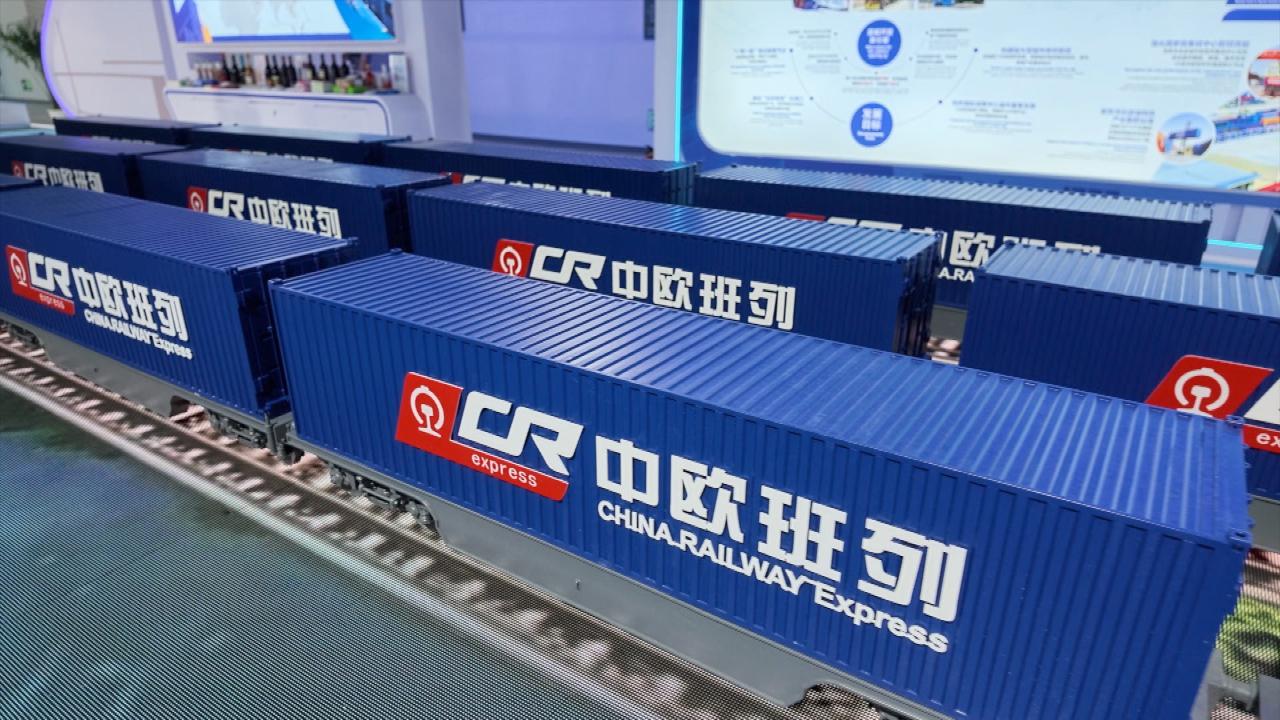
Lianyungang in Jiangsu launched its first full Trans-Caspian freight train service. The train leaves China through Khorgos, crosses Kazakhstan, transfers to a vessel at Aktau Port and reaches Baku via the Caspian Sea, reducing total transit time by about five days compared with earlier routes.
The 2026 China International Fair for Trade in Services opened at Beijing’s Shougang Park on Sept. 9. It brought together participants from 90 countries, regions and international organizations, while more than 1,830 companies exhibited onsite, including 473 Fortune Global 500 or industry-leading firms.
Iran’s Revolutionary Guard said it struck a US Saildrone Explorer-type unmanned surface vehicle at the entrance to the Strait of Hormuz, calling its mission “aggressive.” The IRGC reiterated that the waterway was closed and under its control. US Central Command said its blockade had redirected 96 commercial vessels by September 10, while allowing more than 50 humanitarian-aid vessels to pass.
Iran’s Revolutionary Guard says its navy struck a US-operated surface drone at the entrance to the Strait of Hormuz. It claims the sailboat-shaped vessel was used for an “aggressive mission” that Iranian forces thwarted, while Washington has not commented.
Iran’s Islamic Revolutionary Guard Corps says it attacked a US unmanned vessel in the Strait of Hormuz, while the UK Maritime Trade Operations office reports that projectiles struck two ships off Oman.
The IMF is closely examining the possible consequences of US plans to sharply tighten restrictions on Iran and actively enforce secondary sanctions against Tehran’s economic and trade partners, spokesperson Julie Kozack said. She described the action as relatively limited and said fuller analysis would appear in the World Economic Outlook and regional Middle East discussion.
IMF spokesperson Julie Kozack said the global economy has remained resilient after six months of war in the Middle East, absorbing the energy shock better than feared. Global growth remains on track at around 3%, she said, while uncertainty is still high.
The IMF says the global energy shock triggered by the war involving the United States, Israel and Iran has not been overcome. Oil, gas, diesel and jet-fuel prices remain high, while traffic through the Strait of Hormuz is at one-tenth of pre-war levels. Reserve use, rising AI-related demand and the approaching Northern Hemisphere winter could add pressure.
Dubai Airports CEO Paul Griffiths said the emirate’s airports were targeted by 17 ballistic missile strikes during the Middle East conflict. Sirens sounded 111 times, but no one was killed; the few people injured have since fully recovered.
US forces redirected 96 commercial vessels by September 10 to enforce the blockade of Iran, the Central Command said. More than 50 ships carrying humanitarian aid were allowed through, while the US Navy participated in the operation.
Iran blockadeCENTCOMcommercial shippinghumanitarian aid
Aughinish Alumina told senior Irish officials that Russia’s full-scale invasion of Ukraine and its links to sanctioned oligarch Oleg Deripaska had made operations difficult, the Irish Times reported. The Foynes refinery is owned by Rusal, and shipments of alumina to Russia now account for about half its business. The EU is reportedly considering alumina in its next sanctions package.
The high premium paid for aluminum in the United States would not fall substantially even if Washington cut tariffs on Canadian metal by half, Alcoa’s finance chief said on Thursday, because imports from other countries would still be necessary.
Indian Commerce and Industry Minister Piyush Goyal said the first Innoprom exhibition in India shows Russia and India are moving from statements to concrete action in trade and economic cooperation. He said both governments and business communities must accelerate efforts toward targets of $100 billion in bilateral trade and $50 billion in mutual investment by 2030.
Tightening global copper supply, strong demand driven by the AI boom and tariff uncertainty are fueling a frenzy around the metal, pushing prices to their highest levels ever.
President Donald Trump’s latest trade maneuver leaves room for a compromise with Canada, while threatening to worsen the cost-of-living crisis for Americans and further strain relations with Ottawa.
Global grain prices are climbing sharply as Russia and Ukraine intensify attacks on major export infrastructure in the Black and Azov seas. With the harvest underway, both countries are struggling to find alternatives as ports and terminals close, while Russia’s domestic wheat prices fall below breakeven.
Kremlin spokesman Dmitry Peskov said Latvia’s planned 300% tariffs on Russian grain were the country’s own decision, adding that global markets extend far beyond Latvia and alternative destinations exist. An economist warned the move could halt transit, reducing Baltic revenue and some global supplies.
Kremlin spokesman Dmitry Peskov said trade wars are continuing and that Latvia appears to be “inspired” by transatlantic approaches to tariffs as Riga considers imposing a 300% duty on grain shipments from Russia. An expert said ending transit along the route would not cause a critical global shortage but would raise prices by increasing risks and complicating logistics, benefiting exporters from the EU, US, Argentina and Australia.
China’s expanding imports are giving fresh momentum to global trade as Yiwu displays products from more than 100 countries and Hainan’s zero-tariff policies and faster customs procedures boost demand. The country’s automakers are also drawing international auto-parts suppliers into closer links with China’s manufacturing chains.
Russia's Aurus Cashmere, India's Bansal Spinning Mills and Sberbank signed a memorandum to develop joint textile production. Russian wool, including from Kalmykia, is expected to be made into Aurus Cashmere fabrics in India for later supply to Russia and EAEU markets.
Iran has temporarily suspended a 10% charge on freight fees for foreign vessels transporting imported or exported oil, gas and liquid petroleum products to or from the country, semi-official Fars news agency reported on Thursday.
European governments plan to urge the EU to use a rarely deployed trade-defence tool to shield the chemicals and plastics sectors from a surge in imports, mainly from China, according to sources familiar with the discussions.
Many BRICS members are facing pressure and unlawful restrictions imposed by third countries, Kremlin spokesman Dmitry Peskov said. He said they are seeking ways to secure mutual settlements in economic cooperation, including through joint investment platforms, and that the issue will be discussed at the upcoming summit in India.
The Minutes Reader extension turns the original page into a focused reading view and translates articles and video subtitles on demand. It is in limited beta.
 CNBCOriginal★★☆☆☆2026-09-14 07:10