China’s central bank strengthened the yuan’s reference rate for a fifth consecutive day, seeking to offset recent dollar gains ahead of President Xi Jinping’s summit with US President Donald Trump later this month.
Gold prices edged lower on Tuesday as rising crude oil prices intensified inflation concerns and strengthened expectations for U.S. interest-rate hikes ahead of a Federal Reserve policy meeting.
Sovereign yields climbed further on Tuesday, led by the 10-year U.S. Treasury yield, which reached a nearly two-decade high. Signs of mounting discomfort among borrowers and global investors also deepened.
The benchmark 10-year US Treasury yield briefly reached 5.011% on Monday, its highest level since October 2023, before moving lower as the global bond sell-off intensified.
The 10-year US Treasury yield climbed to its highest level in nearly two decades, marking the latest stage of a painful global bond selloff fueled by surging energy prices, rising debt and inflation.
The benchmark yield for 10-year U.S. government debt reached a peak Tuesday that had not been seen since 2007. The Treasury selloff worsened with the Federal Reserve’s rate decision looming.
The US 10-year Treasury yield moved above 5% on Monday for the first time since 2023. Rising anxiety over inflation coincided with growing borrowing needs from the government and corporations.
Britain’s labour market remains weak, with job vacancies at a four-year low while pay growth is steady, official data showed. The figures come days before the Bank of England is due to announce its interest-rate decision.
A series of price dislocations has set the Federal Reserve up for a difficult decision day as it tries to satisfy both financial markets and President Donald Trump.
Pressure on the Indian rupee is expected to continue this week as oil prices remain above $100 a barrel and growing expectations of a U.S. Federal Reserve rate hike also weigh on government bonds.
Oil prices rose on Tuesday as supply-disruption concerns persisted after attacks on Saudi energy infrastructure shut the kingdom’s East-West pipeline. The outage also cast doubt on efforts to reduce shipping risks in the Gulf.
A Revolut study says Europeans lose an average of €294 in purchasing power for every €10,000 held in the bank. It found €6.3 trillion in low-yield deposits across 20 EU countries as Brussels seeks to channel more of that money into capital markets.
Donald Trump’s war in Iran and tariffs are driving up input prices, while the AI boom is squeezing the availability of some components, adding to cost pressures on US manufacturers.
International inflows into US equities have surpassed those into government debt for the first time this century, apart from the pandemic and its aftermath and the global financial crisis.
Official data showed that China’s new-home prices continued to decline in August, highlighting how the country’s prolonged property downturn remains a drag on the economy.
China’s industrial output rose 5.2% year on year in August, accelerating from July’s 4.5% increase, data from the National Bureau of Statistics showed on Tuesday. Retail sales growth slowed during the month.
China’s industrial output grew faster in August, but weak consumption and a worsening investment slump intensified concerns about deepening imbalances in the economy.
China economyindustrial outputconsumer spendinginvestment
China’s investment downturn worsened in August, while retail sales growth slowed further. Industrial output exceeded forecasts by a wide margin as Beijing warned of an imbalance between supply and demand, adding to pressure on policymakers.
China economyretail salesinvestmentindustrial output
The House Ways and Means Committee published a crypto tax bill ahead of a hearing later this week. It addresses de minimis transactions, staking and other areas where the industry has pressed for policy guidance.
A Qinghai economic and trade delegation of 18 enterprises attended the fifth China (Macao) International High-Quality Consumption Exhibition for the first time last week. Its 150-square-meter Qinghai Pavilion showcased yak meat, organic goji berries, caterpillar fungus and highland vegetables to merchants and buyers from Macao, the Greater Bay Area and Portuguese-speaking countries.
Asian shares traded unevenly on Tuesday as investors assessed Middle East tensions and industry calls to slow AI development. Rising oil prices and bond yields also tempered sentiment ahead of key meetings by the U.S. Federal Reserve and Bank of Japan.
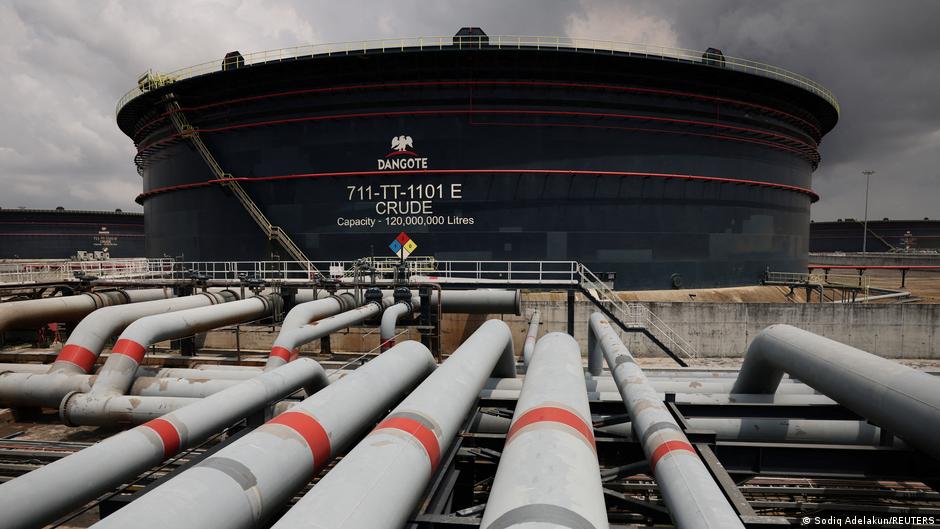
Africa’s richest man, Aliko Dangote, launched an IPO on Monday for his $19 billion Nigerian oil refinery, seeking $1.6 billion from retail investors across the continent. The offering values Africa’s largest refinery at about $49 billion, attracting strong interest while raising concerns about its high valuation.
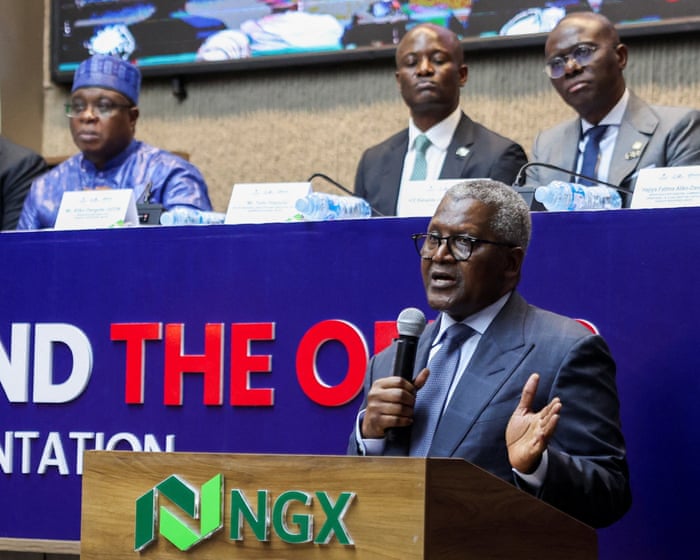
Nigerian billionaire Aliko Dangote has launched Africa’s biggest-ever share sale, listing 4.1 billion shares in his Lagos refinery. He called it a “people’s IPO” intended to give all Nigerians a chance to benefit from the plant’s wealth potential. Trading is expected to begin in November. Global oil prices also rose as Houthi attacks led Saudi Arabia to shut its East-West oil pipeline.
Nigeria’s Dangote refinery is opening up to public ownership and plans to raise $1.6 billion from retail investors across the continent. President Felix Tshisekedi has called on the National Service to clean Kinshasa’s streets, while the Youth Olympic flame begins touring Senegal ahead of the Games.
Nigerian billionaire Aliko Dangote has launched Africa’s largest share sale, offering the public about 3% of his refinery in an IPO that could raise up to $2.1bn. He says the sale will let ordinary Nigerians share in the plant’s success, while experts warn that prices could fall and urge buyers to avoid investing money they need soon.
Aliko Dangote plans to raise about $1.6 billion through an IPO of Dangote Industries to help fund a $14.3 billion expansion that would double the refinery’s capacity to 1.4 million barrels per day. The offer is pitched as a way for millions of Nigerians to own a stake, but affordability remains in question despite a 525-naira price per share and a 10-share minimum.
Aliko Dangote’s Nigerian refinery business has launched what is described as Africa’s biggest-ever IPO. If fully subscribed, Dangote could add $23bn to his $35bn fortune, while the refinery’s valuation is expected to reach about 65.22tn naira. The offering is aimed at institutional and retail investors, particularly young Nigerians.
Nigerian billionaire Aliko Dangote launched an initial public offering for his oil refinery on Monday, calling it Africa’s largest share sale to date. The IPO opens ownership of the plant to retail investors and raises funds for expansion.
Nigeria’s Dangote Group plans to sell 4.1 billion shares in its oil refinery, seeking to raise 2.15 trillion naira ($1.6 billion). The offering is expected to become Africa’s largest initial public offering to date.
Nigeria’s Dangote Group is offering the public a 3.3% stake in its 700,000-barrel-per-day oil refinery, in a transaction expected to be the largest of its kind in Africa.
Aliko Dangote, long Africa’s richest man, is poised for a $23 billion rise up the global wealth rankings as he launches an IPO for his refinery, in what would be the continent’s largest offering yet.
Colombia's Congress approved the government's 634.9 trillion peso ($206.6 billion) spending budget for 2027 on Monday, as public finances deteriorate sharply and the fiscal deficit is expected to reach a record high next year.
Beijing’s new rules for offshore trusts have reached New York City, home to one of the largest concentrations of mainland Chinese wealth outside Asia, after also affecting Hong Kong and Singapore. Effective July 24, the rules impose a 20 per cent tax on realised gains and an annual income tax on mainland tax residents who transfer assets into offshore trusts or receive distributions.
President Volodymyr Zelensky and Prime Minister Serhii Koretskyi warned that Ukraine’s state finances are approaching a crisis. If parliament misses deadlines for legislation tied to international support, the country could lose a “significant portion” of $29.5 billion in planned funding. Koretskyi also announced the dismissal of acting State Tax Service head Lesia Karnaukh.
Ukrainian Prime Minister Sergey Koretsky says public finances are nearing a critical point and urges lawmakers to quickly pass bills tied to international financial assistance. He warns Ukraine could lose a significant share of the allocated $29.5 billion if voting deadlines are missed. The deadline has been moved from November 1 to October 15.
Euler analyst Andrey Polishchuk says sustained peak utilization at US refineries will not make up for the global diesel supply deficit. Falling diesel exports from Russia, the US and Saudi Arabia are expected to widen crack spreads. Higher Chinese refinery use and product exports may boost supply, but also accelerate the drawdown of global inventories.
Traders were pricing in more than a 92% probability of an interest-rate increase and over a 75% chance of another hike in December, setting up a difficult battle for Warsh.
With inflation still above target and no clear prospect of lower oil prices or stable tariffs, Fed Chair Kevin Warsh faces this week the same test that confronted his predecessors.
Global markets faced pressure from growing concerns about the artificial intelligence sector and higher oil prices that are adding to inflation risks, the Wall Street Journal reported. Technology stocks fell worldwide and Nasdaq 100 futures dropped more than 1.5%. Brent crude neared $110 a barrel, while the 10-year US Treasury yield approached 5%.
Brent crude has climbed above $100 a barrel as the war in Iran disrupts shipping through the Strait of Hormuz. Houthi forces’ capture of Mayun Island is also raising concerns about the security of another major oil route through the Bab al-Mandeb.
oil pricesMiddle East tensionsStrait of Hormuzoil shipping
Ukraine will soon receive $841 million in budget support from the World Bank, backed by Canadian guarantees, Prime Minister Serhii Koretskyi said. The funding comes through the PEACE project and will reimburse pension payments from the state budget as Ukraine faces its most difficult budget situation since Russia’s full-scale war began in 2022.
US Energy Secretary Chris Wright said the global energy market is being strained mainly by shortages of diesel and other refined petroleum products rather than crude oil supply. He linked the tightness to the global impact of Ukrainian strikes on Russian fuel and energy infrastructure and said Russia is currently exporting no diesel.
The Bank of Russia has submitted a draft outlining financial market development priorities for 2027-2029 to the president and government. The plan focuses on capital markets, market confidence, investor and consumer protection, digital and payment infrastructure, foreign-trade settlements and systemic-risk mitigation.
Russia’s current account surplus reached $33.9 billion in January-July 2026, up from $21.5 billion a year earlier, according to preliminary Central Bank estimates. July’s surplus rose to $1.7 billion from $1 billion, as goods exports grew faster than imports. The trade surplus also increased to $79 billion, supported by higher commodity prices.
JPMorgan plans to introduce its long-awaited frontier-market local-currency government bond index by the end of September. The new benchmark will cover nearly $330 billion in debt across some of the world’s fastest-growing economies.
A Peterson Institute for International Economics analysis says the economic strain caused by the US-Israel war on Iran could lead Saudi Arabia, Qatar and the UAE to favor domestic investment over nearly $4 trillion in US commitments announced under Donald Trump’s “America First” agenda. The conflict has increased pressure to spend on defence, energy infrastructure and trade while weakening the countries’ fiscal positions and economic prospects.
Canada’s annual inflation rate remained at 3% in August, unchanged from the previous month. Firm crude prices continued to affect gasoline costs, while food-price growth eased only moderately, according to data released Monday.
The US 10-year Treasury yield has reached 5% for the first time since 2023. The rise in US borrowing costs follows an inflation shock sparked by the Iran war.
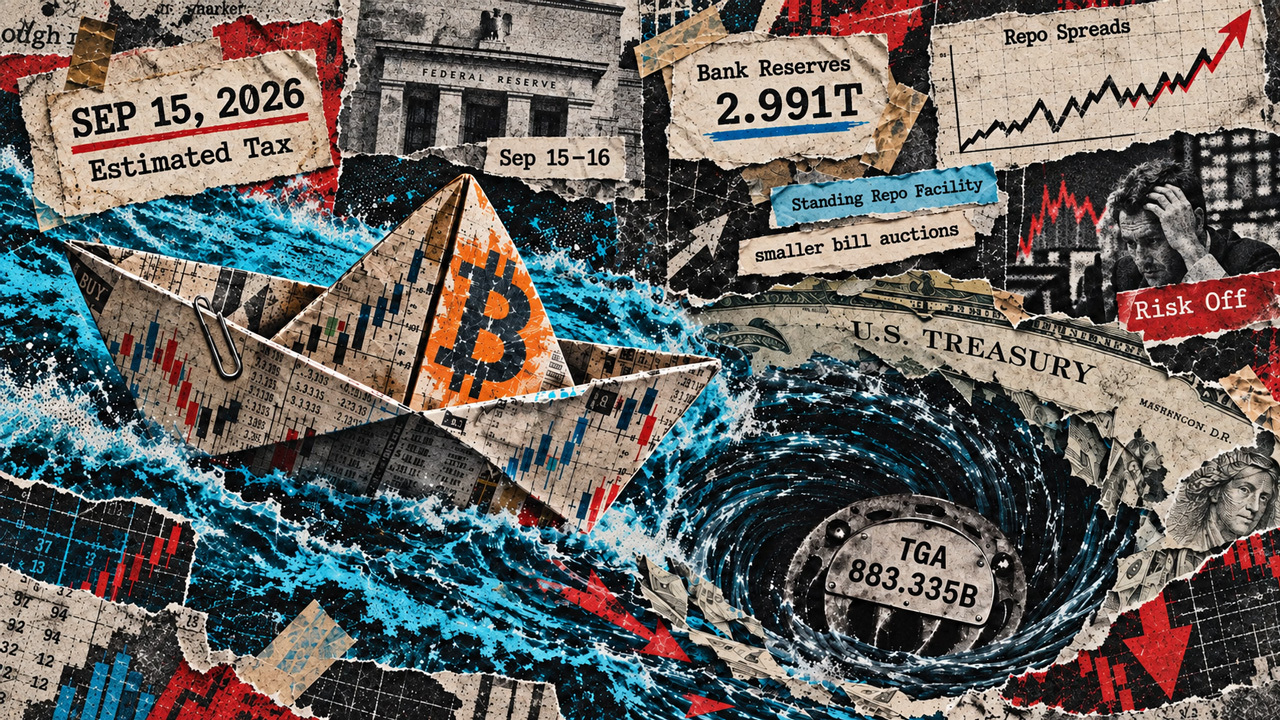
The September 15 US estimated-tax deadline will move cash into the Treasury’s account as the Federal Reserve begins its meeting. That could tighten dollar funding and curb risk-taking, though bill issuance, government spending and Fed liquidity tools may offset the pressure. Short-term funding spreads will indicate whether conditions tighten.
The global bond market is already in turmoil. A Federal Reserve rate hike this week could raise borrowing costs and slow the economy, but many investors caution that leaving rates unchanged may create bigger problems later.
Saudi Arabia suspended its 1,200km East-West oil pipeline after drones struck it near Riyadh and Medina. Carrying about 4–5 million barrels per day to the Red Sea port of Yanbu, the route bypasses the disrupted Strait of Hormuz. Its closure could affect up to 5 percent of global oil supply, with repairs potentially taking days or five to six weeks.
Asian refiners are preparing for a tighter supply of sour crude while waiting for Saudi Arabia to provide guidance on exports through the Red Sea following attacks on the East-West Pipeline, industry sources said on Monday.
Saudi Arabiacrude oil supplyRed Seaenergy infrastructure
Saudi equities suffered another setback on Monday after the previous trading session’s steep losses. Investor confidence took a hit as attacks affecting the kingdom’s energy facilities and maritime routes intensified; several other major Gulf bourses, by contrast, recorded modest gains.
Saudi stocksenergy infrastructureshipping routesGulf markets
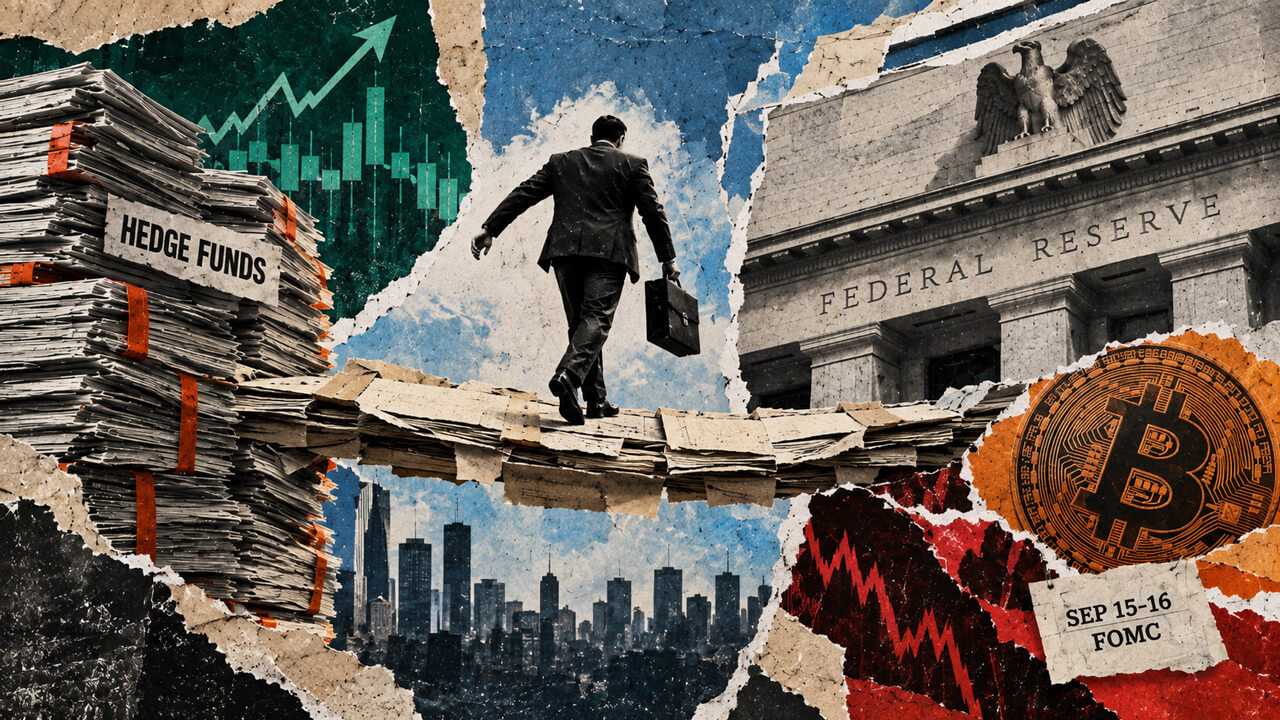
New Federal Reserve data show U.S. domestic hedge funds expanded their gross balance sheets from $2.7857 trillion to $3.1859 trillion in the second quarter. A surprise in September’s rate decision or policy outlook could increase funding and collateral demands, forcing cash-raising in liquid markets. For now, the figures indicate potential amplification capacity, not an actual Bitcoin selloff.
Federal Reserve Chair Kevin Warsh avoids signaling the likely direction of U.S. interest rates, but high inflation, oil at $100 a barrel and his own insistence on price stability appear to leave little doubt that a rate hike is next.
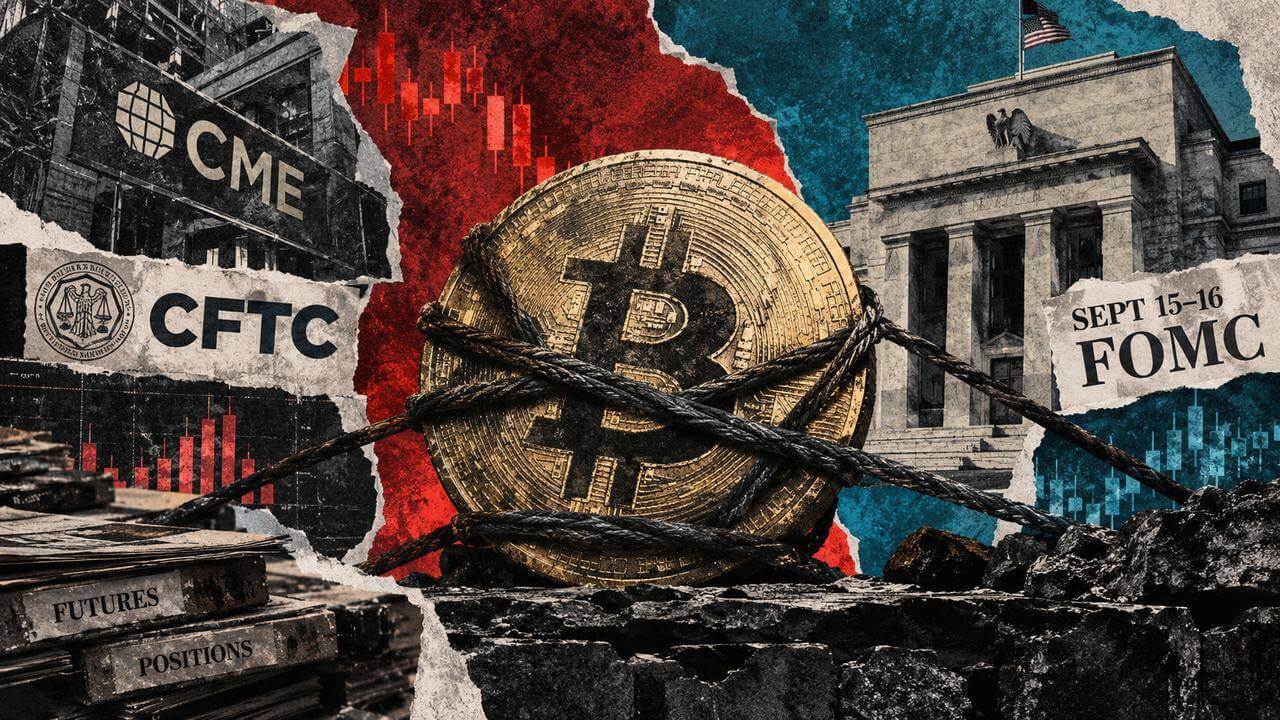
Leveraged funds increased their combined net short position across four regulated Bitcoin futures markets by 1,668 BTC in the week through Sept. 8, reaching 39,876 BTC. The positions may reflect outright bets, basis hedges or both, so the data does not prove traders were making an unhedged wager on a post-Fed Bitcoin decline.
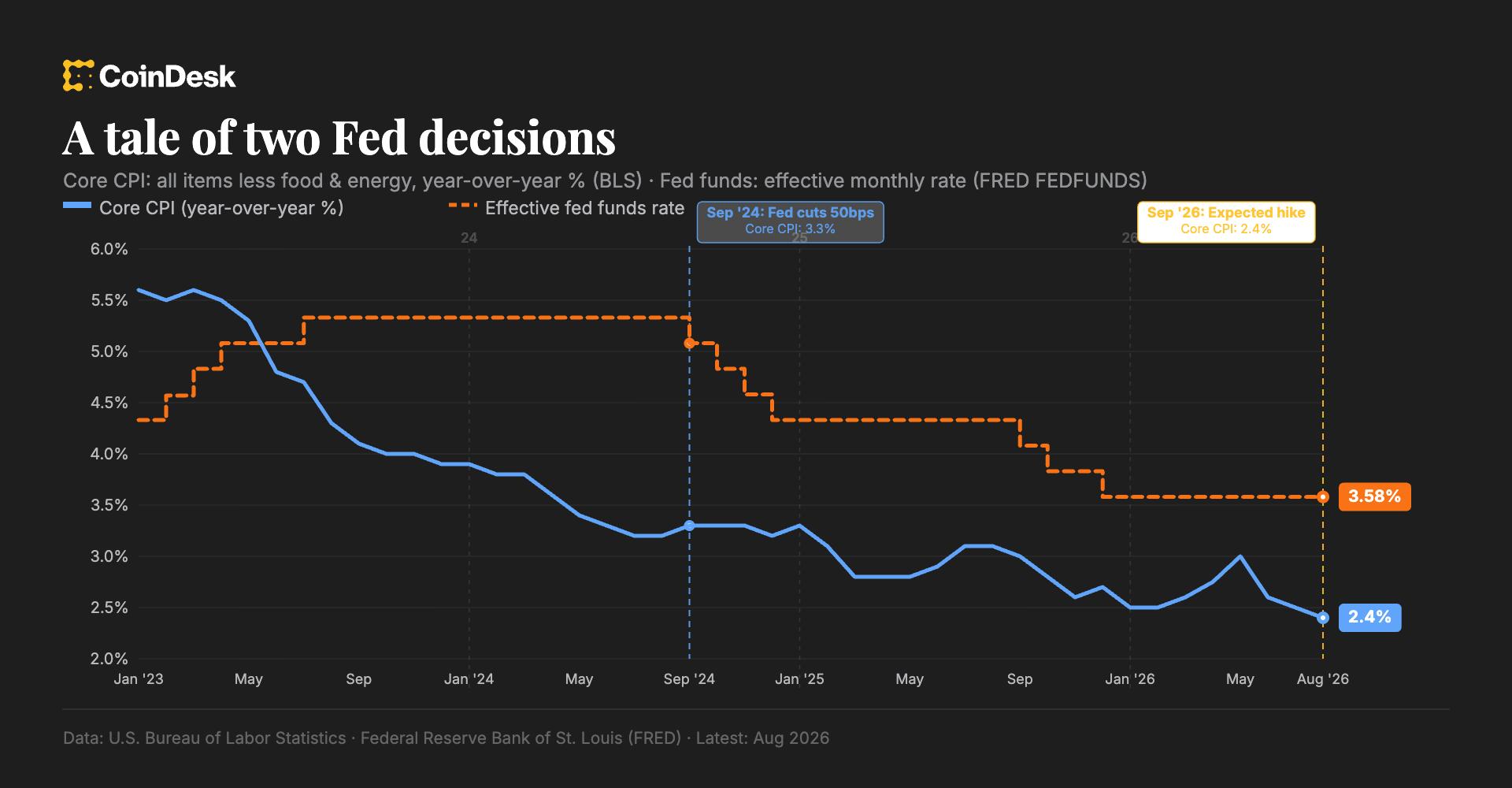
Bitcoin is managing a modest rise while stocks decline amid concern over artificial intelligence and oil prices surge. The Federal Reserve’s two-day policy meeting starts tomorrow, with nearly everyone expecting the U.S. central bank to raise its benchmark policy rate by 25 basis points.
European Central Bank policymakers said on Monday that euro zone inflation could exceed already elevated forecasts. They warned that recent energy-price developments are concerning, particularly the sharp rise in natural gas costs.
The U.S. national average for gasoline has reached $4.32 a gallon, while diesel has climbed to a record $6.23. The Federal Reserve is scheduled to meet Wednesday and is expected to raise interest rates for the first time since 2023.
China’s foreign exchange regulator has told banks to encourage more corporate clients to hedge currency risks, according to people familiar with the matter, intensifying efforts to protect exporters from the yuan’s steady appreciation.
China’s new bank loans returned to positive growth in August after a record contraction in July, but fell well short of analysts’ forecasts. Continued weak demand from households and companies weighed on credit growth.
A Senate vote scheduled for Tuesday by Majority Leader John Thune, R-S.D., is being framed as a decisive moment for the Clarity Act crypto bill, with the cryptocurrency industry pressing for its passage.
Bernstein analysts said progress on the CLARITY Act could exceed market expectations, arguing that any positive surprise is not yet priced in. They said crypto markets currently have a bearish bias ahead of Tuesday’s cloture vote and Wednesday’s Federal Reserve decision.
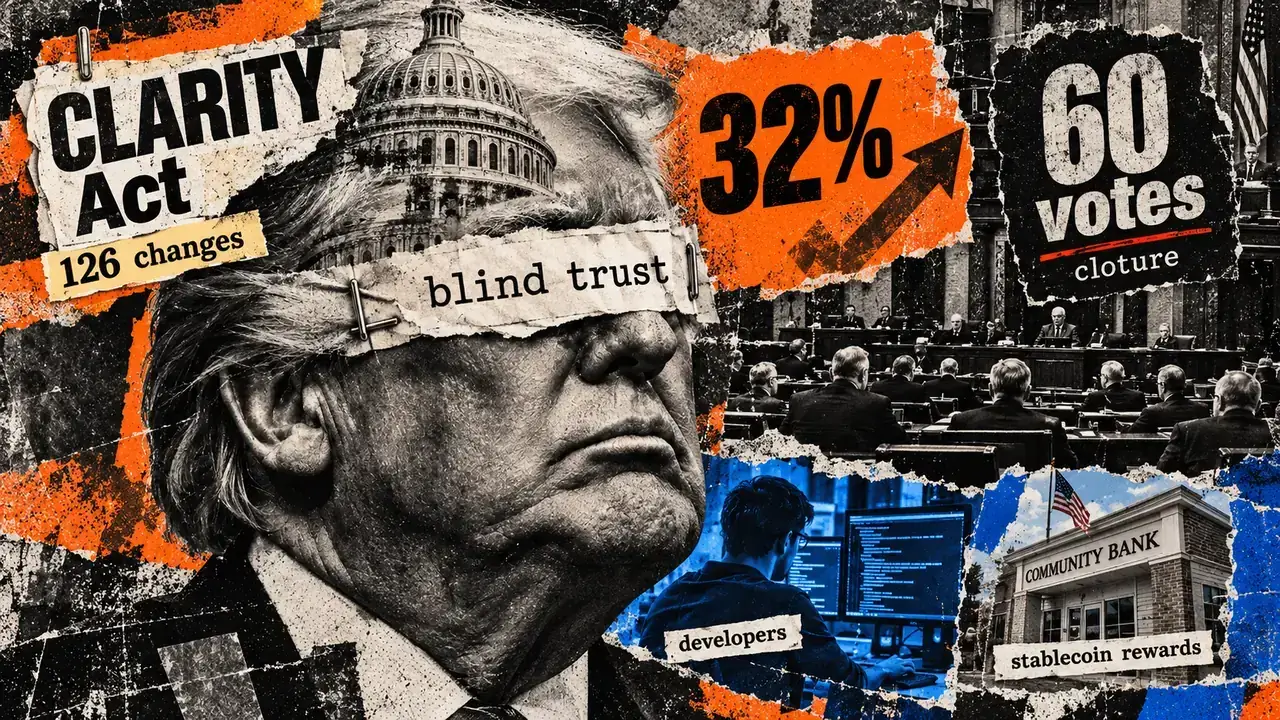
Polymarket traders raised the chance that the CLARITY Act becomes law in 2026 above 32% after Senate Republicans released a 635-page compromise draft. The bill includes ethics restrictions for officials with major crypto interests, a stablecoin circuit breaker and narrowed developer protections. Senators are due to hold a 60-vote cloture test on Tuesday.
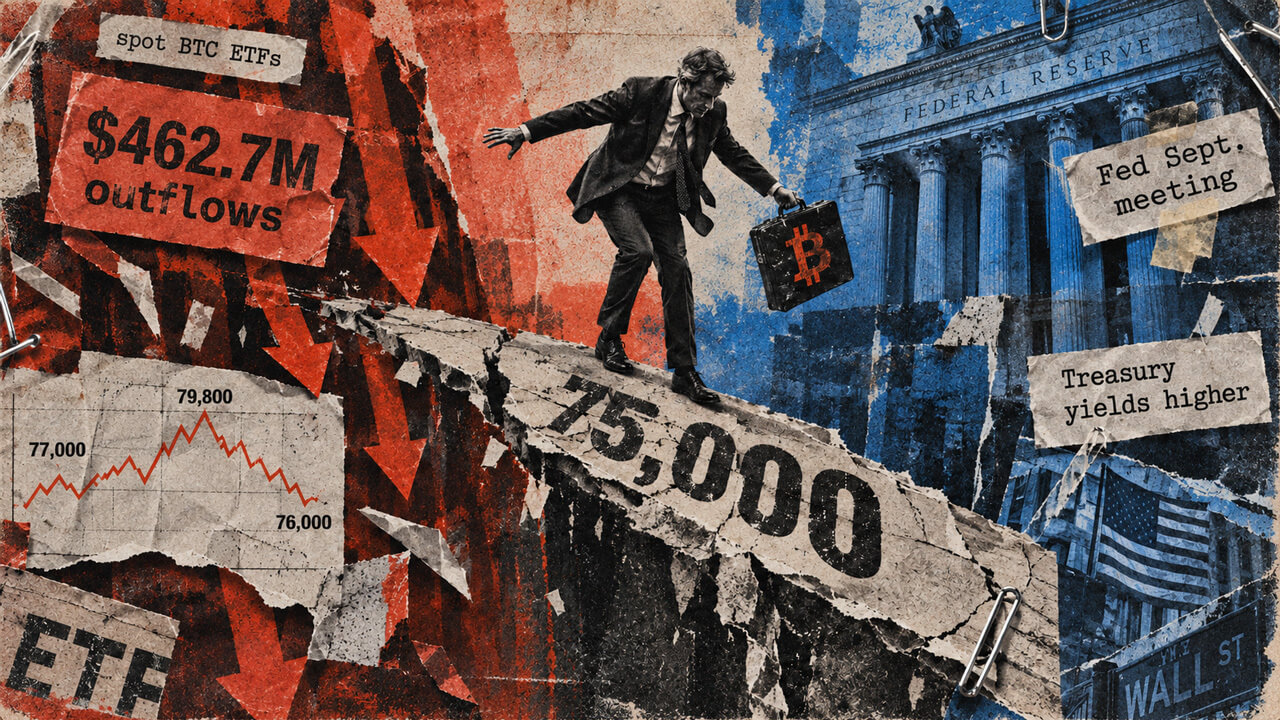
US spot Bitcoin ETFs recorded $462.7 million in weekly outflows, ending three weeks of heavy demand. With hotter inflation, rising Treasury yields and a Federal Reserve meeting ahead, sustained redemptions could weaken the buying pressure supporting Bitcoin and make $75,000 harder to defend. Evidence remains insufficient that ETF investors have abandoned the rally.
A look ahead to the week beginning Sept. 14, when the Federal Reserve, Bank of England and Bank of Japan are due to make interest-rate decisions watched by crypto markets.
A South Korean petition calling for a delay to the planned digital asset gains tax has reached the 50,000-signature threshold, prompting investors to seek a fourth postponement while regulators maintain their position.
Russia’s approved creative-industry development strategy targets an increase in the sector’s GDP contribution from 4.2% in 2025 to 7.7% by 2036. The government also aims to raise the number of companies and individual entrepreneurs in the sector by 22% from 2025. More than 4 million people currently work in it.
Goldman Sachs and JPMorgan now anticipate a Federal Reserve rate increase this week, after several hotter-than-expected inflation reports undermined hopes that price pressures would keep easing without more policy tightening.
A Bank of Japan official said in conference notes released Monday that Japan had experienced inflation spikes driven by higher import costs and currency shocks, indicating that such price reactions should be considered in monetary policy decisions.
Ethiopia once spent about $6 billion in foreign exchange each year on imported oil. Cooperation with Chinese companies on electric buses, heavy-duty trucks, oil-to-gas projects and technical training is helping the country use its hydropower resources and pursue greener industrial growth. The article argues that BRICS is becoming increasingly relevant to the Global South through expanding economic, infrastructure, digital and financial cooperation.
Ethiopia once spent about $6 billion a year in foreign exchange on imported oil. Cooperation with Chinese companies, including electric buses, heavy trucks, oil-to-gas projects and technical training, is helping it use hydropower and pursue greener industrial growth. The article says BRICS is giving the Global South more concrete tools for cooperation, financing and a larger role in global governance.
ECB policymaker Martins Kazaks told Reuters that the central bank may need to gradually raise interest rates further to contain inflation before higher fuel costs driven by the Iran war begin feeding into wages and other prices.
The surge in oil prices has revived expectations that the Bank of England could raise interest rates this year. Investors expect the central bank to hold borrowing costs this week while signalling a possible increase later in the year.
The Federal Reserve and Bank of Japan will meet this week to decide whether to raise interest rates. With the US Treasury market struggling, what effect could those decisions have?
The dollar held steady on Monday while the yen remained near a seven-month high after its recent sharp gains. Investors were weighing potential rate hikes by the Federal Reserve and Bank of Japan ahead of a pivotal week for monetary policy.
Asian share markets fell on Monday as supply concerns sent oil prices sharply higher again. Investors were also preparing for possible interest rate increases in both the United States and Japan this week.
President Donald Trump said on Sunday that no country should have a lower interest rate than the United States, speaking days before the Federal Reserve’s next policy meeting.
Kevin Warsh was sworn in as Federal Reserve chair at a White House ceremony in May. President Donald Trump praised his hand-picked choice and urged him to remain “totally independent,” but the prospect of a rate hike is now putting them on a collision course.
The Middle East conflict has raised security concerns over traditional shipping through the Bab al-Mandeb strait and the Suez Canal. As climate change melts more Arctic ice and extends the navigable season, a South Korean container ship has reached the UK via the route. Its viability as an alternative remains uncertain amid potential geopolitical and environmental tensions.
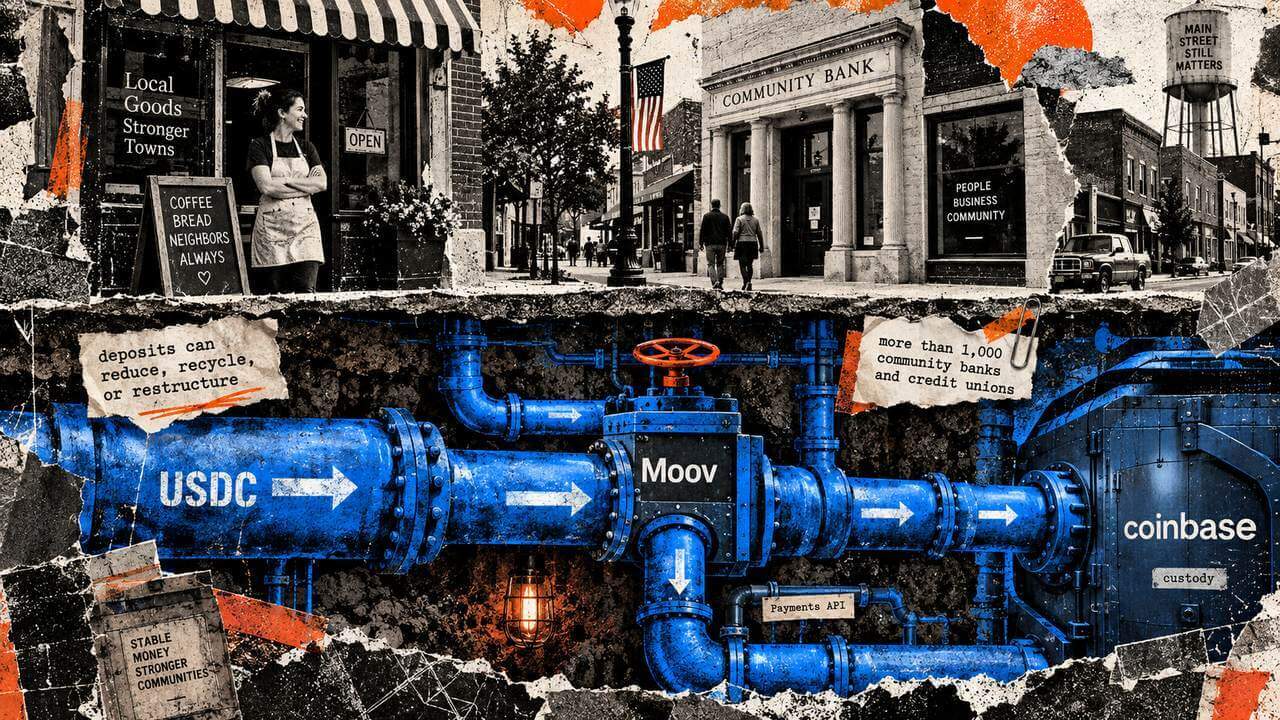
Coinbase is partnering with payments platform Moov to bring stablecoin services into the existing payments systems of community banks and credit unions. The institutions would remain the customer-facing relationship, while Coinbase supplies custody and transaction tools. Fees, revenue sharing, data access, compliance duties and operational risk remain undisclosed.
Rosatom CEO Alexey Likhachev said BRICS countries would eventually lead not only in energy production and consumption but also in nuclear power generation. He cited India’s forecast that energy use will rise 2.5-fold by 2050, with nuclear facilities totaling up to 100 GW to be built by 2047.
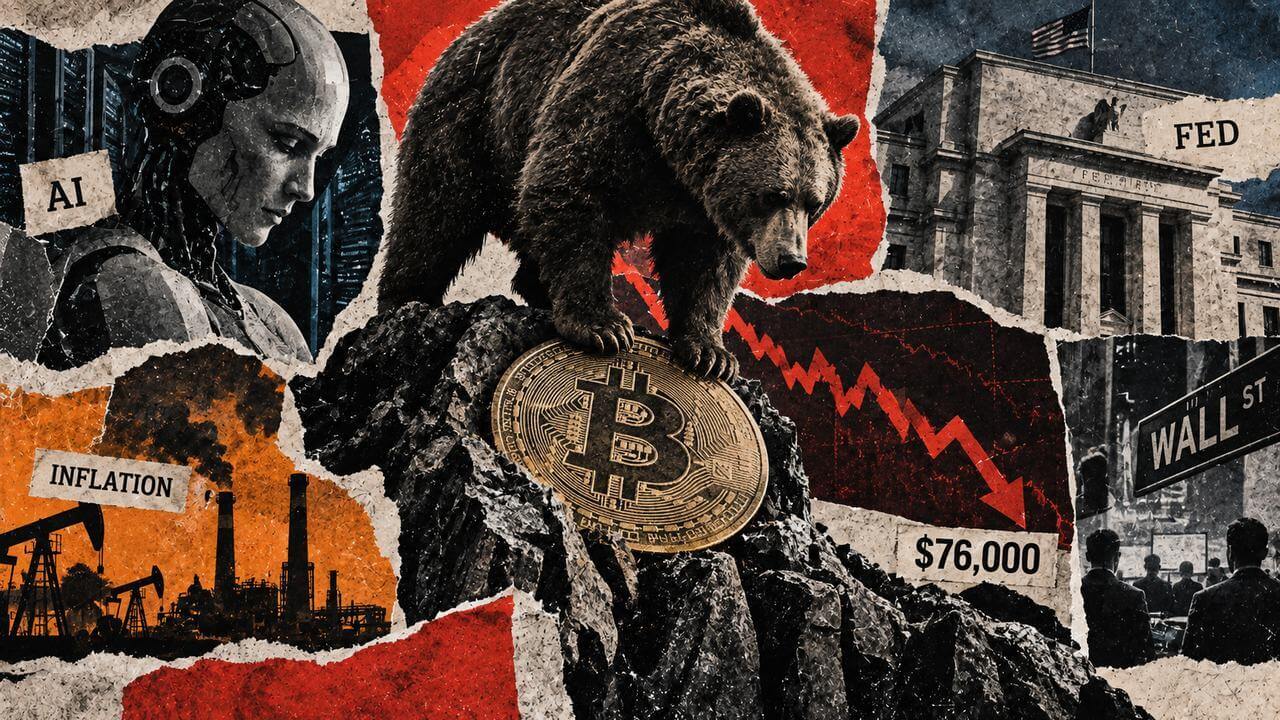
Bitcoin fell below $77,000 on Sunday, extending an already weak week rather than starting a sell-off clearly caused by new AI warnings. Investors are weighing calls from Anthropic and OpenAI leaders to slow AI development, an upcoming Federal Reserve meeting and how technology stocks may respond on Monday; no market outcome is established yet.
The yen has reached its strongest level against the US and Australian dollars in about six months, raising questions about whether Japan will remain an affordable destination for Australians. A sustained rise could increase travel costs and encourage some visitors to consider alternatives elsewhere in Asia, although analysts expect considerable tolerance before habits change.
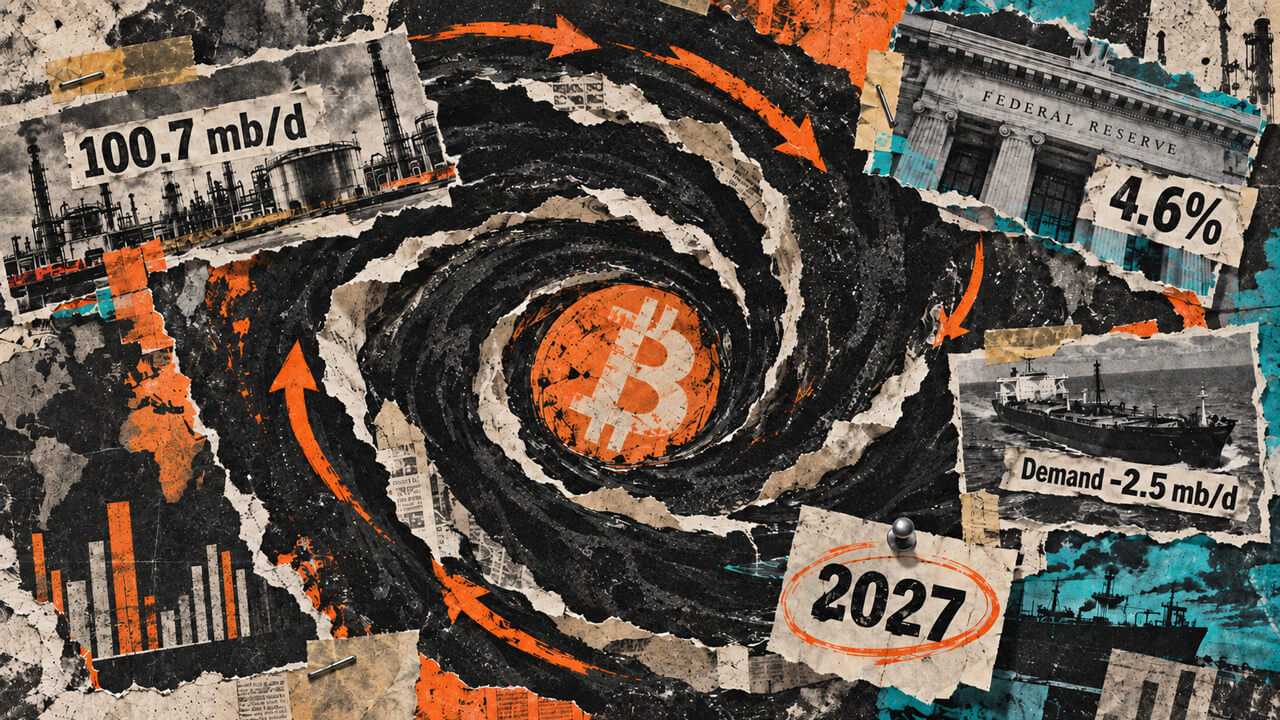
The International Energy Agency has lowered its 2026 oil-supply forecast and expects full Gulf recovery only in 2027, potentially delaying relief in borrowing costs for Bitcoin investors. Demand is weakening, but falling inventories and sharply reduced Gulf refined-product and LPG exports indicate continuing physical tightness. Persistent energy pressure could also keep inflation and interest-rate expectations elevated.
President Donald Trump again argued that the United States should have the world’s lowest interest rates, while his handpicked Federal Reserve chair, Kevin Warsh, faces renewed pressure to increase borrowing costs.
Kirill Dmitriev, CEO of the Russian Direct Investment Fund and Russia’s special envoy for investment and foreign economic cooperation, expects the United States to be among the first Western countries to resume economic relations with Russia. He said many other countries would quickly follow to avoid being left out of the process.
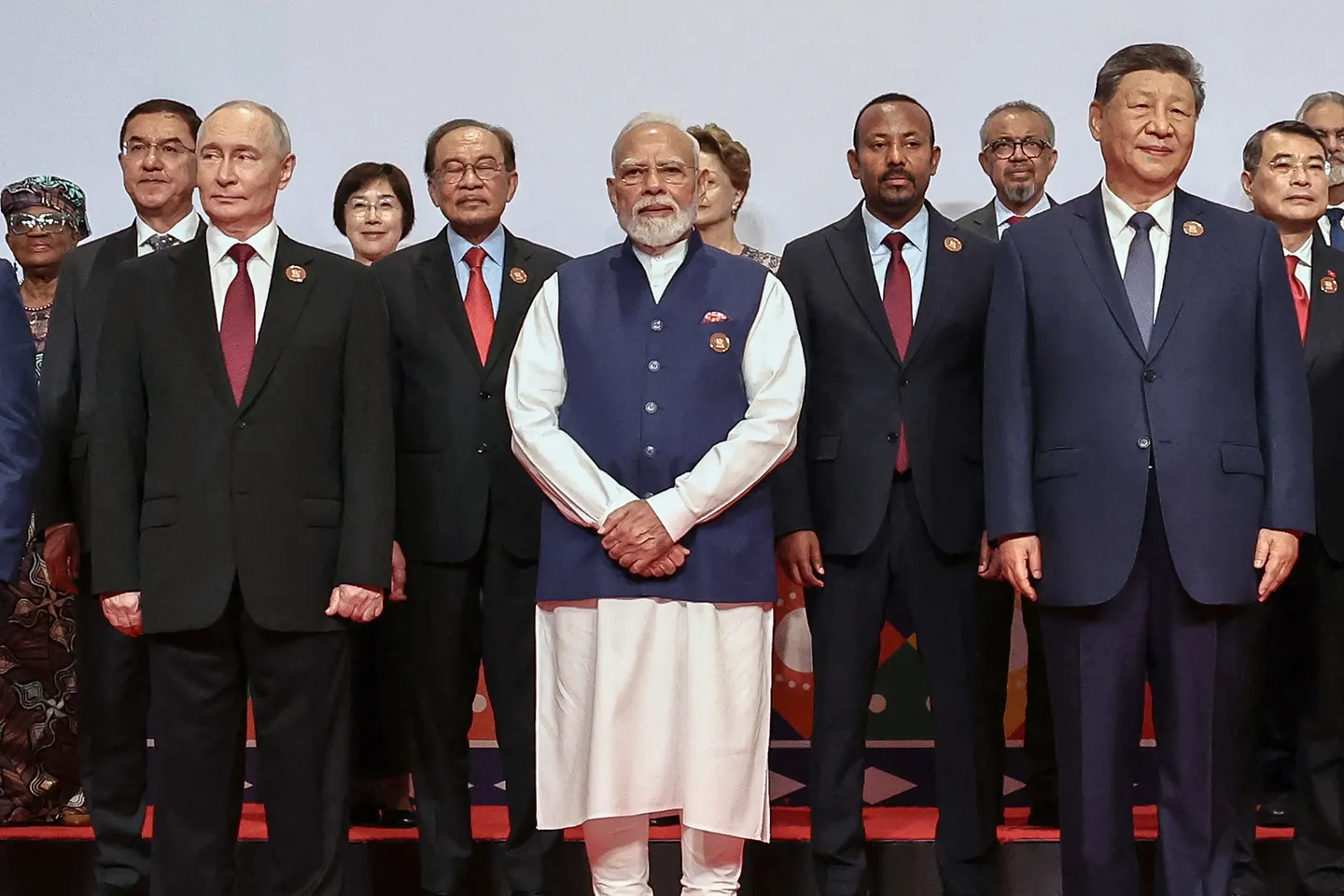
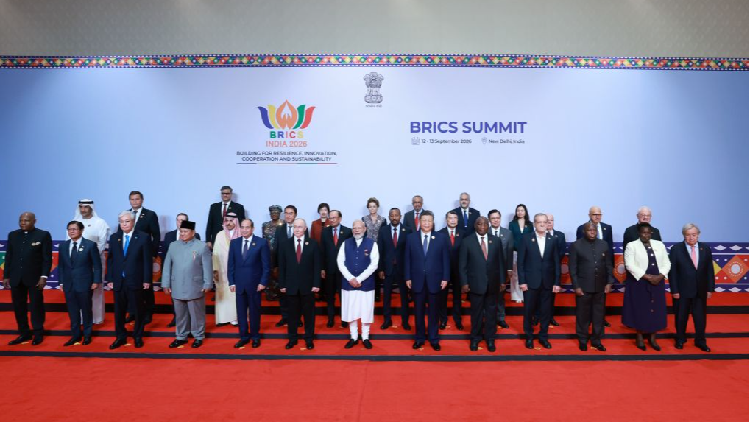
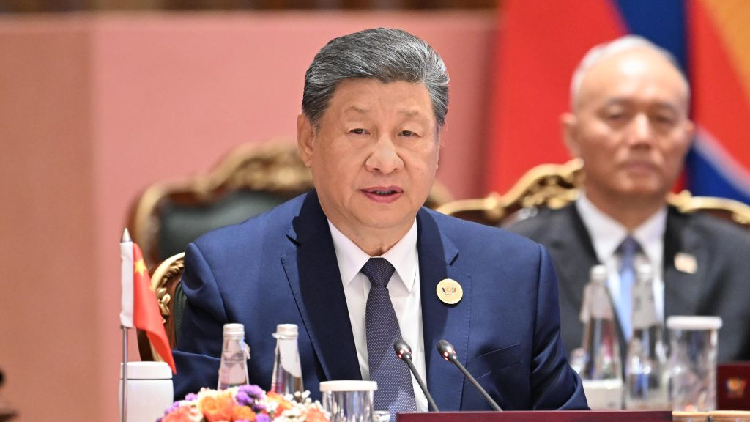
Chinese President Xi Jinping addressed Session II of the 18th BRICS Summit in New Delhi on Sunday, proposing five initiatives for “greater BRICS” cooperation covering AI, trade and investment facilitation, the digital industry, smart manufacturing and talent development. He said the grouping should draw on its links with emerging markets and the Global South, uphold openness and win-win cooperation, keep industrial and supply chains stable and unobstructed, and promote integrated markets.

Xi Jinping made his first visit to India in seven years for the BRICS summit and held a roughly 40-minute meeting with Narendra Modi. Analysts describe the shift in ties as a tactical easing driven partly by shared pressure, not a strategic reset, with border disputes unresolved. The summit’s New Delhi Declaration urged maximum restraint over the Iran war without naming the US, Israel or Iran.
China-India relationsBRICS summitXi Jinping visitIran war
Kremlin spokesman Dmitry Peskov said the BRICS summit’s final declaration incorporated provisions important to Russia, including joint settlement centers, a joint investment platform and a common platform for settlements in national currencies.
China plans to host the BRICS Forum on Trade in Services in 2027 during its chairship of the group, President Xi Jinping said. He also proposed a BRICS special economic zone partnership to coordinate policies and promote open development and economic and trade cooperation.
Chinese President Xi Jinping told the second session of the 18th BRICS Summit in New Delhi that BRICS countries should rally the Global South, defend multilateralism, international law and the United Nations, reform global financial institutions, and deepen cooperation on development, security, climate governance and artificial intelligence.
Chinese President Xi Jinping unveiled initiatives on Sunday spanning areas including AI and trade to deepen cooperation among the “Greater BRICS” emerging economies. Beijing is seeking to turn the grouping into a practical platform for development across the Global South.
Chinese President Xi Jinping said at a meeting of BRICS leaders and partner countries that China will keep opening up, promoting high-quality Belt and Road cooperation and sharing development opportunities with countries around the world.
Chinese President Xi Jinping proposed five initiatives to deepen “greater BRICS” cooperation in AI, trade and investment facilitation, digital industries, smart manufacturing and talent development at the group’s summit in New Delhi. He also urged Global South countries to strengthen multilateralism, reform international institutions and advance global AI governance.

At the 18th BRICS Summit in New Delhi, Chinese President Xi Jinping urged members to lead innovation-driven development, uphold peace and stability, promote mutual learning among civilizations and improve global governance. Global South observers said China has played an important role in BRICS and expressed confidence that it will guide expanded cooperation toward deeper, higher-quality engagement. They also expect China’s 2027 chairmanship to consolidate the group’s enlarged framework.

An economist says a Federal Reserve rate hike would be about Wall Street rather than inflation. Goldman Sachs became the last major bank late Friday to withdraw its forecast that rates would not rise next week.
Hong Kong landlords once known as “shop kings” built portfolios of dozens of properties along the same streets. Many have since gone bankrupt as post-pandemic rents collapsed and banks tightened lending. Shop prices are down more than 40% from their 2018 peak, and Centaline Commercial says there is still no clear sign of a recovery or a market bottom.
Disease has devastated Prince Edward Island’s oyster industry, wiping out entire crops. Farmers say they need more assistance to survive the crisis and fear larger corporations with deeper pockets could acquire their independent operations.
The Minutes Reader extension turns the original page into a focused reading view and translates articles and video subtitles on demand. It is in limited beta.