Huang Falls Out of World’s 10 Richest After Chip Selloff
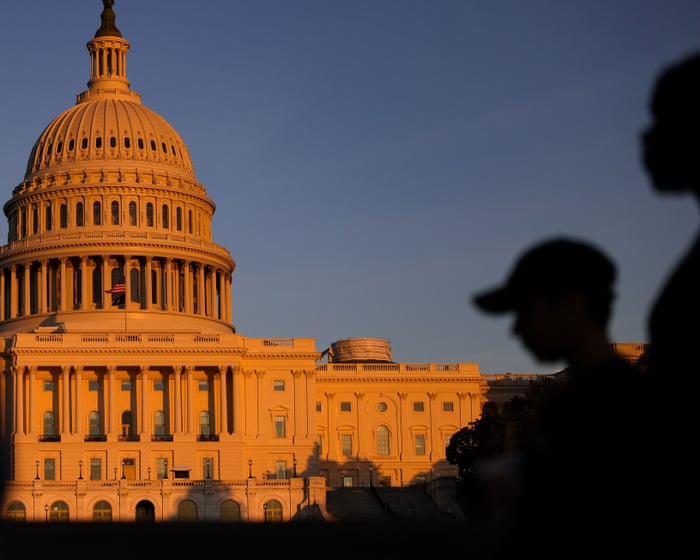
Jensen Huang felt the costly impact of the Democratic Party’s newly gained political strength on Thursday.
As technology stocks sold off on Thursday, investors flooded Goldman Sachs Group Inc.’s equity trading desk with calls asking how much further the decline could go.
AI stocks came under pressure worldwide amid concerns that Democratic victories in the U.S. midterm elections could lead to moratoriums on data centres. The S&P 500 fell 4.4%, its sharpest daily decline since April 2025.

Investors have good reason to be bullish on AI: FactSet expects S&P 500 technology-company earnings to rise 54% this year, while overall index profits are projected to grow 33%, led by tech and energy. The boom’s impact is even greater in Asia, where corporate earnings in South Korea and Taiwan are forecast to surge 283% and…
Shares in Elon Musk’s SpaceX and Tesla fell on Thursday, extending the previous session’s losses. Investors were concerned that Democratic victories in the US midterm elections could slow data center construction.
Tuesday’s big Democratic win is changing the calculations for technology investment. CNBC experts consider whether the AI trade is ending and what investors should do next.

The Democrats’ midterm sweep heightened concerns about AI spending, sending technology stocks sharply lower and dragging Bitcoin down as leveraged traders took heavy losses. Bitcoin touched an intraday low of $75,568 on Thursday before recovering to $76,830.67 at press time.


The post-election rally quickly reversed as AI stocks plunged. Cryptocurrencies held up relatively better despite a $1 billion wave of liquidations.
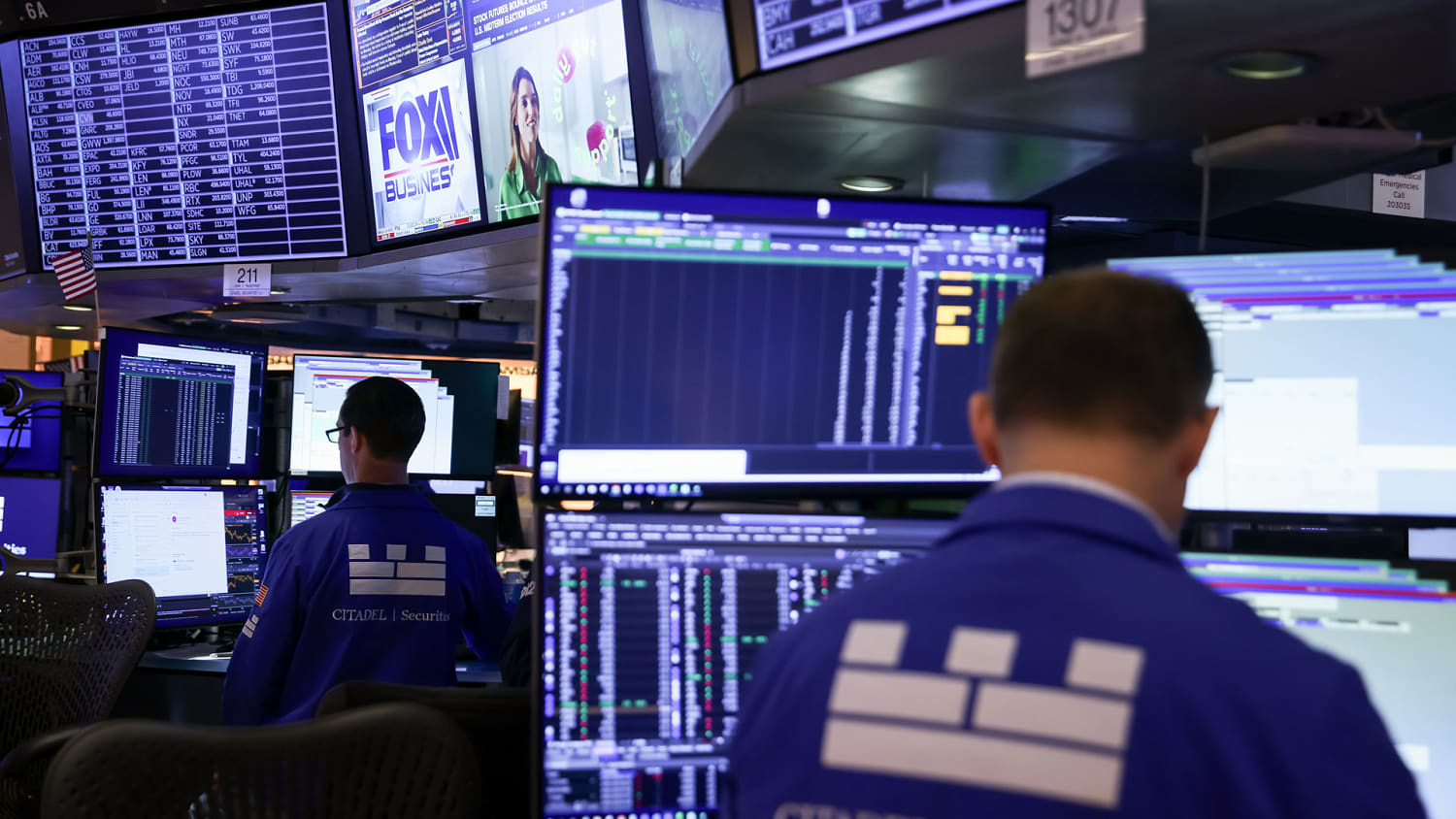
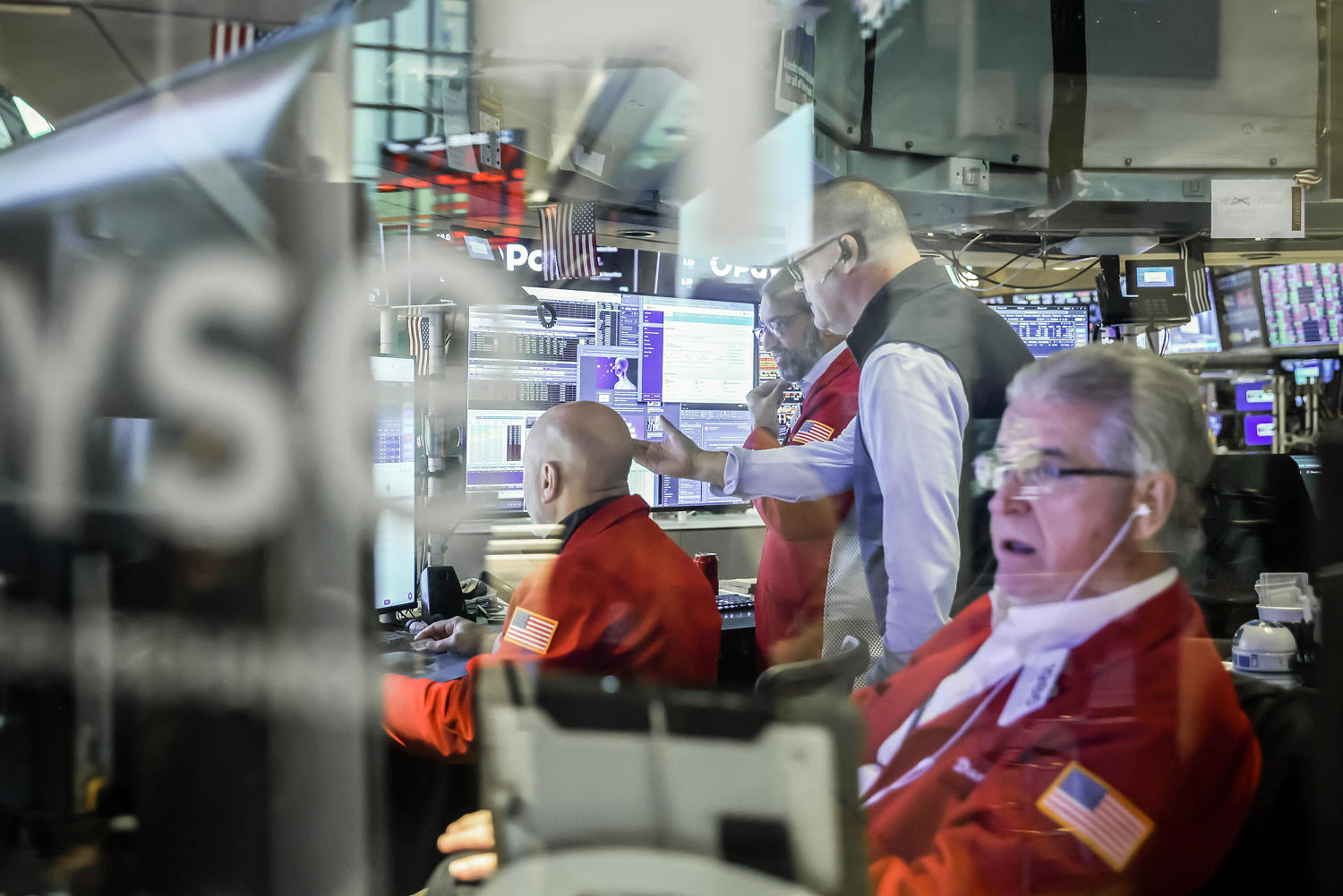
A live view of the New York Stock Exchange’s big board shows the market reacting to concerns about spending in the current artificial intelligence boom.
Tech and AI stocks fell, sending SpaceX shares sharply lower. Markets have been reacting to the possibility of tougher scrutiny of data-centre construction and the AI industry after the US midterms.

US markets fell on Thursday as chip and data-centre stocks led a technology-sector selloff. The Nasdaq was down 4.8 percent in midday trading, while the S&P 500 fell 3.6 percent. Investors assessed whether Democrats’ midterm victories could bring political resistance to AI infrastructure projects.


Technology shares fell sharply Thursday, extending recent losses and raising concerns about whether the AI boom can last. That boom has driven much of recent U.S. economic growth.
NBC News’ Allie Canal and Brian Cheung explain how the midterm elections, the war with Iran and artificial intelligence are affecting the stock market.

The Nasdaq fell by as much as 5% on Thursday, entering correction territory after dropping more than 10% from its recent record and heading for its worst day in 18 months. Investors worried that Democrats’ midterm gains could bring tougher AI regulation and scrutiny of data-centre expansion. Chip stocks led the decline, which spread to markets worldwide.

A dispatch from the front lines of market reporting about Anthropic’s IPO.
The Nasdaq fell into correction territory and was on pace for its worst day in months, as investors worried that Democrats’ midterm gains could affect the AI data center boom.
Voter anger toward AI infrastructure has raised the bar for data center IPO candidates, which provide computing power to support the technology’s rapid growth.
Qualcomm shares fell Thursday morning after its fourth-quarter earnings report, as chip stocks continued to face post-election pressure.

The acquisition is intended to reinforce Dropbox’s AI infrastructure; it is also expected to advance DBX Agent Cloud, a storage product for people developing AI models and agents.

The Verge speaks with economist and Harvard Business School professor Willy Shih about global supply chains, shifting Trump tariffs, stalled efforts to bring factories back to the US, and AI’s vast demand for computing resources. Shih’s new book examines the economics of complex production networks and why China remains a manufacturing powerhouse.

Samsung Wallet’s Stablecoin Account is now available to eligible U.S. Galaxy users, enabling them to use USDC on Solana.

Russia has nearly 256,000 small and medium-sized businesses in its IT sector, up 15% in a year and almost 50% in five years, the Economic Development Ministry said. Some 183,000 focus on software development, while 73,000 provide data processing, portal maintenance, consulting and information services. Revenue in the latter area has risen 2.4-fold in five years.
US technology stocks slid as investors weighed the possible effects of the Democrats’ “blue wave” on sectors favoured by the Trump administration, while the AI trade remained in focus.
A $19 billion data-center deal gives Google the option to acquire part of the project if Anthropic fails to pay rent.

Riot’s binding Corsicana deal covers a planned 910 MW. Mandatory grid orders are exempt, while rent depends on future delivery.

The AI boom is helping lift demand for European chemical and industrial gas companies as semiconductor manufacturers expand capacity to meet surging demand for AI chips.
VanEck says bitcoin miners are oversold after a 35% plunge in October. Investors broadly sold AI infrastructure providers that month, treating companies from very different sectors as a single trade.

Nasdaq futures fell on Thursday as chip and data center-related stocks remained under pressure. S&P 500 contracts were little changed after a sharp rise in the previous session following the Democrats’ sweeping midterm election victory.
About 600,000 advanced Nvidia AI chips are being held in Hong Kong pending shipment to mainland China, two people familiar with the matter said. Beijing has not approved large-scale imports despite demand from technology firms.
U.S. midterm results could slow data center development, increasing the value of existing AI capacity while putting more pressure on debt-funded neoclouds.

Sony reported net profit of 449.6 billion yen for the quarter ended in September, up 44 percent year over year, driven largely by PlayStation and the $2.52 billion global box office of Spider-Man: Brand New Day. PS5 sales fell, but game sales rose, and Sony says work on its next console is progressing as scheduled.

Amazon and Uber are making Uber Eats the official restaurant delivery partner for US Prime subscribers. Members can order through Amazon’s app or website and get delivery fees waived on restaurant orders of $25 or more. Amazon manages orders and alerts, while Uber Eats sends the receipt.

Amazon, Microsoft, Alphabet, and Meta plan at least $720 billion in capital expenditure this year, mostly for AI infrastructure, on top of at least $1 trillion in commitments for coming years. Yet the data-center buildout has not delivered its promised returns, and investors are growing anxious about when it will. Google Cloud’s growth has also come at the expense of Search, while monetizing AI Mode remains uncertain.

China’s state planner has told Japanese investor SoftBank that it will not approve the $5.4 billion purchase of engineering group ABB’s robotics business, ABB said Thursday. It is China’s second major deal blocked this year, following an order for Meta Platforms to undo its acquisition of AI start-up Manus, valued at more than $2 billion.

A new initiative under the EU Chips Act is targeting chip-design start-ups, a sector where European companies account for less than 1% of global revenue.
Riot has sold most of its bitcoin to finance its shift into data centers. Its latest agreement would let Anthropic fund part of the build and earn interest through deductions from rent.

Danish shipping group Maersk raised its 2026 profit guidance for the third time on Thursday, with port congestion and AI-driven demand keeping container freight rates elevated. Its shares fell 11% as analysts said the upgrade was expected and third-quarter profit disappointed.
Xavier Volatier, head of Transatlantic Private Wealth, discusses with Stefan Grobe how the US midterm result could affect global markets.
AI could widen the economic gap between wealthy and poorer Commonwealth nations by $360 billion.

XRP Ledger has switched on a change that stops authorized token burners from generating additional tokens. Validators backed the change in October, restarting the countdown to activation; the XRP asset was unaffected.

Asian technology shares fell as concerns grew that Democratic control of Congress could slow data centre construction.
Chinese stocks rose for a second straight day on Thursday as state support gathered pace and Democrats’ sweeping US congressional election victory lifted a drag on risk appetite. The CSI 300 gained 0.8% to 4,135.97 by 10:25am, while the chip-heavy Star 50 jumped 5%. Democratic control of Congress could tighten technology export restrictions.

Hong Kong retail investors have shifted from checking newspaper closing prices and calling brokers to trading online. The Investor and Financial Education Council’s latest study says 95 per cent trade online, while nearly two-thirds most often use a securities brokerage’s mobile app rather than their bank’s.

Oil, chip stocks and the dollar came under pressure in Asia on Thursday, while nearly everything else rose. Democrats’ stunning string of midterm victories raised hopes that the US-Iran war could end.
Apple is said to be significantly reducing how much it spends on AI for its engineering teams.

Apple is trimming employee budgets for AI use as part of a cost-cutting effort, even as it seeks to make artificial intelligence central to its operations.
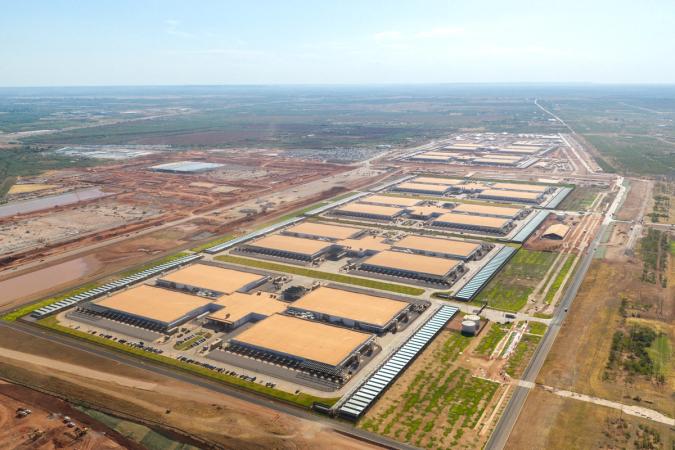
The Democrats’ midterm sweep is unsettling politically exposed digital-asset investments, including cryptocurrencies linked to Donald Trump and major Texas data-center projects that support valuations of companies once known as Bitcoin miners.
Arm Holdings Plc forecast revenue for the current period in line with analysts’ estimates, suggesting its expansion into data center computing is helping counter a downturn in the smartphone market.
US stocks climbed sharply Wednesday as Wall Street absorbed the Democrats’ sweeping midterm victory and considered what divided government could mean for the Iran war, President Donald Trump’s policy agenda and the AI trade.

Investors’ bullish mood after Democrats’ historic election win drove the Dow up more than 3%. NBC News’ Christine Romans explains what helped lift markets.
US technology giants led the market higher on Wednesday. Investors wagered that a Congress controlled by Democrats would slow the massive AI spending that is consuming free cash flow.
With smartphone sales down about 20 percent from 2025, Qualcomm is counting on data centers to bolster revenue. It projects data center revenue of about $650 million in the first quarter of 2027, $5 billion by that year’s end and $15 billion by 2029. The business could eventually make up around 30 percent of the company’s business.

Two $1,000 comparisons yield about 1 basis point and negative 15 basis points before fees. Access restrictions and adjustments tied to the shares further complicate the trade.

AMD reported record third-quarter revenue of $13.4 billion, up 45 percent year over year. Data center revenue rose 97 percent to $8.5 billion, while gaming cratered. AMD forecasts about $17 billion in fourth-quarter revenue; if both companies meet expectations, it would surpass Intel's revenue for the first time.

Apple, Amazon, Google, Meta and Microsoft shares rose after the midterms, while stocks linked to Trump adviser Elon Musk and data centers fell on Wednesday.

Revolut has become Europe’s most valuable startup and a challenger to long-established banking giants. Launched just over a decade ago as a fintech offering cheaper foreign-exchange fees, it has grown rapidly.
Democrats won control of both chambers of Congress in Tuesday’s midterms, scoring unexpected victories in longtime Republican strongholds. Annie Andrews, Abdul El-Sayed and James Talarico were among the winners, while Trump allies including Vivek Ramaswamy and Republican candidates faced setbacks.


Democrats celebrated victories across the United States that gave them control of both chambers of Congress. They flipped Republican seats in traditionally conservative states and scored historic wins.

After a sweeping midterm victory, Democrats will control both chambers of Congress and can advance legislation, investigate the Trump administration through committees, and confirm or block nominations. Trump can still veto bills, while convicting him in an impeachment case would require a two-thirds Senate majority likely beyond Democrats’ reach.

US voters focused on government corruption as they handed Donald Trump’s Republican Party a severe midterm defeat, flipping both chambers of Congress and toppling Republican strongholds. Victorious Democrats warned the Trump administration to “lawyer up,” saying their approach to alleged graft and abuse of power could shape their own prospects and US politics.

Erin Ogunkeye welcomes Searchlight Institute president and Supermajority author Adam Jentleson to discuss Democrats’ sweeping midterm victory. He calls it more than a familiar backlash against an incumbent: a once-in-a-generation event. But he questions whether a coalition ranging from progressive reformers to culturally conservative Democrats can stay united and legislate on healthcare, immigration, inequality and climate change.
Democrats are using their decisive sweep of Congress to usher in a new era. Vice President JD Vance blames the war in Iran for Republicans’ midterm losses.

Republicans lost control of both the Senate and House in the midterms as Trump-backed Maga candidates suffered defeats. Democrats also won Texas’s Senate and governor races, along with Senate contests in Michigan and Kansas. The results amounted to a major blow to Trump’s authority, the report says.

After Democrats’ historic 2026 midterm victory, Donald Trump will remain president for two more years. The article says Democrats can try to constrain him, promote policy proposals and pursue limited bipartisan cooperation, but presidential vetoes and resistance from the party establishment are likely to limit major change and congressional productivity.

Senate Democratic leader Chuck Schumer spoke to reporters after the midterm results. Riding their sweep of Congress into a new era, Democrats are preparing plans to address high living costs and meet voters’ demands for change during President Donald Trump’s final years in the White House.

After the 2026 midterms, Democrats won majorities in both the House and Senate, taking control of Congress. European leaders described the victory as a “win for democracy.”

Trump’s loss of control of both chambers of Congress leaves an unpredictable final two years, analysts say, with consequences for markets, growth, inflation, borrowing costs and living standards. The Iran war, oil prices, AI regulation and political gridlock are among the forces shaping the outlook.

Iranian officials cast the Republicans’ sweeping midterm losses as Americans rejecting the war on Iran. Analysts say the result could increase pressure to end the conflict while making Tehran less willing to compromise. Trump has discussed attacking Iran but says he has not decided.

Economic concerns helped drive the Democrats’ sweeping midterm victories, giving them control of both chambers of Congress while Trump remains in the White House. The article examines the prospect of legislative gridlock and concerns over AI regulation, data centers, tariffs and debt.

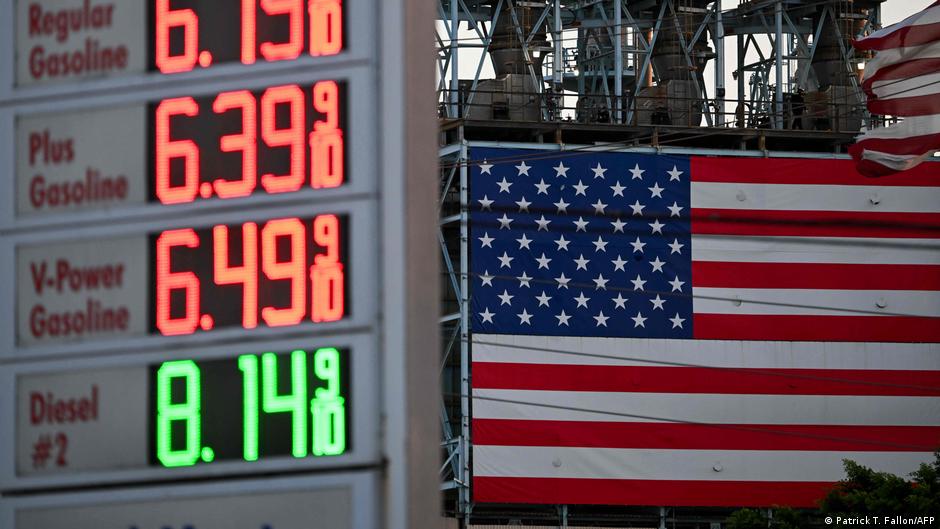
People walked past signs about gas prices and voting in Dallas, Texas, on November 3, 2026.

Voters gave Democrats control of both houses of Congress, with victories in traditionally Republican states that exceeded polling expectations. Donald Trump said he would respect the results but maintained that going to war with Iran was right. The shift is set to shape the administration’s final two years and the 2028 race, while elevating new Democratic figures.

Democratic leaders and candidates who flipped seats offer post-election views. The article says voters broadly rejected Donald Trump, his policies and the Republican party, with attention on Trump’s personal unpopularity, high living costs and the Iran war—giving Democrats a chance to reset the domestic agenda.

The Democrats’ midterm victory has left Donald Trump in a difficult position for the remainder of his term. The newly blue House of Representatives will set the budget, which Trump will have to accept and carry out, says FRANCE 24 international affairs editor Philip Turle.

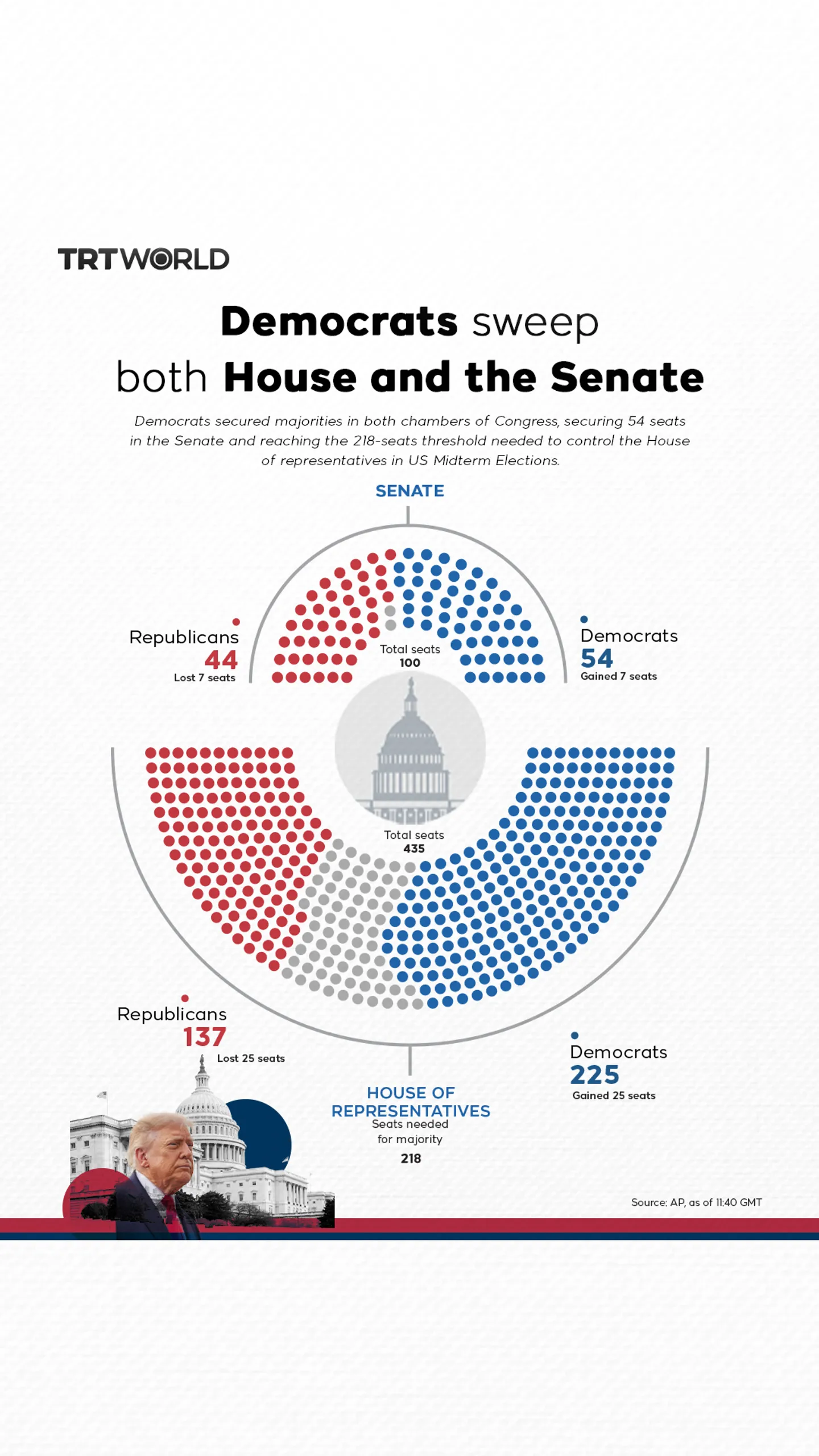
Democrats won majorities in both chambers of Congress, handing Republicans a historic, worse-than-expected defeat. Democrats have so far secured 228 House seats and 54 Senate seats, while several candidates endorsed by Trump lost in traditional Republican strongholds. Republicans did have some wins.

Democrats are projected to regain control of the House, which they have not held since 2020.
Early counts on Wednesday showed Democrats had won control of both chambers of Congress. Donald Trump said the GOP loss had left him “a little surprised” and said he was ready to work with Democrats, while claiming he would “veto everything.” The vote included 35 Senate seats, all 435 House seats and gubernatorial contests in 36 states.

After Democrats scored a series of unexpected wins in Republican-leaning states, some Republicans blamed Trump for the losses, saying his focus on his legacy and lack of concern for voters hurt the party. They also cited unpopular policies, low job approval and discontent over the Iran war, tariffs and immigration crackdown.

Ukrainians do not expect the Democrats’ midterm victory to change US policy on the war with Russia, at least not quickly, France 24 correspondent Emmanuelle Chaze says. President Volodymyr Zelensky has yet to respond to the Democrats’ “blue wave” taking control of Congress.

Democrats won control of both chambers of Congress, giving them power to block Trump’s legislative agenda and investigate his policies, but not enough votes to override a presidential veto. The article examines possible constraints on the Iran war and tariffs, including congressional funding limits, while noting these steps may be difficult to carry out.

Democrats secured a Senate majority and at least 228 House seats, taking control of Congress, while flipping seats in states normally considered Republican strongholds. Trump accepted his party’s defeat and congratulated Democrats, but some contests, including Alaska’s, remained undecided.

ABC News projects Democrats will control the Senate and win enough seats to take control of the House.

Although many races have yet to be called, Democrats have taken control of the Senate and House and won several key governorships.

Democrats unexpectedly took control of both the Senate and House of Representatives on Tuesday. Trump also announced that day that the US would halt $3.8 billion in aid to Israel. The report examines the potential consequences for Israel and Benjamin Netanyahu.

Democrats are poised to control both the House and Senate after wins in South Carolina, Kansas and Texas. Texas turning blue marks a historic upset. President Donald Trump says he will accept the results and blames the candidates for the losses.

Democrats won control of the House and Senate by flipping Republican-held seats in several states. It is the first time in 20 years that a Republican president has lost both chambers. The results are seen as a major rebuke to Donald Trump and his party; Democrats also elected the first Muslim senator and won a Kansas Senate seat for the party for the first time in nearly a century.
A wave of voter anger propelled Democrats to sweep into power in Congress. Outrage over the cost of living and the war in Iran delivered a resounding rebuke to President Donald Trump and his party, just two years after his dominant return to the White House.

Democrats won both the Senate and the House in a nationwide rebuke of President Donald Trump, flipping seats long held by Republicans and securing a series of historic firsts. Their gains are expected to constrain Trump during the final two years of his term and give Democrats power to block legislation, investigate his administration and challenge appointments. Anger over living costs, tariffs and fuel-price increases linked to Trump’s confrontation with Iran helped drive the result.

Democrats took control of both chambers of the US Congress on Tuesday, in what the report describes as a nationwide rejection of Donald Trump. France 24’s Wassim Cornet said the scale of the victory was “impossible to overstate”; Democrats are on course to win more House seats than they had when Barack Obama was elected in 2008.

US voters handed Democrats control of Congress on Tuesday in a sharp rebuke to President Donald Trump and his MAGA movement. Polls indicate that anger over the worsening cost-of-living crisis was a major factor in the party’s historic win; the crisis was partly triggered by Trump’s decision to launch the US-Israeli war on Iran.
In Tuesday’s emphatic Democratic sweep, voters rejected President Donald Trump with a force rarely seen against a president in decades.

Democrats won both chambers of Congress, the House and the Senate.
Stefan Grobe speaks with elections expert Boyd Wagner about the US midterm surprise. Democrats far exceeded expectations overnight, winning historic results in long-time Republican states including Kansas and Texas, which elected their first Democratic senators in decades.

Democrats captured control of both the Senate and House in the November 3 US midterms, winning sweeping victories in Republican strongholds. Tens of millions of voters delivered a sharp rebuke to President Donald Trump. France 24 international affairs editor Kethevane Gorjestani said the predicted “blue wave” was now approaching “tsunami territory.”

Democrats won control of both chambers of Congress, flipping seats long held by Republicans and adding governorships. Voters rebuked Trump’s record, particularly over the cost of living. Trump said he was not on the ballot and would have won by a landslide if he had been, while telling the New York Times he was willing to accept the results.

US voters dealt President Donald Trump and Republicans a sharp rebuke. Democrats retook the House and flipped at least six Senate seats, gaining control of both chambers of Congress. South Carolina will have a Democratic senator for the first time in nearly 30 years.
Bloomberg projections say Democrats won a House majority in the midterms, with at least 223 seats against the 218 needed, while Republicans secured 126. The projections put Democrats at a minimum of 54 Senate seats and Republicans at 41. NBC projected 255 Democratic and 180 Republican House seats, while its Senate tally showed 226 for Democrats and 141 for Republicans.

Precious metals climbed sharply Tuesday morning as investors weighed the Democrats’ sweep in the U.S. midterm elections.
The Democratic Party claimed control of Congress and won governors’ races across the country on Tuesday. As votes continue to be counted in other key states, attention is turning to how many more Republicans will lose.
During the first two years of Donald Trump’s second term, Republicans held majorities in both chambers of Congress, helping his party pass a sweeping tax-cut measure in 2025. With loyalists leading congressional committees, Trump and his administration have largely avoided tough scrutiny from those bodies.

Democrats won control of both chambers in the US midterm elections, taking 53 Senate seats and leading in three more, while crossing the House’s 218-seat threshold. Their majority gives them tools to investigate the Trump administration and block nominations, but advancing legislation may be difficult because Trump can veto bills.

Democrats have won control of both the Senate and the House in a midterm victory far larger and faster than expected, flipping seats in several states. Donald Trump blamed the result on not being on the ballot. The shift is set to reshape the political course of his second presidency.
Democrats have taken both chambers of the US Congress. Europe’s main concerns are tariffs and Ukraine, where Trump still retains much of his power.
A blue wave has swept the US midterms: Democrats won the Senate and are on course for a large House majority, with West Coast votes still being counted. The programme features live analysis from Philadelphia and Brussels, alongside coverage of Poland’s crisis, Ukraine talks and EU enlargement.
Democrats have won control of the U.S. House as well as the Senate, delivering a startlingly decisive rebuke to Republican governance in Washington and ushering in a new era of congressional resistance to President Donald Trump.

The Democratic Party has won back control of the US House of Representatives, after all 435 seats were contested. House Democratic leader Hakeem Jeffries is expected to become speaker, making him the first Black person to hold the post.

The Associated Press projected that Democrats had won the Senate, while NBC News projected they would win the House; counting continued in several races. A Democratic takeover of both chambers would deal a major setback to Donald Trump and Republicans. Democratic lawmakers have vowed to rein in his policies on Russia, Ukraine and the Middle East.

Democrats have won control of both the Senate and House, giving them command of Congress for the remainder of Donald Trump’s presidency. The election night has also brought historic results, with Democrats making substantial gains in states Trump won comfortably two years ago, including Texas, Kansas, Ohio and South Carolina.
Democrats took control of the U.S. Senate, delivering a decisive rebuke to Republican governance in Washington and ushering in a new period of congressional resistance to President Donald Trump.
Democrats are projected to gain control of Congress, giving them a significant check on Trump. The party could use that position to investigate his administration and put greater pressure on the White House over its policies.

Democrats won control of both chambers of Congress in a midterm-election rout, dealing a blow to Trump.

ABC projects that Democrats will win enough seats to take control of the U.S. House of Representatives from Republicans.

Robert Garcia, expected to chair the House oversight committee, vowed to investigate the Trump administration and told Republicans to “lawyer up.” Democrats have retaken the Senate and are widely expected to win the House. Senator Ron Wyden signaled that subpoenas could follow.
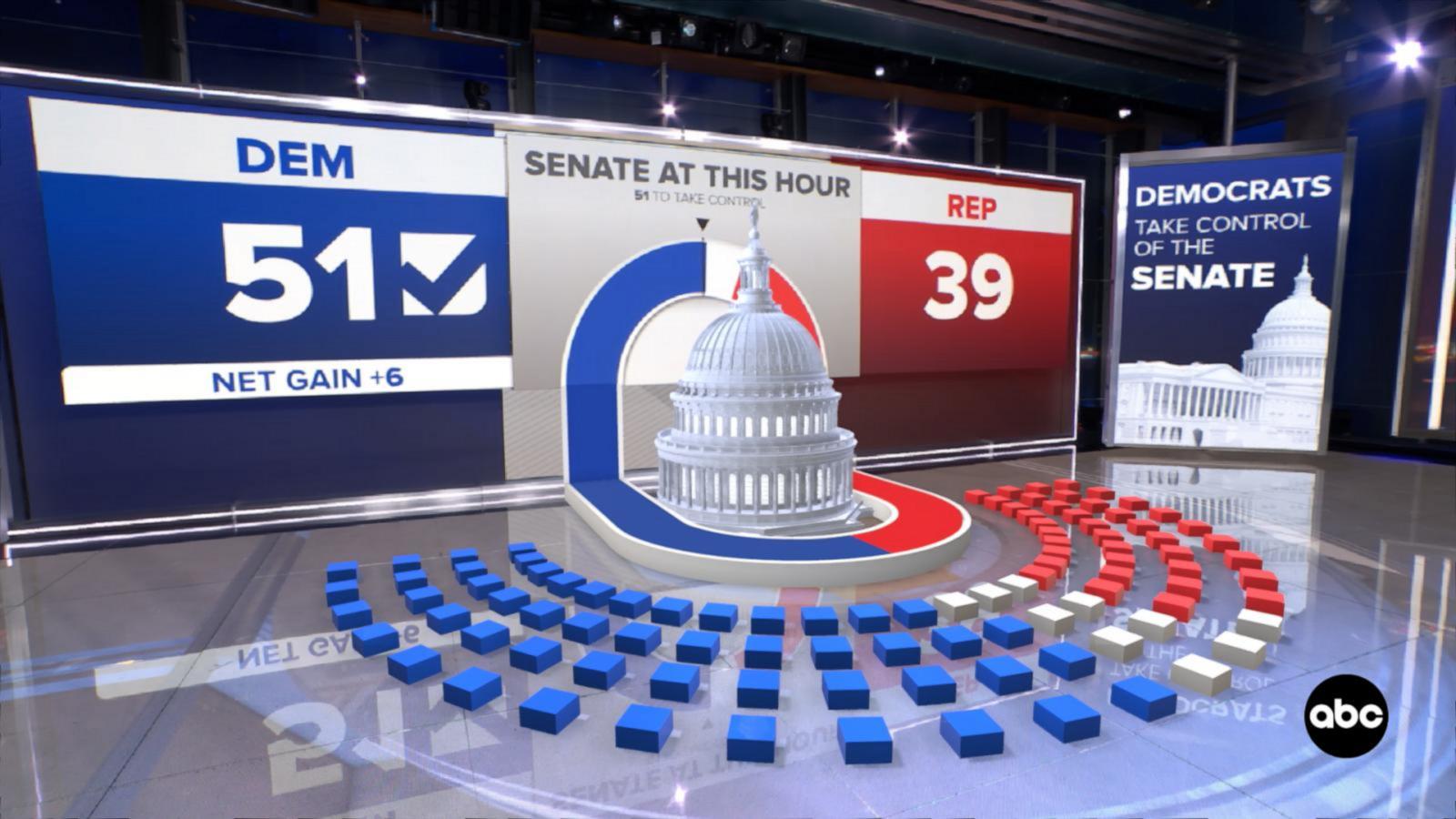
Bloomberg estimates that Democrats will win at least 51 seats in the Senate after the midterm elections, giving them control of the chamber. Republicans currently hold 53 of its 100 seats, while Democrats and allied independents hold 47.

The midterms have ended Republicans’ dominance across all three branches of government. The shift in control of Congress will affect the crypto industry, too.

ABC News projects that Democrats will win enough seats to control both chambers of Congress.

Democrats have won control of the Senate and are projected to take the House as well. Their Senate gains included a surprise win in South Carolina, with Texas, Iowa, Ohio and Maine also turning blue. Democrats also won several Florida districts that had been redrawn to favor Republicans. A poll found the economy and the state of democracy were voters’ top concerns, and more than two-thirds said Donald Trump’s policies had worsened economic conditions.
Democrats won the US Senate, completing their control of Congress and gaining the ability to set the legislative agenda and block Trump’s nominations.

Democrats have retaken the Senate after sweeping Republican-held races nationwide, gaining leverage over Donald Trump for the rest of his presidency. With a likely House win, they are expected to control both chambers from next year and can block legislation as well as cabinet and federal judicial appointments.

Democrats regained control of the US Senate in Tuesday’s midterm elections, an outcome widely seen as a rebuke to Trump’s Republican Party. The party flipped seats in several states while defending others, including in Georgia and Virginia, ending Republican control of the chamber and its Washington trifecta.

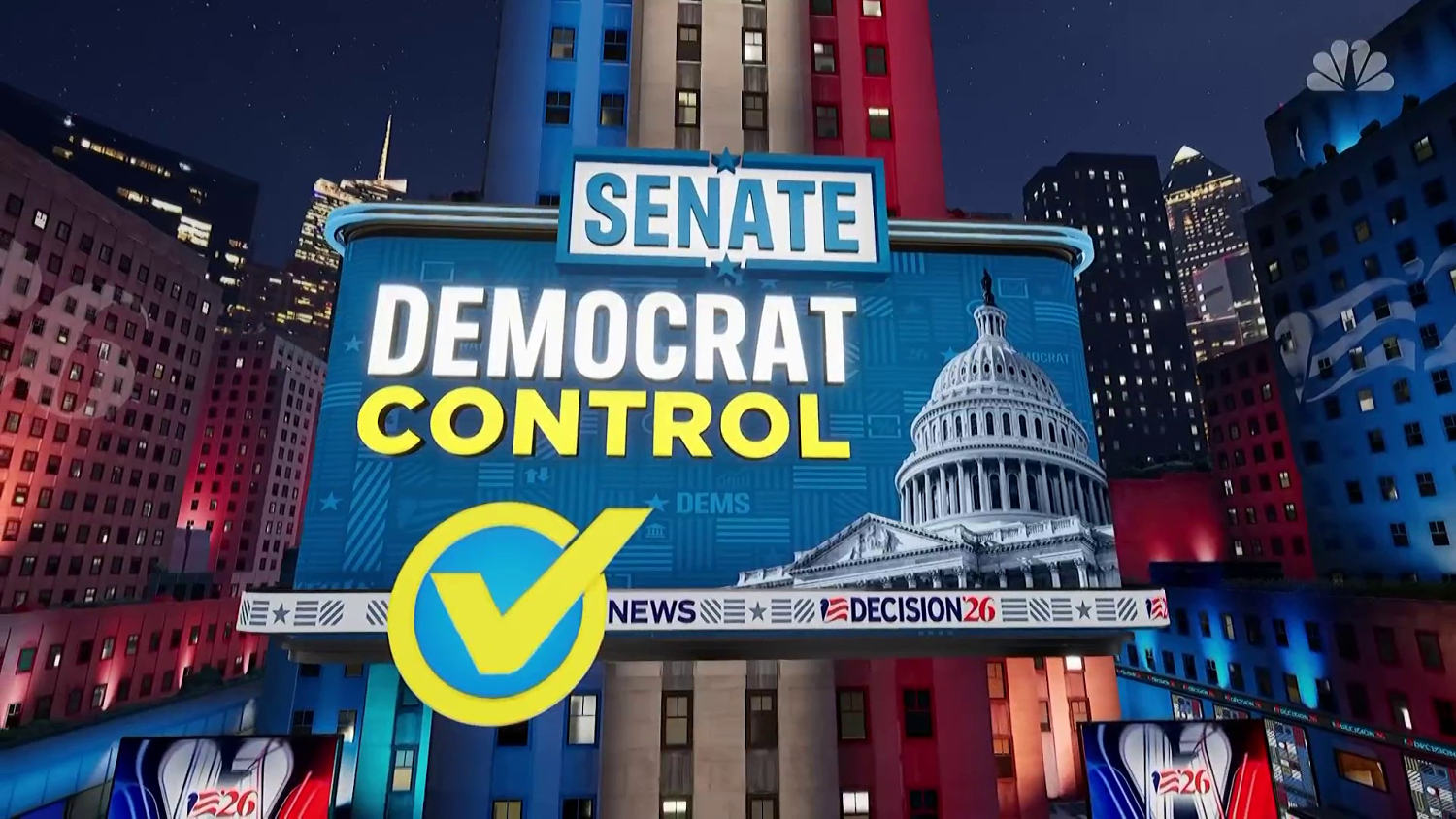
NBC News projects that Democrats won both chambers in the midterm elections and will take full control of Congress in January. Steve Kornacki explains how they gained control of the Senate.

NBC News projects that Democrats will take full control of Congress, powered by wins in states where Republicans are deeply entrenched. President Donald Trump had urged voters to pretend he was on the ballot in this year’s midterm elections.

NBC News forecasts a Democratic majority in the chamber next year, which would let the party scrutinize Trump and seek laws limiting his policy agenda.
Shares in US tech giants surged on Wednesday after Democrats swept the midterm elections. Investors wagered that possible limits on new data-center construction could strengthen the companies’ hold on scarce computing capacity while easing pressure on strained cash flows.
Wall Street has lowered price targets for Bitcoin miners after Democrats’ Texas victory sparked fears that AI data-center projects could face delays.

New regulatory guidance issued on Wednesday says supervisors of big banks should monitor lenders’ use of artificial intelligence, but should not treat it as a risk distinct from others. Authorities worldwide are stepping up efforts to contain AI-driven risks.
US stocks climbed after Democrats won control of both chambers of Congress in the midterms and Donald Trump said he would accept the results. The Nasdaq opened 1% higher, the Dow rose 1.8% and the S&P 500 gained 1.1%. Retail shares were mixed, while oil prices fell and investors weighed the implications for AI and technology companies.


US stocks rose at Wednesday’s open after Democrats’ decisive midterm victory eased some of the political uncertainty weighing on Wall Street. The S&P 500 gained 1.1%, the Dow Jones Industrial Average 1.9% and the Nasdaq Composite 1.1%. AI stocks fell amid heightened expectations.

Stocks jumped Wednesday morning, just hours after results showed a Democratic blue wave, with the Dow surging 1,000 points.
HP named former GSK chief and Microsoft board member Emma Walmsley as CEO on Wednesday. She will lead the PC maker through a memory-chip shortage that has raised prices and triggered a sharp industry downturn.
Bitcoin and stocks have bounced back after plunging overnight. So far, AI data center stocks have suffered the steepest losses, after several candidates who explicitly campaigned against the sector won.
Exchange-traded funds commonly used by Beijing to support the market recorded their second-highest net inflows on record.
With the US midterms effectively over, investors have more clarity on future policy. For technology stocks, the election marks a shift in focus back to fundamentals.
Alphabet said search queries are rising at their fastest pace in five years, but Google Search revenue growth slowed to 12 percent in the third quarter, while paid-click growth eased from 13 percent to 8 percent. AI Mode queries are growing but monetizing less effectively than traditional searches. Google is expanding ads in AI search, and advertisers are still increasing Google search spending.

To protect retail investors, the deferral of employee stock-based compensation costs should no longer be permitted.
Democrats won the House and then flipped the Senate, in a rebuke to President Trump, sending futures into positive territory.


Investors avoided AI stocks and shifted into government bonds on Wednesday after Democrats took control of Congress in the US midterms. Oil prices edged up as uncertainty persisted over the course of US President Donald Trump’s war against Iran. The edition also examines the campaign’s central issue: rising living costs.
World shares are mostly higher following US midterm results showing Democrats won majorities in both the House and Senate.

The dollar fell to a one-month low after Democrats won control of both chambers of Congress, as investors worried tighter AI regulation could slow growth. Investors moved into US Treasuries, while the 10-year yield fell; gold rose and AI-related shares dropped in Asian trading.

The Democrats’ comprehensive midterm victory jolted Asian stocks, bonds and commodities as investors anticipated closer congressional scrutiny of the AI industry and government spending. Regional stocks ended mixed on Wednesday, while US Treasury yields fell on hopes a Democratic-controlled Congress could restrict debt issuance.
Global markets pared losses after a selloff sparked by Democrats sweeping Congress. Investors weighed the prospect of tougher scrutiny of Donald Trump’s policies against lawmakers’ limits in reshaping his agenda.
Chinese flash-memory chipmaker Yangtze Memory Technologies has paused plans for a Shanghai IPO, according to a company memo and people familiar with the matter, as regulators tighten share-sale approvals amid a struggling stock market.
The 140th Canton Fair closed in Guangzhou on November 4, bringing together 32,000 exhibitors showcasing products including robots, AI and green technology. The fair highlights a shift in Chinese trade toward higher-value goods and broader services.

The Texas election result has raised concerns about possible restrictions on data centers, while Elon Musk and Chamath Palihapitiya are drawing attention to the space economy.

Alphabet's Google has expanded voluntary employee buyout offers to several countries this year as it seeks to curb rising costs while spending heavily on artificial intelligence.
Australian property firm Goodman Group and Digital Realty have offered to buy up to 9.9% of data centre operator NextDC for about A$715 million ($499.7 million), according to a term sheet.
Stock futures fell after Democrats won key Senate races nationwide. The scale of the blue wave caught Wall Street off guard, as investors had expected only a ripple.

Wayne Cole previews the day ahead in European and global markets.
Oracle canceled a multibillion-dollar chip-leasing contract with Tencent after yielding to pressure from the Trump administration, the Financial Times reported Wednesday.
Asian stocks and the dollar fell as investors considered the prospect of tighter AI regulation and political gridlock in Washington. Technology shares led the losses, while oil prices also declined.
Tech stocks declined in overnight trading, with losses deepening as the night progressed and a blue wave appeared increasingly likely. The Texas governor result also raised concerns about data center risks.

The longer the AI investment surge and its accompanying financial engineering persist, the greater the likely negative impact when they end.
The Minutes Reader extension turns the original page into a focused reading view and translates articles and video subtitles on demand. It is in limited beta.