'The wealthy poor': Soaring food prices hurt Iranian families
Iranian families across society are struggling as food prices surge. Rising inflation is adding to the pressure, while the effects of war are making their financial burden even heavier.

Iranian families across society are struggling as food prices surge. Rising inflation is adding to the pressure, while the effects of war are making their financial burden even heavier.

The United States is introducing new trade measures aimed at keeping pace with changes in China’s solar supply chain. The effort seeks to address supply routes that keep shifting and curb the repeated adjustment of solar tariffs.
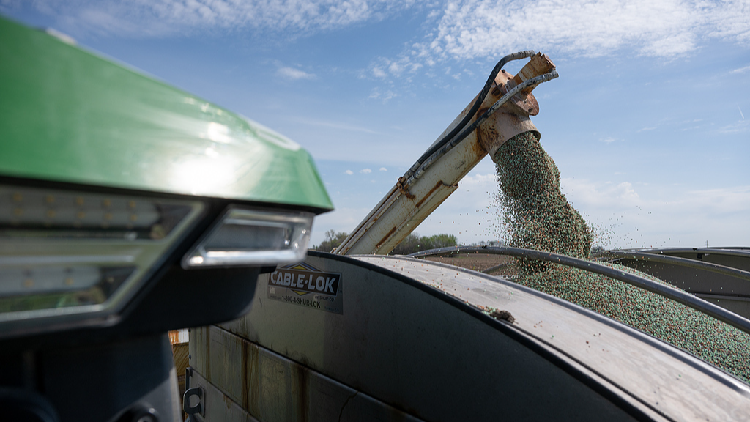
Italy’s Po River has fallen to a record low, leaving farmers to consider whether they should change the crops they plan to grow. Massimo Salvagnin has seeds ready for planting, but remains uncertain about putting them in the ground. The unusually low river level is shaping an immediate decision about farm production. Salvagnin’s hesitation reflects the pressure facing growers as they assess what can be planted under current conditions.
Germany’s trade deficit with China expanded during the first half of 2026, according to preliminary figures. China nevertheless remained Germany’s largest trading partner over the period. The figures were released on Sunday by Germany Trade & Invest, a state-run agency. They also point to Beijing becoming less reliant on European industry.
Bloomberg India is inviting readers to follow it on WhatsApp. The channel promises exclusive content and analysis focused on what billionaires, businesses and markets are doing.
Cashew apples that have long been left to rot in Ghana could become a new source of income for the country’s cashew farmers. The overlooked fruit is gaining attention for its potential to create additional economic value and support rural livelihoods.

Ukraine could lose more than half of its agricultural exports if its ports remain inactive. The potential loss is estimated at around $11.5 billion. The warning links the export shortfall directly to the continued shutdown of the ports.
Vladimir Putin said Russia built more than 955 million square meters of housing over the past 10 years. The Russian leader added that the necessary infrastructure has been developing alongside the construction of new homes.
Official data showed that China’s producer prices increased for a fifth consecutive month in July. The pace of growth nevertheless slowed and fell short of expectations. Consumer-price inflation also cooled during the month. The data came as global energy prices declined despite tensions between the United States and Iran.
Kirill Dmitriev, chief executive of the Russian Direct Investment Fund, said the European Union is now facing an energy crisis of its own making. He stressed that the main reason for the crisis is the bloc’s refusal to buy Russian gas. His remarks place the responsibility for Europe’s energy difficulties on its decision to reject those supplies.
A little-known fintech company surged into the spotlight after signing a deal last year with the Trump family’s crypto platform. The agreement helped push its market value above $1 billion. The company has now sold its core business for roughly $12 million. The sale marks a sharp contrast with the valuation it briefly achieved after the deal.
Serbia says it will help rebuild Ukrainian cities and provide aid as cooperation between the two countries deepens. The partners are also looking toward a possible free trade deal. Their commitments point to broader economic ties alongside continued assistance for Ukraine. The announcement frames the relationship as expanding through both reconstruction support and trade discussions.

President Donald Trump and Federal Reserve Chairman Kevin Warsh frequently discuss the economy, National Economic Council Director Kevin Hassett says. Hassett characterizes their conversations as happening “all the time.” His remarks center on the regular economic discussions between Trump and Warsh. No policy decision or additional economic measure is identified in the statement.
A luxury coffee chain expanding across Manhattan is testing whether customers will pay $32 for an 8-ounce cup. The company is betting that this willingness to spend extends beyond New York to consumers in Los Angeles and Chicago. Its offering pairs a single serving of coffee with an upscale experience. The move reflects an effort to make premium coffee a luxury purchase.
The Bank for International Settlements says America’s technology companies are benefiting from the largest investment surge in history. Many of those firms are headquartered on the West Coast. Yet unemployment across the region is among the highest in the United States. The contrast highlights a gap between booming technology investment and weak regional employment conditions.
Africa’s largest economies are stepping up efforts to build domestic solar manufacturing capacity. The push is intended to strengthen self-reliance in the energy sector. Yet China’s presence and influence remain a significant factor as African countries pursue greater control over solar production.
India’s food safety regulator has warned liquor giant Diageo over the wording used for one of its best-selling whiskies. A confidential government notice says the company misleadingly claimed the whisky was “matured in American oak casks.” Most of the product, the notice indicates, had not actually been matured. The warning challenges the accuracy of the product’s marketing claim.
President Donald Trump’s latest effort to shun foreign solar equipment is tied to his campaign to restore US manufacturing strength. The move is intended to build up domestic production capacity. At the same time, it could deepen the rapidly growing divide in green technology between the United States and the rest of the world.
Several German states are allowing trucks to use motorways on Sundays and public holidays. The measure comes as low water levels disrupt freight shipping. It is intended to help maintain the movement of goods while waterways are difficult to navigate. Separately, the body of a German sailor who had been missing for several days was found in the southern Aegean. DW reported on both developments.

The United States has announced a $400m investment in an Australian rare earth mine. The deal is intended to secure supplies of scandium. It comes as China restricts exports of the material for defence products.

Rubicon Carbon, backed by TPG Inc.’s Rise Climate fund, will provide financing for carbon credit projects in Indonesia. The Southeast Asian nation is seeking to accelerate the supply of carbon credits. It is also pursuing trading agreements with other countries. The deal centers on investment in blue-carbon projects as Indonesia develops its carbon market.
The US Senate has passed a bill imposing sanctions on Russia. The measure could lead to tariffs on India, which is a major consumer of Russian oil. India is therefore wary of the possibility of US tariffs reaching 100%.

A Chinese diplomat said Friday that US President Donald Trump’s trade war with China created a “tortuous experience.” The diplomat said the conflict disrupted soybean flows between the world’s two largest economies. The remarks characterize the trade war as a direct impediment to soybean commerce. They focus on the disruption of agricultural trade between the United States and China.
The latest edition of Next Japan offers an inside view of the forces reshaping the country. It examines what may lie ahead for Japanese businesses, markets and consumers. Readers are invited to access the new edition and subscribe to the publication for further coverage of Japan’s changing landscape.
E.L.F. Beauty’s chief executive, Tarang Amin, still appears highly pleased after the company’s most talked-about acquisition to date. He has now been in the role for 12 years. The story examines the $5 billion cosmetics company behind the high-flying Rhode brand and the significance of its latest deal.
President Donald Trump promoted $3 billion in US investments in critical-minerals mining during a Friday meeting with senior industry executives. The gathering focused on reducing America’s reliance on supply chains dominated by China. Trump presented the projects as part of an effort to expand domestic mining and strengthen the US position in critical minerals. The initiative is aimed at weaning the country away from China-led supply networks.
Canadian negotiators are racing to reach an agreement with the United States before Aug. 19. President Donald Trump has threatened 50% tariffs on a broad range of goods. Canada is warning that imposing the levies would push the trade dispute into an ugly new phase. The deadline is adding urgency to the talks as both sides confront the threat of a sharper confrontation.
Canada is moving quickly to secure a trade deal in an effort to avoid tariffs. At the same time, it has issued a warning. The item also points to a surprise hiring spree, without providing further detail on its scope or significance.
Trump Media & Technology Group ended its agreement with Crypto.com on Friday, a year after the companies had agreed to create a digital treasury company. That venture was intended to purchase billions of dollars’ worth of Crypto.com’s CRO token. The companies also abandoned a plan to offer prediction-market contracts through the Truth Social network.
Ukraine’s budget deficit is expected to reach a record level in 2026, amounting to 35% of gross domestic product. The projected shortfall is set to exceed $70 billion.
Brazil’s government is asking Congress for room to maneuver in international debt markets, not preparing for a flood of overseas bond sales. The Treasury is seeking authorization to issue as much as $35 billion annually in global markets. Treasury Secretary Daniel Leal said in an interview that the request is about flexibility. He sought to reassure investors that it should not be read as a plan for a major wave of foreign borrowing.
Several Chinese traders and steel mills have stopped doing business with iron ore traders Radiant World and Sapphire Minmetals Corp., people familiar with the matter said. The move involves multiple buyers in China’s iron ore trade. The people did not provide a reason for the halt or say how long it may last.
The United States will partially resume activities in Michoacan, Mexico’s leading avocado-producing state. The U.S. embassy said on Friday that the move eases a suspension imposed over security concerns. The pause had disrupted inspections of avocado exports. Michoacan has been affected by persistent violence, making security a central concern for the inspection process.
Russia and Pakistan are working toward launching their first rail cargo route, according to Ambassador Albert Khorev. He said the project is being developed as an opportunity to strengthen rail freight links between the two countries. The possibility of involving Belarus is also under consideration. Work on the proposed route is continuing. No further details about its schedule or design were provided.
BlackRock sought to raise billions in debt financing for a Meta Platforms data center. The asset manager wanted to avoid investors seeking a quick profit. The difficulty surrounding AI-related debt is now forcing Wall Street to reconsider how bond sales are structured and marketed.
The University of North Carolina’s endowment management company first invested in SpaceX more than 15 years ago. That early position has since produced a 30% gain for the college endowment. The investment highlights the financial result of backing the space company at an early stage.
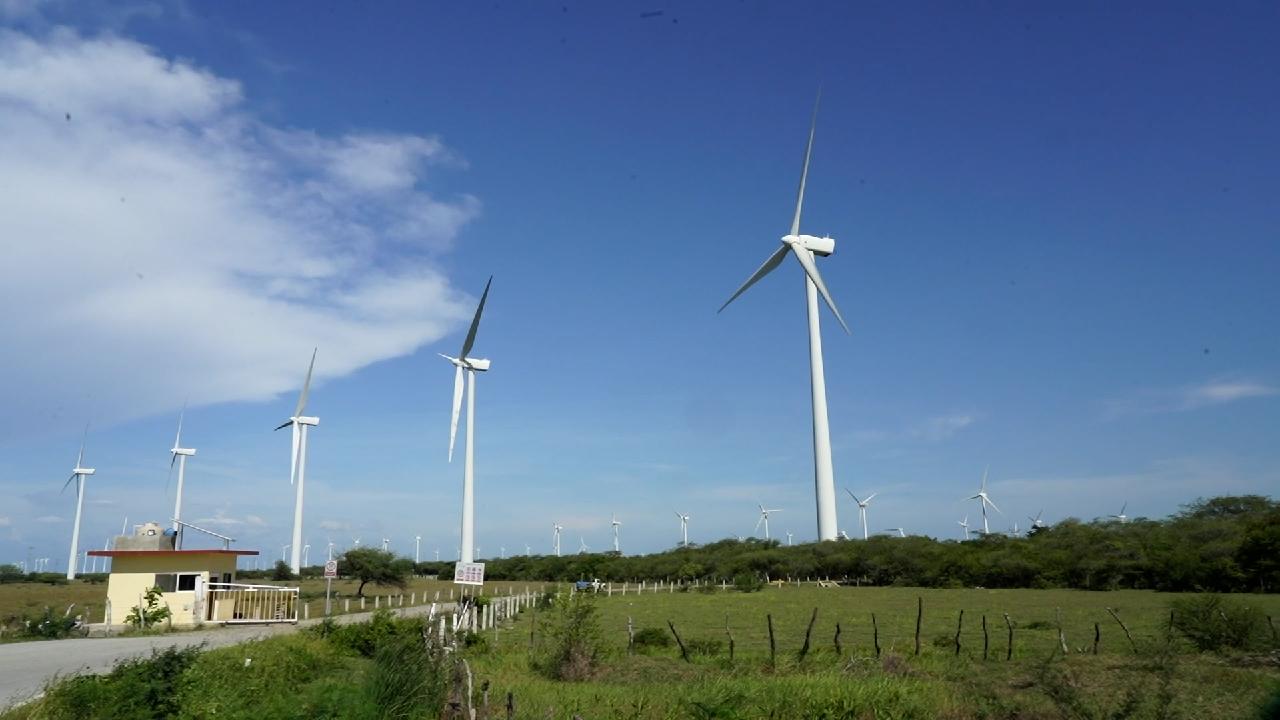
Mexico has launched a major expansion of clean energy. The move signals a broad effort to increase the scale of clean-energy development in the country. It marks a significant step in Mexico’s energy sector. The initiative is presented as a substantial push toward cleaner power.

President Donald Trump again said he favors lower interest rates. He also acknowledged that the decision does not rest solely with the central bank chief. Trump’s comments were notably softer than the sharp attacks he had directed at Federal Reserve Chairman Kevin Warsh’s predecessor. The remarks suggest continued pressure for easier monetary policy, while recognizing that the rate-setting authority is not controlled by one person alone.
Tankers heading into the Red Sea to take on Saudi oil are increasingly identifying Egypt and the Suez Canal as their destinations instead of Saudi ports. The practice is intended to reduce the risk of being targeted by the Houthis. Their signaling therefore masks the vessels’ actual plans to load oil in Saudi Arabia, highlighting the security pressures affecting Red Sea shipping.
The U.S. Export-Import Bank is providing $58 million in loans to three critical-mineral companies, according to a document seen by Reuters. The financing is part of President Donald Trump’s effort to reduce the country’s dependence on Chinese supplies. It also aims to strengthen American mining and processing capacity. The arrangement places federal support behind domestic critical-mineral projects.
The U.S. economy unexpectedly lost jobs in July. Nonfarm payrolls for the previous month were also revised sharply downward. The weaker labor-market picture could raise questions about whether the Federal Reserve will lift interest rates next month.

The US labour market lost 23,000 jobs in July. Education, government and retail were among the sectors reporting significant declines. Labour force participation also fell sharply. The figures point to a weaker employment picture during the month.
The US employment report for July was released on Friday. The report highlights the main points from the latest employment data. The takeaways focus on the state of employment in the United States.
Russia’s stock market finished the week lower, with its major indices declining. The yuan edged up by 0.16 rubles to reach 12.24 rubles.
Walmart has addressed an issue involving its shopping carts. The matter may have escaped the notice of most customers. Large consumer companies have been discussing everyday problems that are important to keeping their businesses running. The cart issue is presented as one of those operational concerns.
The Bank of Russia set the official dollar exchange rate at 82.17 rubles for August 8–10. The official euro rate was also increased by 77.81 kopecks, reaching 94.8366 rubles. The changes apply to the specified three-day period.
The Paze craze is prompting savvy credit card holders to look for ways to come out ahead. The summer’s hottest purchase is described as a $10 Dunkin’ gift card, presented as a route to “free money.”
Russia expects to conclude a firm contract with India for Il-114 and SJ-100 aircraft within a year, Deputy Industry and Trade Minister Alexey Gruzdev said. New Delhi is also expressing interest in potentially localizing aircraft assembly. The possible arrangement therefore involves both aircraft deliveries and a future role for India in assembly operations.
Ukraine is seeking €220 million from the European Union to assist farmers affected by the blockade of ports. The Ukrainian Ministry of Agrarian Policy and Food said the disruption has continued for a prolonged period. It warned that agricultural exports in the 2026–2027 marketing year could fall sharply. Projected exports may drop from 64.4 million tons to 29.6 million tons.
Canada added substantially more jobs than expected in July, according to data released on Friday. The unemployment rate also fell to its lowest level in two years. The figures offer another indication that the Canadian economy is managing to withstand the effects of U.S. tariffs and international tensions.
BRICS countries support initiatives put forward by Russia on metallurgy and critical minerals, Deputy Industry and Trade Minister Alexey Gruzdev says. He describes Russia’s proposals as comprehensive. According to Gruzdev, they cover issues extending well beyond the supply of raw materials.
The yen strengthened sharply after the release of US employment data. Traders are watching for the possibility of intervention in the foreign exchange market. Their caution comes only days after Japanese and US authorities jointly stepped into currency markets. The prospect of another intervention is now shaping market attention.
Trade turnover between China and Russia climbed 26.3% during the first seven months, reaching $159 billion. Russia recorded a $13.56 billion trade surplus with China over the same period. The surplus was 1.7% higher than in the corresponding period of 2025.
The United States has released employment data that can affect exchange rates and stock prices. Employment outside the agricultural sector declined in July, contrary to market expectations, and the drop was substantially larger than anticipated. Expectations that the Federal Reserve would move quickly to raise interest rates have eased. The yen has consequently strengthened while the dollar has weakened.

Wall Street’s main stock indexes moved higher on Friday after data showed that the U.S. economy unexpectedly lost jobs last month. The figures cast doubt on whether the Federal Reserve might raise interest rates in September. Investors responded to the weaker employment picture by reassessing the outlook for monetary policy. Rate-hike expectations became less certain following the payroll decline.
Russian Prime Minister Mikhail Mishustin announced unified rules for marketplace operations within the Eurasian Economic Union. He said the document is designed to protect the interests of both sellers and buyers. The announcement concerns common standards for marketplace activity across the bloc.
Naftogaz says seven of its oil and gas production facilities in eastern Ukraine were damaged overnight. The company describes the damage as serious and says operations have been halted. Its statement does not specify what caused the damage or how extensive the wider impact is. The affected sites are part of Naftogaz’s production infrastructure in the east.
Russian Prime Minister Mikhail Mishustin said the Eurasian Economic Union fully meets demand for nearly all agricultural products. He called for expanding the list of products covered.
Russian Prime Minister Mikhail Mishustin said Russia is open to integration projects involving localization in countries belonging to the Eurasian Economic Union. He added that projects of this kind are difficult to find. His remarks focused on the prospects for cooperation within the bloc. No specific project was identified in the statement.
Russia increased its exports of grain and grain products to Turkey by 67% during January–July 2026, the regulator reported. Total shipments in that period reached 6.7 million tonnes.
A visual report examines how Americans view the economy as the midterm elections approach. It presents economic sentiment as one of the week’s biggest stories, highlighting public opinion ahead of the vote.
Ukrainian land checkpoints are experiencing major traffic jams as the country’s seaports remain idle. A total of 6,835 vehicles are reported at the borders, with the majority gathered along the frontier with Poland.
Ukraine has completely halted agricultural exports through the Black Sea, Ukrainian Minister of Agrarian Policy and Food Taras Vysotsky said. Before July, he stated, about 85% of the country’s agricultural exports were routed through Black Sea ports. The minister’s remarks describe a major change in the route used for Ukrainian farm shipments.
India’s Ola Electric said on Friday that its first-quarter loss had narrowed. The company attributed the improvement in part to stronger sales of electric two-wheelers. Lower operating expenses after a restructuring last year also helped reduce the loss. The results point to an improvement supported by both higher sales and reduced costs.
Russia’s international reserves edged down 0.01% in July, reaching $720.348 billion, according to the Central Bank. Foreign-currency reserves rose 1.43% to $6.036 billion. The value of monetary gold held within the reserves declined 2.05%, falling to $292.854 billion.
America’s political climate may make it seem that the country is returning to an era of intensive oil, gas and coal use while abandoning wind and solar projects. Yet renewable energy in the United States appears to be entering a golden age. The trend is unfolding not merely despite the prevailing political winds, but partly because of them. The contrast challenges the expectation of a broad retreat from clean-energy development under Trump.
The US economy unexpectedly lost jobs in July, while the unemployment rate eased to 4.1%. Nonfarm payrolls for the previous month were revised sharply lower. The weaker employment picture could prompt questions about whether the Federal Reserve will raise interest rates next month. The figures point to a potentially softer labor market.
A summer hiring slowdown weighed on the US labor market in July. The economy unexpectedly shed 23,000 jobs during the month. The Bureau of Labor Statistics released the new data on Friday. The figures point to continued weakness in employment conditions. The decline came as hiring remained subdued across the labor market.
US employers unexpectedly reduced the number of jobs in July. Employment figures for earlier months were also revised downward. The changes suggest that the labor market is encountering difficulties after showing surprising strength earlier this year. The unemployment rate nevertheless declined.
The US labor market has appeared relatively steady so far this year. Hiring has held up after a weak 2025, though the pace has been solid rather than spectacular. July may have brought nearly 100,000 additional jobs. Even so, young people and those already without work continue to face a difficult market.
Corporate America’s use of artificial-intelligence tools is producing gains in profit margins. The payoff offers major relief to investors who had questioned the enormous sums being invested in the technology. Those investments have been concentrated among a limited number of companies. The results suggest that an AI-driven profit boom is now beginning to take shape.
Palm oil harvesting on the Southeast Asian islands of Borneo and Sumatra is being disrupted. Higher fuel prices and shortages are pushing smallholders to collect less fruit. The slowdown threatens yields of one of the world’s most widely used edible oils.
Minister Maxim Reshetnikov said trade within the Eurasian Economic Union rose 8% from January through May. The bloc’s internal trade exceeded $39 billion during the period. He described the increase as steady despite continuing external pressure. The figures highlight sustained growth in trade among EAEU members.
Global food commodity prices increased modestly in July, the United Nations Food and Agriculture Organization said in a report released Friday. Higher cereal, sugar and vegetable-oil prices pushed the overall level upward. Declines in meat and dairy prices provided a partial counterweight. The report linked the change to conditions including heat waves and conflicts.

China’s new bank lending is expected to fall sharply in July, according to a Reuters poll of 20 economists. The survey puts likely issuance at 45 billion yuan, or $6.67 billion. That would be a steep decline from 1.61 trillion yuan in June. Economists attributed the drop to subdued credit demand and lending brought forward ahead of the quarter-end in June.
Indian consumer inflation was likely higher in July, according to a Reuters poll. A modest rise in food prices may have pushed inflation above the Reserve Bank of India’s 4% medium-term target for a second consecutive month. The reading would point to continuing price pressure in the economy.
Dream Finders Homes said it plans to acquire rival Beazer Homes in an all-cash transaction valued at roughly $2.2 billion, including debt. The deal is intended to expand Dream Finders’ scale and make it the sixth-largest U.S. homebuilder. The purchase comes as the housing market remains challenging.
Monster Beverage Corp. reported a 20% increase in sales during the second quarter. The company said demand for energy drinks continues to boom. International markets were identified as a particularly strong source of that demand. The results underscore the beverage maker’s growth beyond its domestic market.
ADNOC Logistics & Services, a unit of Abu Dhabi’s state oil company ADNOC, said it has bought 11 vessels for about $1.3 billion. The purchase comprises five Very Large Gas Carriers and six Very Large Crude Carriers. The transaction is valued at AED 4.8 billion. ADNOC L&S said the acquisition will increase its capacity to transport gas and crude oil.
Russia’s nuclear power plants have produced 7.8% more electricity than planned since the beginning of the year, Rosatom says. Alexey Likhachev said the facilities have continued to operate reliably and safely despite abnormally hot weather. The plants are running at 100% of their rated capacity. Rosatom presented the output as evidence that operations remain steady under difficult weather conditions.
Russian e-commerce giant Wildberries will allow marketplace sellers to insure their goods. The coverage applies to damage or loss caused by terrorist attacks, sabotage, and drone strikes. It also extends to the aftermath of those incidents. The new insurance option will become available on August 7, 2026.
SK Hynix said its board has approved about 54.3 trillion won, or $38.30 billion, in investments through 2031. The spending covers the second construction phase of its chip fabrication plant in Yongin. It also includes 19.1 trillion won for the company’s M17 chip plant in Cheongju.
The Minutes Reader extension turns the original page into a focused reading view and translates articles and video subtitles on demand. It is in limited beta.