The Paze craze is prompting savvy credit card holders to look for ways to come out ahead. The summer’s hottest purchase is described as a $10 Dunkin’ gift card, presented as a route to “free money.”
Russia expects to conclude a firm contract with India for Il-114 and SJ-100 aircraft within a year, Deputy Industry and Trade Minister Alexey Gruzdev said. New Delhi is also expressing interest in potentially localizing aircraft assembly. The possible arrangement therefore involves both aircraft deliveries and a future role for India in assembly operations.
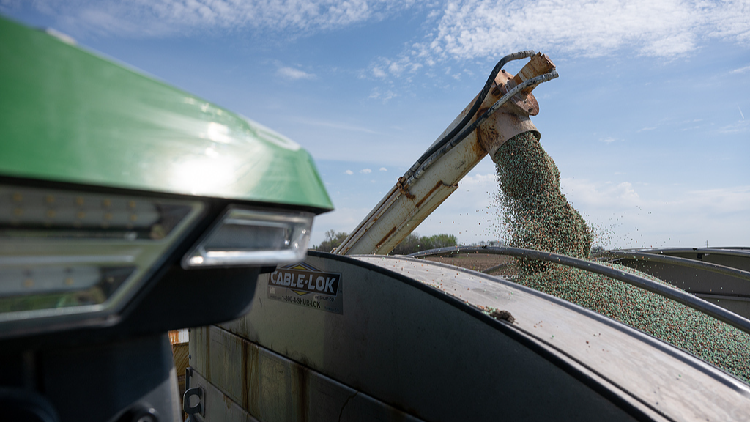
Ukraine is seeking €220 million from the European Union to assist farmers affected by the blockade of ports. The Ukrainian Ministry of Agrarian Policy and Food said the disruption has continued for a prolonged period. It warned that agricultural exports in the 2026–2027 marketing year could fall sharply. Projected exports may drop from 64.4 million tons to 29.6 million tons.
The US labour market lost 23,000 jobs in July. Education, government and retail were among the sectors reporting significant declines. Labour force participation also fell sharply. The figures point to a weaker employment picture during the month.
The US employment report for July was released on Friday. The report highlights the main points from the latest employment data. The takeaways focus on the state of employment in the United States.
Canada added substantially more jobs than expected in July, according to data released on Friday. The unemployment rate also fell to its lowest level in two years. The figures offer another indication that the Canadian economy is managing to withstand the effects of U.S. tariffs and international tensions.
BRICS countries support initiatives put forward by Russia on metallurgy and critical minerals, Deputy Industry and Trade Minister Alexey Gruzdev says. He describes Russia’s proposals as comprehensive. According to Gruzdev, they cover issues extending well beyond the supply of raw materials.
The yen strengthened sharply after the release of US employment data. Traders are watching for the possibility of intervention in the foreign exchange market. Their caution comes only days after Japanese and US authorities jointly stepped into currency markets. The prospect of another intervention is now shaping market attention.
Trade turnover between China and Russia climbed 26.3% during the first seven months, reaching $159 billion. Russia recorded a $13.56 billion trade surplus with China over the same period. The surplus was 1.7% higher than in the corresponding period of 2025.
The United States has released employment data that can affect exchange rates and stock prices. Employment outside the agricultural sector declined in July, contrary to market expectations, and the drop was substantially larger than anticipated. Expectations that the Federal Reserve would move quickly to raise interest rates have eased. The yen has consequently strengthened while the dollar has weakened.
Wall Street’s main stock indexes moved higher on Friday after data showed that the U.S. economy unexpectedly lost jobs last month. The figures cast doubt on whether the Federal Reserve might raise interest rates in September. Investors responded to the weaker employment picture by reassessing the outlook for monetary policy. Rate-hike expectations became less certain following the payroll decline.
Russian Prime Minister Mikhail Mishustin announced unified rules for marketplace operations within the Eurasian Economic Union. He said the document is designed to protect the interests of both sellers and buyers. The announcement concerns common standards for marketplace activity across the bloc.
Naftogaz says seven of its oil and gas production facilities in eastern Ukraine were damaged overnight. The company describes the damage as serious and says operations have been halted. Its statement does not specify what caused the damage or how extensive the wider impact is. The affected sites are part of Naftogaz’s production infrastructure in the east.
Russian Prime Minister Mikhail Mishustin said the Eurasian Economic Union fully meets demand for nearly all agricultural products. He called for expanding the list of products covered.
Russian Prime Minister Mikhail Mishustin said Russia is open to integration projects involving localization in countries belonging to the Eurasian Economic Union. He added that projects of this kind are difficult to find. His remarks focused on the prospects for cooperation within the bloc. No specific project was identified in the statement.
Russia increased its exports of grain and grain products to Turkey by 67% during January–July 2026, the regulator reported. Total shipments in that period reached 6.7 million tonnes.
A visual report examines how Americans view the economy as the midterm elections approach. It presents economic sentiment as one of the week’s biggest stories, highlighting public opinion ahead of the vote.
Ukrainian land checkpoints are experiencing major traffic jams as the country’s seaports remain idle. A total of 6,835 vehicles are reported at the borders, with the majority gathered along the frontier with Poland.
Ukraine has completely halted agricultural exports through the Black Sea, Ukrainian Minister of Agrarian Policy and Food Taras Vysotsky said. Before July, he stated, about 85% of the country’s agricultural exports were routed through Black Sea ports. The minister’s remarks describe a major change in the route used for Ukrainian farm shipments.
India’s Ola Electric said on Friday that its first-quarter loss had narrowed. The company attributed the improvement in part to stronger sales of electric two-wheelers. Lower operating expenses after a restructuring last year also helped reduce the loss. The results point to an improvement supported by both higher sales and reduced costs.
Russia’s international reserves edged down 0.01% in July, reaching $720.348 billion, according to the Central Bank. Foreign-currency reserves rose 1.43% to $6.036 billion. The value of monetary gold held within the reserves declined 2.05%, falling to $292.854 billion.
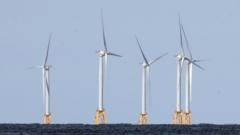
America’s political climate may make it seem that the country is returning to an era of intensive oil, gas and coal use while abandoning wind and solar projects. Yet renewable energy in the United States appears to be entering a golden age. The trend is unfolding not merely despite the prevailing political winds, but partly because of them. The contrast challenges the expectation of a broad retreat from clean-energy development under Trump.
The US economy unexpectedly lost jobs in July, while the unemployment rate eased to 4.1%. Nonfarm payrolls for the previous month were revised sharply lower. The weaker employment picture could prompt questions about whether the Federal Reserve will raise interest rates next month. The figures point to a potentially softer labor market.
A summer hiring slowdown weighed on the US labor market in July. The economy unexpectedly shed 23,000 jobs during the month. The Bureau of Labor Statistics released the new data on Friday. The figures point to continued weakness in employment conditions. The decline came as hiring remained subdued across the labor market.
US employers unexpectedly reduced the number of jobs in July. Employment figures for earlier months were also revised downward. The changes suggest that the labor market is encountering difficulties after showing surprising strength earlier this year. The unemployment rate nevertheless declined.
The US labor market has appeared relatively steady so far this year. Hiring has held up after a weak 2025, though the pace has been solid rather than spectacular. July may have brought nearly 100,000 additional jobs. Even so, young people and those already without work continue to face a difficult market.
Corporate America’s use of artificial-intelligence tools is producing gains in profit margins. The payoff offers major relief to investors who had questioned the enormous sums being invested in the technology. Those investments have been concentrated among a limited number of companies. The results suggest that an AI-driven profit boom is now beginning to take shape.
Palm oil harvesting on the Southeast Asian islands of Borneo and Sumatra is being disrupted. Higher fuel prices and shortages are pushing smallholders to collect less fruit. The slowdown threatens yields of one of the world’s most widely used edible oils.
Minister Maxim Reshetnikov said trade within the Eurasian Economic Union rose 8% from January through May. The bloc’s internal trade exceeded $39 billion during the period. He described the increase as steady despite continuing external pressure. The figures highlight sustained growth in trade among EAEU members.
Global food commodity prices increased modestly in July, the United Nations Food and Agriculture Organization said in a report released Friday. Higher cereal, sugar and vegetable-oil prices pushed the overall level upward. Declines in meat and dairy prices provided a partial counterweight. The report linked the change to conditions including heat waves and conflicts.
China’s new bank lending is expected to fall sharply in July, according to a Reuters poll of 20 economists.
The survey puts likely issuance at 45 billion yuan, or $6.67 billion.
That would be a steep decline from 1.61 trillion yuan in June.
Economists attributed the drop to subdued credit demand and lending brought forward ahead of the quarter-end in June.
Indian consumer inflation was likely higher in July, according to a Reuters poll. A modest rise in food prices may have pushed inflation above the Reserve Bank of India’s 4% medium-term target for a second consecutive month. The reading would point to continuing price pressure in the economy.
Dream Finders Homes said it plans to acquire rival Beazer Homes in an all-cash transaction valued at roughly $2.2 billion, including debt. The deal is intended to expand Dream Finders’ scale and make it the sixth-largest U.S. homebuilder. The purchase comes as the housing market remains challenging.
Monster Beverage Corp. reported a 20% increase in sales during the second quarter. The company said demand for energy drinks continues to boom. International markets were identified as a particularly strong source of that demand. The results underscore the beverage maker’s growth beyond its domestic market.
ADNOC Logistics & Services, a unit of Abu Dhabi’s state oil company ADNOC, said it has bought 11 vessels for about $1.3 billion. The purchase comprises five Very Large Gas Carriers and six Very Large Crude Carriers. The transaction is valued at AED 4.8 billion. ADNOC L&S said the acquisition will increase its capacity to transport gas and crude oil.
Russia’s nuclear power plants have produced 7.8% more electricity than planned since the beginning of the year, Rosatom says. Alexey Likhachev said the facilities have continued to operate reliably and safely despite abnormally hot weather. The plants are running at 100% of their rated capacity. Rosatom presented the output as evidence that operations remain steady under difficult weather conditions.
Russian e-commerce giant Wildberries will allow marketplace sellers to insure their goods. The coverage applies to damage or loss caused by terrorist attacks, sabotage, and drone strikes. It also extends to the aftermath of those incidents. The new insurance option will become available on August 7, 2026.
SK Hynix said its board has approved about 54.3 trillion won, or $38.30 billion, in investments through 2031. The spending covers the second construction phase of its chip fabrication plant in Yongin. It also includes 19.1 trillion won for the company’s M17 chip plant in Cheongju.
MarketsTech & AISK Hynixchip investmentSouth Korea semiconductors
The Trump administration has agreed to about $4 billion in settlements this year to terminate planned offshore wind projects in the United States. A deal announced Thursday will pay German utility RWE AG $1.22 billion. Billions of dollars in additional projects remain at risk of cancellation.
The United States has reached a $1.2bn deal with German company RWE to halt offshore wind projects. The payout is the latest in a series of agreements cancelling wind-energy developments. Wind power has long been derided by Donald Trump, whose administration is pursuing these cancellations.
Cabin crew working for Scandinavian airline SAS in Norway have accepted a new wage agreement. The Fellesforbundet trade union said on Friday that the settlement means members will no longer strike this weekend. The agreement removes the planned Saturday labor action.
Russian official Alexey Overchuk said the Eurasian Economic Union intends to negotiate a free-trade zone with African countries. He added that those countries had already been notified of the plan.
India is expected to exceed its fundraising target for the current fiscal year, government sources said. The goal is to raise 800 billion rupees, or $8.4 billion, through sales of stakes in state-run companies and other asset-monetisation measures. The additional funds would help ease pressure on public finances caused by the Middle East conflict.
South Africa’s textile sector is facing a serious workforce shortage after thousands of migrant workers left the country in recent months. Their departure followed violent protests targeting foreigners. The anti-immigrant group March and March said its campaign aimed to make jobs available to South Africans, about one-third of whom are unemployed. Factory owners in Newcastle say they still have not managed to fill the vacancies left by foreign workers.
Chinese solar stocks swung sharply this week amid two policy pressures. Authorities in China are pursuing efforts to stop sales below cost. At the same time, renewed tariff threats from the United States added further uncertainty. The combination drove pronounced volatility across the sector.
Airbus delivered a flat number of jets in July, according to company data released on Friday. To meet its target, the planemaker now needs to average 90 deliveries a month for the rest of the year. The company also confirmed orders from China. The figures highlight the delivery pace Airbus must maintain through year-end.
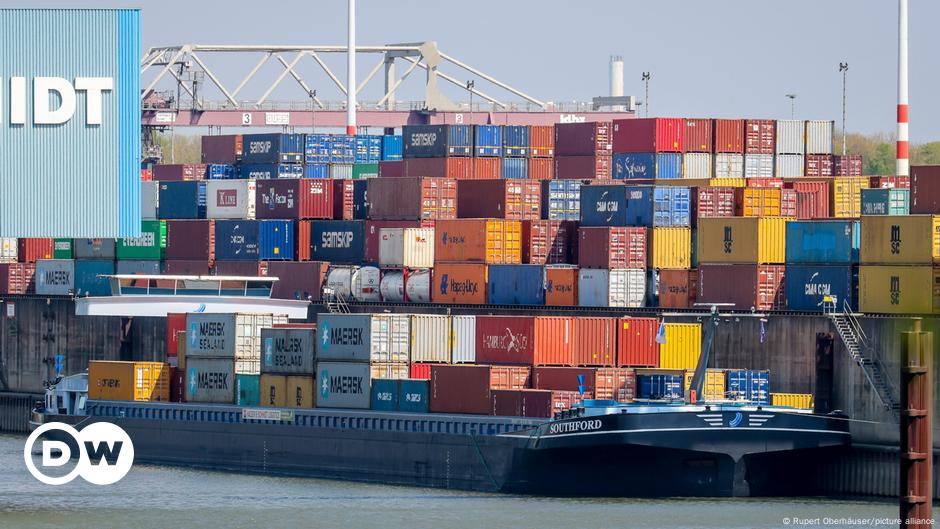
German exports reached a record level in June, offering a boost to the country’s economic outlook. Industrial production also increased for the third consecutive month. Separately, a farm fire in Bavaria killed more than 1,000 pigs. The latest developments combine encouraging economic indicators with a serious agricultural accident.
German exports increased by 0.9% in June from the previous month, exceeding expectations. The figures were released on Friday by the federal statistics office. The data points to an improvement in Germany’s export performance during the month. It records a month-on-month rise in the country’s foreign trade shipments.
Global food prices climbed in July to their highest level in more than three years, according to the United Nations Food and Agriculture Organization. The agency said adverse weather supported crop markets. Escalating warfare in the Gulf and Black Sea also helped sustain crop prices. FAO issued the assessment on Friday.
Global equity funds saw money flow in for an 11th consecutive week. Investor optimism over a strong earnings season, together with softer crude oil prices, encouraged greater appetite for riskier assets. The combination helped improve market sentiment and sustain demand for global stocks.
Urumqi in northwest China’s Xinjiang Uygur Autonomous Region hosted a business-to-business matchmaking event for Uzbek export enterprises. The event ran from Wednesday through Thursday. It provided a setting for export companies from Uzbekistan to pursue business contacts and commercial exchanges in the city.
China’s trade in goods totaled 30.13 trillion yuan during the first seven months of 2026, according to figures released Friday by the General Administration of Customs. The amount was equivalent to about $4.46 trillion. Compared with the same period a year earlier, total goods trade increased by 17.3%.
India is preparing a production-linked incentive scheme to promote domestic polysilicon manufacturing. The country’s top clean energy ministry official said on Friday that the plan is being developed. The proposed measure is intended to support production within India while reducing reliance on China. It would target a key material used in clean-energy manufacturing.
Federal Reserve Bank of St. Louis President Alberto Musalem said inflation is running above the central bank’s 2% target. He argued that policymakers cannot tolerate even higher inflation while waiting for productivity growth to potentially strengthen. Musalem called for meaningful restraint in addressing price pressures.
A sell-off in South Korea’s stock market is undermining a government-backed campaign to bring retail “ant” investors back home. The reversal has sent the biggest wave of money into U.S. markets in six months. It is also reviving a long-standing risk for the won.
MarketsSouth Korea stocksKOSPIU.S. marketsSouth Korean won
As global supply chains are being reshaped, some countries are politicizing trade issues and advancing a narrative about “China overcapacity.” They are also imposing additional restrictions on Chinese companies while claiming to protect their own interests. The commentary presents the campaign as rooted in U.S. anxiety.
China’s industrial capacity is portrayed as a force supporting global economic recovery rather than posing a threat. The commentary argues that dimming others’ lights will not make one’s own shine brighter. It says blocking cooperation would instead hold back one’s own future. The piece therefore rejects the framing of China’s capacity as a danger.
China said its exports slowed a little in July compared with the previous month. Demand for high-tech electronics and vehicles, however, continued to grow strongly. The figures point to a modest easing in overall export performance alongside robust interest in advanced products. High-tech goods remained a notable area of strength.
Jiangxi recorded 290,000 newly created urban jobs during the first half of 2026. The provincial human resources and social security authorities said the figure represents 71% of the target set for the full year. The data was released on Thursday, indicating that the province has made substantial progress toward its annual urban employment goal.
More than a year after the United States placed reciprocal tariffs on Chinese goods, numerous multinational companies that had relocated production to Southeast Asia are bringing parts of their supply chains back to China. The shift highlights the continuing advantages of Chinese manufacturing and the country’s lasting importance to global industrial networks despite the tariff measures.
Federal Reserve Chair Kevin Warsh wants the bond market to take a greater role in determining the price of money in the United States. He argues that market forces should do more of this work. The upcoming jobs report will provide a fresh test of his preference for offering less guidance.
Three new airlines are looking to enter the Australian market. Their plans are shaping up to be the biggest challenge to Qantas’ firm control of domestic air travel since the company was listed in 1995. The prospective entrants could significantly intensify competition across Australia’s domestic airline sector.
European and global markets look ahead to the day’s trading. Investors are hoping that the jobs report will deliver a clear and orderly signal about economic conditions.
Several countries in central and eastern Europe have recorded unprecedented temperatures as a continuing spell of extreme weather fuels wildfires and drought across the continent. Slovakia, Austria and Hungary were among those reporting new records. Slovakia’s hydrometeorological agency said Dolné Plachtince reached 42C, setting a new national high. In Poland, authorities were forced to shut the Kozienice and Połaniec power plants amid the heat.
Record temperatures across Europe are adding fresh strain to food prices and supply chains. Heavily indebted economies are also facing another burden from the heat. Financial markets have already been roiled by an energy shock driven by the war in Iran. The worsening weather is creating yet another headache for investors and policymakers.
Europe heatfood pricessupply chainsfinancial markets
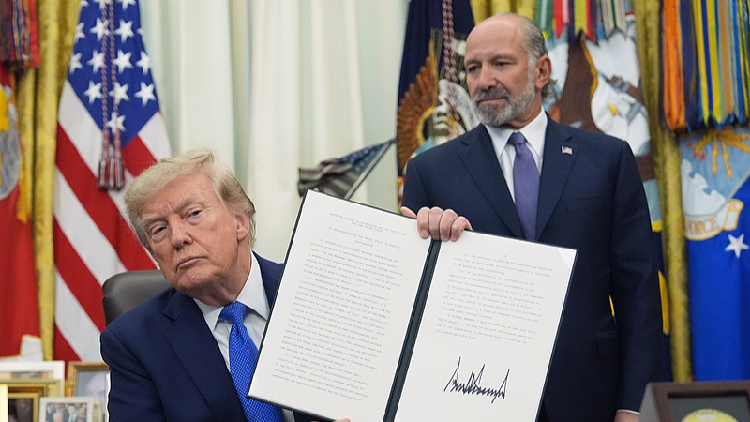
US President Donald Trump signed an executive order on Thursday targeting polysilicon imports. The order sets minimum import prices for polysilicon products and adds a 15% tariff. Polysilicon is a key material used in solar panels and semiconductors.
U.S. employment growth is expected to have strengthened in July. The result would reassure those watching the labor market that it has remained resilient. The unemployment rate is forecast to stay at 4.2%. That would allow the Federal Reserve to keep concentrating on inflation.
The Philippine economy expanded 2.3% in the second quarter compared with the same period a year earlier, the country’s statistics agency said on Friday. The result was weaker than expected, indicating that growth slowed during the quarter.
Singapore lenders OCBC and UOB posted stronger second-quarter profits than analysts had forecast. Revenue from wealth management and other fee-based businesses helped offset the impact of lower interest rates on their core lending operations. Both banks reported the results on Friday, highlighting the support provided by non-lending income as rate pressure weighed on margins.
Unitree Robotics has set the price for its Shanghai initial public offering at 150.80 yuan per share, or about $22.34. The company announced the pricing on Thursday. Applications through both online and offline channels will begin next Monday. The offering is being conducted on Shanghai’s STAR Market.
Collaboration software company Atlassian reported fourth-quarter revenue above Wall Street expectations on Thursday. Strong demand for its enterprise software services and cloud-based products helped drive the result. The performance points to continued interest in the company’s cloud offerings.
Asian stocks paused on Friday as investors awaited U.S. employment figures. The data could be pivotal to the Federal Reserve’s interest-rate decision next month. Oil prices extended their gains, highlighting that tensions in the Middle East remain far from resolved. Markets are watching both the labor data and geopolitical risks for clues about the next policy and trading moves.
Alphabet Inc. has sold $25 billion in investment-grade bonds. Generous yield payouts helped the company attract one of the largest order books of the year for AI-related debt. The transaction marks Alphabet’s return to the bond market. It comes as investors remain concerned about the scale of artificial intelligence spending.
Stock in Elon Musk’s space company climbed Thursday. The increase came even as many SpaceX insiders were given an opportunity to sell their shares for the first time. The development puts the company’s rising stock price alongside a new avenue for insider sales.
Donald Trump has imposed a 15% tariff on a material considered essential to chip production. The measure is intended to counter Chinese producers. Those producers are described as holding a monopoly over global polysilicon production. The tariff therefore targets a strategically important part of the chip-material supply chain.
Shares of United Wholesale Mortgage, the biggest mortgage lender in the United States, dropped as much as 49% on Thursday. The move marked the company’s steepest decline ever. It came after the lender reported a net loss of $452 million. The company also suspended its dividend for the first time, intensifying the market reaction.
Donald Trump says the war cannot continue for much longer. The United States, Iran and Oman are reportedly close to reaching a temporary agreement. The proposed deal would reopen the Strait of Hormuz. The talks therefore center on restoring passage through the strategic waterway.
Oil prices continued to rise after reports said Iran attacked what it called “hostile targets” in the Strait of Hormuz. Tehran is seeking an arrangement with Oman that would bar US ships from the strategically important waterway. The reported action and the proposed restriction are adding to pressure on energy markets. The developments center on access through the strait and Iran’s negotiations with Oman.
Iran is seeking to prevent US and Israeli ships from using the Strait of Hormuz, according to local media reports. The proposal is part of a potential agreement with Oman to manage the strategic waterway. It would also require hostile countries to provide compensation before being permitted to use the passage. The reports indicate that negotiations between Iran and Oman are moving forward.
The US Central Command says 49 ships have been redirected after Iran’s naval blockade resumed. The US military also reports that two additional vessels have been put out of action. The statement presents the shipping changes alongside the reported loss of those vessels. No further details are provided about the ships or the circumstances.
Since the Iran war began, Iranian attacks on vessels in the Strait of Hormuz have disrupted shipping. A US blockade of Iranian ports has also slowed the movement of energy exports and other commodities from the Middle East. Finding an alternative route around the strait is therefore far from simple.
An Iranian parliamentary committee is considering a preliminary bill that would prevent U.S. and Israeli vessels from transiting the Strait of Hormuz. The proposal would also cover other ships classified as “hostile.” Iran’s semi-official Fars news agency reported the review, citing a lawmaker. The measure remains at the draft stage as the committee examines it.
A proposed arrangement between Iran and Oman would give Tehran control over ships entering the Gulf through the Strait of Hormuz. Four industry sources said the plan would be difficult for shipping companies to implement. They pointed to U.S. sanctions and restrictive insurance clauses covering any payments as key obstacles to making the deal workable.
U.S. oil producer Occidental Petroleum said it expects both production and capital spending to remain flat in 2027. The company added that reducing debt will continue to be a priority. Its outlook points to no planned expansion in those areas next year, while financial efforts remain centered on lowering its debt burden.
Asian stocks were poised for a modest decline on Friday as renewed geopolitical tensions weighed on US equities and bonds. Oil prices surged, bringing inflation worries back to the forefront. Investors are also looking ahead to a key US jobs report. The market moves reflect heightened concern over the latest developments involving Iran.
Lyft exceeded Wall Street expectations for second-quarter revenue on Thursday. The ride-hailing company projected current-quarter gross bookings slightly above forecasts. Growth was supported by demand for higher-value rides, expansion into international markets and partnerships. The results point to continued stability in demand.
The Minutes Reader extension turns the original page into a focused reading view and translates articles and video subtitles on demand. It is in limited beta.