Bitcoin mining infrastructure firm Luxor raises $16 million to expand AI business

Luxor plans to grow its AI business and hire about 12 people by year-end, COO Ethan Vera told The Block.

Luxor plans to grow its AI business and hire about 12 people by year-end, COO Ethan Vera told The Block.

The Fed is expected to leave rates unchanged on Wednesday, six days before the US midterms. With inflation at 3.7% and oil prices still high, investors consider a December rate hike likely and will look to Chair Kevin Warsh’s remarks for clues.
Lower-income Brazilians are putting a growing share of their earnings toward interest on credit cards and other costly consumer loans. Policymakers are considering ways to curb excessive debt, the central bank says.
CF Benchmarks has introduced a service bringing Wall Street pricing infrastructure onchain. Using data that includes benchmarks used by BlackRock, it could help developers build blockchain-based index funds, tokenized portfolios and derivatives.

Analysts lowered their 2026 gold-price forecast for a second consecutive quarter, citing high Treasury yields, a strong U.S. dollar and expectations that interest rates will remain elevated for longer. They still expect prices to recover in 2027, a Reuters survey found.
Hundreds of economists surveyed by Reuters expect high inflation to persist in the global economy well into next year. They are increasingly concerned that price pressures will become entrenched beyond energy-cost increases linked to the Middle East conflict.
British finance minister John Healey is due to present his first budget on Wednesday, facing pressure to deliver on pledges to ease household living costs and support businesses.

John Healey presents his first U.K. Budget amid tighter fiscal room and mounting spending pressures, while bond investors call for less borrowing and stronger growth.
New orders for key US-made capital goods rose in September, while shipments surged, indicating that business equipment spending sustained robust growth in the third quarter. At the same time, concerns are growing over the enormous cost of expanding AI infrastructure.

World Bank President Ajay Banga told CNBC’s “Squawk Box” on Oct. 27 that capital availability was “not really an issue” as AI demand drove borrowing costs higher.

U.S. Treasury yields were little changed on Tuesday ahead of the Federal Reserve’s two-day monetary policy meeting.

The relief rally in tech stocks is continuing as investors turn their attention to difficult decisions facing the Federal Reserve.

Interest rates and oil prices are falling, while equities are rising; crypto remains under pressure.

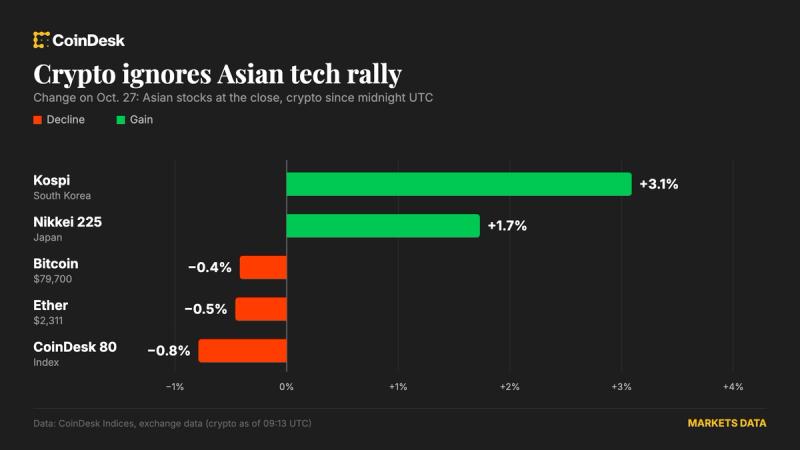
Bitcoin slid 0.4% to about $79,700 since midnight UTC, while Asian technology stocks rallied. The DeFi index lost 1.8%, and the Federal Reserve is set to start a two-day meeting.
By one official measure, American workers’ share of the economic pie has fallen to its lowest level in almost 80 years.
Markets overwhelmingly expect the Fed to leave benchmark interest rates unchanged after September’s increase, while Warsh may indicate that more hikes are possible.

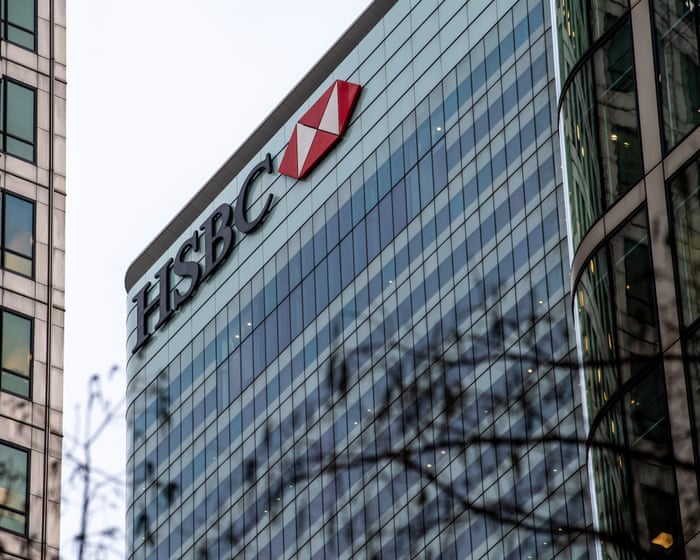
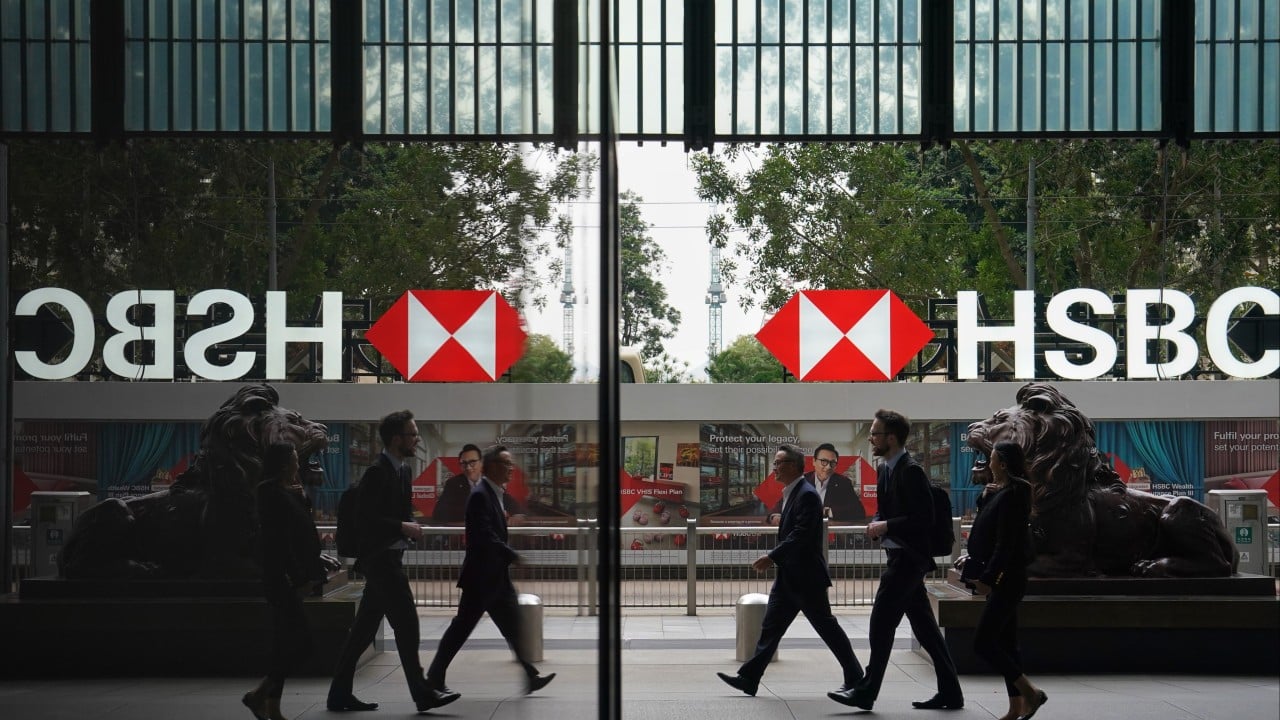
HSBC CFO Pam Kaur said the bank faces no pressure to move its headquarters from London, despite an expected UK bank tax increase. HSBC reported a 32% rise in third-quarter profits to $9.6bn and plans to return $2.7bn to shareholders through dividends and buybacks.

Swiss engineering company Sulzer said Tuesday it had entered a five-year alliance with Venezuela’s state-owned oil company PDVSA to develop key industrial infrastructure in the country and support economic growth.
South Korea's economy grew faster than expected in the third quarter. Analysts warned that heavy reliance on the chip industry leaves the country vulnerable if global AI spending slows.

South Korea’s GDP grew 1% quarter-on-quarter and 3.4% year-on-year in the third quarter, exceeding the Bank of Korea’s August forecast of 0.3% quarterly growth. Strong demand for AI-related semiconductors boosted exports, while private consumption fell 0.2%.
BTG counted 738,144 UK businesses in “significant” financial distress in the third quarter, 1.6% more than a year earlier and the highest figure since its report began in 2004. The findings add to calls for the chancellor to offer businesses more support in the budget.

India plans to ease goods and services tax rules for post-sale discounts and speed up provisional refunds for businesses facing inverted duty structures from November 1, according to a government notification dated October 26.
South Korean semiconductor exports could be $50 billion to $100 billion below earlier forecasts if major U.S. technology firms slow their capital spending on AI next year, according to central bank data.
Profits at China’s major industrial firms rose 15.5% year on year to 6.03 trillion yuan in the first nine months of 2026. Electronics profits doubled, while high-tech manufacturing profits climbed 52%. Industrial output value added grew 5.3% over the same period.


China’s industrial profits rose 14.4%, the strongest growth in three months. The global AI boom and higher commodity prices stemming from the war in Iran lifted earnings at miners, chipmakers and raw-material suppliers.
The Section 166 order was issued earlier this year and focuses on risks linked to Revolut’s rapid launches of new financial products.
Concerns over economic management triggered the Brazilian currency’s worst day in more than 25 years, leaving Lula facing a fiscal reckoning.
Japan is showing encouraging signs of returning to sustained growth and stable inflation, Moody’s Japan sovereign analyst told Reuters on Tuesday. The key test is whether its resilience can withstand future shocks.
HSBC said on Tuesday that third-quarter profit rose 32%, supported by higher interest rates and net interest income, as well as the absence of legal provisions booked in the same period a year earlier. It also launched a buyback of up to $1 billion.

HSBC said third-quarter pre-tax profit rose 32% to US$9.6 billion, compared with US$7.3 billion a year earlier and analysts’ estimate of US$9.7 billion. It also announced a US$1 billion share buyback, in line with analysts’ expectations.

HSBC announced its third-quarter earnings on Tuesday, with pretax profit in line with estimates as net interest income boosted results.
China handled 43.04 billion metric tons of commercial freight in the first three quarters of 2026, up 2.3% year on year, the Ministry of Transport said. Port cargo throughput rose 0.7%, container throughput increased 4.5%, and transport-sector fixed-asset investment totaled 2.4 trillion yuan.
A key measure of inflation in Japan’s service sector climbed 3.7% in September from a year earlier, indicating mounting price pressures that are likely to keep the central bank on course for further rate hikes.
Asian stocks jumped on Tuesday after Anthropic’s eagerly awaited IPO filing boosted risk appetite. Investors were also looking ahead to technology earnings that could test enthusiasm for AI, and central bank meetings with implications for near-term interest rates.
Microsoft has offered voluntary buyouts to 60,000 employees, about 27% of its global workforce, as the company increases spending on artificial intelligence.

Microsoft says it will offer voluntary buyouts to roughly 60,000 eligible employees in selected parts of the company across the United States, India, Canada and the United Kingdom. The offer comes as the company manages costs while investing in AI infrastructure and data centers, and follows an earlier voluntary retirement program and layoffs in its Xbox division this year.
Microsoft will offer voluntary buyouts to employees on selected teams in the US, Canada, India and the UK at level 70 and below, potentially including some senior staff.
Microsoft said Monday it is offering voluntary buyouts to more than a quarter of its global workforce, including employees in Canada, as it seeks to curb costs and finance major AI investments.

Microsoft says its voluntary separation offer for 60,000 workers is available for a limited time, as the company increases its AI investment.
Based on a company spokesperson's comments, Business Insider reported Monday that about 60,000 people working at Microsoft are being offered buyout terms.
Microsoft plans to offer buyouts to about 60,000 workers as part of efforts to cut costs and reshape its workforce for the AI era.

Microsoft is offering voluntary buyouts to 60,000 employees as it seeks to balance rapid infrastructure expansion with capital efficiency.

Microsoft is offering voluntary exit packages to up to 60,000 employees in the US, UK, Canada, and India. Chief people officer Amy Coleman said the packages include financial support and career-planning resources. The company is seeking to reduce staff without another round of layoffs.
Several parties and political figures who backed Flavio Bolsonaro recognized President Luiz Inacio Lula da Silva’s reelection, despite Bolsonaro’s effort to annul the vote. Lula won 51.79% of valid ballots to Bolsonaro’s 48.21%, according to Brazil’s electoral court. Bolsonaro said he would seek to have the result annulled.

The unexpected result means Brazil’s environmental policies will continue rather than take a sharp turn under Flávio Bolsonaro.

Luiz Inácio Lula da Silva defeated far-right rival Flávio Bolsonaro in Brazil’s presidential election runoff, securing a fourth term with 51.79% of the vote to Bolsonaro’s 48.21%. Guardian correspondent Tom Phillips will answer questions about the result, Brazil’s future and its regional implications.
The Latin American left’s standard-bearer has pulled off another seemingly impossible comeback, but now faces the task he failed to accomplish over the past four years.

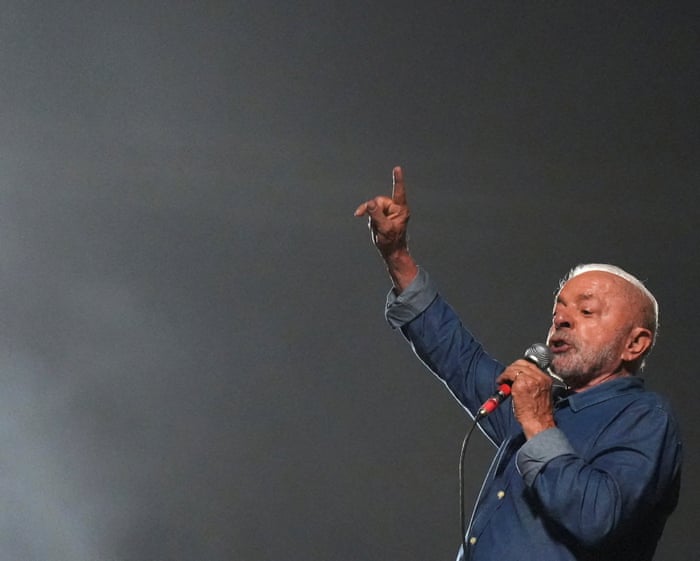
Luiz Inacio Lula da Silva was declared the winner of Sunday’s runoff and delivered a defiant message. Rival Flavio Bolsonaro disputes the result and wants it annulled. Lula has pledged a new approach to governing, but faces many challenges ahead.
Senator Flavio Bolsonaro has abandoned plans to seek annulment of Brazil’s presidential runoff results after lawyers and key allies urged him not to contest the vote’s legitimacy, Folha de S.Paulo reported. The newspaper cited a lack of concrete legal arguments and risks in court and politics. The electoral commission said Lula da Silva won 51.79%.

Two days before his 81st birthday, Luiz Inacio Lula da Silva emerged as a comeback victor after a bitter campaign in which he often appeared to show his age. He became the first candidate since Brazil returned to democracy in the 1980s to win the presidential runoff after trailing in the first round, turning a 2.2 million-vote deficit against far-right Flavio Bolsonaro into a 4.4 million-vote lead.

The Brazilian real fell 12 percent against the dollar after Luiz Inacio Lula da Silva unexpectedly won re-election. Bovespa shares also plunged, triggering a 30-minute trading halt. Investors are concerned about higher spending and fiscal pressures, and will watch Lula’s choice of finance minister for clues about his approach.

After Lula finished second in Brazil’s first presidential-election round, student-led protests spread nationwide and a WhatsApp channel called “Lula’s Army” grew to more than 10 million followers. Analysts and Lula credited street activity and social media with reviving his campaign and helping him overturn the first-round result in the runoff.

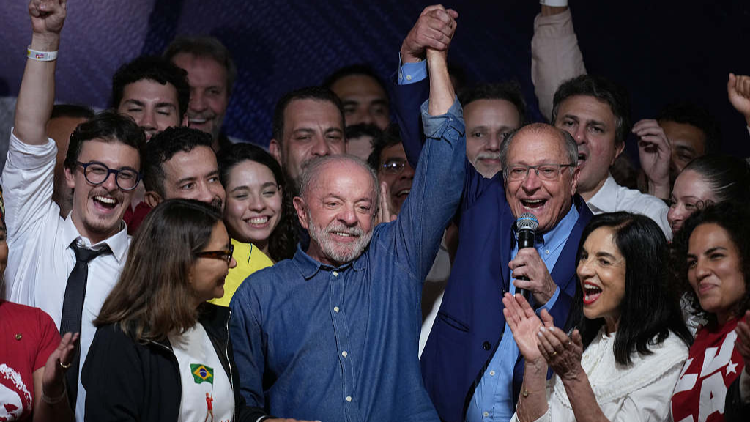
Luiz Inácio Lula da Silva won a fourth term as Brazil’s president, beating far-right candidate Flávio Bolsonaro with 51.79% of the vote. Lula became the first candidate to win a runoff after losing the first round, while Bolsonaro refused to concede. The result breaks with a regional trend following the growth of a radical populist movement.

Prediction-market odds pointed to a decisive Bolsonaro victory, but Lula won the closely fought race.

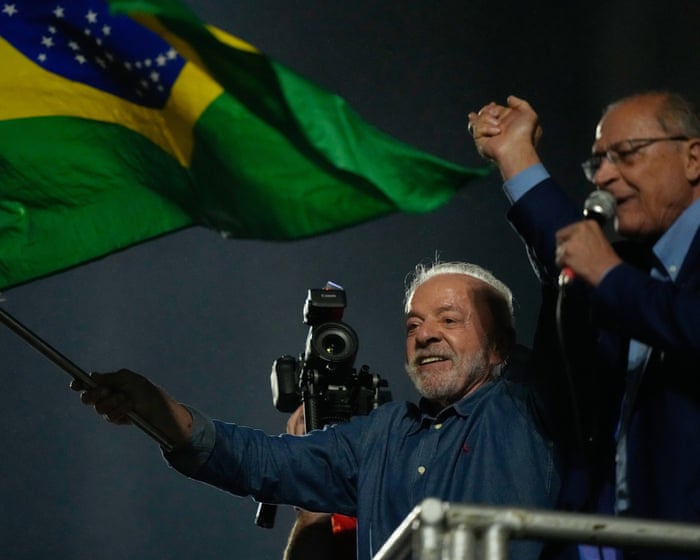
President Luiz Inacio Lula da Silva won Brazil’s presidential election on Sunday, defeating right-wing Senator Flavio Bolsonaro in a runoff to secure a fourth, non-consecutive term.

Luiz Inácio Lula da Silva defeated far-right rival Flávio Bolsonaro to win a fourth term, then told supporters in São Paulo that dictatorship and fascism would never return to Brazil. Leaders and governments around the world congratulated him, with some calling the comeback an important signal for Latin America.

Brazil's electoral court said President Luiz Inacio Lula da Silva won an unprecedented fourth term on Sunday, October 25, in a surprise result that ran counter to opinion polls.

Brazilian President Luiz Inácio Lula da Silva won a fourth term with 51.79% of the vote, overturning Flávio Bolsonaro’s first-round lead. Bolsonaro has refused to accept the result and called for it to be annulled, while the electoral court confirmed Lula’s victory. Lula now faces a divided country and a Congress packed with Bolsonaro allies.

Brazilian President Luiz Inacio Lula da Silva won a historic fourth term after finishing behind Flavio Bolsonaro in the first round. Lula received 51.79 percent of valid votes, but faces a conservative Congress and a legal challenge seeking to annul the runoff. The article credits grassroots organizing, youth mobilisation and a shift to digital campaigning for his comeback.

Left-wing politician Luiz Inácio Lula da Silva has won a fourth term as Brazil’s president. Born into poverty, he worked as a metalworker, became a trade union activist and founded the Workers’ Party. His presidencies expanded social programmes and raised Brazil’s international profile. He was also jailed in a corruption case. Uniting a divided country will be a challenge.
The British Retail Consortium said shop prices rose 2.1% year on year in October, up from 1.4% in September and the highest rate in two and a half years. Rising energy and food-ingredient costs are leading retailers to pass on increases. Food inflation reached 2.9%, while non-food inflation climbed from 0.8% to 1.7%.

Survey respondents unanimously expect the BOJ to signal preparations for a rate hike in December or January, as inflation and wages continue to rise.

Beijing has borrowing capacity, but heavily indebted local governments are cutting spending, increasing the pressure on growth and on China’s efforts to manage local debt.

Shimao Group sold two Hong Kong hotels for HK$2.7 billion (US$344 million), leaving an estimated HK$1.8 billion gap against their secured loans. Una Ge of AlixPartners, a joint receiver overseeing the sale, said shortlisted bidders all raised their offers in the final stages. The deal illustrates how mainland China’s developer debt crisis is reshaping Hong Kong’s restructuring industry.

Mark Zuckerberg’s liquidity negotiations illustrate some of the challenges involved in taxing the wealthy.
The Times reported on Monday that British finance minister John Healey will announce plans on Wednesday to raise the minimum wage by nearly 4%.
Neocloud shares fell on Monday after SpaceX CEO Elon Musk said the sector could see consolidation and failures, adding to concerns that investment in AI infrastructure is pulling further ahead of revenue generation.
Citadel co-Chief Investment Officer Pablo Salame says the transformative artificial intelligence boom sweeping the global economy will leave some casualties in its wake.
Yury Ushakov, a Russian presidential aide for foreign policy, described Africa as one of the world’s most dynamically developing regions. Citing the African Development Bank, he said the continent’s nations average 4.2% economic growth, above the global rate, and account for more than half of the world’s 20 fastest-growing economies. He also cited UN projections that Africa will become the center of global population growth from 2030 and exceed 2.5 billion people by 2050, about 70% of them under 30.
South Korean officials are considering another delay to the crypto gains tax, concerned that users of domestic exchanges would bear the tax burden because the United States will not share crypto trading data until 2029.


South Korea is reportedly considering postponing its crypto gains tax for a fourth time, with a 2029 start in view. The delay is said to align with the U.S. schedule for integrating CARF, the OECD’s international tax framework for digital assets.
Russian services exports totaled $46.3 billion in 2025 and are projected to reach $59 billion by 2030, growing about 5% annually, Economic Development Ministry department director Dmitry Nekrasov said. Services imports are rising faster and stood at about $95 billion. Travel and transport are expected to account for roughly $4.3 billion of export growth.
Economists warn that the discontent behind protests and violence in France is a “warning signal” for Australia if the country avoids an honest budget discussion. Demonstrators in France protested underfunded schools, alongside wider cost-of-living complaints. Public debt is nearly 120% of GDP in France, compared with 53% in Australia.

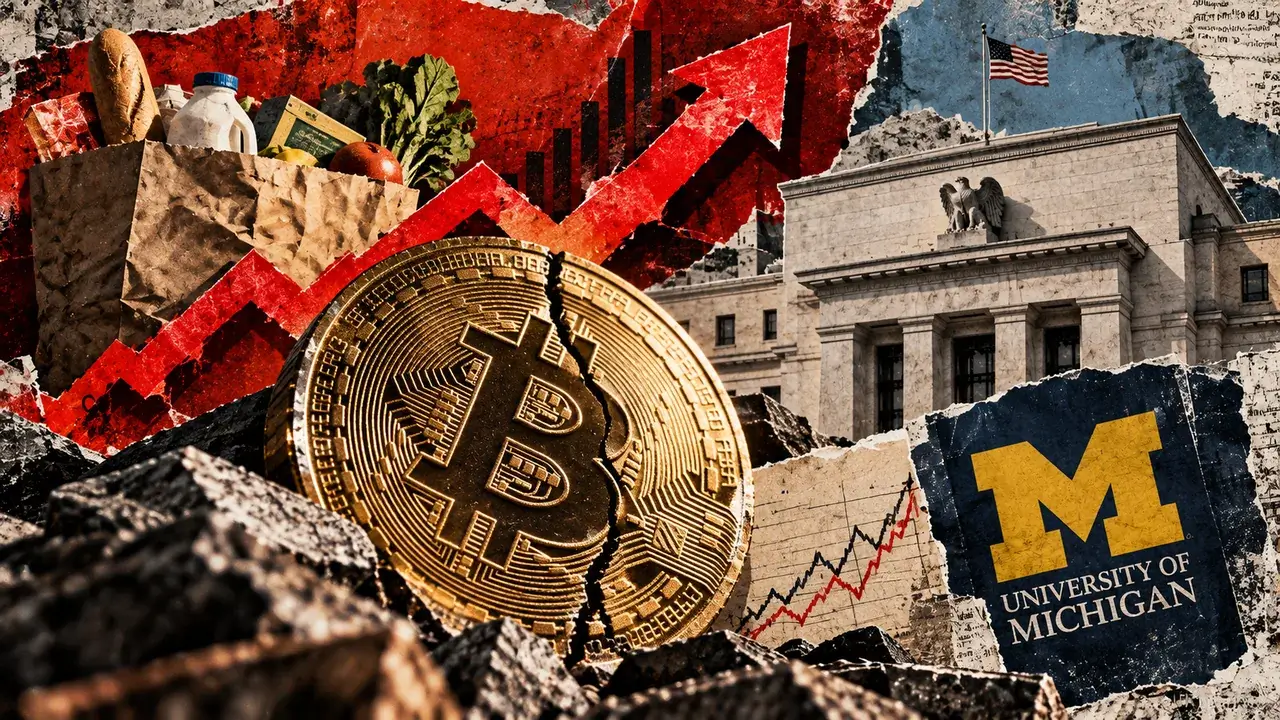
A new historical comparison from the University of Michigan finds elevated long-term inflation expectations, which could complicate easier financing conditions for Bitcoin.

Germany’s ifo Business Climate Index climbed in October, helped by stronger confidence in manufacturing. Higher energy prices and interest rates remain risks to the country’s economic recovery.
Tax authorities across China are intensifying oversight after the grace period for reporting offshore trusts expired last Thursday, as part of efforts to encourage voluntary disclosures. Beijing tax officials posted notices naming 21 individuals that day and requiring them to submit tax documents related to offshore trusts.

Dave McKay, who has expanded Royal Bank of Canada well beyond its Canadian roots, discusses the rift with the US, his use of AI at work and what keeps him awake at night.
Nigeria aims to bring inflation down to single digits before the end of 2027, opening the way for steep interest-rate cuts that could reduce borrowing costs and support growth, Finance Minister Taiwo Oyedele said on Monday.
Investors had positioned for a victory by rightwing Bolsonaro, whom they viewed as more willing to tackle the budget deficit. They now expect Lula to add to fiscal pressure, setting Brazil’s markets up for a fall.
European Court of Auditors President Tony Murphy said the EU’s debt as an organization is expected to reach €1 trillion by the end of 2027, more than 500% of the bloc’s budget. The figure excludes the debts of EU member states. Murphy said pressure on the EU budget is growing.
Verizon raised its full-year forecast for wireless subscriber additions on Monday, citing expected strong demand for its simplified plans. It also signed an AI infrastructure agreement worth more than $2 billion with Amazon Web Services.
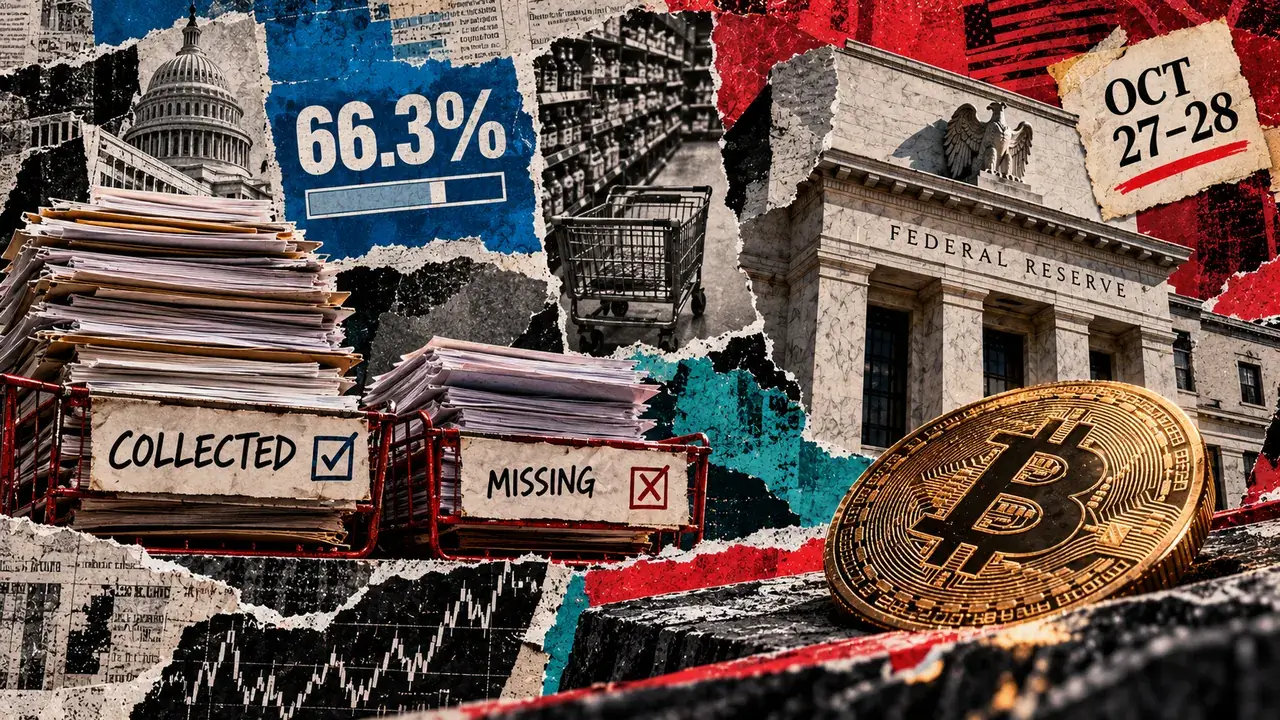
September’s 66.3% collection rate for commodity and service quotes shows the extent of survey coverage, but does not resolve which way any inflation bias may run.

Pakistan has raised its key interest rate to 12% as energy costs remain high and inflation persists. Vendors wait for customers at a clothes market in Rawalpindi.

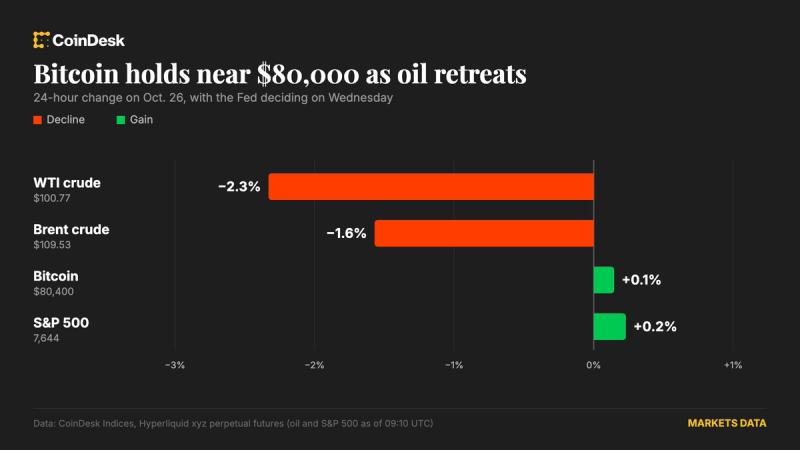
Bitcoin was little changed around $80,400 from midnight UTC. The DeFi index was the only CoinDesk index to rise, with the Fed set to announce its decision on Wednesday.

Russian Energy Minister Sergey Tsivilyov said natural gas and the infrastructure and technologies needed to use it are important for developing countries’ industrialization and quality of life. He called gas a guarantor of global energy security and outlined the draft Moscow Declaration, grounded in energy justice, technological neutrality and equal, non-discriminatory access to energy resources and technologies.
Federal Reserve policymakers have signaled they will not raise US short-term borrowing costs again this week. With inflation concerns still at the forefront, investors expect the pause in rate hikes to be brief.
At the fourth Polish-German Economic Forum in Warsaw on Monday, German Economy Minister Katherina Reiche said Poland and Germany had pledged to expand trade and investment ties and work together to strengthen Europe’s industrial competitiveness.
Ukraine’s government has proposed a mechanism to recruit foreign professionals and skilled workers in sectors facing labor shortages. A draft resolution from the Economy Ministry would create an annual list of sought-after jobs and standardize qualification assessments. It is not yet in force and could change.

Nearly eight months into a war that has destabilized the global energy system, the average gas price during Donald Trump’s second term is now higher than it was under Joe Biden, according to a CNN analysis of AAA data.
Brent crude fell more than 6% on Monday morning, pulling back from its highest close since March. The decline came as regional mediators travelled to Tehran and US President Donald Trump weighed a deal with Iran, while investors prepared for a busy week of central bank decisions and earnings reports.
Brent crude fell more than 6% early Monday, retreating from its highest close since March. Regional mediators were heading to Tehran as US President Donald Trump weighed a deal with Iran, while investors prepared for a busy week of central bank decisions and corporate earnings.
The week starting Oct. 26 is set to bring interest-rate decisions from the Fed, ECB and BOJ, along with Coinbase earnings.

British finance minister John Healey is expected to present a cautious first budget this week, putting bond-market stability ahead of the major spending plans Andy Burnham discussed when he became prime minister.
Volatile bond markets, persistent inflation and shifting foreign-exchange dynamics are putting the profitability and strong capital positions of Asia-focused banks at risk as they prepare to report third-quarter earnings.
Canada's economy is weak while inflation is climbing. The Bank of Canada must decide which challenge to address: higher rates could further weaken the economy, while lower rates could worsen inflation. Its decision is due Wednesday.
The Bank of Russia bought 12 billion rubles ($148.81 million) worth of yuan on the domestic market, with settlement on October 23. Purchases settling on October 22 were also 12 billion rubles. The central bank conducts the operations through the yuan-ruble instrument on the Moscow Exchange.
Households with people aged 18 to 24 generally have lower equivalised disposable incomes, though experts caution that this measure may not capture the full picture.
A £1 billion regeneration plan near marshes east of London remains on hold 17 years after it was announced. Rising construction costs are adding to the growth challenge facing finance minister John Healey in this week’s budget.
Britain’s largest employers say making training older workers more expensive could undermine the government’s effort to address youth unemployment. Ministers are considering an apprenticeship funding overhaul that would raise employers’ training costs for workers aged 25 and over in England by 25%; business groups urge them to reconsider.

Oil prices fell as investors assessed the risk of further attacks on Saudi energy infrastructure and worried that elevated prices could weaken demand.

Infosys lowered its fiscal 2027 revenue growth forecast by more than expected and reported weakness in its North American business. Its shares fell 2.7% in early trading on Monday.

Major bond investors want reassurance from the new chancellor and warn against changing key fiscal rules.
Wayne Cole looks ahead at elections, central banks and corporate earnings on the agenda for European and global markets.
Bitcoin dropped below $80,000 as traders reduced risk ahead of a Federal Reserve meeting. Ether and XRP led declines among major cryptocurrencies, while the AI trade suffered another setback in Asia and Goldman Sachs lowered its Kospi target by 25%.

Australian data centre operator NEXTDC said on Monday that CEO Craig Scroggie will give up his fiscal 2027 bonus opportunities. The company cut its revenue forecast and paused future developments last week.
SpaceX has raised $40 billion in debt to purchase GPUs. Musk predicts a major shakeout among smaller AI cloud providers.


Elon Musk said in a post on X that SpaceX has completed $40 billion in debt financing to buy GPUs.
Elon Musk said SpaceX has completed a $40 billion debt deal to buy chips needed to advance its artificial intelligence ambitions.
Elon Musk said SpaceX had completed $40 billion in debt financing for graphics processing units. He said the company’s investment-grade status and revenue from Starlink satellite internet and launch operations helped it retain access to credit.
Japanese companies are moving to compensate users after waves of cyberattacks disrupted internet services and raised concerns about economic stability.

The Minutes Reader extension turns the original page into a focused reading view and translates articles and video subtitles on demand. It is in limited beta.