Premier Li Qiang urged China on Monday to bolster external demand and deepen international trade cooperation as weak domestic consumption weighs on growth and risks from abroad increase.
Conservative politicians Andrew Bragg and Pauline Hanson argue compulsory superannuation has failed to improve the budget or reduce reliance on the age pension. Experts and Treasury projections instead indicate that Australia’s total retirement-system costs will remain broadly stable despite population ageing, while the share of people fully funding their own retirement is expected to rise from 29% to 38% by 2050.
Brazil’s economy grew just 0.2% in the second quarter from the previous three-month period, according to a central bank indicator, pointing to fading momentum after a strong start to the year, especially in the crucial services sector.
Canada’s annual inflation rate rose to 3% in July, slightly above expectations, data showed. Renewed US-Iran tensions pushed gasoline prices higher, while tour travel costs also increased.
Most economists surveyed by Reuters expect the Federal Reserve to leave its key interest rate unchanged next month and through the end of the year, maintaining a view they have held for several months.
Russian Deputy Prime Minister Alexander Novak ordered continued monitoring of key macroeconomic indicators and close oversight of development programs for the agricultural and fuel-and-energy sectors. The Economic Development Ministry estimates that the economy grew 0.6% over the past six months, returning to a growth trajectory.
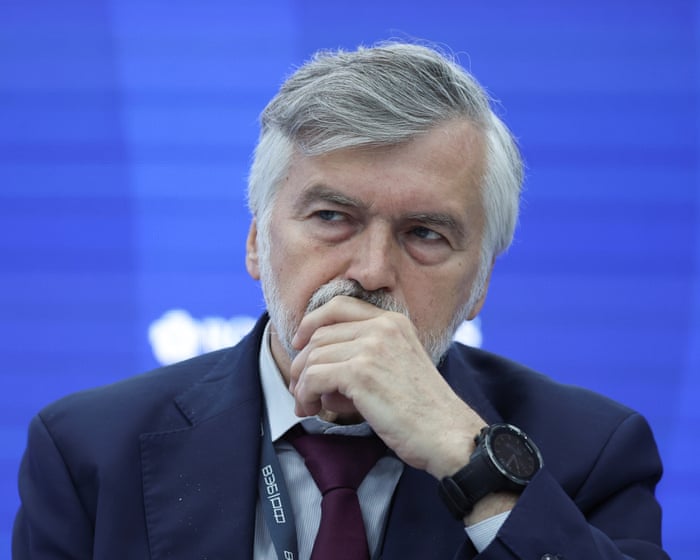
Andrei Klepach, chief economist at state-controlled development bank VEB, was fired after criticizing Russia’s economic outlook and warning that Moscow could not win a prolonged economic war of attrition with Ukraine. He had said Russia was falling behind China, the US and, in some respects, Ukraine.
Russia’s state development corporation VEB.RF dismissed chief economist Andrei Klepach after media circulated his remarks that Russia could not win the economic “war of attrition.” Sources linked the move to his criticism of Russia’s economic and political course, while VEB.RF confirmed his departure without giving a reason.
RussiaVEB.RFAndrei Klepacheconomic war of attrition
The South African rand strengthened against the U.S. dollar in early Monday trading as investors awaited inflation figures due later this week for indications of the health of Africa’s largest economy.
The euro rose above 98 rubles on Russia’s interbank market for the first time since March 20, 2026, trading data showed. At 10:45 a.m. Moscow time, it was up 1.51% at 98.683 rubles, while the dollar gained 1.27% to 84.99 rubles.
The 23rd China-ASEAN Expo is scheduled for Sept. 17-21 and is expected to draw more than 3,000 exhibitors worldwide. Nearly 500 companies have confirmed participation, while the event will feature about 300 new products and 200 technologies in digital technology, intelligent manufacturing and green development.
China’s economy stayed broadly stable in the first seven months of 2026, with growth shifting toward newer drivers and higher-quality structures, the National Bureau of Statistics said. Industrial output rose 5.3% year on year, while foreign trade increased 17.3% to 30.13 trillion yuan and retail sales grew 2.6%.
Chinese Ambassador to Moscow Zhang Hanhui said bilateral trade reached $159 billion from January to July 2026, up 26% from the same period last year. He said steady growth in economic cooperation could lift turnover to a new all-time high by year-end, while investment is expected to remain stable. He spoke at the SPROUTS forum in Kazan.
The Philippine central bank governor said inflation should ease gradually over the medium term, while risks to consumer prices remain tilted to the upside.
Japan’s GDP grew 0.3 percent in the second quarter, down from 0.5 percent in the previous quarter and below analysts’ forecasts. Private consumption was flat and capital spending fell 1.2 percent, offsetting strong exports. The weaker figures could complicate the Bank of Japan’s September rate decision.
China’s industrial output growth slowed in July, while retail sales increased less than forecast. The figures point to pressure from weak domestic demand, disruptions caused by extreme weather and the fading impact of state measures intended to lift consumption.
The rupee is expected to open lower on Monday and remain under pressure after the central bank unexpectedly brought forward by a month the deadline for its discounted forex swap facility for non-resident Indian deposits.
A morning look at the day ahead in European and global markets, focusing on whether consumers could keep the Federal Reserve on hold while Japan raises rates.

The 2026 Zhanjiang Fishing Season Launch Ceremony and “Zhanpin” brand exhibition opened Sunday, with 5.05 billion yuan in agreements signed across the marine fishery industry chain. Zhanjiang’s marine fishery chain output exceeds 100 billion yuan, and the city has 40 marine ranching projects in reserve.
China’s railways recorded 2.8 billion passenger trips in the first seven months of 2026, up 4.1% year on year, according to China State Railway Group. The network ran an average of 11,462 passenger trains daily, while cross-border travel and rail trips by foreign nationals also increased significantly.
Government data showed Japan’s economy grew more slowly than expected in April-June. Weak household spending and business investment partly offset the boost from strong exports.
Asian shares moved sideways on Monday as investors watched oil prices, which posted sizeable gains last week. With little progress toward ending the Iran war, inflation risks remained tilted upward.
Experts from the Center for Analysis of World Arms Trade said US-designed air-defense systems used by Arabian Peninsula countries create a huge cost imbalance when countering Iranian drones. A Shahed-136 costs $20,000-$50,000, compared with $4 million for a PAC-3 missile and $3 million for an AMRAAM-ER.
Andrei Klepach, chief economist at Kremlin-controlled state bank VEB.RF, was reportedly dismissed on Aug. 16, a day after Russian media circulated his warnings that Russia was losing its economic and technological competition with the West. He said Russia would not collapse but was almost certain to face a social crisis. The Kyiv Independent could not immediately verify the claims.
VEB.RF’s press service says Andrei Klepach has left his post as chief economist and that a successor has already been chosen, with an appointment expected soon. Klepach had held the position since 2014 while also serving as the corporation’s deputy chairman.
Lithium is vital to the global clean-energy transition and is generating millions of dollars in investment and export earnings for countries including Argentina. Abundant deposits high in the Andes help power phones, computers and vehicles.
The White House reportedly used Iraqi Kurdistan leader Nechirvan Barzani as an intermediary with Iran’s Islamic Revolutionary Guard Corps. Washington wanted him to arrange closed-door bilateral talks in Erbil, but Tehran raised security concerns linked to Israeli intelligence and the meeting never took place.
Millions of Iranians are struggling to survive as the months-long war with the United States and its naval blockade of Iranian ports drive up prices and reduce job opportunities. Food inflation has exceeded 128 percent, youth unemployment reached 23.4 percent, and many workers face low pay, long hours and no insurance.
Trump pledged Friday to impose severe economic pain on Iran. A day earlier, Treasury chief Scott Bessent had stated that Washington would introduce previously unseen measures against Tehran, starting as soon as next week.
While investors debate whether and when the Federal Reserve might raise interest rates, expectations of further tightening are growing worldwide, creating mounting trouble for bonds.
Rhine shipping is nearing collapse after water at a key gauge fell to a record-low 6 cm. Near Kaub, levels are too low even for lightly loaded vessels. Reduced precipitation has also lowered other European rivers, and experts estimate Germany could lose 0.1-0.2% of third-quarter GDP as a result.
Anton Kobyakov, an adviser to the Russian president and executive secretary of the Eastern Economic Forum’s organizing committee, says interest remains high among Asia-Pacific participants, including some countries classified as unfriendly, as well as European businesses and executives. The forum is scheduled for September 1–4 in Vladivostok.
ETFs are already known for their tax efficiency, but this popular part of the market is taking those benefits further than ever through the 351 conversion ETF.
US mortgage rates slipped slightly for the first time in six weeks after new data showed the labor market cooling and suggested the Iran war may have had a more muted effect on inflation last month.
Fitch on Friday raised the Republic of Congo’s long-term local-currency rating to “CCC+” from “CCC” while affirming its foreign-currency rating. The agency cited better regional financing conditions and a smoother debt repayment profile, which reduced refinancing risks.
Europe has endured five heat waves this summer. Persistent hot, dry conditions are fueling deadly wildfires, disrupting energy supplies, destroying crops and draining reservoirs and rivers. Triodos Bank estimates the fallout could wipe out nearly all of the EU’s expected 1.1% GDP growth this year.
Home prices across the US continue to soar, increasing frustration among buyers and renters. Bloomberg News is asking people with similar experiences to share their stories.
Goldman Sachs, Blackstone and Apollo Global Management spent months working on debt deals intended to help artificial-intelligence system developers pay for Nvidia chips.
U.S. retail sales fell in July for the first time in nine months as the boost from large tax refunds faded, pointing to a marked slowdown in consumer spending at the start of the third quarter.
US shoppers unexpectedly reduced spending in July as the lift from government tax refunds weakened. Commerce Department data showed retail sales fell 0.6% last month, the largest decline since May 2025, after a revised 0.2% gain.
Chicago Fed President Austan Goolsbee said recent easing in inflation is encouraging, but he wants to see the trend continue in the coming months before concluding that price growth is returning to the central bank’s 2% target.
U.S. business inventories were flat in June, as higher wholesale stocks were offset by a decline at retailers, pointing to strong domestic demand in the second quarter.
The AFL-CIO says the average S&P 500 CEO earned 312 times the median worker’s pay in 2025, up from 285 times in 2024. Elon Musk received $158bn from Tesla—2.5 million times the company’s average employee pay—even as Tesla’s revenue fell 3 percent and sales declined about 9 percent.
Russia’s current account surplus climbed to $21 billion in the second quarter of 2026, up from $2 billion a year earlier and $13 billion in the first quarter, Central Bank documents show. The increase was driven mainly by higher goods exports, lifting the foreign trade surplus to $38 billion. Service-export growth reflected transport services for non-residents and spending by foreign visitors.
Russia’s external debt stood at $313.3 billion on July 1, 2026, up $6.5 billion, or 2.1%, from the start of the year, according to the Bank of Russia. External liabilities in other sectors and the banking system grew most significantly. The figure was $324.05 billion a year earlier.
The ruble’s inflation-adjusted real effective exchange rate against the currencies of Russia’s main trading partners fell 4.7% month-on-month in July 2026, Central Bank data showed. It was up 2.2% from the start of the year; the rate declined 4.7% against the dollar and 3.8% against the euro in July.
The Bank of Russia set the official dollar rate at 84.5449 rubles for August 15-17, up 73.91 kopecks from the previous figure. The dollar exceeded 84 rubles for the first time since March 20, 2026, while the euro rose to 97.5141 rubles and the yuan to 12.4789 rubles.
The dollar-denominated RTS Index dropped below 800 points for the first time since July 20 after the Bank of Russia published exchange rates for August 15-17. At 5:29 p.m. Moscow time, the index was down 4.8% at 798.75 points, while the regulator set the dollar at 84.54 rubles and the euro at 97.51 rubles.
Russian Economic Development Minister Maxim Reshetnikov said inflation was stabilizing as the Bank of Russia steadily cut its key rate. He said uncertainty remained partly because of fuel-market developments and recent terrorist attacks, while businesses and the wider economy were responding adequately. Annual inflation stood at 6.06% on August 10.
Russian Railways and a Vietnamese delegation led by Hanoi Party Committee Secretary Tran Duc Thang agreed to keep exploring cooperation on urban transport projects, consulting services and railway personnel training. Vietnam plans to expand its rail network and develop convenient intra-city infrastructure in Hanoi and Ho Chi Minh City.
The Central African Republic and the Democratic Republic of Congo plan to build a 645-metre bridge across the Congo River between Bangui and Zongo. The World Bank will fund the $60 million project, which aims to improve trade and transport links between the two countries.
After more than a decade running her business in Tehran, Nazanine has endured US sanctions, repeated currency collapses and two wars. She says this is the first time she has had to buy groceries on credit.
Global equity funds recorded inflows for a 12th straight week through Aug. 12. Optimism about a strong earnings season, alongside weaker-than-expected U.S. payroll growth and cooling inflation, reduced expectations of a Federal Reserve rate hike and supported sentiment.
India’s wholesale prices rose 9.78% year on year in July, government data released on Friday showed. The increase was slightly slower than in June, helped by lower energy inflation.
Softer inflation data could pressure the Federal Reserve to keep rates where they are. Since taking over as chair in May, Kevin Warsh has faced a policy crossroads, with officials split over whether hikes are needed to curb inflation while President Donald Trump calls for cuts to boost the economy.
Three people familiar with the Bank of Japan’s thinking say it could lift interest rates as early as September and may consider raising them more frequently afterward than its current pace of roughly twice a year.
Russia’s VK holding company reported a net profit of 328 million rubles for the second quarter of 2026, its first profitable quarter since late 2022. Analysts attributed the result to VK’s sale of a 25% stake in Tochka bank, while VK said the deal had an insignificant effect and pointed to improved efficiency and lower costs behind revenue growth.
Three generations’ summer memories trace China’s economic progress and rising living standards, from free outdoor activities to sightseeing and today’s focus on experiences and emotional value. The country’s consumption upgrade is about more than buying more; it also reflects broader choices and growing demand for quality, experiences and emotional fulfillment.
A weaker economic outlook is expected to curb Chinese outbound tourism in the latter half of the year, with trip numbers now projected below earlier estimates as consumer confidence softens.
An interim Productivity Commission report says the GST deal struck with Western Australia under the Morrison government achieved almost none of its objectives and made the distribution system less equitable. Taxpayer costs have reached nearly A$23bn, are forecast to hit A$60bn by 2029-30, and the commission says only WA has benefited.
China is expected to have a record 12.7 million university graduates in 2026, with the number seeking work exceeding 15 million when previous unemployed graduates and returning overseas students are included. Youth unemployment among 16- to 24-year-olds stood at 14.9%. Hong Kong graduates also face fewer vacancies, particularly in entry-level administrative, IT and programming roles. Scholars say AI is deeply affecting early-career jobs and highly educated cognitive work.
More than 200,000 metric tons of Southeast Asian fruit had reached China via the China-Laos Railway by Wednesday, up 11.16% year on year, China Railway Kunming Group said. Durian shipments accounted for over 186,200 metric tons, rising 22.53%. China, Laos and Thailand now have regular all-rail cold-chain freight services, with some shipments reaching China in as little as three days.
Japan could carry out joint intervention in the yen market at any time and signal faster-than-expected interest-rate increases to curb the currency’s decline, former top currency diplomat Mitsuhiro Furusawa said.
Asian stocks rose on Friday and were on track for their strongest week in two months after benign inflation data weakened expectations of an imminent U.S. rate hike. Stalled talks to end the war in the Middle East could nevertheless keep risk sentiment subdued.
Fitch affirmed the United States’ sovereign credit rating at “AA+” with a stable outlook on Thursday, citing the country’s large economy, high per-capita income and the dollar’s position as the world’s leading reserve currency.
The US government sold 30-year bonds at the highest interest rate seen in 25 years, underscoring investors’ demand for greater compensation to fund the country’s widening deficit.
Armenia and Russia agreed in Almaty to intensify food safety cooperation, including discussions on lifting restrictions affecting Armenian shipments to Russia and transit through Russian territory. The countries will strengthen coordination between Armenia’s Food Safety Inspection Body and Russia’s Rosselkhoznadzor. Russia had previously restricted imports of various Armenian goods over safety violations.
Wholesale inflation fell last month as gas prices gave back part of their Iran war-driven surge and other costs cooled as well, suggesting consumer inflation may gradually ease in the months ahead.
The number of Americans seeking unemployment benefits rose moderately last week, indicating that the labor market remains stable despite an unexpected drop in jobs in July.
Britain’s economy is showing its clearest signs yet of benefiting from the global artificial intelligence boom, as data released Thursday pointed to rapid growth in related industries and a surge in computer hardware investment.
Prime Minister Andy Burnham is touring the UK to hear people’s financial concerns as living costs rise. Inflation stood at 2.8 percent in June, while energy and fuel prices pushed up household bills. Lower-income households are bearing the brunt, with 7.4 million unable to afford essentials this year.
The Minutes Reader extension turns the original page into a focused reading view and translates articles and video subtitles on demand. It is in limited beta.