Morning Bid: Middle East deadlock
Rae Wee previews the day ahead for European and global markets. The market outlook is framed around a deadlock in the Middle East.
R ReutersOriginal★★☆☆☆2026-08-11 04:40
Morning Bid: Middle East deadlock

Rae Wee previews the day ahead for European and global markets. The market outlook is framed around a deadlock in the Middle East.
RReutersOriginal★★☆☆☆2026-08-11 04:40
Argentina’s state oil company YPF reported net profit of $1.21 billion for the second quarter of 2026. That compared with $58 million in the same period a year earlier. The company attributed the sharp increase to stronger shale production, record processing levels and higher international prices.
RReutersOriginal★★★☆☆2026-08-11 03:30

The president’s media company reported a massive loss in its latest quarter. It plans to abandon newly added business lines as part of a fresh turnaround effort. The company instead intends to refocus as a forum where users can post their views. The shift puts user expression back at the center of its business direction.
T The Associated PressOriginal★★★☆☆2026-08-11 03:00

Intel plans to issue $15 billion worth of new stock. The offering could be the chipmaker’s first public share sale since it listed in 1971. The company is seeking to extend its comeback. It also aims to capitalize on demand created by the artificial-intelligence boom.
B Bloomberg NewsOriginal★★★☆☆2026-08-11 01:00


Intel is reportedly close to expanding the size of a planned share sale. People familiar with the matter say the company is aiming to raise about $20 billion. That would be roughly one-third more than the target announced when the transaction was disclosed Monday morning. The size of the offering has not been presented as final.
Donald Trump’s social media company reported deeper losses totaling $238 million. The firm is shifting away from a major cryptocurrency bet toward a controversial new business. That operation sells faster access to posts from the US president that could move financial markets. The pivot reflects a change in the company’s commercial focus as it seeks a new path beyond its crypto venture.
BBloomberg NewsOriginal★★☆☆☆2026-08-10 23:30

Packaged food company Flowers Foods is seeking to divest its Tastykake baked goods business, according to people familiar with the matter. The potential transaction would involve the company’s Tastykake operation. The information comes from sources who have knowledge of the situation, while no further details about the proposed divestiture were provided.
RReutersOriginal★★☆☆☆2026-08-10 21:45

The U.S. Securities and Exchange Commission charged fintech company Netcapital with securities fraud on Monday. The regulator alleges that Netcapital carried out a scheme to overstate its revenue. The case centers on the company’s reported income and the alleged deception tied to those figures. The charges represent an enforcement action by the SEC, while the allegations remain claims in the case.
RReutersOriginal★★☆☆☆2026-08-10 21:25

Brazilian meatpacker JBS has appointed Wesley Batista Filho as chief executive, with the change taking effect in January 2027. The move will be the company’s first CEO transition in eight years. It also returns a member of the founding Batista family to JBS’s top operating role. The company described the appointment as a change at the group’s highest executive level.
RReutersOriginal★★★☆☆2026-08-10 21:15

Global pharmaceutical companies are enlarging their operations in the United States. They have pledged investments worth billions of dollars. The spending is intended to increase manufacturing capacity in the country. It will also support broader research activity across the US.
RReutersOriginal★★★★☆2026-08-10 21:10

Russia’s central bank has recommended that banks help small and medium-sized businesses affected by what it describes as “terrorist attacks.” The wording refers to Ukrainian drone strikes on warehouses and logistics centers. Lenders are being urged to support companies whose operations were hit by those attacks. The recommendation concerns financial terms for the affected businesses.
MMeduzaOriginal★★★☆☆2026-08-10 16:48
Oil prices and stock markets have risen sharply as the closure of the Strait of Hormuz continues. Analysts warn that US petrol prices, which fell by nine cents last week, could climb again if the disruption persists. The warning links a prolonged closure with renewed pressure on fuel costs.
AAl JazeeraOriginal★★★★☆2026-08-10 15:45


Donald Trump says the United States is only “semi-negotiating” with Iran as the war enters the 30th day of its second phase.
Iranian President Masoud Pezeshkian said Washington failed to bring down Iran in the way it had wanted. He said forecasts made by Iran’s “enemy” using artificial-intelligence data and information obtained through spy networks and agents failed one after another. Pezeshkian offered no further details in the statement described here about which forecasts he meant.

Iran has gained leverage in the Strait of Hormuz. Its Gulf neighbours are responding by reshaping regional security arrangements. Their aim is to constrain what Tehran can do with the influence it has acquired. The contest around Hormuz is therefore driving a broader realignment of security in the region.

Iranian Foreign Ministry spokesman Esmaeil Baghaei said on Monday that fees should be collected for maritime services provided in the Strait of Hormuz. His statement links payment to services connected with passage through the strategic waterway. The remarks address how maritime passage and related services should be charged.

Iran’s Revolutionary Guards said on Sunday that the Strait of Hormuz would remain closed until the United States met a list of demands. Those demands include compensation for war damages. The central question is whether the conditions amount to a surrender document for Washington. Dr H.A. Hellyer, a senior fellow in geopolitics, international security and Middle East studies at RUSI, joins the discussion to assess the position.

President Donald Trump indicated that the United States is prepared to allow economic pressure on Iran to intensify instead of ordering new military strikes. He described the US position toward Tehran over the Strait of Hormuz as only “semi-negotiating.” His remarks point to an emphasis on economic leverage rather than an immediate fresh attack. The approach leaves pressure building while contact with Iran remains limited.

Wayne Cole surveys the day ahead for European and global markets. The item highlights a sudden shift in how the United States views the Strait of Hormuz, describing the waterway as having become “irrelevant” to Washington. It frames that change as the central market-related development under consideration.

Donald Trump signals that the United States is shifting toward economic pressure on Iran following new military strikes. Washington is relying on sanctions and a naval blockade as key tools in the approach. Oil prices have stabilised, easing the economic burden on American consumers. The change points to a greater emphasis on restricting Iran through economic measures rather than relying solely on military action.

The United States and Iran appear to be modifying their respective positions as uncertainty persists over the future of their confrontation. Reopening the Strait of Hormuz remains a central obstacle in the negotiations. Iran is also reshuffling important security posts. The US is meanwhile pursuing a deliberately low-key approach to the talks.
Short-term snapshots of US factory employment obscure deeper, longer-term difficulties. A closer examination of manufacturing jobs indicates that the revival promised by Trump is taking shape slowly and has yet to materialize fully.
BBloomberg NewsOriginal★★★☆☆2026-08-10 14:30

Australia’s corporate regulator is urging car owners to push back against sharp increases in motor insurance premiums and seek better offers. The Australian Securities and Investments Commission found that many insurers were lifting prices faster than inflation. Its review of eight insurers found none adequately explained how premiums were calculated or why prices had changed in quote and renewal documents. The regulator advised customers to challenge insurers rather than simply accept the increases.
TThe GuardianOriginal★★★☆☆2026-08-10 14:01

Shipping giant MSC and buyout fund BlackRock have withdrawn their request for European Union antitrust approval of a planned purchase. The proposed deal concerned a stake in the Barcelona port terminal owned by CK Hutchison. A regulatory filing disclosed the withdrawal. The filing did not state why the companies decided to remove their request. The transaction therefore remains without the requested EU competition clearance.
RReutersOriginal★★☆☆☆2026-08-10 12:10

GameStop Corp., led by Chief Executive Officer Ryan Cohen, is considering pulling its $56 billion offer for eBay Inc., people familiar with the matter said. The possible move concerns a major proposed corporate transaction. The people did not provide a reason for the consideration, and no final decision was indicated. The bid remains under consideration by the company.
BBloomberg NewsOriginal★★★☆☆2026-08-10 12:00

Blackstone Infrastructure’s Safe Harbor Marinas is close to reaching a $1.5 billion agreement to acquire MarineMax, according to people familiar with the matter. Safe Harbor is described as the world’s largest owner and operator of marinas. The potential transaction would bring MarineMax under Safe Harbor’s ownership. The sources characterized the deal as nearing completion, rather than finalized.
RReutersOriginal★★☆☆☆2026-08-10 11:35

Statistics show that Ukraine’s agricultural exports fell by 60% in early August. Export revenue dropped 38.4%, declining from $326.9 million to $201.5 million.
T TASSOriginal★★★☆☆2026-08-10 10:14
Several Chinese companies listed on stock exchanges say they have received refunds of US tariffs along with interest since early July. The payments come as the United States moves to return duties imposed under the International Emergency Economic Powers Act. The reports point to refunds tied to tariffs collected under that law.
C CGTNOriginal★★★☆☆2026-08-10 09:50
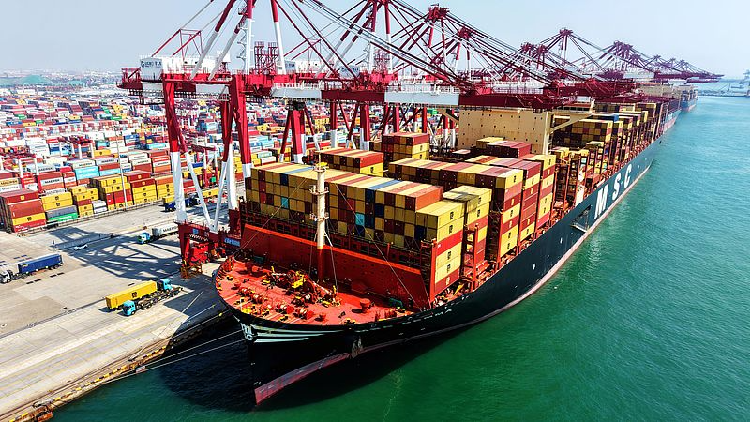
Egypt’s annual urban consumer inflation rose to 14.9% in July, according to the state statistics agency CAPMAS. The agency said the rate stood at 14.3% in June. The figures indicate that price growth in Egypt’s urban consumer market accelerated compared with the previous month.
RReutersOriginal★★★☆☆2026-08-10 09:50

A Chinese company plans to begin a regular container shipping service to Europe through the Northern Sea Route. The weekly service is expected to connect the two destinations in about 20 days. That would reduce the transit time by nearly half, according to the report. The move points to a new scheduled commercial shipping link along the route.
TTASSOriginal★★☆☆☆2026-08-10 08:46
Thermo Fisher Scientific expects its customer base in India to expand by 15% to 20% over the next five years. The head of the company’s India unit said the projection reflects the expanding biopharmaceutical research and manufacturing ecosystem. The company is betting that this growth will create additional demand for its products and services. Its outlook links customer expansion to the development of India’s biopharma sector.
RReutersOriginal★★☆☆☆2026-08-10 08:45

Russia’s jet fuel output is expected to increase by 4% in August, according to the Energy Ministry. The ministry said stocks were at normal levels at the start of the month. It added that supplies could still be increased. The statement presents current reserves as sufficient while leaving room for further growth.
TTASSOriginal★★☆☆☆2026-08-10 07:20
Russia’s Energy Ministry says aviation kerosene production is at a sufficient level. The ministry stated that the volume produced will cover the entire required level of consumption. Its statement presents domestic output as adequate for demand. No additional supply measure or shortfall was cited in the announcement.
China’s Consumer Price Index increased 0.5% year on year in July, according to the National Bureau of Statistics. The rise was 0.5 percentage points lower than the increase recorded in June. Consumer prices therefore remained higher than a year earlier, although the pace of annual growth eased during the month.
C China News ServiceOriginal★★★☆☆2026-08-10 07:04
The first phase of the Bozhong 19-6 gas field in the Bohai Sea has entered full production. CNOOC’s Tianjin branch announced that the project is China’s first gas field with reserves of 100 billion cubic meters. Daily oil and gas output has exceeded 5,200 metric tons of oil equivalent. The milestone marks expanded offshore energy production in China.
CChina News ServiceOriginal★★★☆☆2026-08-10 05:12
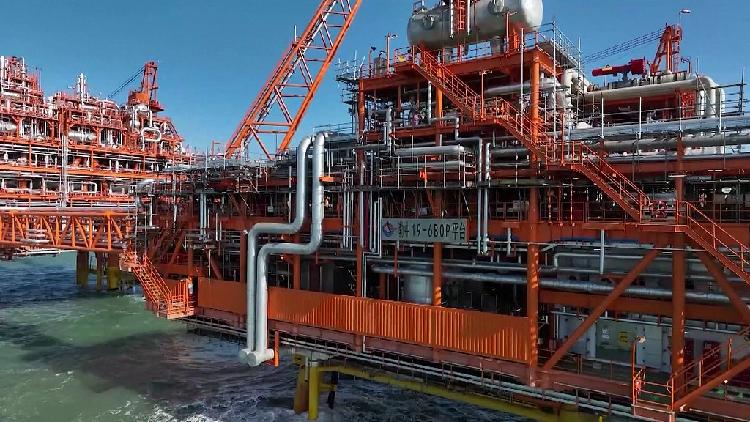
The first phase of China’s Bozhong 19-6 gas field in the Bohai Sea has entered full operation, with daily oil and gas output exceeding 5,200 tonnes, CNOOC said. The field holds more than 200 billion cubic meters of proven natural gas reserves and has produced over 2.8 billion cubic meters. Drilling for its second phase has begun.
Nearly 3,000 people registered to seek work at the eighth Chinese Companies Recruitment Fair in Brazil. The event took place in São Paulo on Saturday. Thirty Chinese companies presented more than 440 available positions. The turnout highlights strong interest from Brazilian job seekers in opportunities offered by Chinese businesses operating in the country.
CChina News ServiceOriginal★★☆☆☆2026-08-10 04:21
Shein encouraged some of its largest Chinese suppliers to establish manufacturing bases in Vietnam. The effort was intended to expand the company’s production footprint outside China. Instead, the experiment failed to develop as planned. The experience has left Shein recognizing that China remains difficult to replace within its supply chain.
RReutersOriginal★★☆☆☆2026-08-09 23:25

Maruti expects India’s passenger vehicle market to expand to as many as 6.3 million units by 2031. The company links the projected growth to a recovery in demand for small cars and a stronger sport utility vehicle segment. Its outlook points to renewed interest in smaller vehicles alongside continued momentum in SUVs.
RReutersOriginal★★☆☆☆2026-08-09 14:40

Imports of state-subsidised electric cars from China reached 172,000 in the year to May, representing 14% of the European market. Sales have been propelled by strong demand and low tariffs in the UK, alongside a sharp increase in Italian buyers. The figures come as Chinese manufacturers face claims that they are “dumping” subsidised vehicles into the EU and UK to expand their market share. They are likely to strengthen demands for quotas and higher tariffs aimed at shielding European carmakers.
TThe GuardianOriginal★★★★☆2026-08-09 14:30
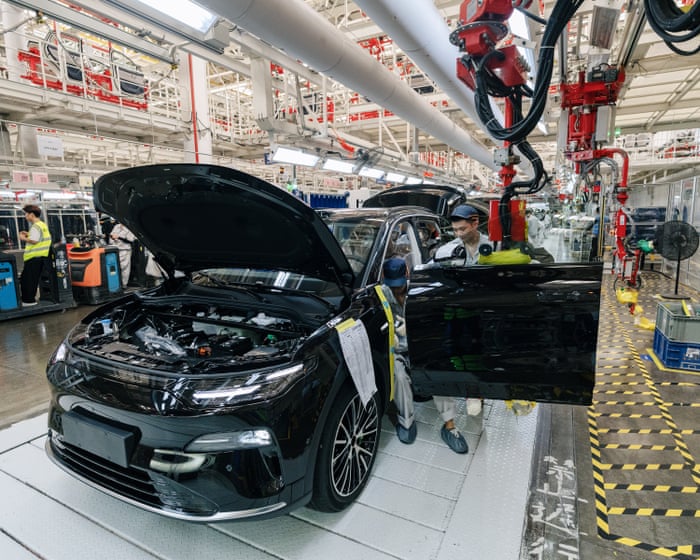
Germany’s trade deficit with China expanded during the first half of 2026, according to preliminary figures. China nevertheless remained Germany’s largest trading partner over the period. The figures were released on Sunday by Germany Trade & Invest, a state-run agency. They also point to Beijing becoming less reliant on European industry.
RReutersOriginal★★★☆☆2026-08-09 06:45

Bloomberg India is inviting readers to follow it on WhatsApp. The channel promises exclusive content and analysis focused on what billionaires, businesses and markets are doing.
BBloomberg NewsOriginal★☆☆☆☆2026-08-09 05:30
A little-known fintech company surged into the spotlight after signing a deal last year with the Trump family’s crypto platform. The agreement helped push its market value above $1 billion. The company has now sold its core business for roughly $12 million. The sale marks a sharp contrast with the valuation it briefly achieved after the deal.
BBloomberg NewsOriginal★★☆☆☆2026-08-08 17:30

Serbia says it will help rebuild Ukrainian cities and provide aid as cooperation between the two countries deepens. The partners are also looking toward a possible free trade deal. Their commitments point to broader economic ties alongside continued assistance for Ukraine. The announcement frames the relationship as expanding through both reconstruction support and trade discussions.
AAl JazeeraOriginal★★★☆☆2026-08-08 17:05

A luxury coffee chain expanding across Manhattan is testing whether customers will pay $32 for an 8-ounce cup. The company is betting that this willingness to spend extends beyond New York to consumers in Los Angeles and Chicago. Its offering pairs a single serving of coffee with an upscale experience. The move reflects an effort to make premium coffee a luxury purchase.
BBloomberg NewsOriginal★★☆☆☆2026-08-08 14:00

The Bank for International Settlements says America’s technology companies are benefiting from the largest investment surge in history. Many of those firms are headquartered on the West Coast. Yet unemployment across the region is among the highest in the United States. The contrast highlights a gap between booming technology investment and weak regional employment conditions.
C CNNOriginal★★☆☆☆2026-08-08 13:30
Africa’s largest economies are stepping up efforts to build domestic solar manufacturing capacity. The push is intended to strengthen self-reliance in the energy sector. Yet China’s presence and influence remain a significant factor as African countries pursue greater control over solar production.
TThe Associated PressOriginal★★★☆☆2026-08-08 12:00

President Donald Trump’s latest effort to shun foreign solar equipment is tied to his campaign to restore US manufacturing strength. The move is intended to build up domestic production capacity. At the same time, it could deepen the rapidly growing divide in green technology between the United States and the rest of the world.
BBloomberg NewsOriginal★★★☆☆2026-08-08 10:30

Rubicon Carbon, backed by TPG Inc.’s Rise Climate fund, will provide financing for carbon credit projects in Indonesia. The Southeast Asian nation is seeking to accelerate the supply of carbon credits. It is also pursuing trading agreements with other countries. The deal centers on investment in blue-carbon projects as Indonesia develops its carbon market.
BBloomberg NewsOriginal★★☆☆☆2026-08-08 09:00

The latest edition of Next Japan offers an inside view of the forces reshaping the country. It examines what may lie ahead for Japanese businesses, markets and consumers. Readers are invited to access the new edition and subscribe to the publication for further coverage of Japan’s changing landscape.
BBloomberg NewsOriginal★☆☆☆☆2026-08-08 07:00
E.L.F. Beauty’s chief executive, Tarang Amin, still appears highly pleased after the company’s most talked-about acquisition to date. He has now been in the role for 12 years. The story examines the $5 billion cosmetics company behind the high-flying Rhode brand and the significance of its latest deal.
BBloomberg NewsOriginal★★☆☆☆2026-08-08 06:30

Canadian negotiators are racing to reach an agreement with the United States before Aug. 19. President Donald Trump has threatened 50% tariffs on a broad range of goods. Canada is warning that imposing the levies would push the trade dispute into an ugly new phase. The deadline is adding urgency to the talks as both sides confront the threat of a sharper confrontation.
BBloomberg NewsOriginal★★★★☆2026-08-08 05:00


Canada is moving quickly to secure a trade deal in an effort to avoid tariffs. At the same time, it has issued a warning. The item also points to a surprise hiring spree, without providing further detail on its scope or significance.
Trump Media & Technology Group ended its agreement with Crypto.com on Friday, a year after the companies had agreed to create a digital treasury company. That venture was intended to purchase billions of dollars’ worth of Crypto.com’s CRO token. The companies also abandoned a plan to offer prediction-market contracts through the Truth Social network.
BBloomberg NewsOriginal★★☆☆☆2026-08-08 03:30

Brazil’s government is asking Congress for room to maneuver in international debt markets, not preparing for a flood of overseas bond sales. The Treasury is seeking authorization to issue as much as $35 billion annually in global markets. Treasury Secretary Daniel Leal said in an interview that the request is about flexibility. He sought to reassure investors that it should not be read as a plan for a major wave of foreign borrowing.
BBloomberg NewsOriginal★★★☆☆2026-08-08 03:00

Several Chinese traders and steel mills have stopped doing business with iron ore traders Radiant World and Sapphire Minmetals Corp., people familiar with the matter said. The move involves multiple buyers in China’s iron ore trade. The people did not provide a reason for the halt or say how long it may last.
BBloomberg NewsOriginal★★☆☆☆2026-08-08 00:30

BlackRock sought to raise billions in debt financing for a Meta Platforms data center. The asset manager wanted to avoid investors seeking a quick profit. The difficulty surrounding AI-related debt is now forcing Wall Street to reconsider how bond sales are structured and marketed.
BBloomberg NewsOriginal★★☆☆☆2026-08-07 23:30

The U.S. economy unexpectedly lost jobs in July. Nonfarm payrolls for the previous month were also revised sharply downward. The weaker labor-market picture could raise questions about whether the Federal Reserve will lift interest rates next month.
RReutersOriginal★★★☆☆2026-08-07 18:05


The US labour market lost 23,000 jobs in July. Education, government and retail were among the sectors reporting significant declines. Labour force participation also fell sharply. The figures point to a weaker employment picture during the month.

The US employment report for July was released on Friday. The report highlights the main points from the latest employment data. The takeaways focus on the state of employment in the United States.
Walmart has addressed an issue involving its shopping carts. The matter may have escaped the notice of most customers. Large consumer companies have been discussing everyday problems that are important to keeping their businesses running. The cart issue is presented as one of those operational concerns.
BBloomberg NewsOriginal★★☆☆☆2026-08-07 17:30

Russia expects to conclude a firm contract with India for Il-114 and SJ-100 aircraft within a year, Deputy Industry and Trade Minister Alexey Gruzdev said. New Delhi is also expressing interest in potentially localizing aircraft assembly. The possible arrangement therefore involves both aircraft deliveries and a future role for India in assembly operations.
TTASSOriginal★★★☆☆2026-08-07 16:46
Canada added substantially more jobs than expected in July, according to data released on Friday. The unemployment rate also fell to its lowest level in two years. The figures offer another indication that the Canadian economy is managing to withstand the effects of U.S. tariffs and international tensions.
RReutersOriginal★★★☆☆2026-08-07 15:25

The yen strengthened sharply after the release of US employment data. Traders are watching for the possibility of intervention in the foreign exchange market. Their caution comes only days after Japanese and US authorities jointly stepped into currency markets. The prospect of another intervention is now shaping market attention.
RReutersOriginal★★★☆☆2026-08-07 15:15

India’s Ola Electric said on Friday that its first-quarter loss had narrowed. The company attributed the improvement in part to stronger sales of electric two-wheelers. Lower operating expenses after a restructuring last year also helped reduce the loss. The results point to an improvement supported by both higher sales and reduced costs.
RReutersOriginal★★★☆☆2026-08-07 14:05

The US economy unexpectedly lost jobs in July, while the unemployment rate eased to 4.1%. Nonfarm payrolls for the previous month were revised sharply lower. The weaker employment picture could prompt questions about whether the Federal Reserve will raise interest rates next month. The figures point to a potentially softer labor market.
RReutersOriginal★★★☆☆2026-08-07 13:05

A summer hiring slowdown weighed on the US labor market in July. The economy unexpectedly shed 23,000 jobs during the month. The Bureau of Labor Statistics released the new data on Friday. The figures point to continued weakness in employment conditions. The decline came as hiring remained subdued across the labor market.

US employers unexpectedly reduced the number of jobs in July. Employment figures for earlier months were also revised downward. The changes suggest that the labor market is encountering difficulties after showing surprising strength earlier this year. The unemployment rate nevertheless declined.

The US labor market has appeared relatively steady so far this year. Hiring has held up after a weak 2025, though the pace has been solid rather than spectacular. July may have brought nearly 100,000 additional jobs. Even so, young people and those already without work continue to face a difficult market.
Corporate America’s use of artificial-intelligence tools is producing gains in profit margins. The payoff offers major relief to investors who had questioned the enormous sums being invested in the technology. Those investments have been concentrated among a limited number of companies. The results suggest that an AI-driven profit boom is now beginning to take shape.
BBloomberg NewsOriginal★★☆☆☆2026-08-07 13:00

Indian consumer inflation was likely higher in July, according to a Reuters poll. A modest rise in food prices may have pushed inflation above the Reserve Bank of India’s 4% medium-term target for a second consecutive month. The reading would point to continuing price pressure in the economy.
RReutersOriginal★★★☆☆2026-08-07 12:05

Dream Finders Homes said it plans to acquire rival Beazer Homes in an all-cash transaction valued at roughly $2.2 billion, including debt. The deal is intended to expand Dream Finders’ scale and make it the sixth-largest U.S. homebuilder. The purchase comes as the housing market remains challenging.
RReutersOriginal★★☆☆☆2026-08-07 12:01

Monster Beverage Corp. reported a 20% increase in sales during the second quarter. The company said demand for energy drinks continues to boom. International markets were identified as a particularly strong source of that demand. The results underscore the beverage maker’s growth beyond its domestic market.
BBloomberg NewsOriginal★★☆☆☆2026-08-07 12:00

The Trump administration has agreed to about $4 billion in settlements this year to terminate planned offshore wind projects in the United States. A deal announced Thursday will pay German utility RWE AG $1.22 billion. Billions of dollars in additional projects remain at risk of cancellation.
BBloomberg NewsOriginal★★★☆☆2026-08-07 11:00

The United States has reached a $1.2bn deal with German company RWE to halt offshore wind projects. The payout is the latest in a series of agreements cancelling wind-energy developments. Wind power has long been derided by Donald Trump, whose administration is pursuing these cancellations.
India is expected to exceed its fundraising target for the current fiscal year, government sources said. The goal is to raise 800 billion rupees, or $8.4 billion, through sales of stakes in state-run companies and other asset-monetisation measures. The additional funds would help ease pressure on public finances caused by the Middle East conflict.
RReutersOriginal★★★☆☆2026-08-07 10:05

South Africa’s textile sector is facing a serious workforce shortage after thousands of migrant workers left the country in recent months. Their departure followed violent protests targeting foreigners. The anti-immigrant group March and March said its campaign aimed to make jobs available to South Africans, about one-third of whom are unemployed. Factory owners in Newcastle say they still have not managed to fill the vacancies left by foreign workers.
FFrance 24Original★★★☆☆2026-08-07 09:35

Airbus delivered a flat number of jets in July, according to company data released on Friday. To meet its target, the planemaker now needs to average 90 deliveries a month for the rest of the year. The company also confirmed orders from China. The figures highlight the delivery pace Airbus must maintain through year-end.
RReutersOriginal★★☆☆☆2026-08-07 09:25

German exports reached a record level in June, offering a boost to the country’s economic outlook. Industrial production also increased for the third consecutive month. Separately, a farm fire in Bavaria killed more than 1,000 pigs. The latest developments combine encouraging economic indicators with a serious agricultural accident.
DDWOriginal★★★☆☆2026-08-07 08:51
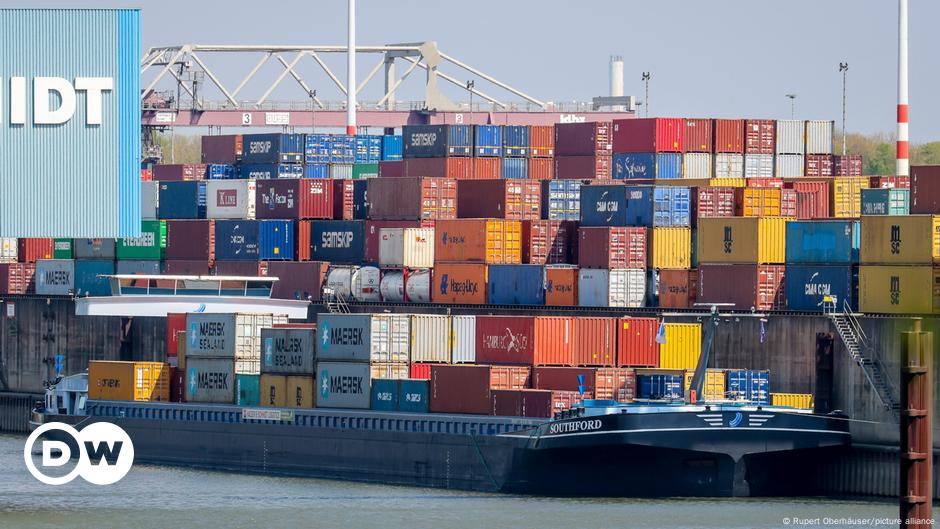

German exports increased by 0.9% in June from the previous month, exceeding expectations. The figures were released on Friday by the federal statistics office. The data points to an improvement in Germany’s export performance during the month. It records a month-on-month rise in the country’s foreign trade shipments.
Global equity funds saw money flow in for an 11th consecutive week. Investor optimism over a strong earnings season, together with softer crude oil prices, encouraged greater appetite for riskier assets. The combination helped improve market sentiment and sustain demand for global stocks.
RReutersOriginal★★☆☆☆2026-08-07 07:35

Urumqi in northwest China’s Xinjiang Uygur Autonomous Region hosted a business-to-business matchmaking event for Uzbek export enterprises. The event ran from Wednesday through Thursday. It provided a setting for export companies from Uzbekistan to pursue business contacts and commercial exchanges in the city.
CChina News ServiceOriginal★★☆☆☆2026-08-07 06:45
Jiangxi recorded 290,000 newly created urban jobs during the first half of 2026. The provincial human resources and social security authorities said the figure represents 71% of the target set for the full year. The data was released on Thursday, indicating that the province has made substantial progress toward its annual urban employment goal.
CChina News ServiceOriginal★★★☆☆2026-08-07 05:37
More than a year after the United States placed reciprocal tariffs on Chinese goods, numerous multinational companies that had relocated production to Southeast Asia are bringing parts of their supply chains back to China. The shift highlights the continuing advantages of Chinese manufacturing and the country’s lasting importance to global industrial networks despite the tariff measures.
CChina News ServiceOriginal★★★☆☆2026-08-07 05:36
Federal Reserve Chair Kevin Warsh wants the bond market to take a greater role in determining the price of money in the United States. He argues that market forces should do more of this work. The upcoming jobs report will provide a fresh test of his preference for offering less guidance.
RReutersOriginal★★★☆☆2026-08-07 05:35

Three new airlines are looking to enter the Australian market. Their plans are shaping up to be the biggest challenge to Qantas’ firm control of domestic air travel since the company was listed in 1995. The prospective entrants could significantly intensify competition across Australia’s domestic airline sector.
BBloomberg NewsOriginal★★☆☆☆2026-08-07 05:15
European and global markets look ahead to the day’s trading. Investors are hoping that the jobs report will deliver a clear and orderly signal about economic conditions.
RReutersOriginal★★☆☆☆2026-08-07 05:00

U.S. employment growth is expected to have strengthened in July. The result would reassure those watching the labor market that it has remained resilient. The unemployment rate is forecast to stay at 4.2%. That would allow the Federal Reserve to keep concentrating on inflation.
RReutersOriginal★★★☆☆2026-08-07 04:10

Singapore lenders OCBC and UOB posted stronger second-quarter profits than analysts had forecast. Revenue from wealth management and other fee-based businesses helped offset the impact of lower interest rates on their core lending operations. Both banks reported the results on Friday, highlighting the support provided by non-lending income as rate pressure weighed on margins.
RReutersOriginal★★★☆☆2026-08-07 03:20

Collaboration software company Atlassian reported fourth-quarter revenue above Wall Street expectations on Thursday. Strong demand for its enterprise software services and cloud-based products helped drive the result. The performance points to continued interest in the company’s cloud offerings.
RReutersOriginal★★☆☆☆2026-08-07 02:30

Asian stocks paused on Friday as investors awaited U.S. employment figures. The data could be pivotal to the Federal Reserve’s interest-rate decision next month. Oil prices extended their gains, highlighting that tensions in the Middle East remain far from resolved. Markets are watching both the labor data and geopolitical risks for clues about the next policy and trading moves.
RReutersOriginal★★★☆☆2026-08-07 02:20

Stock in Elon Musk’s space company climbed Thursday. The increase came even as many SpaceX insiders were given an opportunity to sell their shares for the first time. The development puts the company’s rising stock price alongside a new avenue for insider sales.
TThe Associated PressOriginal★★☆☆☆2026-08-07 01:30

The Minutes Reader extension turns the original page into a focused reading view and translates articles and video subtitles on demand. It is in limited beta.