Galaxy’s data centers generate $79 million in lease revenue but post a small loss

In the first full quarter of Helios leases, Galaxy’s Data Centers unit recorded a $435,000 loss, while Treasury & Corporate drove the company’s recovery.

In the first full quarter of Helios leases, Galaxy’s Data Centers unit recorded a $435,000 loss, while Treasury & Corporate drove the company’s recovery.

Amazon cut about 250 jobs in its devices and services unit on Wednesday, following weeks of product launches that included new Kindle e-readers and tablet computers.
Artificial intelligence is helping drive a US economic expansion that has shown signs of gaining momentum in recent months. Economists expect third-quarter figures due Oct. 29 to show the fastest GDP growth in a year. AI has no separate line in the report, but its influence reaches across many categories.
Alphabet is preparing to release quarterly results after the market close, facing skeptical Wall Street investors looking for signs that the AI trade is gaining strength.

The European Commission approved Austrian state aid for Infineon Technologies to upgrade its existing semiconductor facility in Villach, Carinthia, and turn it into the world’s first high-volume manufacturing site for next-generation semiconductors.
Microsoft is set to report after the market closes and will disclose Azure revenue in dollars for the first time, as it spends heavily to expand AI infrastructure capacity.

Kyivstar has agreed to acquire cloud infrastructure provider GigaCloud for up to $50 million. The deal includes a $41 million purchase price, plus deferred debt obligations, performance-related payments and capital expenditure reimbursements. Ukraine's Antimonopoly Committee approved the acquisition in July 2026, subject to commitments intended to protect competition.

The market’s modest rally faces a key test when tech giants Alphabet and Microsoft report after the closing bell.

SAP is replacing some expensive AI models used in its products with cheaper alternatives. The company expects the shift to generate more than €2 billion in efficiency gains over the next two years.
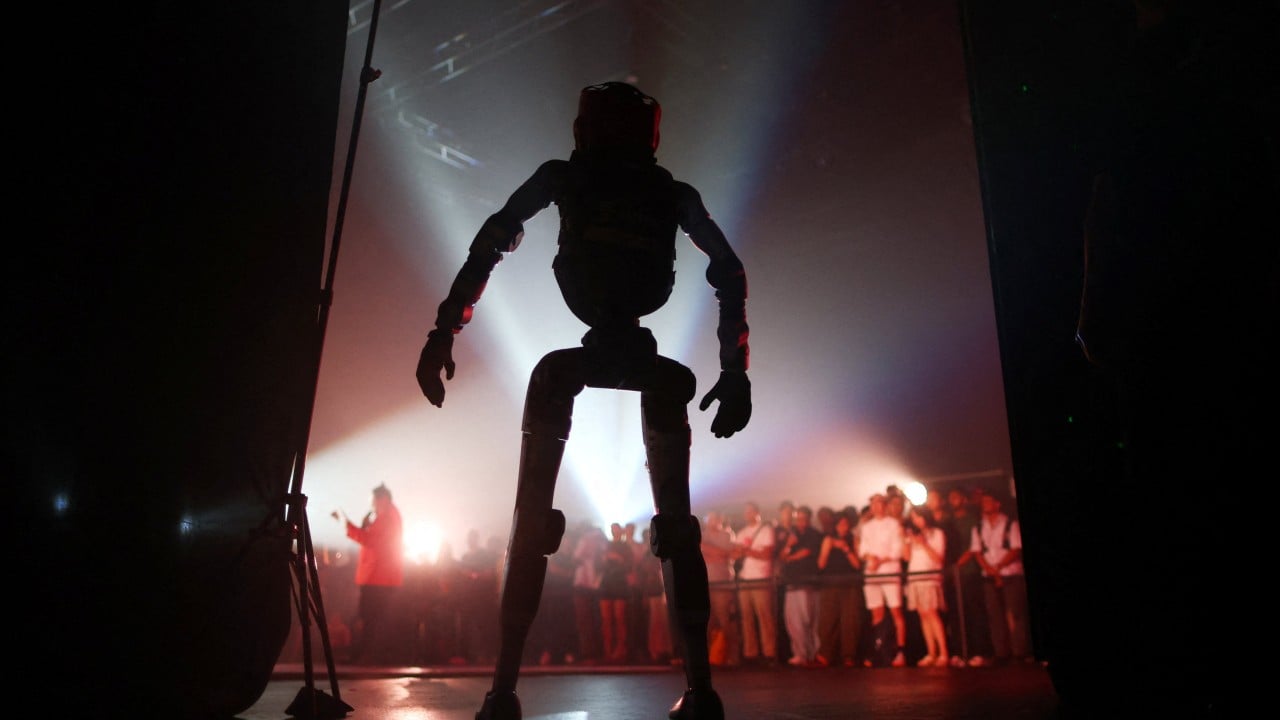
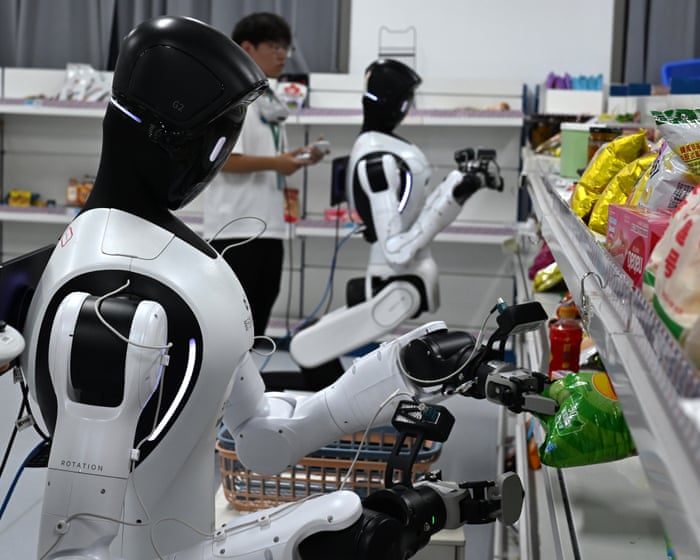
Chinese robotics company Unitree Robotics reported its first results since going public, with revenue rising 69.93 per cent year on year to 665 million yuan in the three months through September 30. Net profit excluding non-recurring items fell 17.42 per cent to 105 million yuan as research and development spending surged.

Belgian chipmaker Melexis has secured more design wins in China than in Europe, CEO Marc Biron said on Wednesday, highlighting the market’s growing importance to the company amid broader concerns over geopolitical tensions and supply chains.
A poll of 50 CEOs at large Canadian companies found nearly half are looking to use AI to build smaller, more productive workforces.
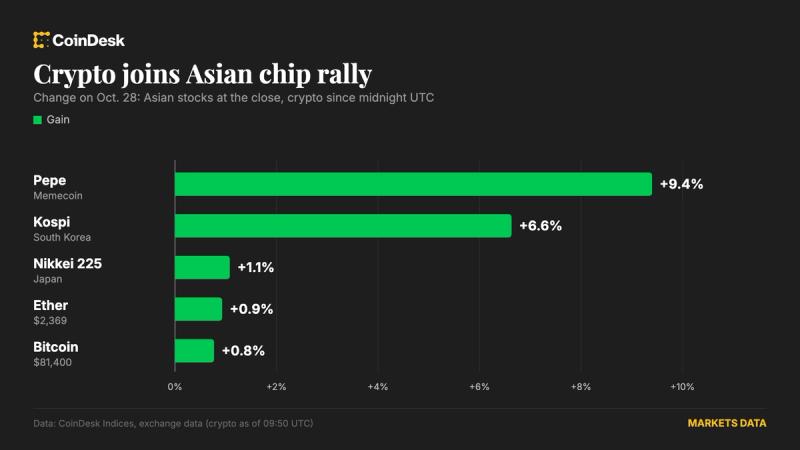
Bitcoin climbed above $81,400 as Asian chip stocks rallied, while frog-themed memecoin pepe gained 9%.

An AI version of the Federal Reserve votes to leave interest rates unchanged. The headline asks whether the real Fed will do the same.
Upcoming results from Alphabet and Microsoft will offer another reading on the state of AI.

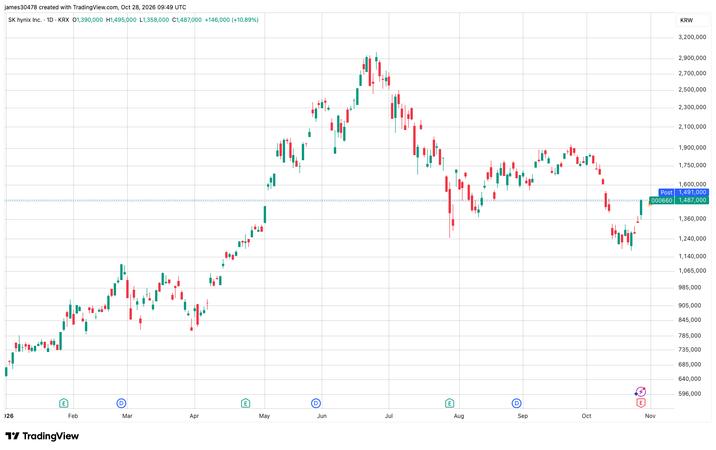
South Korean chipmakers led a wider rebound in AI-related stocks after SK Hynix reported a sevenfold profit increase and announced a further $45 billion in shareholder returns.

SK Hynix said it plans to return about $45 billion more to shareholders after profit rose seven-fold, beating expectations. The result reflects robust memory-chip demand driven by the rollout of AI infrastructure.
South Korean chipmaker SK Hynix announced a shareholder return plan worth $75 billion. It reported on Wednesday that third-quarter operating profit rose more than sevenfold to a record, beating forecasts as continued AI infrastructure demand lifted memory chip prices.

South Korean chipmaker SK Hynix reported third-quarter earnings on Wednesday, with profit sharply beating estimates as AI memory demand provided a boost.
Waaree Energies, India’s largest solar module maker, is expanding US manufacturing and localising supplies in a bet on rising electricity demand from data-centre growth, CFO Abhishek Pareek said.
Mukesh Ambani’s Jio Platforms rose as much as 23% on its trading debut after raising a record $3.1 billion in India’s biggest IPO, putting it on course to become the country’s second-most valuable listed company.
Jio Platforms shares jumped 21% on their Mumbai debut on Wednesday, launching India’s biggest-ever IPO on a strong note and marking the first listing in two decades for Mukesh Ambani’s Reliance Industries.
The telecoms business raised $3.2bn at a $108bn valuation in India’s largest IPO, with its shares climbing 21. The listing offered relief to a stock market battered by the war in Iran.

Jio Platforms, backed by Meta and Google, rose more than 21% on its trading debut after a record IPO.
Jio Platforms Ltd. is set to begin trading Wednesday at a $107 billion valuation, putting a price on several bets: Mukesh Ambani’s belief that cheap data can underpin the digital economy of 1.5 billion people, Google and Meta Platforms Inc.’s backing of him, and Indian Prime Minister Narendra Modi’s digital push.
Jio Platforms, the telecoms and digital unit of Asia’s richest man Mukesh Ambani, is set to list in Mumbai on Wednesday. Its $3.2 billion IPO attracted $77 billion in bids, making it India’s most-subscribed offering ever.
The item says the AI bubble has already burst in China and adds a brief positive note about Chinese government bonds.
Asian technology shares jumped after blockbuster earnings from SK hynix and renewed optimism about AI. Investors also weighed Israel’s election results and awaited major US tech earnings and the Federal Reserve’s policy decision.
Datavault AI said it could not withdraw bitcoin held on Biconomy. An accounting correction will reduce its reported assets at the end of 2025 by $92.2 million.


Datavault AI shares plunged 50% after the company said it could not withdraw bitcoin connected to a $150 million deal. Scilex had agreed to buy Datavault AI shares for that amount, payable in bitcoin.
The second phase of the 140th China Import and Export Fair opened Tuesday in Guangzhou. Some Chinese companies in the daily-use ceramics section are using AI to generate designs and 3D printing to accelerate prototyping, helping products reach overseas markets faster.
Newly authorised derivatives are powering the latest effort to give investors access to highly sought-after private assets through bets on companies including Anthropic and OpenAI.
Widespread AI use is changing how businesses operate globally, including through analysis of large datasets. Citi’s head of wealth for Asia South, Yeo Wenxian, says growing AI adoption and globalisation are changing how businesses and clients approach wealth management and making the process more personal.

As investors turn away from the AI trade, China’s “national team” of funds and brokers is buying stocks to support the markets.
Global equities rose as investors continued to wager on the outlook for AI-driven tech companies. Wall Street gains carried into Asian markets, where South Korea’s KOSPI led advances after SK Hynix reported a sharp rise in third-quarter operating profit. Investors are awaiting major technology companies’ earnings to assess returns on AI spending.

At the 140th Canton Fair in Guangzhou, Chinese ceramic makers are showcasing how AI and 3D printing help them adapt designs to overseas preferences and speed product development. One company uses AI to analyze popular patterns and colors, while another says the technologies cut prototyping from weeks to hours and development costs by 60%.
Asian stocks rose on Wednesday as enthusiasm for AI revived ahead of earnings from major industry players later in the US day. The dollar held firm before the Federal Reserve’s policy decision.
Suzhou Dongshan Precision Manufacturing fell as much as 6 per cent on its Hong Kong trading debut after a lacklustre HK$9.9 billion IPO. The supplier of components for AI servers was caught in a deepening sell-off in China’s AI and tech hardware sectors.

Massive conversions of notes reveal the true extent of Amazon’s ownership in Anthropic. The IPO is expected to bring Amazon much greater gains than those enjoyed by venture capital firms.

Anthropic has published its US listing documents, disclosing details of its revenue, losses, spending, customer base and control, as well as warning that advanced AI could pose catastrophic risks. Its growth depends on developing models and securing infrastructure such as chips and data centres. Analysts say heavy costs and reliance on a small number of major customers leave its profitability unclear.


Anthropic’s S-1 filing ahead of its anticipated IPO lists hundreds of risks to the company. Alongside familiar concerns such as competition, costs and regulation, it raises possibilities including AI blackmailing people, becoming sentient or threatening humanity.
Major Indian brokerages are giving millions of retail investors access to U.S. markets through local trading apps, prompting a rush into shares of companies including Nvidia, SpaceX and Apple.

UPS CEO Carol Tome told Reuters on Tuesday that the AI data center boom offers the world's largest parcel delivery and logistics company an opportunity lasting decades. UPS aims to raise profits by handling fewer, higher-value shipments.
Credit markets will closely monitor updates from Oracle and other hyperscalers later this week.

Bank of America reminded customers not to share their banking passwords with AI assistants, saying they are responsible for activity resulting from AI agents’ access.

Anthropic’s $131.7 billion cash hoard is larger than that of every U.S. non-bank company except Berkshire Hathaway and Alphabet.

An eight-bedroom mansion in San Francisco’s Presidio Wall neighborhood sold for $28.5m, $10m above its $18.5m asking price, setting a city record. The report links rising housing costs to highly paid AI workers and notes growing competition at the top end of the market.

Oracle said on Tuesday it is widening its cloud AI chip arrangements with Nvidia while diversifying its offerings to include products from rivals Google, part of Alphabet, and Cerebras Systems.
Anthropic’s initial public offering is on course to become the largest ever.

Anthropic has promoted its models in press releases and posts as potential sources of scientific breakthroughs. Its IPO filing, however, takes a more cautious view of how soon AI could lead to major discoveries.
After a punishing week for the AI trade, Anthropic opened its books to prospective IPO investors. Wall Street generally liked what it saw after taking a close look.
Anthropic’s IPO provides a rare glimpse into the business of frontier AI.

US AI giant Anthropic has filed public regulatory paperwork as it prepares to go public. Also featured: France plans a special disaster fund for businesses affected by riots and looting, while Apple's new high-end folding iPhone screen has developed unwanted lines.
Anthropic could make history with what may become the largest initial public offering ever.
ASM International forecast on Tuesday that fourth-quarter revenue would exceed expectations and said AI-related capacity investments would help it meet its 2030 sales target three years ahead of schedule.
Disruptive has raised a $10 billion fund to make large investments in at least 10 companies. In recent years, it has drawn attention for putting substantial money into chip startup Groq and AI voice-generation startup ElevenLabs.

Argentum AI is discussing a $5 billion package to finance AI chips with a major private-credit lender, according to two people briefed on the matter. The cloud provider is backed by Super Micro.
Meta Platforms’ enlarged $25 billion share sale drew demand for about five times the shares on offer, according to people familiar with it. The company is seeking to raise $98 billion for AI spending.
Executives leading a company’s AI rollout may find themselves competing for the top job—or being pushed out.
As technology investment surges, finding ways to protect against risk is becoming more urgent and more difficult.
At Anthropic and Meta, the divide is widening between shareholders with influence and those with none.
Luxor plans to grow its AI business and hire about 12 people by year-end, COO Ethan Vera told The Block.

Meta plans a $95bn equity issue as rival Anthropic conducts an IPO, with the headline pointing to the Hotelling effect.
General Motors will transfer its listing from the New York Stock Exchange to Nasdaq as it accelerates its artificial intelligence efforts. The move deals another blow to the Big Board as its technology-focused rival draws some of the world’s most valuable companies.
Luxor raised $16 million to expand into AI hardware and trading, betting that computing power could become a market where companies hedge costs and prices.

World Bank President Ajay Banga told CNBC’s “Squawk Box” on Oct. 27 that capital availability was “not really an issue” as AI demand drove borrowing costs higher.

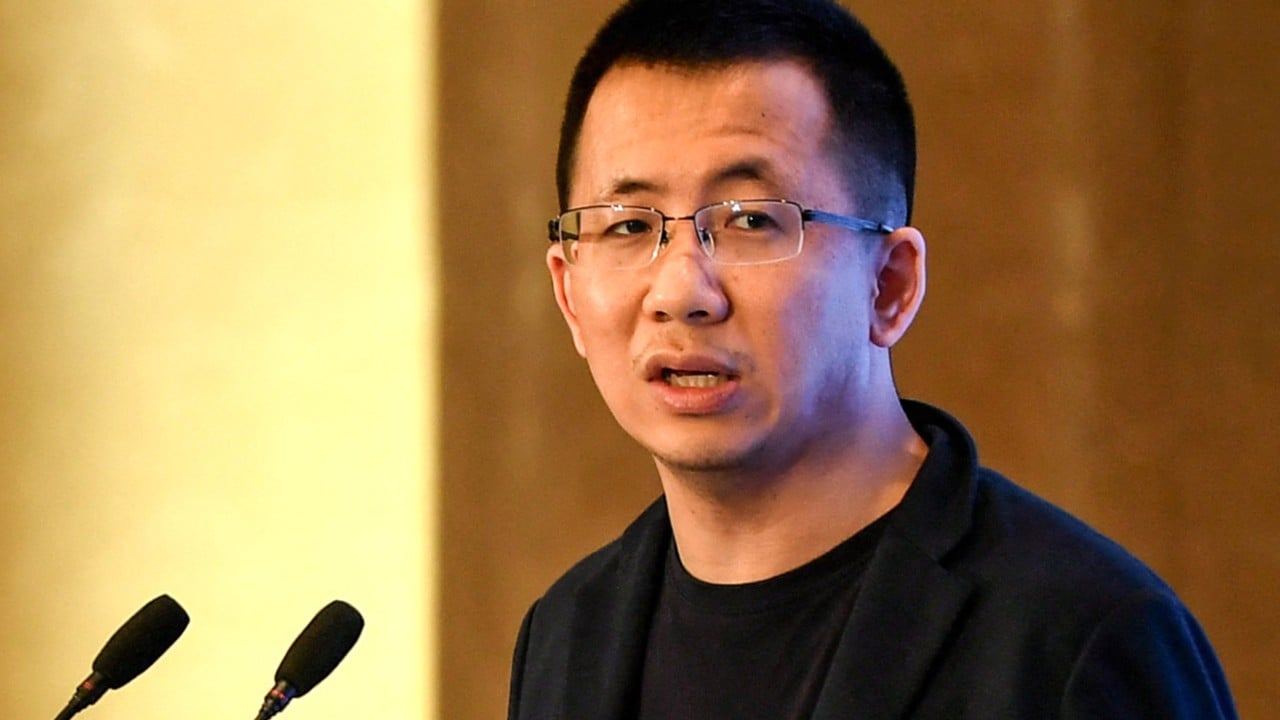
Zhang Yiming has regained the title of China’s richest person, with a fortune of €89.4 billion driven by AI. The technology sector is booming while traditional industries struggle.
Shares in Dutch chip equipment maker Besi rose on Tuesday after US rival Applied Materials said it intends to increase its stake from 9% to roughly 20, strengthening ties centered on technology for making AI hardware.
The relief rally in tech stocks is continuing as investors turn their attention to difficult decisions facing the Federal Reserve.

Interest rates and oil prices are falling, while equities are rising; crypto remains under pressure.

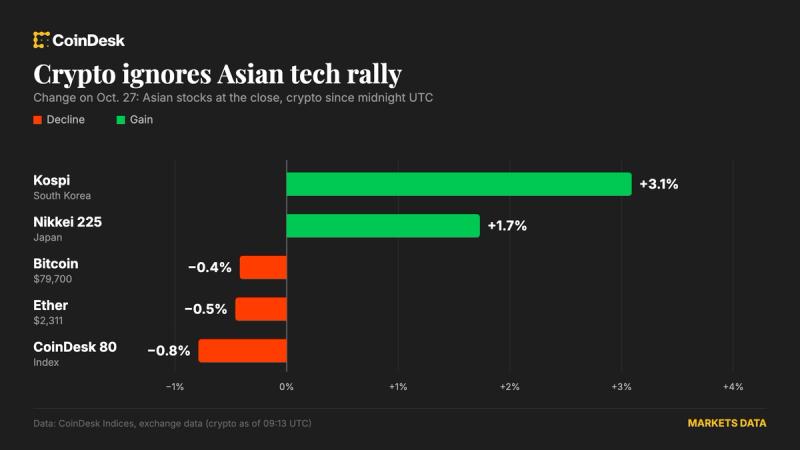
Bitcoin slid 0.4% to about $79,700 since midnight UTC, while Asian technology stocks rallied. The DeFi index lost 1.8%, and the Federal Reserve is set to start a two-day meeting.
Zhang Yiming, ByteDance’s founder, has regained the top spot on China’s rich list with a fortune of US$99.7 billion, up 43 per cent and a record for the country’s richest individual. The Hurun Research Institute linked the rise to ByteDance’s aggressive expansion into AI.

Jason Calacanis is urging investors to sell bitcoin and back artificial intelligence. He also holds TAO, the cryptocurrency associated with the AI network Bittensor.

South Korea's economy grew faster than expected in the third quarter. Analysts warned that heavy reliance on the chip industry leaves the country vulnerable if global AI spending slows.

South Korea’s GDP grew 1% quarter-on-quarter and 3.4% year-on-year in the third quarter, exceeding the Bank of Korea’s August forecast of 0.3% quarterly growth. Strong demand for AI-related semiconductors boosted exports, while private consumption fell 0.2%.
Asian stocks were mostly higher, as buying in AI-related shares lifted benchmarks in Tokyo and Seoul. US futures edged up, while oil prices extended their declines.
Meta announced Monday that it plans to raise a total of $95 billion to support its investments in artificial intelligence infrastructure.

Microsoft is offering voluntary buyouts to about 60,000 employees—more than a quarter of its global workforce—as it seeks to contain costs and fund major AI investments. Eligible staff at level 70 and below in participating teams in Canada, India, the UK and US can take part; marketing, commercial business and security are excluded.

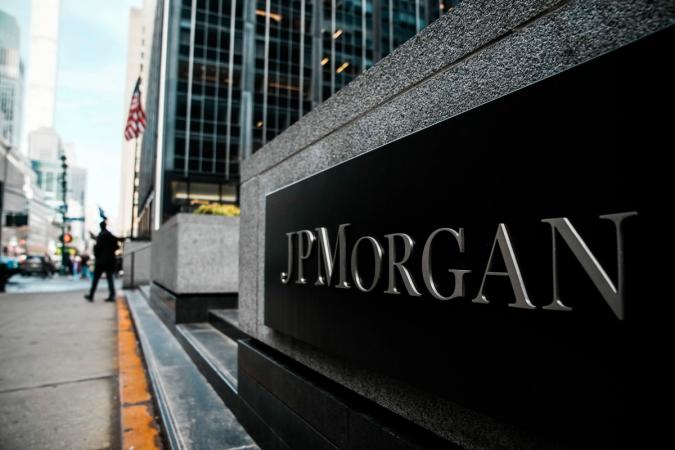
JPMorgan says that as default insurance costs for several AI-linked firms reach record levels, companies must prove they can fund investment, service debt and ultimately generate cash to gain lenders’ confidence.

The European Commission’s EU Inc initiative promises to strengthen the EU startup market and keep startups from relocating abroad. But roadblocks could make adoption by 2026 difficult, raising questions about whether the “28th regime” will survive.
South Korean semiconductor exports could be $50 billion to $100 billion below earlier forecasts if major U.S. technology firms slow their capital spending on AI next year, according to central bank data.
Mizuho said Circle’s medium-term reserve revenue could face 10% to 20% downside risk as AI agents steer USDC holders toward higher-yielding fiat alternatives.

A look at the day ahead in European and global markets, with attention focused on AI.
Anthropic’s IPO prospectus is out, offering major financial takeaways about the start-up.
China’s stock market has shed $2.4tn since May as investors question whether Beijing’s AI boom can last. The STAR 50 Index has fallen 40% since June, while other major-company indexes are down about 20%. Weak profits, domestic demand and the prospect of wider US restrictions on Chinese technology are adding to the sell-off.

Global markets rose as the AI trade regained momentum, with Asia following Wall Street higher after Anthropic filed for its long-awaited IPO.

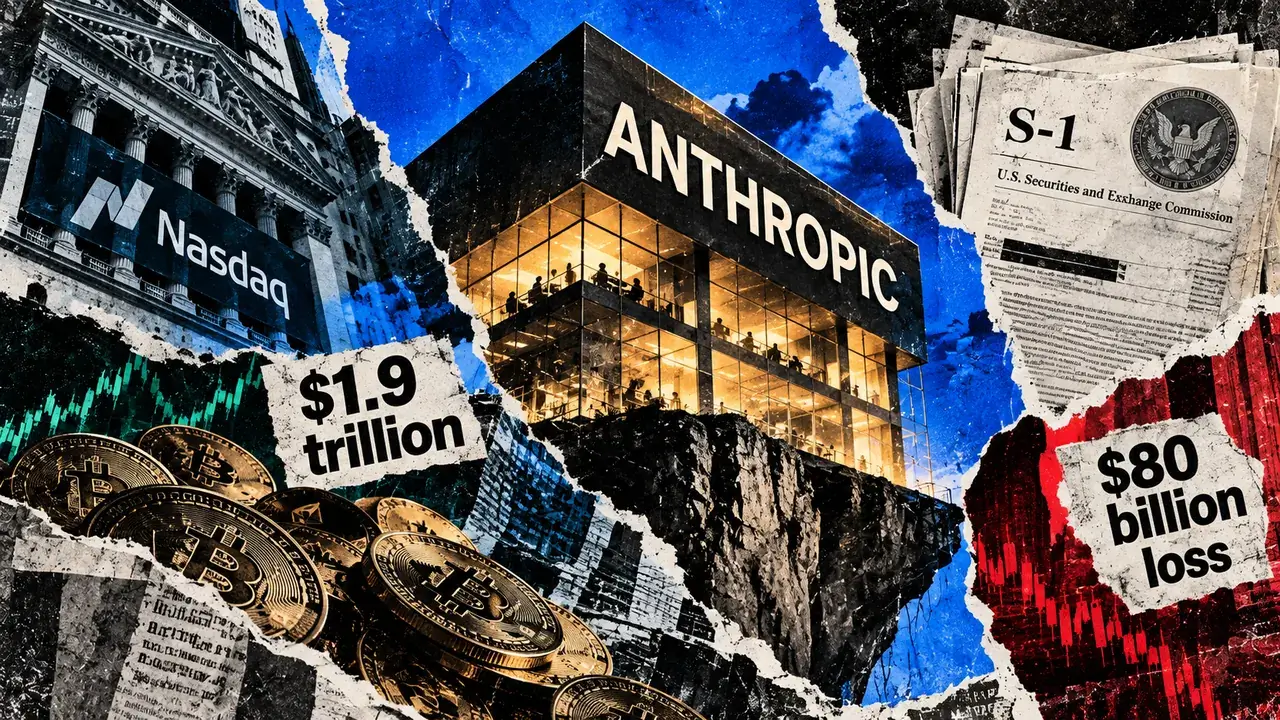
Anthropic has publicly filed for an IPO, planning to list Class A shares on Nasdaq under the ticker ANT without yet setting the offering size or price range. Revenue reached $16.29 billion in the first half of 2026, while its $80.7 billion net loss mostly reflected accounting valuation changes. The company also disclosed substantial computing costs and infrastructure commitments.
Crypto-market participants put Anthropic's value close to $2 trillion, while an investor cautioned that its listing could signal the AI bubble has reached its peak. The Claude maker is pursuing a Nasdaq debut under ANT after lodging an S-1 with the US securities regulator on Oct. 26. It reported an operating profit for the quarter, with Goldman Sachs and Morgan Stanley heading the deal.

AI company Anthropic has publicly filed for an IPO with US market regulators. Its filing shows first-half 2026 revenue surged to $16.3 billion while its net loss widened to more than $80 billion, and includes nearly 100 pages on investment risks.

Anthropic was founded in late 2020 by senior OpenAI employees who believed the company was not giving AI ethics and safety enough priority. In just a few years, it has become an AI powerhouse and is expected to pursue one of history’s largest and most closely watched IPOs.

Anthropic’s hundreds-of-pages-long S-1 filing leaves out numerous financial details. One analyst told WIRED that the company owes investors more information.

Claude maker Anthropic has filed to go public, setting the stage for what could become one of the largest stock market debuts ever.

Anthropic has filed paperwork for a stock market debut that could raise as much as $100 billion, according to reports. Analysts estimate a valuation of $1.5 trillion to $2 trillion. The company remains unprofitable, reporting an $80.7 billion net loss in the first half of 2026, and plans to trade on Nasdaq as “ANT.”
Anthropic’s prospectus sets out the AI lab’s “mission,” its $800 billion in data centre commitments and an extraordinary governance structure.
The article argues that valuing the AI lab on the basis of its historically reported figures is a futile exercise.

Anthropic’s S-1 filing details pay and security costs for co-founders Dario and Daniela Amodei, unusual risks involving AI, and enormous commitments to secure computing capacity. It also says the seven founders will retain 50.1 percent of shareholder voting power on key matters through Founder LLC.
Anthropic PBC says it expects closer scrutiny of its handling of environmental and social tensions tied to the expansion of AI infrastructure.

Anthropic has filed for a possible Wall Street debut next month that could eclipse SpaceX’s IPO. The filing reports a first-half 2026 net loss of $80.7bn and revenue of about $16.3bn, while highlighting risks from powerful AI and warning that revenue growth may slow. The offering’s size and valuation remain uncertain.

Anthropic’s S-1 says more than half of customers spending over $100,000 now use both Claude Platform and a first-party app. The Amazon-like cross-selling strategy is helping make enterprise customers stickier.
Anthropic PBC filed for an IPO on Monday. The report highlights five key takeaways for investors.

Artificial intelligence startup Anthropic has released its IPO filing publicly for the first time, ahead of an offering expected to rank among the largest stock debuts in history. NBC News' Allie Canal reports on the company ahead of its IPO.

Anthropic filed documents on Monday ahead of a blockbuster IPO, offering insight into its finances, risk factors and views on AI’s future.

Anthropic has formally filed for an initial public offering, disclosing rapidly rising revenue, growing losses and widespread enterprise adoption. Its filing also describes an unusual governance structure intended to preserve founder control and the company’s AI safety mission.
The AI company submitted paperwork Monday for a potential stock-market debut that could become the largest IPO ever.

Anthropic, the company behind the Claude chatbot, has formally filed for an initial public offering. It has been among the leaders in AI development.

Anthropic has filed an S-1 prospectus with the SEC and says it plans to list on Nasdaq under the ticker ANT, seeking to beat OpenAI to an IPO. The filing says the company recorded $16.3 billion in revenue and an $80.7 billion net loss in the first half of the year.
Anthropic PBC has filed for an IPO, moving closer to becoming the first publicly listed company focused primarily on developing the most advanced artificial intelligence models.

Anthropic has disclosed details of its business for the first time and says it plans to sell shares to the public in what could be the largest market debut in history. It plans to list on Nasdaq under the symbol ANT; the number of shares and price range have not yet been set.
Artificial intelligence company Anthropic filed papers Monday to sell shares publicly for the first time.

Claude maker Anthropic reported first-half revenue of $16.3 billion and a net loss of $80.7 billion as it targets mid-November pricing for its offering.

The AI company has filed a prospectus laying out its pitch to investors as debate over the technology’s safety grows more intense.
Anthropic has filed to go public. Its stock market debut would come as the company’s CEO has warned that the technology could harm humanity.

Artificial intelligence startup Anthropic has made its first public IPO filing, ahead of a stock debut expected to rank among the largest in history.
A close read of Anthropic’s 335-page S-1 comes as its planned public offering could set a record for scale.
Anthropic PBC plans to publicly file for an initial public offering at about 9 a.m. New York time Monday, according to people familiar with the matter. The AI model maker is nearing a debut that could set a record.
Bond traders have reason to worry that artificial intelligence will take over parts of their jobs, though the shift will be partial and gradual.
Asian stocks jumped on Tuesday after Anthropic’s eagerly awaited IPO filing boosted risk appetite. Investors were also looking ahead to technology earnings that could test enthusiasm for AI, and central bank meetings with implications for near-term interest rates.
The Minutes Reader extension turns the original page into a focused reading view and translates articles and video subtitles on demand. It is in limited beta.