September risks are stacking up hard and fast for world markets
Traders returning from their August breaks will face a range of market risks, including growing concern over elevated government debt and inflation that may persist.
The Bank of Russia bought yuan worth 5.9 billion rubles ($68.64 million) on the domestic market for settlement on August 27, 2026. Purchases settled on August 26 amounted to 6 billion rubles ($69.81 million). The operations use the yuan-ruble instrument on the Moscow Exchange.
Treasury yields were little changed as investors focused on Kevin Warsh’s keynote speech at Jackson Hole.


Warsh’s Jackson Hole speech could shape expectations about Federal Reserve support for Treasury buybacks, with potential consequences for bitcoin, gold and long-term yields.
Rae Wee looks ahead to the day in European and global markets as Warsh heads into the Jackson Hole hot seat.
China’s Cross-border Interbank Payment System now serves 192 countries and regions, the People’s Bank of China says. By the end of June 2026, it had 210 direct and 1,619 indirect participants, with access through more than 5,200 banking institutions. China also plans longer high-value payment-system hours and broader fast-payment and cross-border QR-code interoperability.
Cash holdings in Russia’s economy continue to rise, while a structural liquidity deficit is emerging in the banking sector, Sberbank CFO Taras Skvortsov said. He expects about 4.2 trillion rubles in liquidity to shift into cash by the end of 2026, but believes the financial market remains resilient enough for conditions to normalize.
China’s new economic growth drivers index reached 153 in 2025, up 12.5% from a 2022 base of 100, according to the National Bureau of Statistics’ Institute of Statistical Sciences. All four sub-indexes rose, led by a 22.7% increase in transformation and upgrading and a 12.9% rise in innovation-driven growth; together they contributed 65.5% of the overall increase.
Markets are awaiting a much-anticipated speech by Federal Reserve Chairman Kevin Warsh after recent volatility in bond yields.

Federal Reserve Chair Kevin Warsh is due to address international economists and central bankers on Friday. Investors worldwide will look for more detail on the economy, recent bond-market volatility and risks to the U.S. and global outlooks.
US consumer spending is rising, but not in the areas that would signal a healthy expansion, suggesting some strain among consumers.
Tokyo’s annual core inflation accelerated for a third consecutive month in August, data showed, indicating that price pressures are broadening and strengthening the case for a rate hike as early as next month.
Indian shares opened higher on Friday after two consecutive sessions of losses. Caution could persist ahead of a speech by the Federal Reserve chair and following sharp swings under the new closing auction mechanism.
The Indian rupee is expected to open little changed on Friday, with steady importer demand for dollars offset by continued central-bank support. The tug-of-war is likely to keep the currency near 95.50 per U.S. dollar ahead of the Federal Reserve chief’s closely watched speech.
Asian shares turned cautious on Friday after a technology rally fueled by Nvidia, while currency and bond markets awaited remarks from the world’s most powerful central banker on U.S. interest rates.
The Trump administration wants G20 finance leaders meeting in the United States next week to agree on measures to support economic growth, reduce global imbalances and address sovereign debt challenges. A senior Treasury official said Washington will also press them to cut off Iran’s economic lifelines.
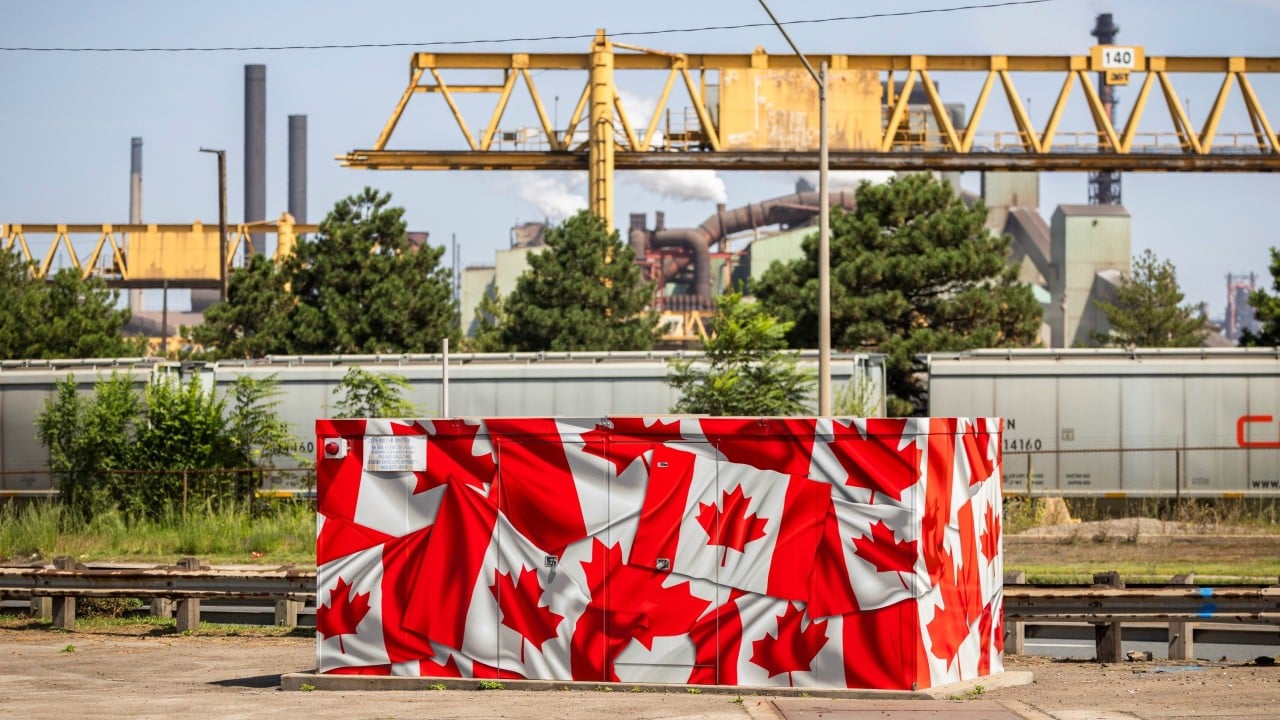
Canada’s leading economists told the finance minister that damage from the escalating trade war with the US should be manageable, potentially strengthening Prime Minister Mark Carney’s argument for walking away from the talks.
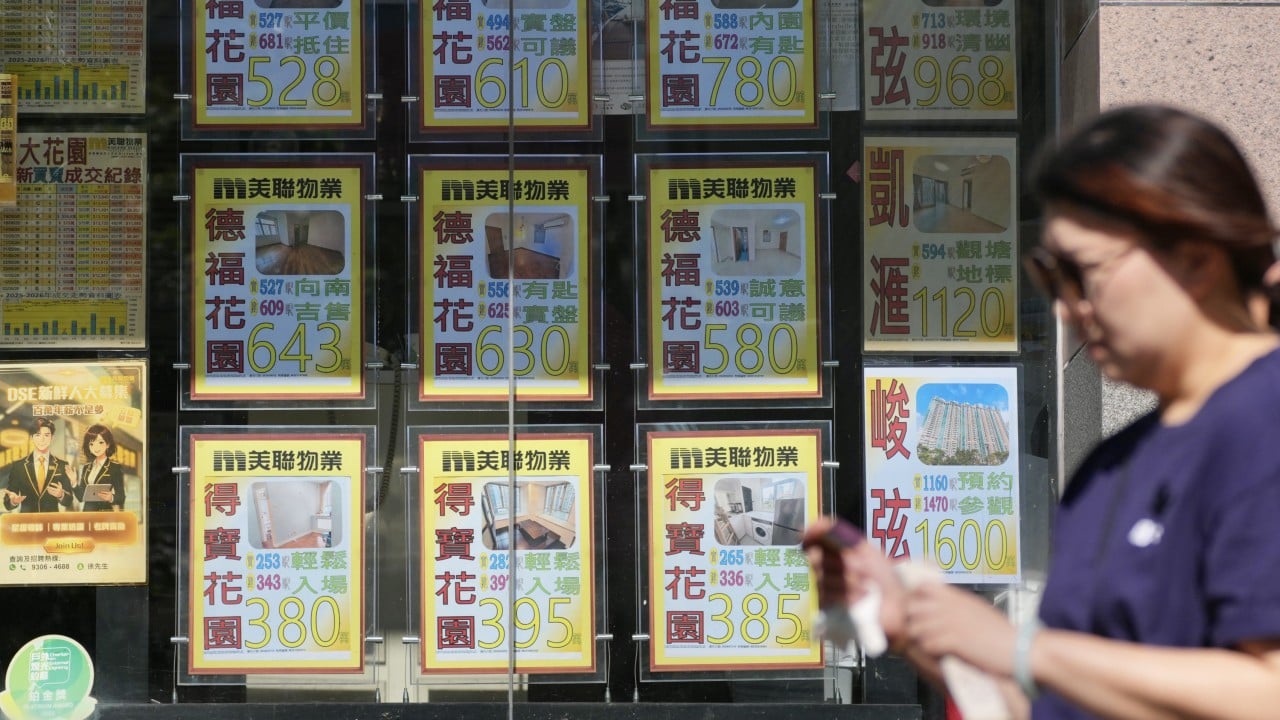
Hong Kong lived-in home prices fell 0.46% in July, ending a 13-month rise, official data showed. The second-hand home index dropped from 323 in June to 321.5, marking its first decline in 16 months as concerns over mainland Chinese taxes weighed on demand.

Brazil’s oil export levy now faces conflicting decisions: a local court ordered collection halted on Thursday, while the government’s foreign trade chamber approved extending the measure for another 60 days.
Russians will be able to pay with digital rubles from September 1, when the law creating the new form of currency takes effect. Issued by the Bank of Russia, digital rubles will equal cash and bank-account rubles, operate through central-bank digital wallets, and be usable for payments and transfers. Transactions will not be anonymous, as the central bank and Rosfinmonitoring can access the data.
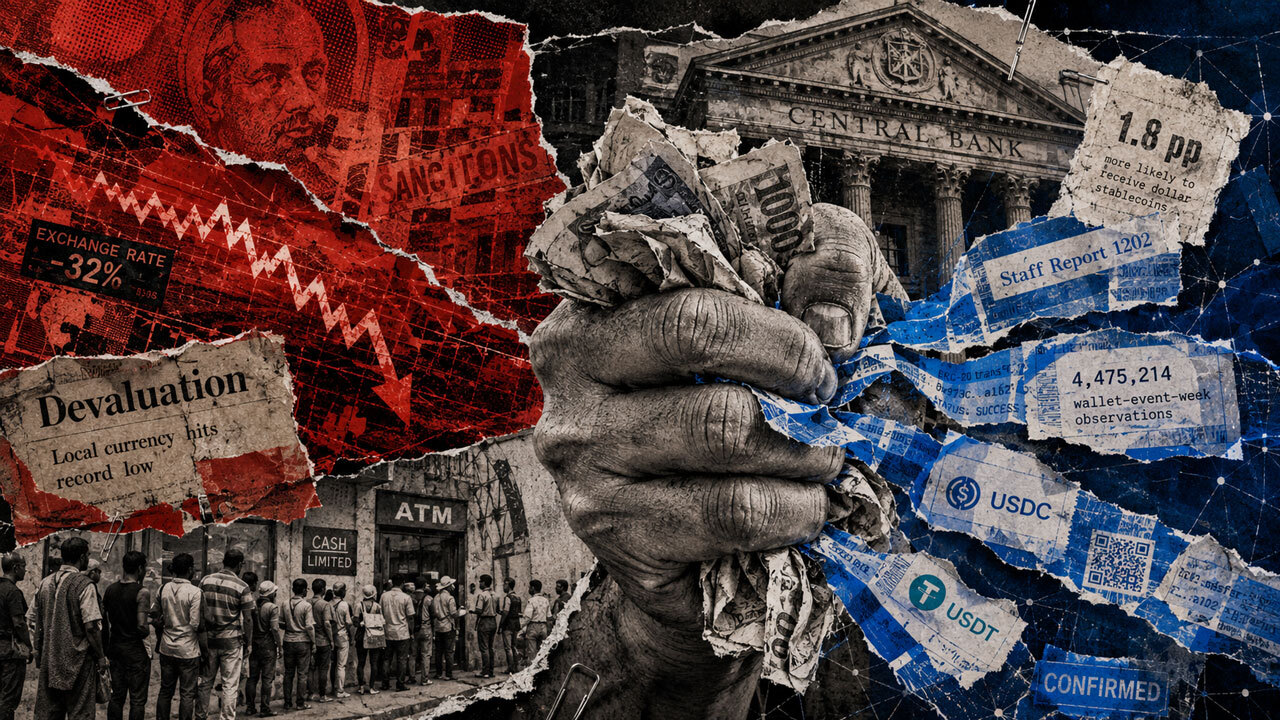
A New York Fed study found that wallets linked to countries facing currency or banking crises were more likely to receive dollar stablecoins, with receipt volumes rising during crisis weeks. The researchers say stablecoins give households and businesses a way to obtain dollar exposure outside domestic banking channels, potentially weakening capital controls in future crises.

Ukraine’s Economy Ministry has lowered its growth forecast for the year from 1.3% to 0.5% as Russian attacks target businesses, energy and logistics infrastructure, and Black Sea ports. Steel, agriculture, retail and exports are suffering, while strikes hit the Zaporizhstal plant and distribution facilities across the country.

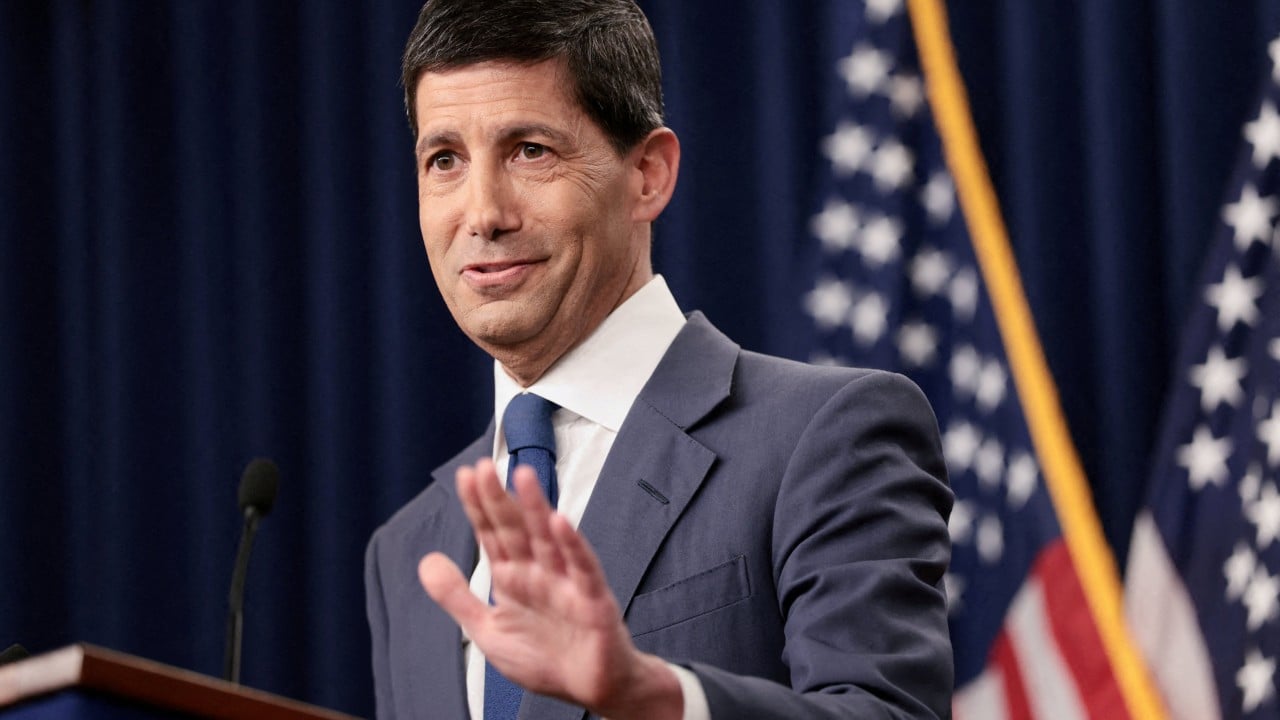
Federal Reserve Chair Kevin Warsh is set to give a major speech at Jackson Hole on Friday. Previous Fed chairs have used the address to outline broad policy frameworks and signal their intentions.

Fed chair Kevin Warsh will need to reassure markets in his forthcoming speech.

Crypto traders are watching for Fed Chair Kevin Warsh’s speech in Jackson Hole. One analyst expects him to take a tough stance on inflation, while still predicting that the Fed will delay rate hikes until at least after the November midterm elections.

Investors are preparing for Kevin Warsh’s first speech as chair of the US Federal Reserve at the central bank’s annual economic policy meeting. His comments on the US interest-rate outlook at Friday’s Jackson Hole symposium could offer clues for markets, including stocks and bonds recently pressured by rising Treasury yields.

Treasury yields edged lower as investors prepared for the release of initial jobless claims data and a closely watched speech by Federal Reserve Chair Kevin Warsh.
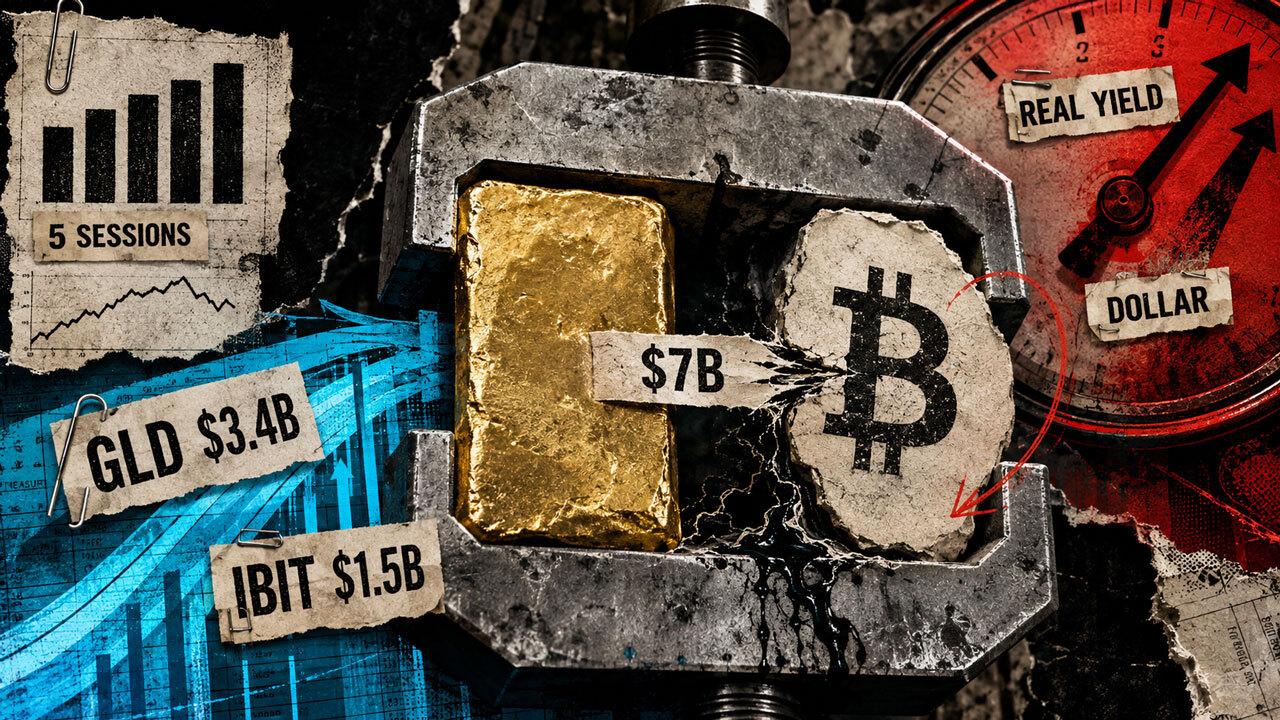
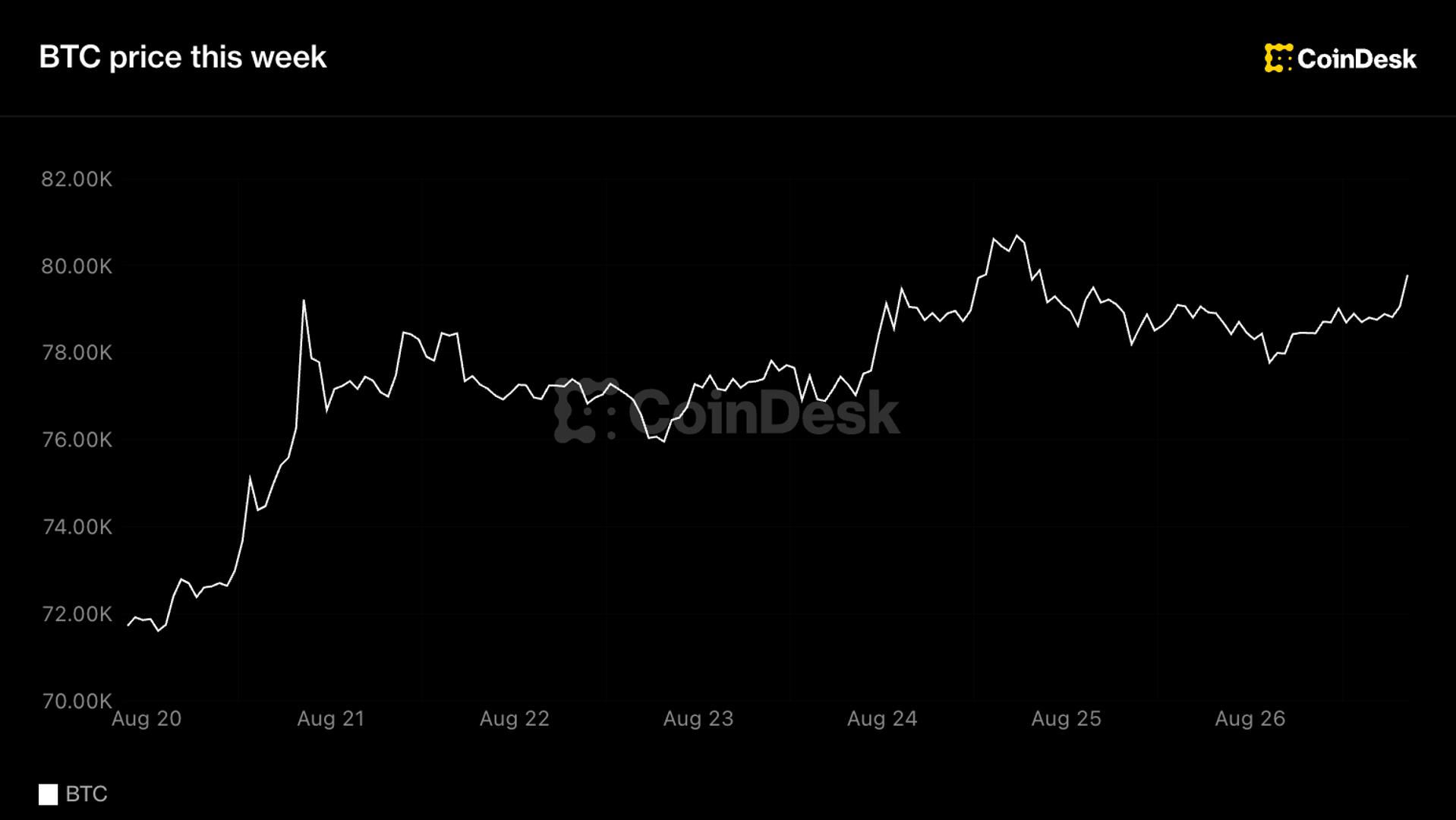
Gold and Bitcoin ETFs attracted about $7 billion over five US trading sessions, a record combined inflow concentrated in the largest funds, GLD and IBIT. The buying accelerated as Bitcoin moved above $80,000 and gold topped $4,600 an ounce, with investors seeking scarce assets amid a weaker dollar, US debt concerns and mounting fiscal pressure.

European Commission President Ursula von der Leyen said the EU’s economic model had long depended on cheap Russian energy, free global trade and growing access to China’s market, but those advantages are gone. She promised that the Commission would help European businesses, while not pointing out that its sanctions directly caused disruptions to global trade and Russian energy supplies.
Three Federal Reserve officials reiterated their concerns about the U.S. inflation outlook on Thursday as central bankers gathered in Jackson Hole, Wyoming, for the Kansas City Fed’s closely watched annual economic symposium.
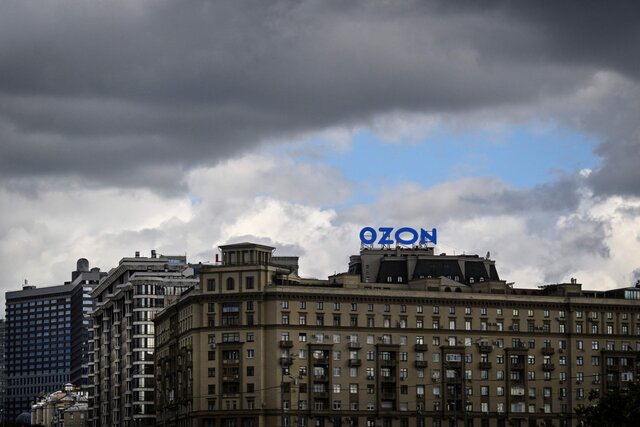
An Anti-Corruption Foundation investigation says Ozon’s largest shareholder, Alexander Chachava, used money from entities controlled by billionaire and Putin ally Gennady Timchenko to buy his stake. The entities held 34.95% of Ozon by April 2026, according to the investigation, which urged the EU to sanction people and companies allegedly controlling the stake for Putin and his inner circle.
Russia has created an economic subcommission to help distressed sectors withstand difficult conditions, First Deputy Prime Minister Denis Manturov said. It will assess sector resilience and propose measures to reduce threats, while monitoring key enterprises, developing engineering and regulatory solutions, conserving critical resources, diversifying logistics and finding new strategic-product suppliers.
The Bank of Russia set the official dollar rate for August 28 at 85.9541 rubles, up 1.6721 rubles from the previous figure. The euro rose to 100.2998 rubles, moving above 100 for the first time since February 11, 2025, while the yuan reached 12.7691 rubles.
European Central Bank policymakers believed at last month’s meeting that they would probably need to raise interest rates once more to contain the fallout from the Iran war, according to the ECB’s account released Thursday.
Jackson Hole recently hosted both a blockchain symposium and the Kansas City Fed’s annual economic gathering. This year’s central-bank event places crypto and stablecoins alongside instant payments and other digital systems under the theme of financial innovation, highlighting the increasingly close overlap between the crypto industry, traditional finance and central-bank policy.

For the first time, the U.K. tax office separately reported crypto capital-gains figures. Some 17,600 people declared $1.87 billion in profits during the 2024–2025 tax year, including 240 taxpayers who made more than $1.3 million each.

Six countries that contribute more to the EU budget than they receive called on Thursday for cuts of several hundred billion euros to the European Commission’s proposed long-term budget. They presented a joint position as negotiations entered a decisive phase.
Germany, Denmark, the Netherlands, Austria, Finland and Sweden are urging the European Commission to cut several hundred billion euros from its proposed budget of nearly €2 trillion and oppose new joint borrowing. They say negotiations on the 2028–2034 financial framework have reached a decisive stage and the EU must reprioritize within its budget.
Investors are raising their expectations for long-run economic growth in the US, but Treasury yields should not be interpreted incorrectly on that basis.
Fed official Hammack says now is the time to act on raising interest rates.

Prime Minister Mikhail Mishustin said Russia’s budget revenues are growing faster than projected and have exceeded 18.64 trillion rubles. He added that non-oil and gas revenues now account for more than 80% of the total, reflecting diversification toward higher-value goods-producing sectors.
Russia’s international reserves reached $761.2 billion as of August 21, 2026, up $5.6 billion, or 0.7%, in a week, mainly due to positive revaluation, the Central Bank said. Reserves stood at $755.6 billion on August 14.
Chainalysis estimates that at least $457 billion in onchain crypto activity was taxable in 2025, while the Crypto-Asset Reporting Framework covered only 14% of it.

The number of Americans filing for unemployment benefits fell last week, suggesting the labor market remains stable despite a surprise drop in employment in July. The goods trade deficit widened in July.
Prime Minister Mikhail Mishustin said Russia’s GDP rose 0.6% year-on-year in January-June 2026, reaching nearly 102 trillion rubles in nominal terms. He added that the country’s economic development is continuing despite current challenges.
The US merchandise-trade deficit expanded in July to its widest level since early 2025, driven by a decades-high surge in incoming shipments of capital equipment.
Sterling fell to a one-week low against the dollar and euro as investors reduced their expectations for a Bank of England rate hike this year and turned their attention to the annual monetary policy symposium in Jackson Hole, U.S.
The Trump administration’s top trade negotiator suggested that the US should consider banning some Canadian goods, adding another threat to the trade dispute between Washington and Ottawa.

The bond market’s reaction points to waning confidence in US economic leadership. A trade war between the deeply integrated US and Canadian economies once seemed unthinkable, but Donald Trump’s recklessness and unpredictability helped derail negotiations and trigger 50 per cent US tariffs on a broad range of Canadian goods, exposing the vindictive and politicised character of his trade policy.
Kansas City Fed policymaker Schmid described inflation as “stubborn” and “sticky,” saying the policy rate is not restrictive. He stopped just short of explicitly calling for an interest-rate hike.

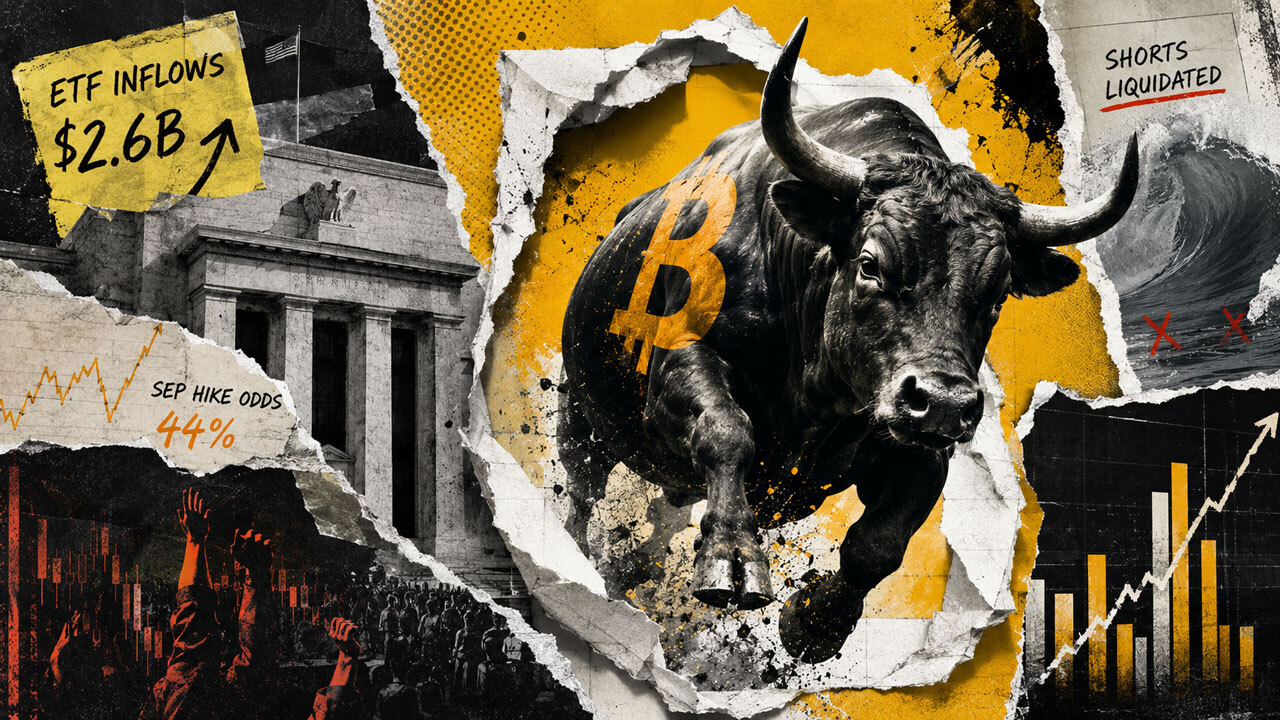
July PCE inflation matched expectations but remained above the Federal Reserve’s target, lifting September rate-hike odds to about 44%. Bitcoin reached $79,251.60 intraday. U.S.-traded spot Bitcoin ETFs absorbed roughly $2.23 billion during the move, while futures open interest fell 11%, pointing to cash demand and flushed leverage rather than newly built speculation.


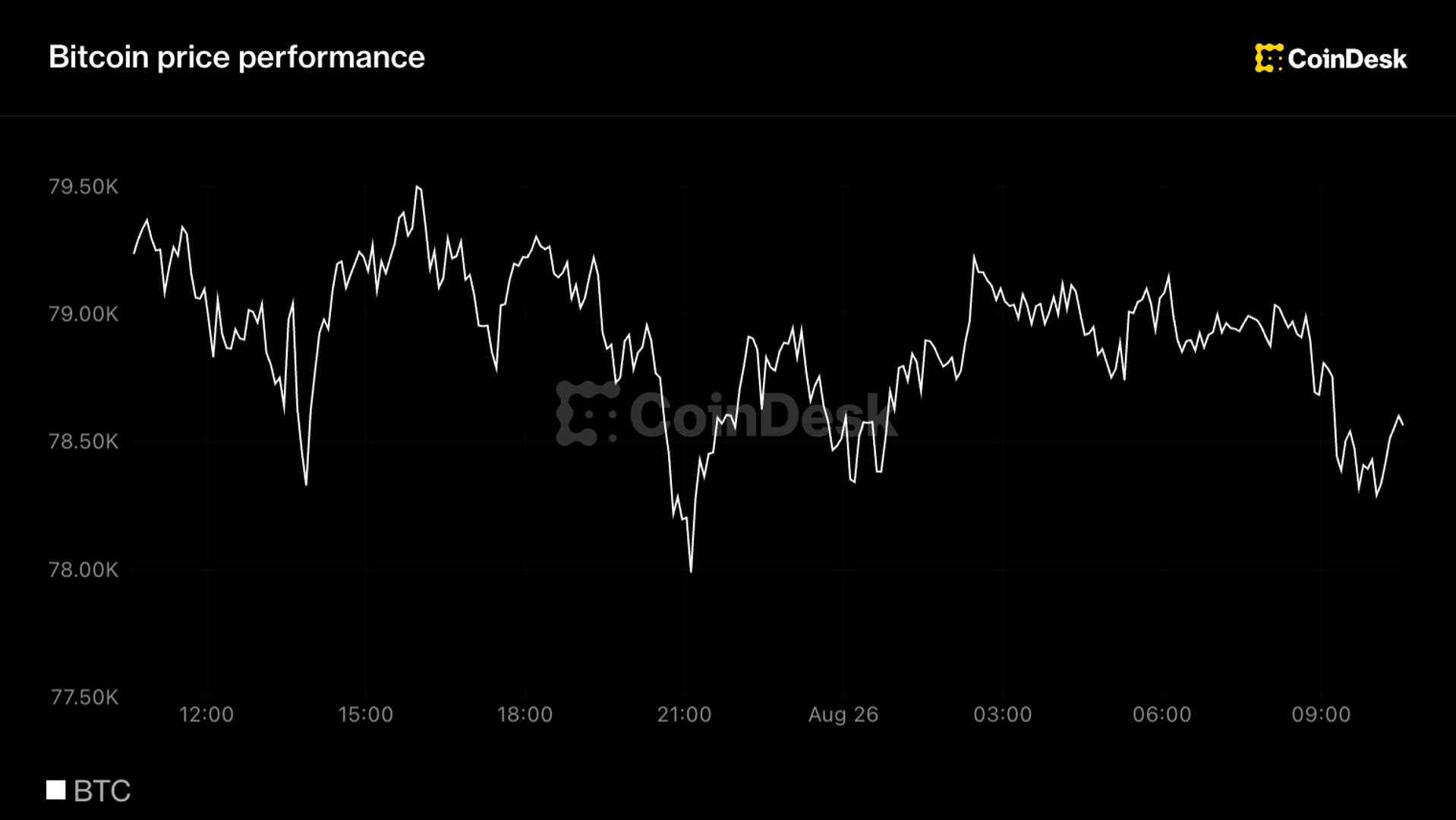
Bitcoin held steady above $79,000 on Thursday as spot bitcoin ETFs recorded their eighth consecutive day of net inflows. Altcoins broadly drifted lower.
HM Revenue & Customs collected £24.2bn in capital gains tax during the 2024/25 tax year, an 89% increase from the previous year, according to the data.
U.S. auto prices rose at an annualized pace of about 5% in July, while housing and utility costs climbed more than 3.5%. Recreational goods prices surged by double digits, as households absorbed a 3.7% rise in living costs—nearly twice what the Federal Reserve has promised.
Private equity carried interest payouts surged to £5.4bn, suggesting a flurry of activity before the Labour government’s tax overhaul.
Hong Kong retirees’ living costs rose nearly three times as fast as the city average over the past five years, driven mainly by strong demand for northbound travel, a new Hong Kong-Macau Retirement Expense Index says. The index, jointly produced by the Institute of Financial Planners of Hong Kong and YF Life Trustees, reached 131.6 in 2026, up from 127 in 2023 and 100 in 2020.

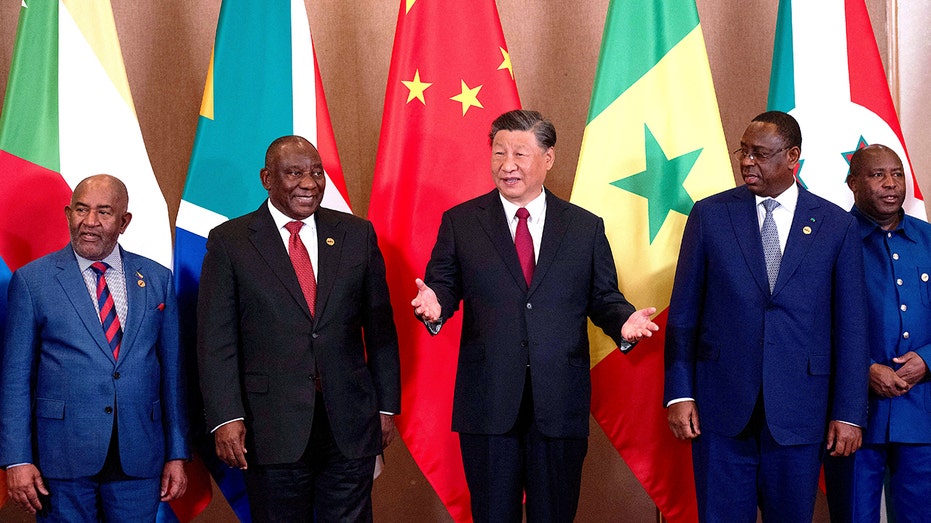
A State Department official and analysts accuse China of flooding African markets with subsidized finished goods while taking raw materials and buying far fewer African products. They say the imbalance is hurting local manufacturing. The Trump administration says it wants to offer alternatives and open opportunities for U.S. businesses.

Nvidia’s better-than-expected earnings and strong outlook lifted technology stocks, bitcoin and companies tied to AI infrastructure.


Nvidia shares rose 6% in premarket trading after blockbuster earnings strengthened confidence in artificial intelligence.
Nvidia reported second-quarter revenue of $96.2 billion for the period ended July 26, up 18% from the previous quarter and 106% year on year. The US technology company expects about $108 billion in revenue next quarter, while CEO Jensen Huang pointed to the rapid development of artificial intelligence.
Asian-Pacific stocks rose at Thursday’s open for a third straight session after Nvidia reported better-than-expected earnings. The result lifted technology hardware makers and renewed investor confidence, despite overnight data showing the Federal Reserve’s preferred US inflation gauge remains elevated.

Nvidia reported better-than-expected results and said it expects revenue to grow another 70% in fiscal 2028.
Nvidia shares initially fell after the company released its quarterly results on Wednesday, then surged, giving investors a roller-coaster ride. The move underscored Wall Street’s lofty expectations for its favored AI chip designer.

Nvidia expects to generate $108 billion in revenue within a few months, following a record $96.2 billion quarter. Data center revenue more than doubled year over year to $89 billion, while profits reached $59.7 billion. Consumer business growth was tempered by slower PC sales, higher prices, and component shortages.
Nvidia’s sales outlook beat expectations but failed to satisfy all investors, deepening worries about whether artificial-intelligence spending can maintain its momentum.
Nvidia projected quarterly revenue above Wall Street expectations on Wednesday, but the forecast did little to calm investor concerns about the company’s long-term dominance of the AI chip market.

Nvidia, a bellwether for the technology sector, reported fiscal second-quarter results after Wednesday’s close that exceeded estimates. The company projected $108 billion in revenue for the following quarter.
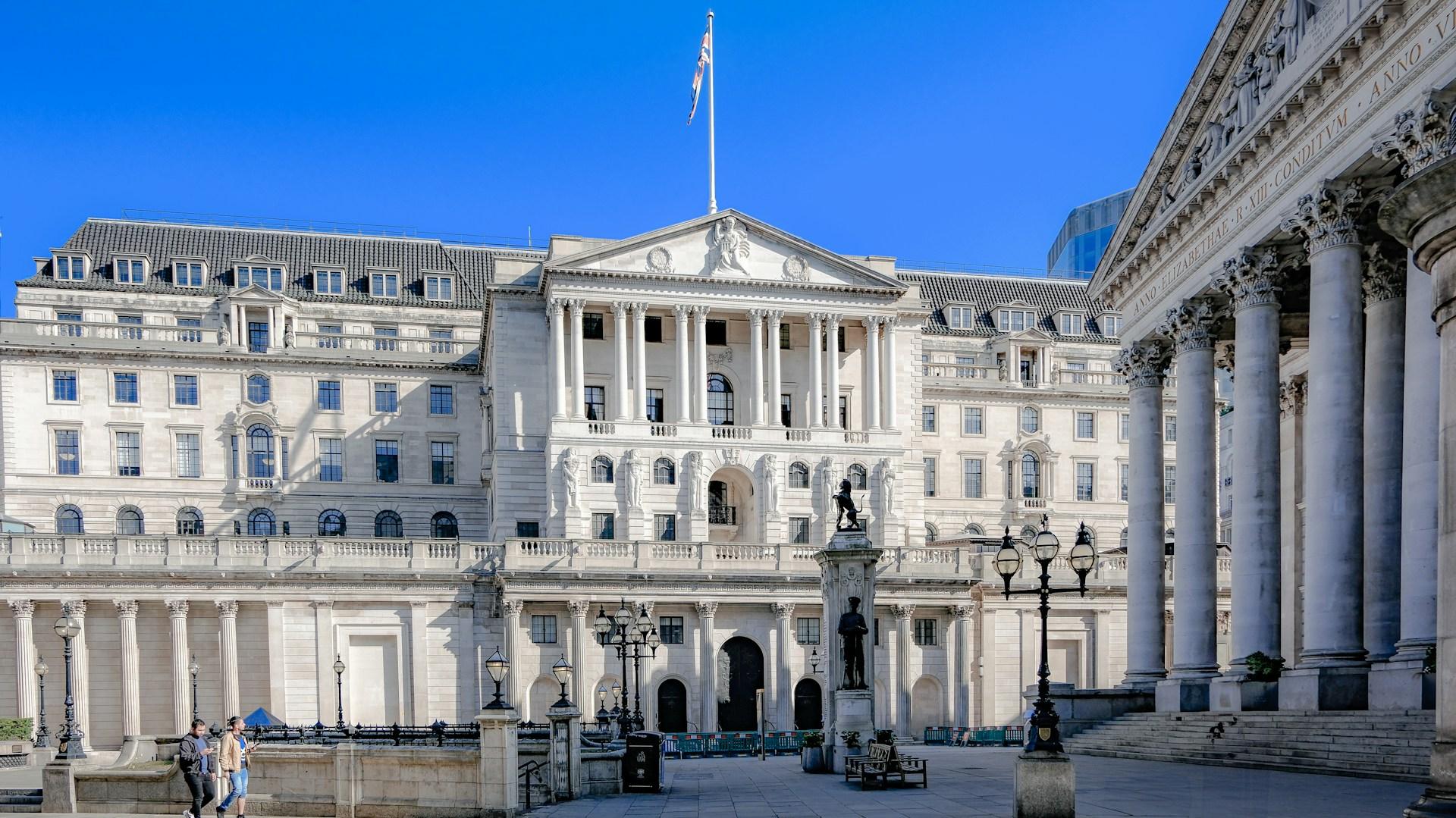
Britain is planning a new stablecoin-related objective for the Bank of England. Financial stability would remain the central bank’s primary duty, while annual reports to Parliament on the new objective are also planned.

Treasury Secretary Scott Bessent and Federal Reserve Chair Kevin Warsh appear divided over a central question in U.S. financial policy: how hands-off policymakers should be when determining the price of money.
Bank of Japan Deputy Governor Ryozo Himino on Thursday emphasized the need for timely interest-rate increases, focusing on rising inflation risks and reinforcing prevailing market expectations of a near-term rise in borrowing costs.
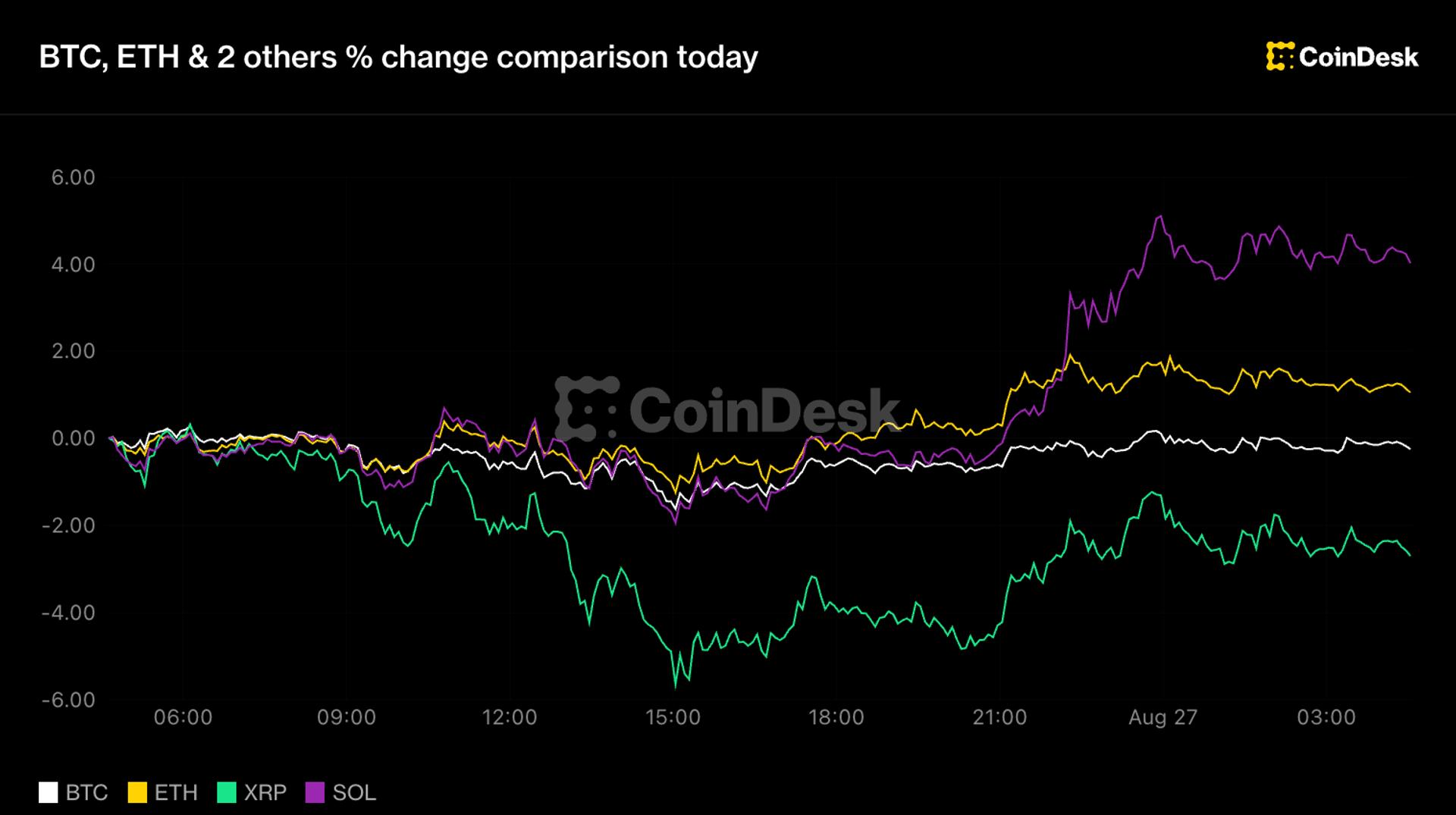
Bitcoin slipped below $79,000 as traders began betting on a Federal Reserve rate hike, with XRP recording the steepest losses. Every major token except Solana and BNB was flat or lower over 24 hours, while Bitcoin retained a 14% weekly gain and XRP was up 28%.

The Indian rupee is expected to open little changed on Thursday. Lower oil prices and sustained intervention by the Reserve Bank of India are likely to counter expectations of a Federal Reserve rate hike next month and continued dollar demand for hedging.
If being overweight America is no longer the default investment choice, it could upset the country’s economic equilibrium.
China’s industrial profits grew 11.2% from a year earlier in July, slowing to their weakest pace this year, according to data released Thursday by the National Bureau of Statistics.

Saskatchewan Premier Scott Moe said Wednesday that the province would impose a 50% tariff on American alcohol in response to the deepening trade war between Canada and the United States.
Saskatchewan, a western Canadian province, will impose a 50% tax on alcoholic beverages from the United States in retaliation for new American tariffs on Canadian beer, wine and liquor.
President Donald Trump signed an order easing tariffs on some ground beef imports in an effort to reduce costs for consumers. The move has angered ranchers and Republicans in rural states ahead of the November midterm elections.
The Bank of Korea raised its policy rate by 25 basis points to 3%, the highest level since January 2025, matching expectations as core inflation remained elevated.

The dollar stayed close to an eight-day high on Thursday after U.S. inflation and other economic figures modestly increased expectations of a Federal Reserve rate hike. Markets were also looking ahead to the Jackson Hole central bankers’ symposium, scheduled to start later that day.
Legal and financial advisers have formed a committee to bring together companies with outstanding claims against Venezuela ahead of the country’s planned debt restructuring, the advisers said.
Russia’s coal production fell 1.8% year on year in January-July to 249 million tons, Rosstat said. Output of all hard coal declined 2.3%, while coking coal rose 1.2% and brown coal was nearly unchanged.
Russia’s industrial output rose 0.1% year on year in the first seven months of 2026, Rosstat said. July production increased 0.4% from a year earlier and 1.4% from June. Mining fell 0.9%, while manufacturing grew 0.5%; power, gas and steam production rose 0.7%, and water and waste services declined 3.2%.
US inflation stayed above the Federal Reserve’s 2 percent target for a 65th consecutive month. The PCE price index rose 3.7 percent year on year in July, exceeding expectations and strengthening bets on a rate hike as soon as September. Energy costs surged after the US and Israel attacked Iran, while new tariffs after failed Canada talks could add pressure.

Annual U.S. inflation unexpectedly held steady in July, staying well above the Federal Reserve’s 2% target for a 65th consecutive month. The halt in its decline from a recent Iran-war-driven peak is likely to intensify the central bank’s tense debate over raising rates or holding them steady.

Core prices in the personal consumption expenditures price index rose 3.3% over the year in July. Economists surveyed by Dow Jones had expected the index to increase 0.1% month over month and 3.6% over 12 months.
The Treasury is giving the central bank a new legal objective to promote innovation in digital currencies, as part of efforts to establish the UK as a hub for stablecoins.
A closely watched Federal Reserve inflation measure was unchanged last month, the latest indication that many Americans continue to struggle with higher costs amid the Iran conflict and ongoing US trade disputes.
The Bank of Russia set the official dollar exchange rate at 84.282 rubles for August 27, up 18.15 kopecks from the previous figure. The euro rate fell 22.85 kopecks to 98.2897 rubles, while the yuan rate dropped 3.65 kopecks to 12.5294 rubles.
London's FTSE 100 was subdued on Wednesday as falling oil prices weighed on energy stocks and offset broader gains. Investors awaited key U.S. inflation data and Nvidia's quarterly earnings.
A complete ban on trade with Iran could destabilize the global economy, The New York Times reported. Experts said sanctions were unlikely to succeed without cooperation from China and India, Tehran’s key trading partners. Washington has threatened secondary sanctions against countries that refuse to comply with tighter measures.

The article argues that a new round of US sanctions on Iran would deepen the country’s economic and livelihood difficulties while transmitting disruption through energy, trade, finance and supply chains. It says pressure could shift risks and costs onto US allies, developing countries and global energy markets, with regional economies forced to adjust ties with Iran.
CNN analysis says Scott Bessent’s “Operation Economic Outcast” threatens damaging new sanctions against countries that refuse to stop doing business with Iran, but leaves unnamed the one country that could determine whether the effort succeeds: China.

The United States has announced a new round of economic sanctions against Iran and warned countries and entities trading with Tehran that they could also be punished. The explainer says secondary sanctions expose such partners to US penalties, with Washington relying mainly on access to its market and financial system to enforce the pressure campaign.
The U.S. economy grew at a sluggish 1.5% annualized pace from April through June, while consumer spending remained strong.
New Commerce Department data showed that US consumers cut back on spending in July while inflation remained stubbornly high.
Treasury yields were broadly unchanged on Tuesday as investors assessed the release of the Federal Reserve’s preferred inflation measure, which was largely in line with expectations.

A South Korean fund financed by record tax windfalls from the semiconductor boom will support projects over three to four years rather than recurring outlays such as welfare programs, a presidential official said Wednesday.
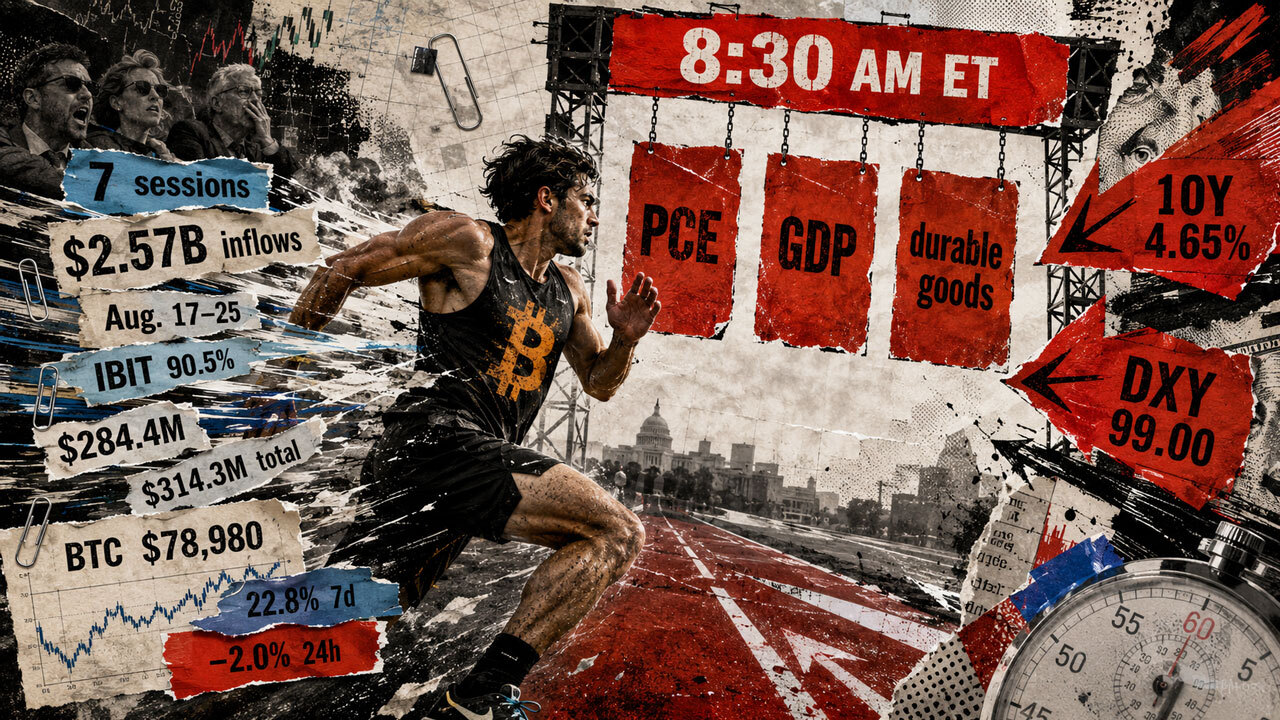
The US is set to release July personal income and outlays, PCE inflation data, a second estimate of second-quarter GDP and advance durable-goods orders simultaneously. Bitcoin’s spot ETFs recorded $2.5697 billion in net inflows across seven sessions, though BlackRock’s IBIT supplied about 90.5% of the latest day’s total. Markets will watch how yields, the dollar and Bitcoin respond.


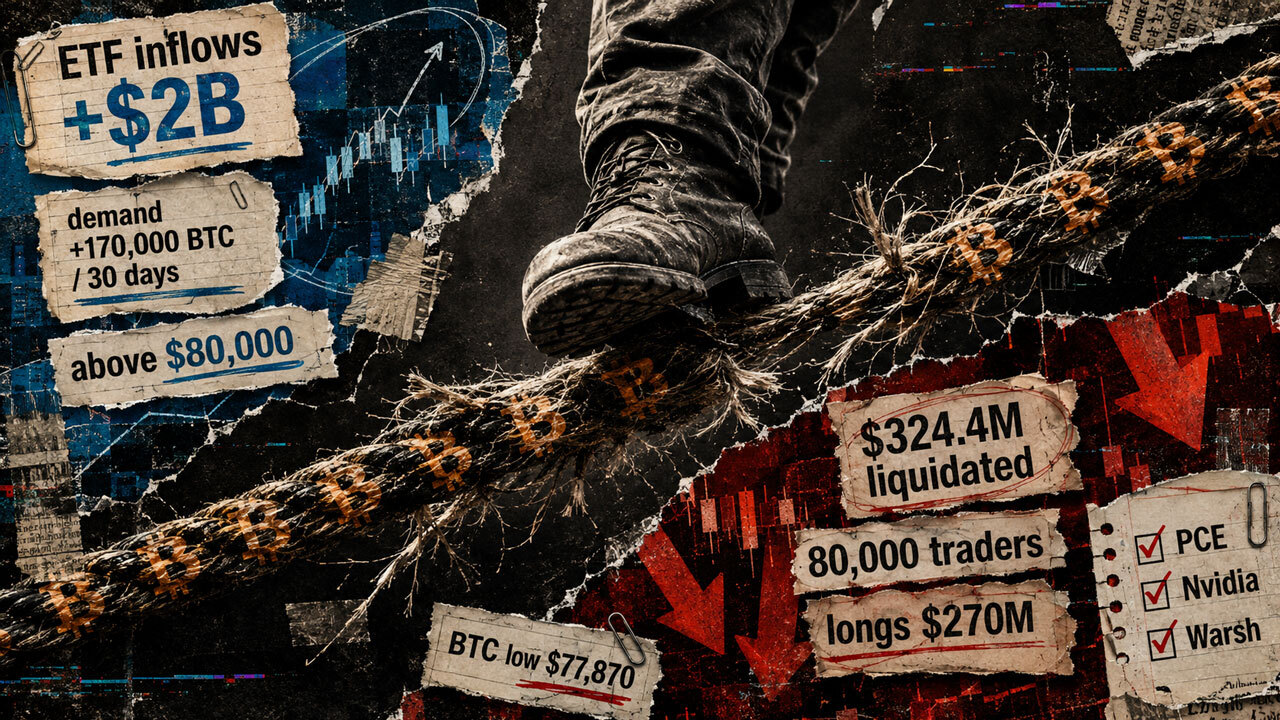
Bitcoin’s dip below $78,000 triggered about 80,000 liquidations worth $324.4 million, with long positions accounting for roughly $270 million. After a rally fueled by Treasury developments, ETF inflows and forced short covering, the market now depends more on whether spot and ETF buyers can absorb profit-taking and sustain demand above $80,000.

Bitcoin slipped to $79,000 on Wednesday after rising 23% over seven days, while August ETF inflows climbed above $3 billion.
The Dallas Fed warns that tokenized deposits could reduce U.S. banks’ lending capacity by $700 billion. Programmable deposits and AI agents may let customers switch banks instantly and automatically for higher yields, increasing banks’ funding costs.

The Minutes Reader extension turns the original page into a focused reading view and translates articles and video subtitles on demand. It is in limited beta.