Norway Prepares for More US Tariffs After Trade Talks in Washington
Norway is preparing for additional tariffs from the Trump administration following trade talks in Washington, according to the top civil servant at the country’s Foreign Ministry.
Russia has sent another grain shipment to Armenia through Azerbaijan, including 2,725 metric tons of wheat, Azerbaijan’s state-run Azertac news agency reported. Since Azerbaijan lifted its transit ban in late October 2025, more than 44,000 metric tons of Russian grain have reached Armenia via its territory.
Fidelity International plans to withdraw from its wholly owned China fund unit, according to two people familiar with the matter. The move would rank among the biggest retreats by a global asset manager from the world’s second-largest economy.
Brent futures for October 2026 delivery on London’s ICE rose above $94 a barrel for the first time since July 24, according to trading data. At 12:18 p.m. Moscow time, Brent was up 2.64% at $94.04, while WTI futures gained 2.45% to $86.46.
Ukrainian Verkhovna Rada member Anna Skorokhod says the suspension of seaport operations has put 61 million tons of grain at risk of being sold abroad. About 90% of grain had been exported by sea, while land corridors and European transit routes could handle no more than 24 million tons, hurting foreign-currency earnings, tax revenue and the economy.
As President Trump announces a “crushing economic operation” against Iran, soaring prices and a weakening currency are already making it difficult for many Iranians to make ends meet. Al Jazeera’s Tohid Asadi visited a market in Tehran.
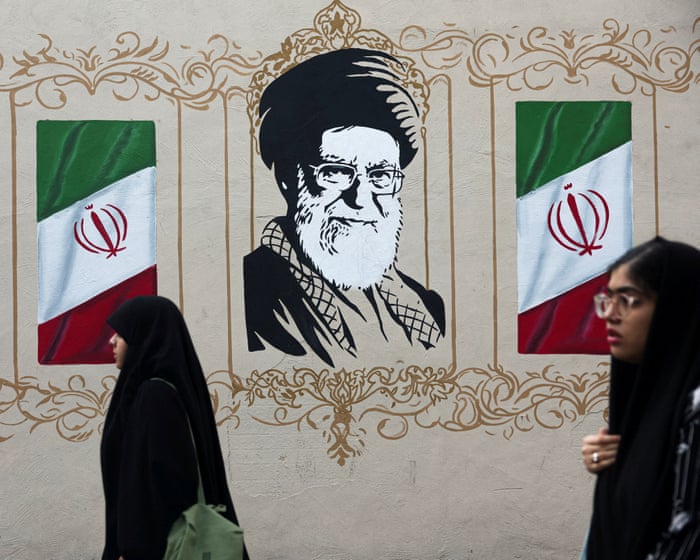
Iranian Foreign Minister Abbas Araghchi called Washington’s announced economic pressure on Iran a diversion from the United States’ domestic crisis and said it threatens the entire global financial system. He also condemned the so-called economic “D-Day” and Washington’s warning of serious consequences for entities supporting Tehran.

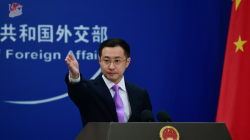
China urged all relevant parties on Thursday to address tensions over Iran through political and diplomatic channels, following U.S. President Donald Trump’s announcement of what he called “the most crushing economic operation” against the Islamic Republic. Spokesperson Lin Jian said sanctions and pressure would not solve the issue and called for responsible steps toward a political solution.

Kpler data indicates that oil flows through the Strait of Hormuz nearly tripled during the 60-day US-Iran memorandum period, reaching 374 million barrels, though volumes remained well below pre-war levels. The MoU expired without a peace deal as attacks on commercial shipping continued to undermine confidence in safe passage.
Stephen Collinson writes that President Donald Trump is introducing yet another strategy for the Iran war in a familiar manner: through an all-caps threat.

US President Donald Trump has threatened countries that support Iran with what he called tremendous economic consequences, describing the campaign as economic warfare and unprecedented isolation. Iranian media dismissed the warning as familiar psychological warfare and propaganda. Australia also summoned Israel’s envoy over the 2024 death of an aid worker in an Israeli strike in Gaza.

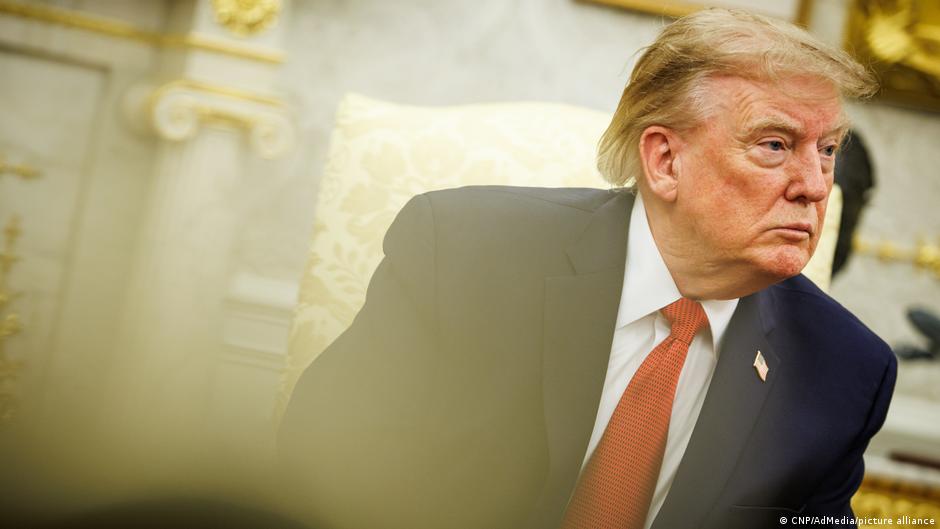
Donald Trump announced what he called the most crushing economic operation against Iran, warning countries whose institutions, businesses, airports or governments provide Tehran with a lifeline of severe consequences. The unspecified measures could target Iranian oil buyers and provoke a confrontation with China, Iran’s biggest trading partner, after military strikes failed to bring Tehran back to talks.

US President Donald Trump has threatened an “economic D-Day” against any country that helps Iran or does business with it. Al Jazeera’s Mike Hanna says the vague warning signals a renewed emphasis on economic action rather than military measures.
Donald Trump warned on social media that countries supporting Iran would face economic consequences. He pledged “Economic Warfare and Isolation on an unprecedented scale,” but offered few details.
President Donald Trump announced plans for what he called an “economic D-Day” against Iran, highlighting his growing frustration that Tehran has refused to capitulate. Weeks of U.S. military strikes and a blockade have already squeezed Iran’s oil exports.

Regional security analysts say Iran is deepening financial and military ties with China and Russia to evade U.S. sanctions and withstand Washington’s renewed “maximum pressure” campaign. Trump announced sweeping consequences for countries and businesses that sustain Iran, calling his policy an unprecedented campaign of economic warfare and isolation.
U.S. President Donald Trump announced what he called the most crushing economic operation ever imposed on a country, threatening sweeping economic warfare and isolation against Iran. He said countries whose institutions provide Tehran with any lifeline would face tremendous consequences, while urging allies to help isolate and defeat the Iranian threat. Washington and Tehran remain at odds over the Strait of Hormuz and conditions for ending the conflict, leaving talks uncertain.

Donald Trump says any country helping Iran or doing business with it will face “TREMENDOUS Economic Consequences”. He calls the move the most crushing economic operation ever taken against a country, after a 60-day ceasefire expired with no diplomatic or military off-ramp from the US-Iran conflict.

Donald Trump announced what he called the “most crushing” sanctions against Iran and said Washington might resume talks with Tehran “at some point.”
US President Donald Trump announced what he called unprecedented “economic warfare and isolation” against Iran, saying Tehran had failed to seize his opportunity for a deal. He described the planned operation as the most crushing economic action ever taken against any country.

US President Donald Trump warned on Wednesday that any country supporting Tehran or providing Iran with “any type of lifeline” would face economic consequences. He did not specify Washington’s possible measures or identify any country by name.

US President Donald Trump announced what he called the “most crushing economic operation ever taken against any country” against Iran, while warning that any country trading with Tehran would face “tremendous economic consequences”. He also said countries doing business with Iran would be sanctioned as talks to end the conflict remained deadlocked.
The number of US service members wounded since the war with Iran began has surpassed 750, according to the Defense Department’s war casualty database.

U.S. President Donald Trump announced what he called the most crushing economic operation ever taken against a country, warning that any nation providing Iran with a financial, commercial, airport or government lifeline would face tremendous economic consequences. He did not detail the measures or name any country.
Bitcoin rose more than 10% in trading, topping $71,000 and reaching $71,337, according to Binance data. Ethereum gained 18.8% to $2,277.79. Over the past 24 hours, cryptocurrency exchanges liquidated more than 184,000 traders’ positions worth over $3.26 billion, with Bitcoin accounting for $1.67 billion.
The Trump administration is poised to lower tariffs on automobiles imported from Canada to 15% from 25% under a broader deal that would also have Canada withdraw retaliatory trade measures, people familiar with the matter said.
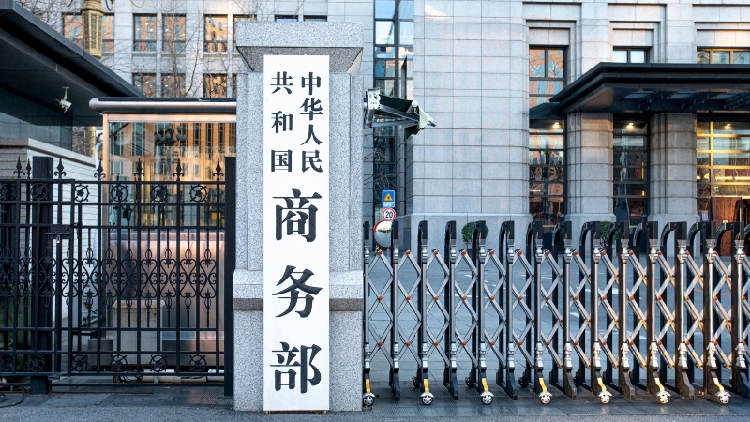
China criticized the United States for imposing Section 232 tariffs on drones and related components, saying Washington is using “national security” as a pretext for unilateralism and protectionism. Commerce Ministry spokesperson He Yadong said Chinese drones sold to the US are mainly used for civilian purposes and urged the US to withdraw the measures.

Europe’s fifth heatwave of the year is damaging growth and productivity as wildfires spread, crops fail and rivers dry up. Economists estimate the extreme heat could cost $209bn, about 1 percent of EU GDP, while the Iran war is adding to the region’s energy-price pressure.

The yuan’s central parity rate strengthened by 46 pips to 6.7808 against the U.S. dollar on Thursday, according to the China Foreign Exchange Trade System. In China’s spot market, the currency can move within 2 percent either way from the daily central parity rate.
Coal India Ltd, the world’s largest coal producer, is establishing its first overseas trading office in Singapore, according to two sources. The move is intended to diversify the company into trading iron ore and critical and strategic minerals.
Russian stocks slipped at the opening of Thursday’s main trading session, with the MOEX and RTS indexes each falling 0.1% to 2,170.12 and 803.05 points. Both later moved into positive territory, while the MOEX Index’s morning session began down 0.16%. The yuan fell 3.8 kopecks against the ruble to 12.392 rubles.
The MOEX Index fell 0.16% to 2,168.83 points when Thursday’s morning session opened on the Moscow Exchange. By 7:10 a.m. Moscow time, the ruble-denominated index was down 0.52% at 2,161.04 points.
Russia has started importing fuel for the domestic market, Deputy Prime Minister Alexander Novak said. Authorities have allowed production of lower environmental-grade fuel and expect conditions to improve significantly as several refineries complete maintenance. Imported AI-92 gasoline was sold on the St. Petersburg exchange on August 19.
Investors seeking to follow China’s hottest companies are shifting their attention away from the country’s traditional stock indexes and toward the Star 50 index.
Shenyang in northeast China’s Liaoning Province has launched the Shenyang-Baku and Shenyang-Mongolia-Russia TIR routes simultaneously for the first time. The Baku route is expected to take 13 or 14 days, while auto parts will travel through Mongolia to Russia. The center has opened routes to six countries.
General Motors, Ford and Hyundai have each withdrawn from Japan at some point after struggling to persuade car buyers there to switch from domestic automakers.
Ukraine has lost about $2 billion in foreign-currency revenue since its seaports were shut on July 22, according to TASS calculations. Odessa, Chernomorsk and Yuzhny remain idle, with no large foreign commercial vessels entering. Agricultural exports have dropped roughly 60%, while iron ore and metal shipments have nearly stopped.
CK Hutchison Holdings says it has launched investment-treaty arbitration against Panama, seeking more than $1.5 billion over the loss of its port concessions. It alleges measures taken in 2025 and 2026 ended its contracts and led to the takeover of the Balboa and Cristobal terminals.
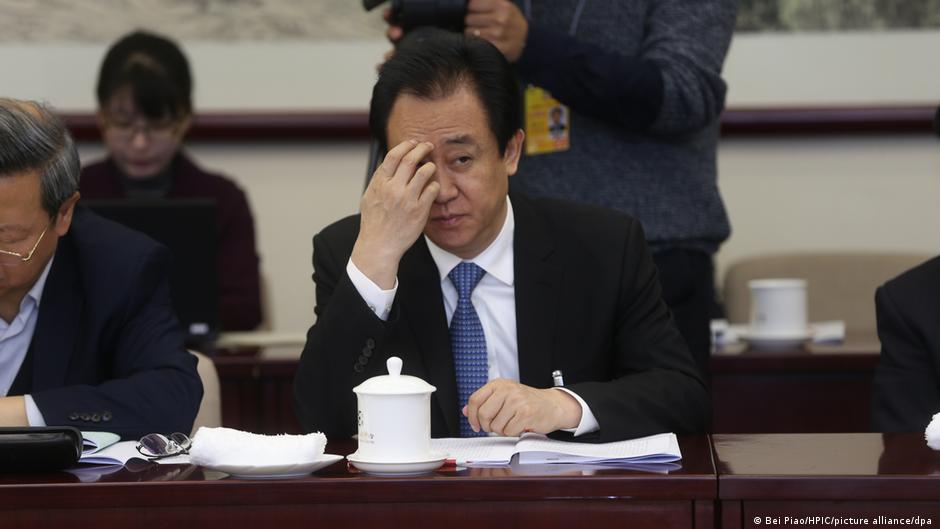
At the Chinese Communist Party’s centenary celebrations in 2021, Evergrande founder Hui Ka Yan mingled with powerful figures and smiled broadly, showing no apparent sign of the mounting pressure on China Evergrande Group, the world’s most indebted property developer.

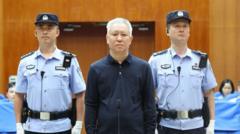
A Chinese court sentenced Evergrande founder Hui Ka Yan to life in prison, confiscated his personal property and revoked his political rights for life. Hui had pleaded guilty to fraud, corporate bribery and illegally taking public deposits. Evergrande and its main subsidiary were also fined billions of yuan, while five other executives received prison terms and fines.

Evergrande, the property giant seen as the face of China’s real estate troubles, reached a painful conclusion to its years-long saga on Thursday, as courts ordered fines and prison terms. The rulings raise questions about their implications for China’s economy.

A Shenzhen court has sentenced Evergrande founder Hui Ka Yan to life imprisonment for crimes including fundraising fraud, embezzlement and corporate bribery. His personal assets will be confiscated and illegal gains recovered, while Evergrande Group and Evergrande Real Estate were fined a combined 15.82 billion yuan. Five senior executives were also sentenced.

China sentenced the founder of troubled property developer Evergrande to life in prison on Thursday and fined the group more than $2 billion. The offences included fraud, five years after its high-profile default.

Hui Ka Yan, founder of China’s Evergrande, has been given a life sentence and had his personal assets confiscated after pleading guilty to charges including embezzlement and corporate bribery. A Shenzhen court also fined Evergrande 8.82bn yuan and its property arm 7bn yuan, marking a key moment in the fallout from the developer’s collapse.
Evergrande founder Hui Ka Yan was sentenced to life in prison in China, while his former companies were fined 15.82 billion yuan ($2.4 billion). The ruling seals the downfall of a property tycoon who came to represent the country’s real estate boom and bust.
The Shenzhen Intermediate People’s Court sentenced Hui Ka Yan, founder of China’s Evergrande real estate group, to life in prison on Thursday for large-scale fraud.
A Chinese court sentenced the founder of China Evergrande Group, described as the world’s most indebted property developer, to life imprisonment on Thursday and ordered the confiscation of all his personal assets, state broadcaster CCTV reported.
Industry data shows China’s pet insurance premiums rose from about 50 million yuan in 2020 to as much as 3.5 billion yuan in 2025, a 60-fold increase. Growth has brought complaints about waiting periods, exclusions and pre-existing conditions, while insurers face inconsistent veterinary fees and fraud. Standardization efforts are underway.
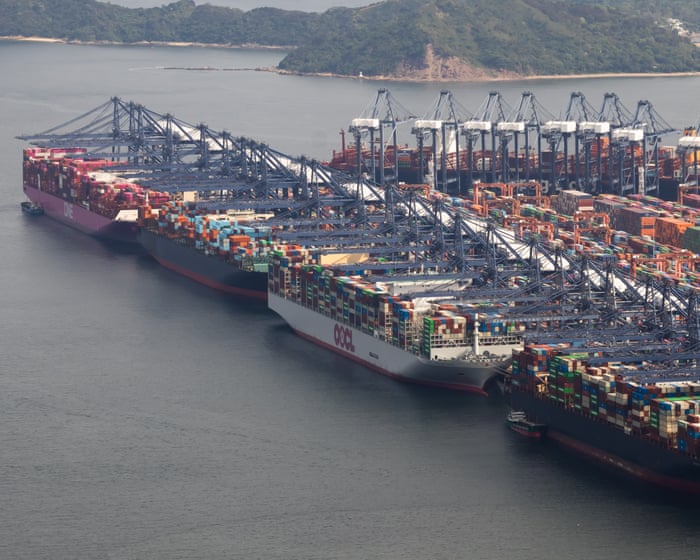
Sea Legend Shipping’s CAX China–Europe Arctic Express has made its maiden voyage from Guangzhou’s Nansha Port, opening south China’s first direct shipping route to Europe through the Arctic Ocean. The Northeast Passage cuts transit to Britain’s Port of Felixstowe to 28 days, 14 fewer than the Cape of Good Hope route.
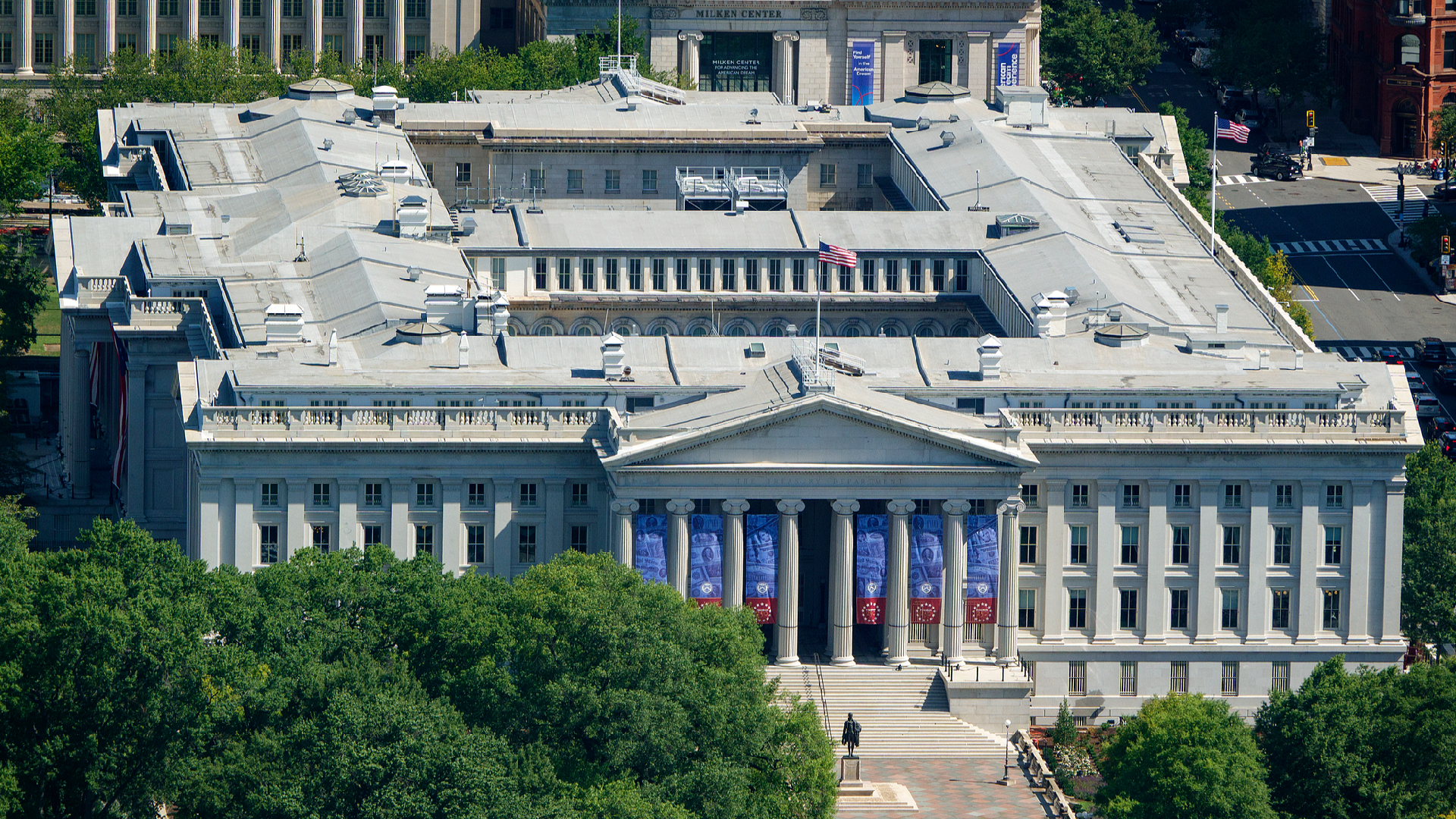
The U.S. dollar fell to a three-month low on Thursday after the Treasury Department acted to calm a bond-market rout. Long-term yields had climbed to their highest level since 2007, weakening support for the greenback.
China kept its benchmark lending rates unchanged on Thursday, marking the 15th consecutive month without a change in August and matching market expectations.
China’s international air-cargo market continued to expand in July 2026 while domestic volumes edged down, with cross-border e-commerce remaining the main support. More than 41 weekly round-trip flights are expected to be added nationwide, carrying e-commerce shipments, clothing, fresh seafood, electronic components and other high-value goods.
International markets remained a key growth engine for China’s air cargo sector in July, with strong cross-border e-commerce and AI hardware demand. Five listed airport operators handled 860,100 metric tons of cargo, of which international routes accounted for 576,000 metric tons, or 66.97 percent.
Maoming, Guangdong, has completed this year’s fresh lychee export season, with its final shipment sent to the United States. Despite a low-yield year, the city exported 8,450 metric tons worth 177 million yuan, with volume up 3.3% and value up 52.6% year on year—both records.
Standard Chartered is helping wealth management clients allocate part of their assets to hedge funds to better cushion the effects of heightened market volatility, a senior executive said.
A look ahead to European and global markets considers how long the current Bessent-driven market support can continue.
Andrey Denisov, first deputy chairman of the Russian Federation Council’s international committee, says Russia is China’s most reliable energy supplier. He cited a 92% rise in Russian oil shipments to China during the first seven months amid the Strait of Hormuz crisis as evidence of Beijing’s interest in dependable energy sources.
The Indian rupee is expected to open higher on Thursday after the dollar fell to a three-month low. The decline followed the U.S. Treasury’s decision to increase buybacks of longer-dated bonds to ease pressure on the bond market, while oil remains a risk.
A year after Target Corp. tapped longtime executive Michael Fiddelke to replace Brian Cornell as chief executive, he faced two tasks. The retailer’s familiar shopping trip is now making a comeback.
China’s General Administration of Customs proposed a “4E AEO Cooperation Initiative” at an APEC seminar in Dalian. The plan calls for more AEO-certified companies, broader trade-facilitation measures, expanded mutual-recognition arrangements and more effective cooperation to create a more open, inclusive and resilient regional trade system.
Global bonds steadied on Thursday after the U.S. Treasury intervened to contain a sell-off in its bond market. The move calmed investors, pushed the dollar lower and helped stocks rise.
The Trump administration’s unexpected push to increase purchases of long-term Treasuries is prompting comparisons with the Federal Reserve’s “Operation Twist,” last used in 2011 to reduce bond yields.
Treasury data shows US public debt reached $40.047 trillion as of Tuesday, crossing $40 trillion for the first time. The milestone came earlier than expected amid persistent budget deficits, while fiscal experts warned the trajectory was unsustainable. The White House said the Trump administration was cutting waste and seeking faster growth.

Fortescue, the world’s fourth-largest iron ore miner, said on Thursday that it hoped market conditions for its China trade would return to normal as soon as possible.
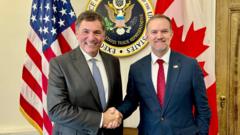
US President Donald Trump and Canadian Prime Minister Mark Carney voiced optimism that the two countries can finalize a tariff agreement. Negotiators from Washington and Ottawa met in Washington for additional talks.
Canadian and U.S. trade negotiators met on Wednesday after President Donald Trump paused planned 50% tariffs on some Canadian goods for three days. Sources said tariff levels on autos remained a key sticking point.
US national debt has exceeded $40 trillion for the first time, doubling over the past decade and prompting concerns about a fiscal crisis as spending outpaces revenue. The increase spans the Trump and Biden administrations, while the July deficit reached $432bn.


US gross national debt has topped $40 trillion for the first time, Treasury data showed. Public debt reached $40.05 trillion on Tuesday, exceeding the Congressional Budget Office’s forecast of $39.4 trillion for the end of fiscal 2026 as borrowing, interest costs and long-term obligations increased.
The U.S. Treasury said total national debt has surpassed $40 trillion for the first time. Fresh warnings say a fiscal crisis is developing as the costs of social safety-net programs and interest payments greatly exceed revenues constrained by tax cuts.
South Korea’s AI-driven chip rally drew millions of first-time investors into stocks. When the KOSPI plunged nearly 40 percent from its June peak, many saw their gains disappear, while heavy borrowing deepened losses. The volatility has also fueled scrutiny of President Lee Jae Myung’s efforts to broaden market participation and promote leveraged products.

With the Iran war still in limbo, natural gas prices have climbed to twice their level a year ago, leaving Europe braced for another increase in energy bills this winter.
A recent selloff in US bonds has pushed 30-year yields to their highest levels in decades. Most respondents in the latest Markets Pulse survey expect the 10-year benchmark yield to soon move above 5%.
Government borrowing costs are rising worldwide as investors demand greater compensation for holding longer-term debt. Average bond yields across the Group of Seven reached their highest level since 2008 in mid-August.
A series of unexpected moves this year has made Scott Bessent the most interventionist US Treasury secretary in financial markets in decades. He is risking his credibility as he tries to contain a potentially damaging increase in US borrowing costs.
Iran has sufficient foreign currency to purchase goods and medicine over the coming months, Central Bank Governor Abdolnasser Hemmati said. He said the bank is using alternative solutions to maintain a steady supply of resources and will continue the plan without issuing money that could fuel inflation.
The United States is sinking into an increasingly deep debt hole.
Iran has almost completely stopped exporting oil to foreign markets, Central Bank Governor Abdolnaser Hemmati said. He stated that the country has foreign exchange reserves and assured Supreme Leader Mojtaba Khamenei that supplies of essential goods and medicines were being provided by the central bank and government.
A tentative US-Canada trade agreement would reduce tariffs on some Canadian steel and aluminum exports to 25%, according to people familiar with the matter.
SpaceX’s $86.2 billion IPO on June 11 shattered nearly every record for new listings. Investors of all sizes rushed to buy shares and support Elon Musk’s sweeping vision spanning space-based data centers, expanded Starlink service, artificial intelligence, chipmaking, space tourism and even asteroid mining.
Russia’s motor oil supply chain is facing disruptions. Market participants told Kommersant that a broad shortage has not yet emerged, but delivery times have lengthened and prices for some products have risen 40%. The main pressure is on imported oils, while Russian-made products may also be affected by shortages of imported additives and unscheduled refinery repairs after Ukrainian drone attacks.
European gas storage operators are injecting gas more slowly as the US-Iran conflict curbs LNG supplies. Citing Montel calculations, Handelsblatt said storage could reach only 69% by November 1 if purchases continue at the current pace, leaving reserves at risk of being depleted by April 2027. Reaching the 80% target would require 142 LNG tankers a month, versus an average of 105 recently.
Russia has sent another grain shipment to Armenia in transit through Azerbaijan, including 1,820 metric tons of wheat. Azerbaijan lifted its ban on goods bound for Armenia through its territory in late October last year; since then, up to 43,000 metric tons of Russian grain and other goods have followed the route.
Minutes from the Federal Reserve’s July meeting show that concern over inflation intensified. Several policymakers were prepared to raise rates, while many said higher borrowing costs would be necessary if inflation failed to fall to the central bank’s 2% target.
US Treasury Secretary Scott Bessent made another effort to curb long-term borrowing costs after they reached multi-year highs, sending Treasury yields and the dollar lower.
Russia’s grain harvest since the start of 2026 is expected to reach 100 million metric tons within days, Agriculture Minister Oksana Lut said. She described harvesting as progressing well, said the crop exceeds last year’s volume and noted that farmers are being prioritized for fuel supplies.
Russia recorded 0.02% deflation from August 11 to 17, according to Rosstat, compared with 0.06% the previous week. Consumer prices have fallen 0.08% since the start of August but risen 4.67% since the beginning of the year. Annual inflation was 6.08% as of August 17.
Finance Minister Taiwo Oyedele said on Wednesday that President Bola Tinubu’s economic overhaul, including the removal of an expensive fuel subsidy and currency devaluation, helped stabilize Nigeria’s public finances, increase foreign reserves and attract investment.
The Bank of Russia set the official dollar rate for August 20 at 85.1293 rubles, down 3.52 kopecks from the previous rate. The euro rate fell to 98.5457 rubles, while the yuan rate rose to 12.6301 rubles.
Russian authorities expect several oil refineries to return from maintenance soon, significantly improving the fuel market, Deputy Prime Minister Alexander Novak said. The government is monitoring the market daily and working with companies to redirect supplies to regions experiencing shortages.
Russia has started importing fuel to increase supplies on its domestic market, Deputy Prime Minister Alexander Novak said. Authorities have also approved rules allowing the production of lower-standard Euro 2, Euro 3 and Euro 4 fuel, while extending the import damper mechanism to diesel.
Canada and the US say they are close to finalising a trade agreement after Prime Minister Mark Carney cited “significant progress” in negotiations. Donald Trump said it would benefit American farmers and manufacturers, but the scope and concessions remain unclear. A planned wave of 50% tariffs on Canadian goods has been paused until the weekend.


US President Donald Trump says Washington and Ottawa have reached a “very fair” trade deal that would impose no tariffs on US farmers and businesses exporting to Canada. Officials have not confirmed the full terms, after Trump paused a threatened 50 percent tariff for three days.
The piece argues that Washington has not won its trade battle with China. Although direct imports have fallen, Chinese goods continue to reach the US through third countries, while an undervalued yuan sustains Beijing’s huge trade surplus. The White House’s AI effort to detect rerouted goods is unlikely to restore factory jobs or seriously weaken China’s exports.
A U.S. appeals court on Wednesday revived an investor lawsuit over Signature Bank’s 2023 collapse, ruling that the FDIC’s seizure of the lender did not remove shareholders’ right to sue.
The U.S. International Development Finance Corporation is supporting a pipeline of African rare-earth projects, two senior executives said, as private investors remain reluctant to finance the sector.
Mexico’s government said it was seriously concerned by a preliminary U.S. Commerce Department ruling that found dumping in Mexican strawberry exports during the winter.
Deputy Prime Minister Alexander Novak said Russia’s economy grew by more than 10% in real terms over the past three years despite external pressure. Finance Minister Anton Siluanov said proposed fiscal recovery measures for regions would have a budgetary impact of more than 800 billion rubles in 2027, including additional support for border regions.

Finance Minister Anton Siluanov said Russia’s Finance Ministry is proposing support for border regions facing extra expenses related to the current situation. As regional budgets for the next three years are drafted, the ministry will work with regions on financial plans, monitor budget execution and prepare deficit-control measures for heavily indebted regions.
The Minutes Reader extension turns the original page into a focused reading view and translates articles and video subtitles on demand. It is in limited beta.