The 2026 Zhanjiang Fishing Season Launch Ceremony and “Zhanpin” brand exhibition opened Sunday, with 5.05 billion yuan in agreements signed across the marine fishery industry chain. Zhanjiang’s marine fishery chain output exceeds 100 billion yuan, and the city has 40 marine ranching projects in reserve.
Government data showed Japan’s economy grew more slowly than expected in April-June. Weak household spending and business investment partly offset the boost from strong exports.
Asian shares moved sideways on Monday as investors watched oil prices, which posted sizeable gains last week. With little progress toward ending the Iran war, inflation risks remained tilted upward.
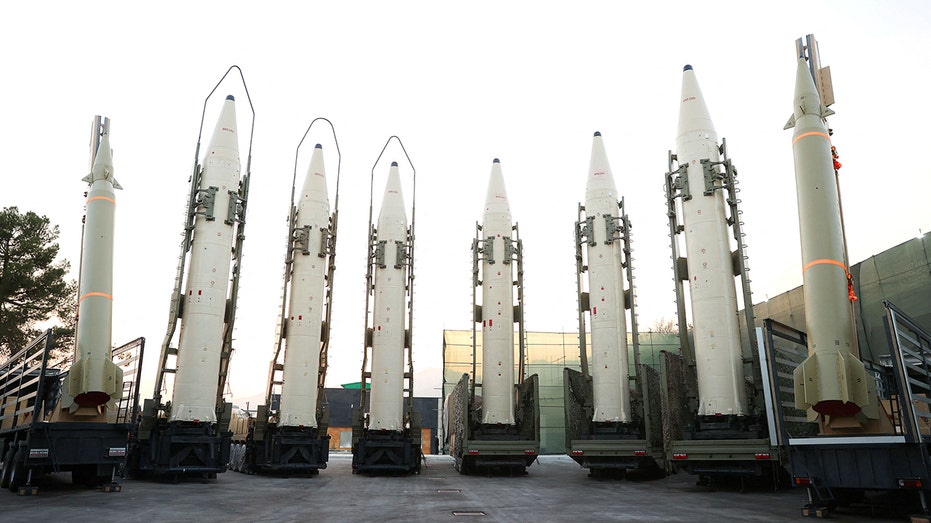
Experts from the Center for Analysis of World Arms Trade said US-designed air-defense systems used by Arabian Peninsula countries create a huge cost imbalance when countering Iranian drones. A Shahed-136 costs $20,000-$50,000, compared with $4 million for a PAC-3 missile and $3 million for an AMRAAM-ER.
Only about a quarter of women in the UK invest, yet Fidelity International found female individual investors achieved a 50% cumulative return over three years, compared with 47% for men. Analysts point to women trading less, showing greater risk awareness, diversifying more and linking investments to practical life goals.
While investors debate whether and when the Federal Reserve might raise interest rates, expectations of further tightening are growing worldwide, creating mounting trouble for bonds.
German companies sharply reduced their investments in the United States to a three-year low in the first half of 2026, as policies from the Trump administration fueled uncertainty between the transatlantic trading partners.
An SEC disclosure lists a new 1% Vista holding for Palantir co-founder Peter Thiel. Vista is among the largest oil companies operating in Argentina’s Vaca Muerta shale formation.
ETFs are already known for their tax efficiency, but this popular part of the market is taking those benefits further than ever through the 351 conversion ETF.
Harvard Management Co. disclosed a $2.2 billion stake in SpaceX, showing that the university’s endowment has profited from an early investment in Elon Musk’s giant rocket company.
Fitch on Friday raised the Republic of Congo’s long-term local-currency rating to “CCC+” from “CCC” while affirming its foreign-currency rating. The agency cited better regional financing conditions and a smoother debt repayment profile, which reduced refinancing risks.
Anthropic is preparing for what could be one of the largest IPOs on record. Sources say Wall Street is valuing the AI company unusually far ahead, basing its assessment on a forecast that its 2028 revenue could reach $190 billion to $200 billion.
Berkshire Hathaway said on Friday that it increased its Alphabet investment by 83% in the second quarter, making Google and YouTube’s parent company its third-largest stock holding.
A sharp stock decline and a series of setbacks have brought new scrutiny to billionaire Mat Ishbia’s mortgage company, prompting him to respond directly to his critics.
Jane Street lost $15 billion in July because of its exposure to Situational Awareness, an AI-focused hedge fund, according to two people familiar with the matter.
Goldman Sachs, Blackstone and Apollo Global Management spent months working on debt deals intended to help artificial-intelligence system developers pay for Nvidia chips.
Analysts and investors said on Friday that Silver Lake’s potential acquisition of Workday could lift battered software valuations by signaling continued private-equity confidence in the industry’s prospects despite fears that artificial intelligence could disrupt it.
Russia’s stock market closed lower on Friday, with the ruble-denominated MOEX Index down 4.29% at 2,136.35 points and the dollar-denominated RTS Index falling 5.13% to 796.02 points. Analysts said the MOEX correction could pause near 2,100-2,120 points, while the ruble may begin recovering next week.
Businesses from countries that take an unfriendly political stance toward Russia are showing interest in investment and transport opportunities in the Russian Arctic, Minister Alexey Chekunkov says. He believes long-term investment cooperation could help harmonize Russia’s relations with several East Asian states.
Freight turnover between Russian and Chinese ports along the Northern Sea Route totals 5.4 million tons annually, or nearly 15% of the route’s overall cargo traffic, Rosatom official Azamat Khochuev said. Total NSR cargo has surpassed 37 million tons, while India and other Asia-Pacific countries are also showing interest in using the route.
The ruble’s inflation-adjusted real effective exchange rate against the currencies of Russia’s main trading partners fell 4.7% month-on-month in July 2026, Central Bank data showed. It was up 2.2% from the start of the year; the rate declined 4.7% against the dollar and 3.8% against the euro in July.
The Bank of Russia set the official dollar rate at 84.5449 rubles for August 15-17, up 73.91 kopecks from the previous figure. The dollar exceeded 84 rubles for the first time since March 20, 2026, while the euro rose to 97.5141 rubles and the yuan to 12.4789 rubles.
The dollar-denominated RTS Index dropped below 800 points for the first time since July 20 after the Bank of Russia published exchange rates for August 15-17. At 5:29 p.m. Moscow time, the index was down 4.8% at 798.75 points, while the regulator set the dollar at 84.54 rubles and the euro at 97.51 rubles.
Banks in Belarus, Kazakhstan, and Kyrgyzstan have sharply increased fees for nonresidents depositing cash Russian rubles into their accounts, RBC reports. Some fees have risen from 2–5% at the start of summer to 10–15%, while Belarus’s Neo Bank Asia charges a flat 20%. At least 10 banks tightened their terms since early August amid increased cash inflows from Russia.
South Korea’s stock market has undergone a sharp correction, leaving many retail investors badly hurt. The KOSPI suffered one of its most severe adjustments on record between June and August, falling from above 9,000 to 5,500 before recovering partly. By the end of July, an estimated 1.2 million retail-investor accounts had faced margin calls.
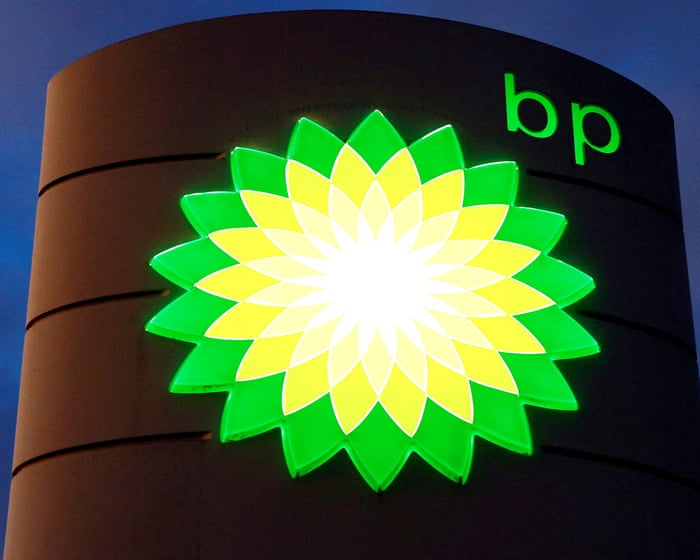
BP plans to develop the second phase of Venezuela’s Loran offshore gasfield with two oil companies closely linked to the Trump administration. The move follows Donald Trump’s call for foreign oil firms to help rebuild the country’s fossil fuel industry and would be among the first large-scale foreign investments since the US ousted Nicolás Maduro in January.
Global equity funds recorded inflows for a 12th straight week through Aug. 12. Optimism about a strong earnings season, alongside weaker-than-expected U.S. payroll growth and cooling inflation, reduced expectations of a Federal Reserve rate hike and supported sentiment.
A tongue-in-cheek private credit glossary circulating in the industry rebrands ABS, normally short for asset-backed securities, as “anything but software,” highlighting the push to invest beyond software.
Shares of KKR-backed supply-chain logistics firm LEAP India dropped 5.3% on Friday in their trading debut, giving the company a valuation of 69.18 billion rupees, or $725.2 million.
Alphabet has become by far SpaceX’s largest single institutional holder, with the value of its investment rising 100-fold over the past decade to $94 billion.
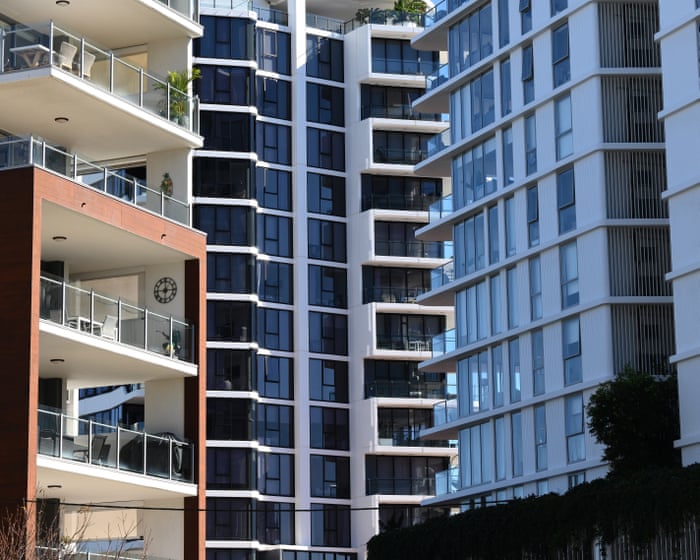
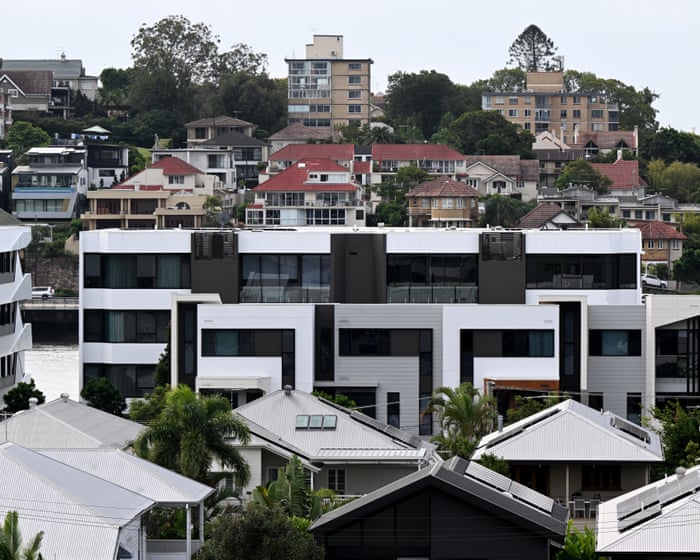
ABS data shows new lending to property investors fell 8.6% in the June quarter, while total new home loans dropped 5.4%. Investors borrowed 14.8% less for established homes but 4.4% more for new builds, a shift economists and housing advocates say could ease competition for first-home buyers and add rental supply.
Brazil’s Finance Ministry plans to issue its first yuan-denominated sovereign panda bonds in China this year, targeting 5 billion yuan ($700 million). A successful offering could lead to regular issuance and create a sovereign pricing benchmark for Brazilian companies seeking access to China’s bond market and RMB financing.
Trader Matt Latimore built a $1 billion fortune through a contrarian bet on coal. He is now diversifying into critical minerals that U.S. President Donald Trump has identified as essential to national security, steelworks and even a freight railway.
China Central Depository & Clearing supported a wholly owned overseas subsidiary of Shanghai Electric Group in issuing 1.5 billion yuan in three-year FTZ offshore bonds at a 1.8% coupon. Listed on the Hong Kong Stock Exchange, the deal set several records and drew interest from investors across multiple regions.
Japan could carry out joint intervention in the yen market at any time and signal faster-than-expected interest-rate increases to curb the currency’s decline, former top currency diplomat Mitsuhiro Furusawa said.
Investors failed to pay for 8,734 shares allotted in the online tranche of Unitree Robotics’ Shanghai STAR Market IPO, while the offline tranche was fully subscribed. The sponsor and lead underwriter will take up the unpaid shares, valued at about 1.32 million yuan. The final online allotment rate was just 0.0181%.
Asian stocks rose on Friday and were on track for their strongest week in two months after benign inflation data weakened expectations of an imminent U.S. rate hike. Stalled talks to end the war in the Middle East could nevertheless keep risk sentiment subdued.
Norwegian Foreign Minister Espen Barth Eide says the war against Iran failed to meet its initial objectives and instead strengthened hardliners in Tehran. He calls for the prewar freedom of navigation in the open Strait of Hormuz to be restored and urges an end to the conflict.
National security analysts warn that Iran could launch military strikes against high-value targets as early as this fall as Washington intensifies economic sanctions. The warning follows reports that two vessels were struck while transiting the Strait of Hormuz. Treasury Secretary Scott Bessent said the US was preparing unprecedented economic measures, while talks between Washington and Tehran remain deadlocked and control of the waterway is a central dispute.
Seven months into the war, Iran’s economy and infrastructure are under severe strain, yet its decision-makers appear in no hurry to end the fighting. Analysts say Tehran may be able to sustain lower-intensity attacks and disrupt the Strait of Hormuz, while inflation, unemployment and regional damage mount. How and when this could become an acceptable political deal remains unclear.
Iran warStrait of Hormuzeconomic pressureUnited States
The United States threatened on Thursday to keep a naval blockade of Iran in place indefinitely, intensifying economic pressure on Tehran as ceasefire talks stalled, global oil supplies fell and regional tensions mounted.
US Secretary of War Pete Hegseth said the Navy could sustain an indefinite blockade of Iran by rotating ships. The United States and Israel launched military operations against Iran on February 28; after a June cessation-of-hostilities memorandum, Washington resumed large-scale strikes on July 8, accusing Tehran of violating terms related to the Strait of Hormuz.
The United States has enough military assets to sustain a naval blockade of Iranian ports for an unlimited period, Defense Secretary Pete Hegseth said Thursday. He said ships could be cycled into and out of the region as circumstances require.
With the U.S.-Iran war dragging on and no end in sight, oil traders and policymakers are confronting a critical question: whether global oil stocks can sustain the market through another six months of conflict.
Iran says the Strait of Hormuz is under its management and control, rejecting President Donald Trump’s claim that the United States has “total control” of the waterway. Iranian officials said vessels need Tehran’s permission to transit and that the strait will not reopen unless the US meets commitments under an interim deal.
Iran on Thursday rejected Donald Trump’s claim that Washington controlled the Strait of Hormuz as “lies and fabrications.” Ebrahim Zolfaghari, spokesperson for Iran’s central military command, said the waterway was fully under Tehran’s control. Trump had said a day earlier that the US had “total control” of the strait.
Ebrahim Zolfaghari, a spokesman for Iran’s armed forces headquarters, said Iran has full control of the Strait of Hormuz. Iranian television quoted him as saying that no commercial ship or tanker can safely pass without permission and supervision from Iran’s armed forces. Donald Trump said the previous day that the US had “total control” of the strait.
The US and Iran remain locked in a standoff over the Strait of Hormuz while mediators try to revive talks. Iran rejects Washington’s claim of control and says the waterway will stay closed until its demands on US aggression, reparations and sanctions are met. Shipping has fallen to a one-week low as Iran restricts passage, while the US maintains a naval blockade around Iranian ports.
President Donald Trump has repeatedly claimed that the United States controls the Strait of Hormuz. Iran says it will not fully reopen the strait until Washington meets its conditions, while experts say the situation is much more complicated than Trump’s proclamation suggests.
Ken Griffin’s Citadel is requiring investing staff, including some analysts, to sign non-compete agreements lasting as long as two years. The measure is among the more aggressive restrictions adopted by multistrategy hedge funds seeking to stop employees from joining rivals.
The US government sold 30-year bonds at the highest interest rate seen in 25 years, underscoring investors’ demand for greater compensation to fund the country’s widening deficit.
Private equity firm Silver Lake is discussing a possible acquisition of Workday, according to people familiar with the matter. With Workday valued at about $43 billion, the deal would be among the largest software buyouts ever.
New York City brokers are charging clients thousands of dollars for early access to newly listed apartments, giving them a chance to move first on the city’s best deals.
Rebuilding Wildberries warehouses and other infrastructure damaged in Ukrainian drone attacks is estimated to cost 147–223 billion rubles, potentially rising to 169–278.9 billion if buildings must be demolished and sites cleared. Combined losses for the retailer and sellers could reach 600–800 billion rubles. More than 400,000 sellers were affected, with some losing up to 95 percent of their inventory.
A new study finds that extraordinary compensation deals for Elon Musk have paved the way for chief executives at other S&P 500 companies to secure enormous pay packages.
Norway’s $2.3 trillion sovereign wealth fund is voicing concern over what it sees as a continuing weakening of shareholder rights in major markets. It warns that regulation is increasingly favouring company founders and insiders over independent investors.
MarketsNorwaysovereign wealth fundshareholder rights
MSCI has added 33 Chinese companies, including AI firm Zhipu AI, to its MSCI China Index. The changes take effect after the August 31 market close, prompting passive funds that track the benchmark to rebalance. Analysts say the move highlights the growing influence of Chinese technology and hard-tech companies in global indexes.
Britain’s economy is showing its clearest signs yet of benefiting from the global artificial intelligence boom, as data released Thursday pointed to rapid growth in related industries and a surge in computer hardware investment.
Accelerant said private equity firm Thoma Bravo will take the insurance marketplace private through an all-cash transaction valued at more than $4 billion, just over a year after the company listed in New York.
The EU wants savers to move the €11 trillion held in bank accounts into stock and bond markets, directing more capital to businesses across the region. Yet progress has repeatedly been offset by setbacks.
The $109 billion investment fund behind Novo Nordisk has returned to full activity after reducing allocations earlier this year. Its chief executive says the fund is seeking opportunities in a US market that has become attractively priced.
Guangdong's provincial government issued 2.5 billion yuan in offshore RMB local government bonds in Macao. The three tranches comprise Hengqin construction-themed, green and blue bonds. Orders peaked at 23.2 billion yuan, producing a record 9.28-times oversubscription for a Macao bond issue. Proceeds will fund Hengqin infrastructure and green and blue development in the Greater Bay Area.
China’s national carbon emissions rights trading market recorded cumulative trading volume of more than 930 million tonnes by the end of July, Minister of Ecology and Environment Huang Runqiu said Thursday.
Russian stocks declined at the start of Thursday’s main trading session, with the MOEX and RTS indices each down 0.32% at 2,294.07 and 870.72 points. Their losses later widened to 0.56%, while the yuan rose to 12.388 rubles.
Tycoons are battling over a tropical retreat aimed at wealthy people. Bond investors are also pulling back from data centers, while New York City’s pied-à-terre tax has hit another obstacle.
South Korean stocks climbed 22% in ten days, putting the benchmark index on course to enter a technical bull market as a global rebound in the AI trade fueled a swift reversal from last month’s historic rout.
Asian stocks climbed on Thursday after U.S. inflation matched expectations, reducing bets on another Federal Reserve rate hike in the near term. Oil stayed near $80 a barrel as Washington and Tehran remained deadlocked over efforts to end the Gulf war.
Applications for investor loans have declined since the beginning of the year, but the downturn already seems to be reversing. Warnings that the government’s tax changes will destroy property investment may be overstated. Commonwealth Bank, Australia’s largest mortgage lender, reported a bumper $11bn full-year cash profit on Wednesday. Strong demand for its lending products, particularly mortgages, helped underpin the result. The property market has taken a knock, but the article argues it remains well short of collapse.
A $42 billion sale of 10-year US Treasury notes produced the benchmark securities’ highest yield since 2007. Investors still showed decent demand at the auction, even as they sought greater compensation for financing the US government. After the consumer-price data, bond traders continued to treat a September Federal Reserve rate increase as roughly a coin toss. The auction highlighted pressure for higher returns in government debt markets.
The Bank of Russia says the decline in investment levels at the beginning of 2026 should not be characterized as dramatic. Adviser to the Central Bank governor Kirill Tremasov said overall investment activity remains high. His assessment presents the early-year drop as limited against continued strong activity.
Buyout funds and lenders were attracted to software-as-a-service companies because they offered dependable revenue and low operating costs. Artificial intelligence now threatens that entire model. Investors who committed to these businesses face the possibility that the assumptions supporting their bets may no longer hold. The pressure reaches both the companies and the financial firms that backed them.
Wall Street’s main indexes advanced on Wednesday, with the Nasdaq leading the gains. Strong earnings from companies involved in artificial intelligence infrastructure lifted technology shares. Inflation figures that were broadly in line with expectations also strengthened market bets that the Federal Reserve will keep interest rates unchanged. The move combined enthusiasm over AI-related results with support from the latest price data.
Goldman Sachs plans to acquire exchange-traded funds provider Neos Investments. The deal is valued at as much as $2.25 billion. The investment bank is pursuing the transaction to strengthen its position in active asset management and broaden its presence in active ETFs.
Goldman Sachs Group Inc. plans to acquire Neos Investments for as much as $2.25 billion. The purchase will broaden the reach of Goldman’s asset-management business in the actively managed exchange-traded fund market.
Investors are questioning whether Federal Reserve Chairman Kevin Warsh can successfully move away from decades of communicating the central bank’s monetary-policy intentions. They worry that providing less exact guidance could impose a cost on financial markets. The concern centers on whether a leaner communication approach would unsettle markets as policy expectations become less clearly defined.
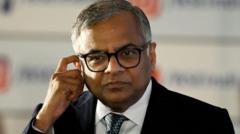
N. Chandrasekaran said Wednesday that he has resigned as chairman of Tata Sons. His departure follows the board’s failure to approve his reappointment. The decision comes amid tensions with the charitable arm that controls the wider Tata Group. The group spans businesses ranging from salt to aviation in India.
Tata Group chairman N Chandrasekaran says he will not seek another term when his tenure ends in February. He attributes the decision to a lack of support from the Tata Sons board. His departure will bring his period as chairman to an end at the close of his current term.
N. Chandrasekaran, chairman of India’s Tata Sons, said on Wednesday that he had resigned. He cited the board’s failure to approve his reappointment as the reason for his departure. The resignation comes amid tensions with the charity arm that controls the Tata Group, whose businesses range from salt to aviation.
Shares of Tata Group companies extended their decline on Wednesday, falling as much as 4%. The selling followed the resignation of N. Chandrasekaran as chairman of Tata Sons. His departure sparked a selloff across the conglomerate’s listed companies, sending their stocks lower. The market reaction spread beyond the parent company to other publicly traded Tata businesses.
India’s Tata Sons Chairman N. Chandrasekaran has stepped down, according to a source directly familiar with the matter. The source said he will nevertheless remain in place until his current term ends. No reason for the resignation or details about a successor were provided.
Ukraine’s government is seeking to sell thousands of state-owned assets. Most are described as unprofitable, inefficient, nonoperational, or some combination of all three. Yet the effort faces a major obstacle: offering low prices has not been enough to draw the foreign investors Ukraine is hoping to attract.
The Reserve Bank of India likely stepped into the foreign-exchange market on Wednesday, according to six traders cited by Reuters. Continuing anxiety linked to the Iran war has kept oil prices high. That pressure has weighed on the South Asian currency, prompting expectations that the central bank acted to support the rupee.
Taiwanese equities are attracting more interest from global investors than South Korean stocks after the sharp artificial-intelligence-related market selloff in July. Both markets are major AI indicators and are seeking to recover from that decline. The preference for Taiwan reflects expectations of steadier earnings compared with Korea. Investors are consequently reassessing their exposure to the two markets.
MarketsTech & AITaiwan stocksSouth Korea stocksAI selloffglobal investors
Crypto asset manager Bitwise Asset Management has dismissed about 14% of its workforce. The job cuts come as digital-asset prices remain in a prolonged slump, underscoring the pressure facing the cryptocurrency industry.
Blackstone Inc. and a group of Canadian pension funds are set to purchase a 25% interest in Air Canada’s Aeroplan loyalty program. The transaction is valued at C$2.5 billion, equivalent to about $1.8 billion. It gives the investors a substantial minority stake in the airline’s loyalty business.
South Korea expects to put more than 1 trillion won, or $707 million, of fresh capital into a new sovereign wealth fund next year. The fund will target artificial intelligence and other strategic industries. The move places the country alongside governments worldwide seeking to mobilize investment and gain an advantage in high-tech sectors.
Russian stock indices declined when trading opened on the Moscow Exchange. The yuan-to-ruble exchange rate also fell by 3.1 kopecks from the previous session’s close, reaching 12,213 rubles.
China’s pharmaceutical sector is rising, drawing growing interest from drugmakers around the world. The report examines why global companies are moving into China’s pharma market. It focuses on the factors behind this international investment. No specific deal or company is identified in the headline.
A village has discovered a path to prosperity through green development. The story highlights the economic gains associated with this approach. It presents green development as the basis for the village’s newfound wealth.
A senior strategist at Bank of New York Mellon has devised a new way to gauge the yen through the price of a Japanese fast-food staple. The so-called Katsu Curry Index is intended to provide a more accurate picture of the currency’s weakness. Its use comes as the effects of recent intervention begin to fade.
Gen Z visitors are exploring how Guizhou is connecting its local industries with consumers around the world. In Jiangkou County in Tongren, local authorities describe a matcha refining facility as the world’s largest single-site operation of its kind. Its fully automated production lines process finely ground green tea for domestic and overseas consumers. The facility presents matcha production as part of the region’s route into global markets.
The Minutes Reader extension turns the original page into a focused reading view and translates articles and video subtitles on demand. It is in limited beta.
 ReutersOriginal★★☆☆☆2026-08-17 04:30