Anthropic offers a chance to rethink IPO rules
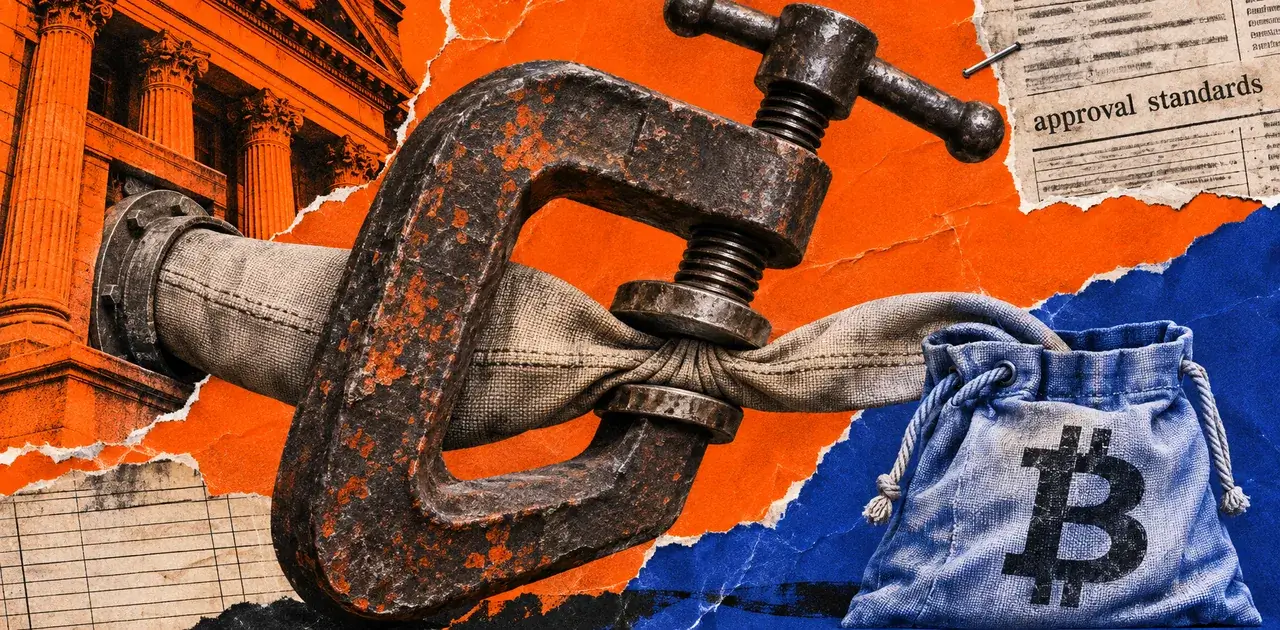
To protect retail investors, the deferral of employee stock-based compensation costs should no longer be permitted.
Democrats unexpectedly took control of both the Senate and House of Representatives on Tuesday. Trump also announced that day that the US would halt $3.8 billion in aid to Israel. The report examines the potential consequences for Israel and Benjamin Netanyahu.
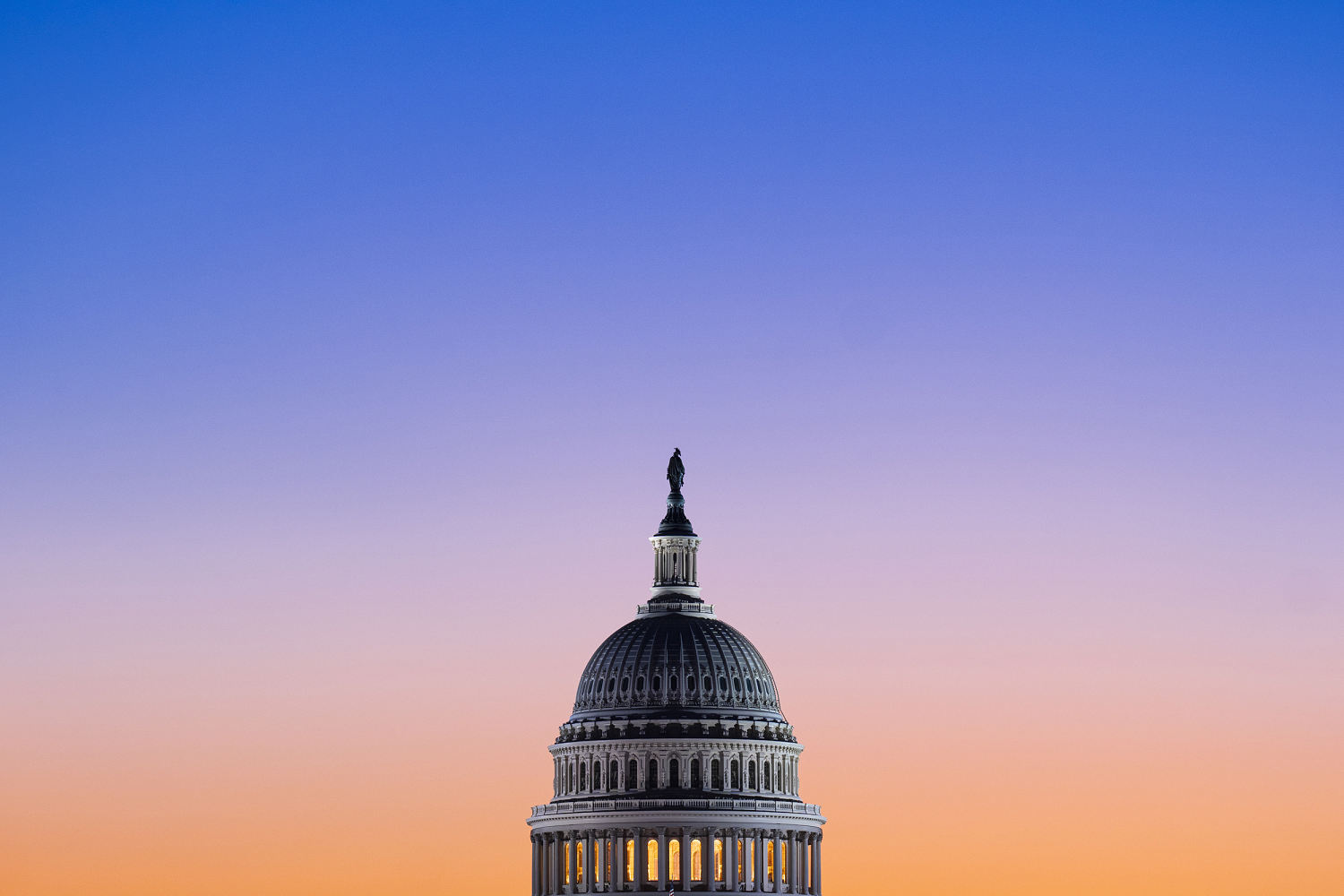

Democrats are poised to control both the House and Senate after wins in South Carolina, Kansas and Texas. Texas turning blue marks a historic upset. President Donald Trump says he will accept the results and blames the candidates for the losses.

Democrats won control of the House and Senate by flipping Republican-held seats in several states. It is the first time in 20 years that a Republican president has lost both chambers. The results are seen as a major rebuke to Donald Trump and his party; Democrats also elected the first Muslim senator and won a Kansas Senate seat for the party for the first time in nearly a century.
A wave of voter anger propelled Democrats to sweep into power in Congress. Outrage over the cost of living and the war in Iran delivered a resounding rebuke to President Donald Trump and his party, just two years after his dominant return to the White House.

Democrats won both the Senate and the House in a nationwide rebuke of President Donald Trump, flipping seats long held by Republicans and securing a series of historic firsts. Their gains are expected to constrain Trump during the final two years of his term and give Democrats power to block legislation, investigate his administration and challenge appointments. Anger over living costs, tariffs and fuel-price increases linked to Trump’s confrontation with Iran helped drive the result.

Democrats took control of both chambers of the US Congress on Tuesday, in what the report describes as a nationwide rejection of Donald Trump. France 24’s Wassim Cornet said the scale of the victory was “impossible to overstate”; Democrats are on course to win more House seats than they had when Barack Obama was elected in 2008.

US voters handed Democrats control of Congress on Tuesday in a sharp rebuke to President Donald Trump and his MAGA movement. Polls indicate that anger over the worsening cost-of-living crisis was a major factor in the party’s historic win; the crisis was partly triggered by Trump’s decision to launch the US-Israeli war on Iran.
In Tuesday’s emphatic Democratic sweep, voters rejected President Donald Trump with a force rarely seen against a president in decades.

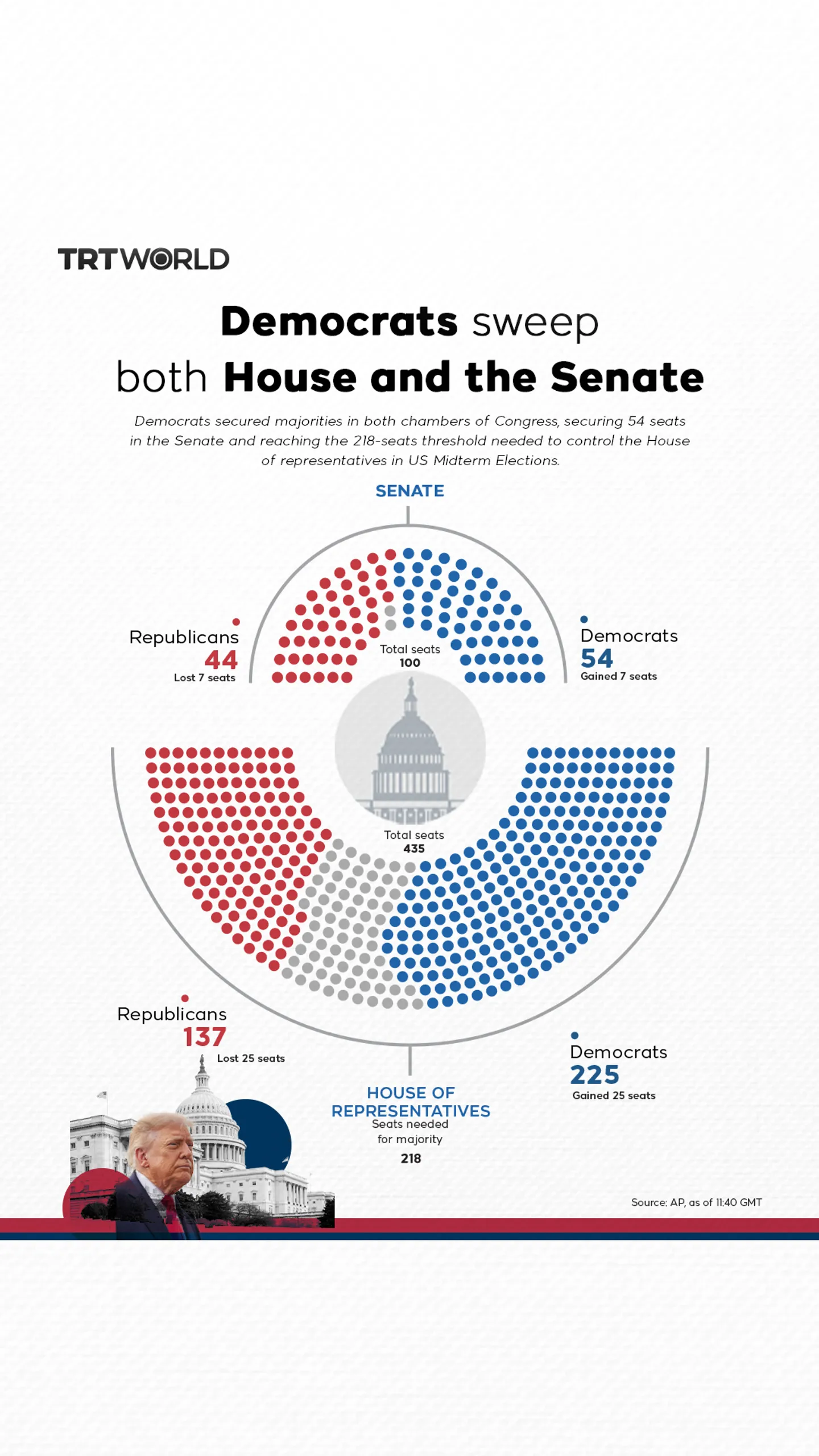
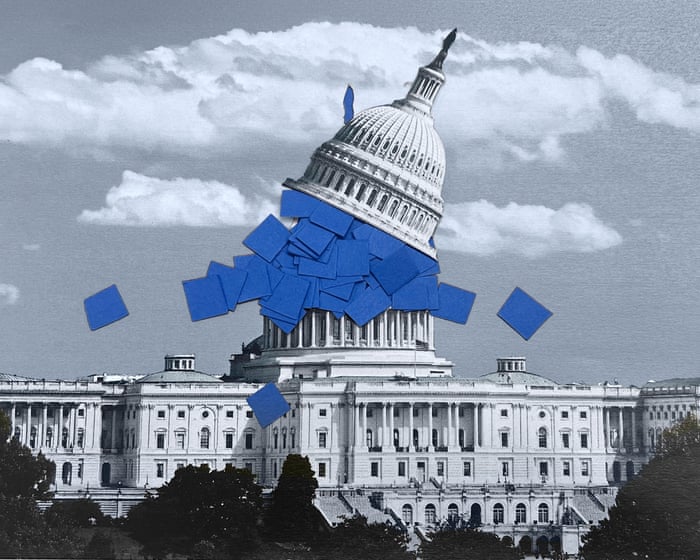
Democrats won both chambers of Congress, the House and the Senate.
Stefan Grobe speaks with elections expert Boyd Wagner about the US midterm surprise. Democrats far exceeded expectations overnight, winning historic results in long-time Republican states including Kansas and Texas, which elected their first Democratic senators in decades.

Democrats captured control of both the Senate and House in the November 3 US midterms, winning sweeping victories in Republican strongholds. Tens of millions of voters delivered a sharp rebuke to President Donald Trump. France 24 international affairs editor Kethevane Gorjestani said the predicted “blue wave” was now approaching “tsunami territory.”

Democrats won control of both chambers of Congress, flipping seats long held by Republicans and adding governorships. Voters rebuked Trump’s record, particularly over the cost of living. Trump said he was not on the ballot and would have won by a landslide if he had been, while telling the New York Times he was willing to accept the results.

US voters dealt President Donald Trump and Republicans a sharp rebuke. Democrats retook the House and flipped at least six Senate seats, gaining control of both chambers of Congress. South Carolina will have a Democratic senator for the first time in nearly 30 years.
Bloomberg projections say Democrats won a House majority in the midterms, with at least 223 seats against the 218 needed, while Republicans secured 126. The projections put Democrats at a minimum of 54 Senate seats and Republicans at 41. NBC projected 255 Democratic and 180 Republican House seats, while its Senate tally showed 226 for Democrats and 141 for Republicans.
Precious metals climbed sharply Tuesday morning as investors weighed the Democrats’ sweep in the U.S. midterm elections.
The Democratic Party claimed control of Congress and won governors’ races across the country on Tuesday. As votes continue to be counted in other key states, attention is turning to how many more Republicans will lose.
During the first two years of Donald Trump’s second term, Republicans held majorities in both chambers of Congress, helping his party pass a sweeping tax-cut measure in 2025. With loyalists leading congressional committees, Trump and his administration have largely avoided tough scrutiny from those bodies.

Democrats won control of both chambers in the US midterm elections, taking 53 Senate seats and leading in three more, while crossing the House’s 218-seat threshold. Their majority gives them tools to investigate the Trump administration and block nominations, but advancing legislation may be difficult because Trump can veto bills.

Democrats have won control of both the Senate and the House in a midterm victory far larger and faster than expected, flipping seats in several states. Donald Trump blamed the result on not being on the ballot. The shift is set to reshape the political course of his second presidency.
Democrats have taken both chambers of the US Congress. Europe’s main concerns are tariffs and Ukraine, where Trump still retains much of his power.
A blue wave has swept the US midterms: Democrats won the Senate and are on course for a large House majority, with West Coast votes still being counted. The programme features live analysis from Philadelphia and Brussels, alongside coverage of Poland’s crisis, Ukraine talks and EU enlargement.
Democrats have won control of the U.S. House as well as the Senate, delivering a startlingly decisive rebuke to Republican governance in Washington and ushering in a new era of congressional resistance to President Donald Trump.

The Democratic Party has won back control of the US House of Representatives, after all 435 seats were contested. House Democratic leader Hakeem Jeffries is expected to become speaker, making him the first Black person to hold the post.

The Associated Press projected that Democrats had won the Senate, while NBC News projected they would win the House; counting continued in several races. A Democratic takeover of both chambers would deal a major setback to Donald Trump and Republicans. Democratic lawmakers have vowed to rein in his policies on Russia, Ukraine and the Middle East.

Democrats have won control of both the Senate and House, giving them command of Congress for the remainder of Donald Trump’s presidency. The election night has also brought historic results, with Democrats making substantial gains in states Trump won comfortably two years ago, including Texas, Kansas, Ohio and South Carolina.
Democrats took control of the U.S. Senate, delivering a decisive rebuke to Republican governance in Washington and ushering in a new period of congressional resistance to President Donald Trump.
Democrats are projected to gain control of Congress, giving them a significant check on Trump. The party could use that position to investigate his administration and put greater pressure on the White House over its policies.

Democrats won control of both chambers of Congress in a midterm-election rout, dealing a blow to Trump.

ABC projects that Democrats will win enough seats to take control of the U.S. House of Representatives from Republicans.

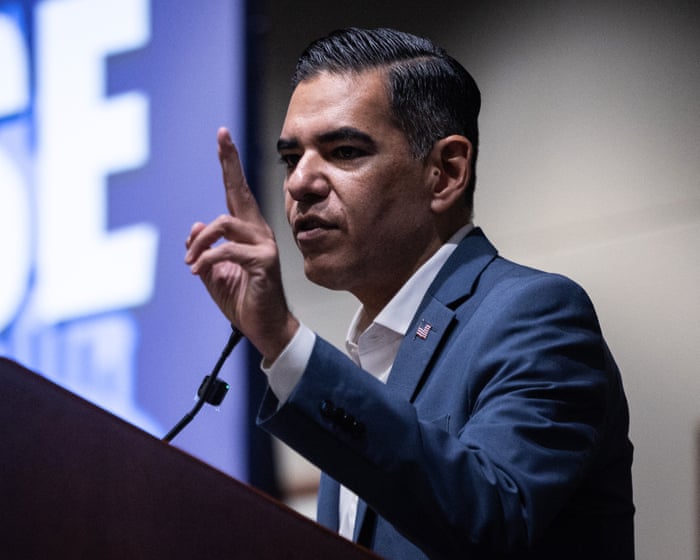
Robert Garcia, expected to chair the House oversight committee, vowed to investigate the Trump administration and told Republicans to “lawyer up.” Democrats have retaken the Senate and are widely expected to win the House. Senator Ron Wyden signaled that subpoenas could follow.
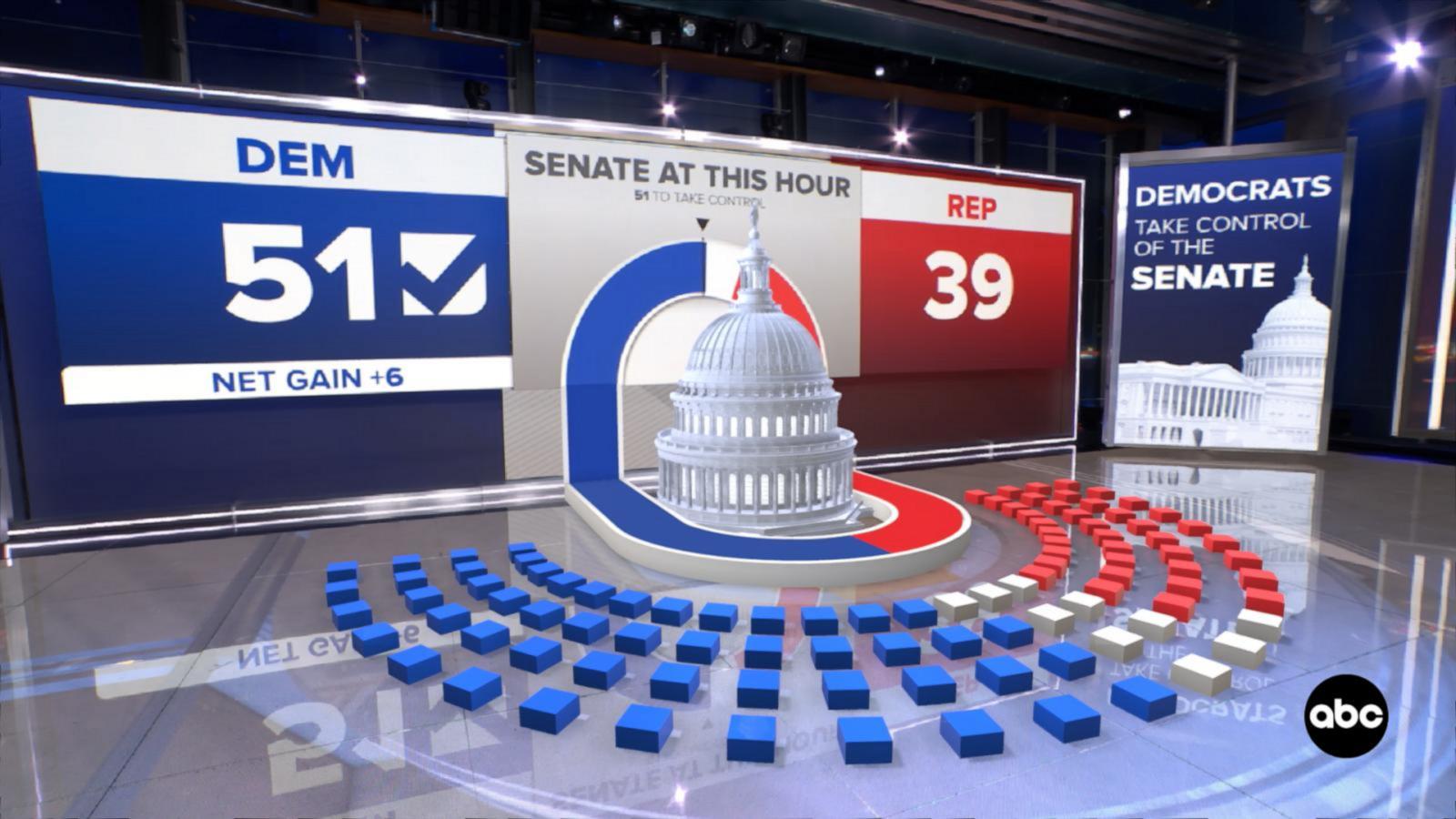
Bloomberg estimates that Democrats will win at least 51 seats in the Senate after the midterm elections, giving them control of the chamber. Republicans currently hold 53 of its 100 seats, while Democrats and allied independents hold 47.

The midterms have ended Republicans’ dominance across all three branches of government. The shift in control of Congress will affect the crypto industry, too.

ABC News projects that Democrats will win enough seats to control both chambers of Congress.

Democrats have won control of the Senate and are projected to take the House as well. Their Senate gains included a surprise win in South Carolina, with Texas, Iowa, Ohio and Maine also turning blue. Democrats also won several Florida districts that had been redrawn to favor Republicans. A poll found the economy and the state of democracy were voters’ top concerns, and more than two-thirds said Donald Trump’s policies had worsened economic conditions.
Democrats won the US Senate, completing their control of Congress and gaining the ability to set the legislative agenda and block Trump’s nominations.

Democrats have retaken the Senate after sweeping Republican-held races nationwide, gaining leverage over Donald Trump for the rest of his presidency. With a likely House win, they are expected to control both chambers from next year and can block legislation as well as cabinet and federal judicial appointments.

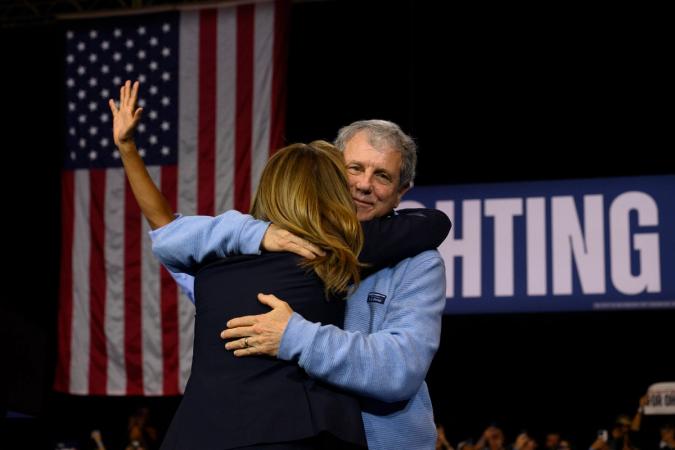
Democrats regained control of the US Senate in Tuesday’s midterm elections, an outcome widely seen as a rebuke to Trump’s Republican Party. The party flipped seats in several states while defending others, including in Georgia and Virginia, ending Republican control of the chamber and its Washington trifecta.

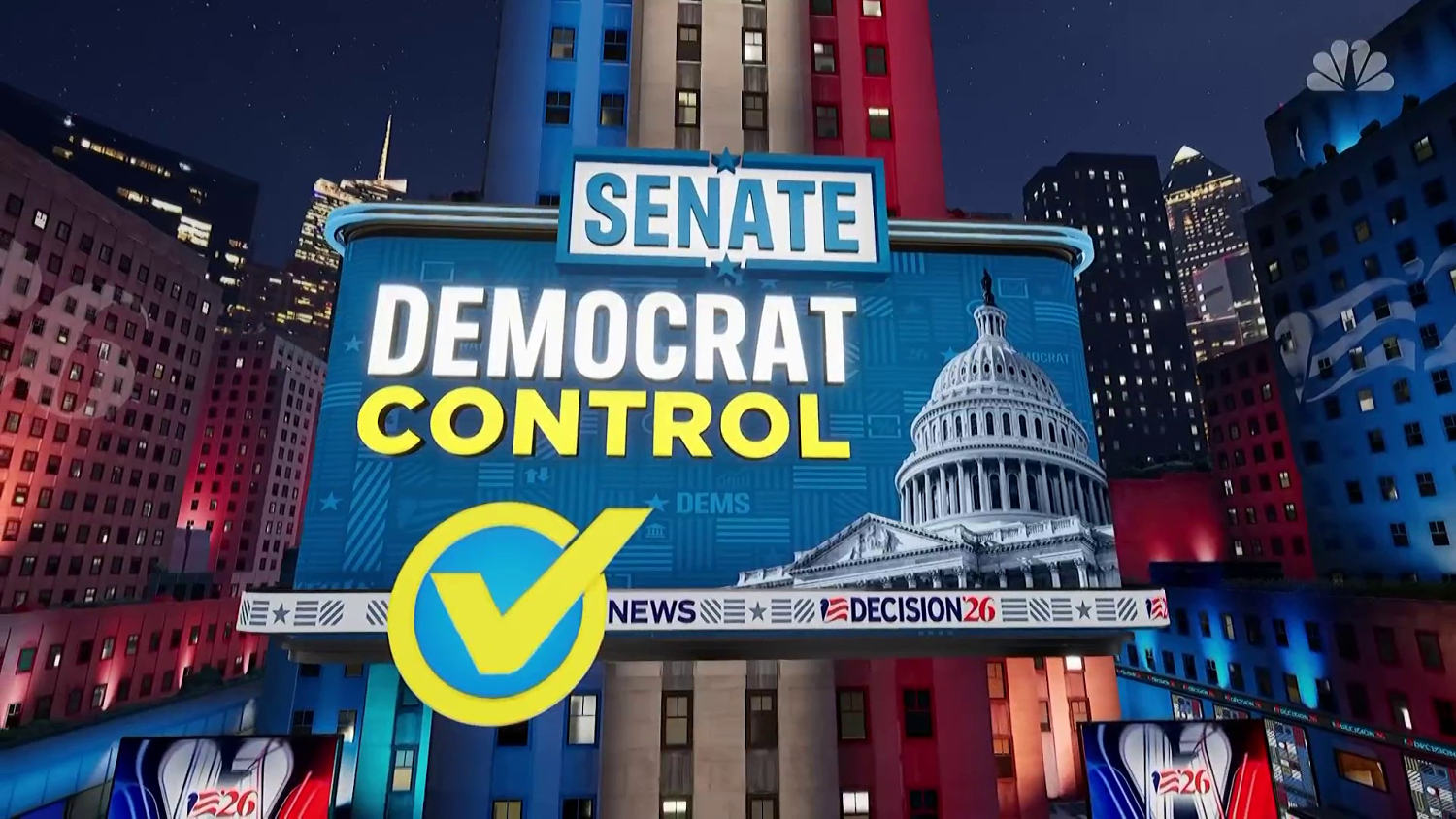
NBC News projects that Democrats won both chambers in the midterm elections and will take full control of Congress in January. Steve Kornacki explains how they gained control of the Senate.

NBC News projects that Democrats will take full control of Congress, powered by wins in states where Republicans are deeply entrenched. President Donald Trump had urged voters to pretend he was on the ballot in this year’s midterm elections.

NBC News forecasts a Democratic majority in the chamber next year, which would let the party scrutinize Trump and seek laws limiting his policy agenda.
Democrats won the House and then flipped the Senate, in a rebuke to President Trump, sending futures into positive territory.


Investors avoided AI stocks and shifted into government bonds on Wednesday after Democrats took control of Congress in the US midterms. Oil prices edged up as uncertainty persisted over the course of US President Donald Trump’s war against Iran. The edition also examines the campaign’s central issue: rising living costs.
World shares are mostly higher following US midterm results showing Democrats won majorities in both the House and Senate.

The dollar fell to a one-month low after Democrats won control of both chambers of Congress, as investors worried tighter AI regulation could slow growth. Investors moved into US Treasuries, while the 10-year yield fell; gold rose and AI-related shares dropped in Asian trading.

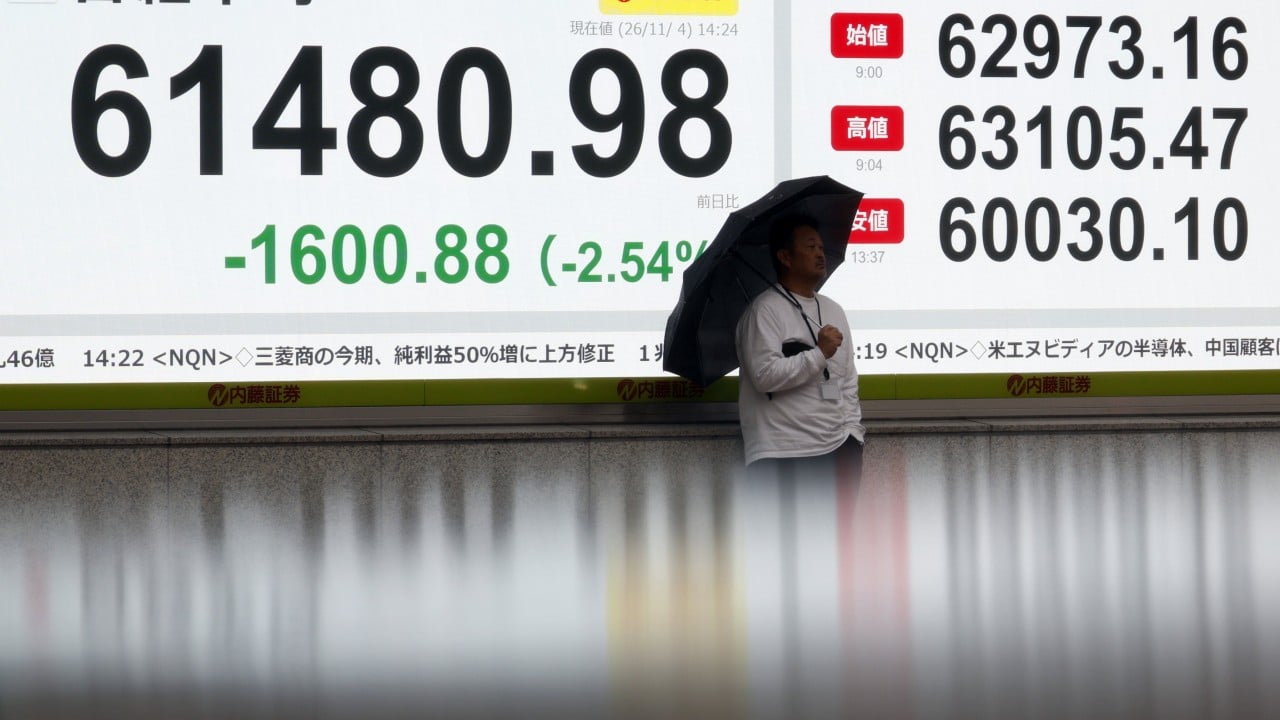
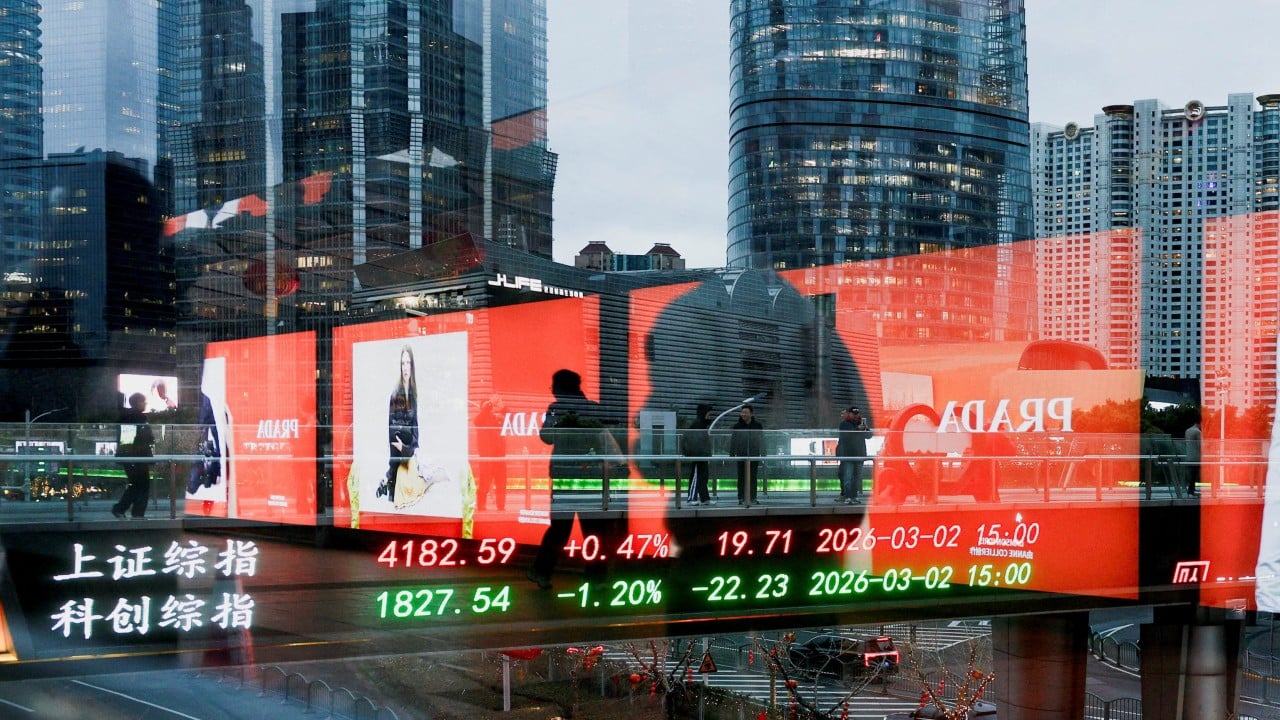
The Democrats’ comprehensive midterm victory jolted Asian stocks, bonds and commodities as investors anticipated closer congressional scrutiny of the AI industry and government spending. Regional stocks ended mixed on Wednesday, while US Treasury yields fell on hopes a Democratic-controlled Congress could restrict debt issuance.
Global markets pared losses after a selloff sparked by Democrats sweeping Congress. Investors weighed the prospect of tougher scrutiny of Donald Trump’s policies against lawmakers’ limits in reshaping his agenda.
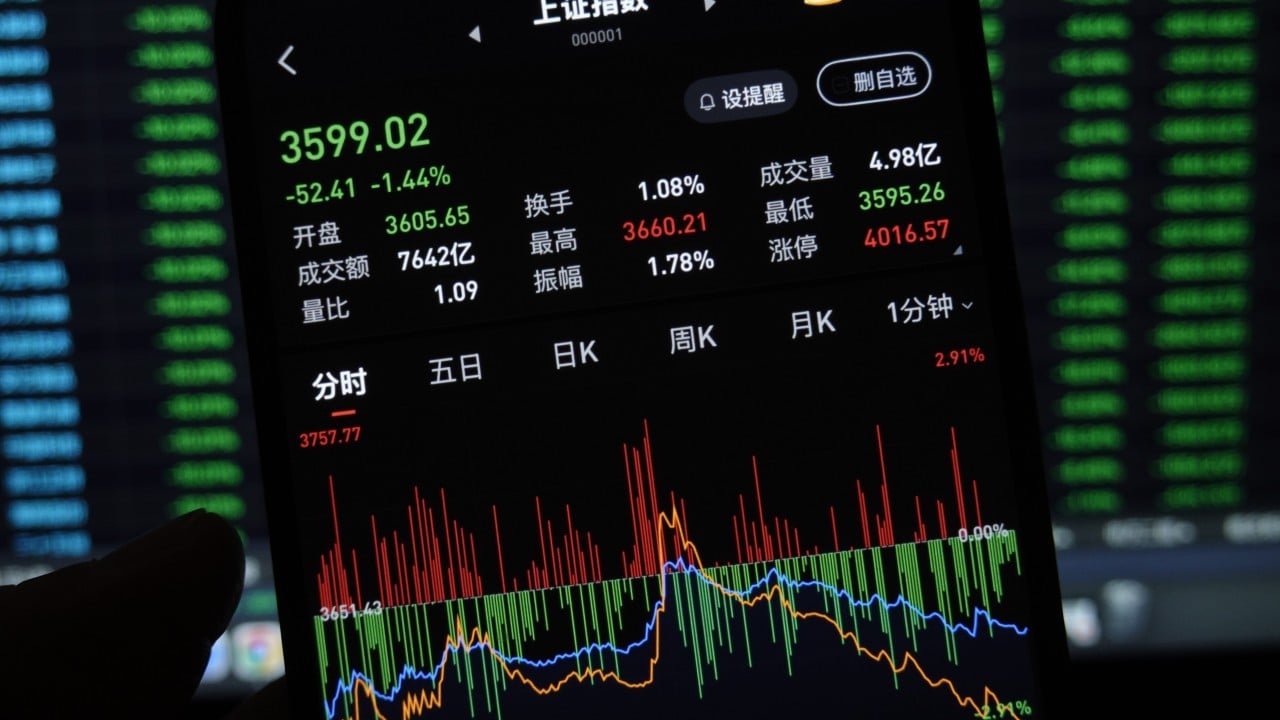
Chinese flash-memory chipmaker Yangtze Memory Technologies has paused plans for a Shanghai IPO, according to a company memo and people familiar with the matter, as regulators tighten share-sale approvals amid a struggling stock market.
The People’s Bank of China raised the foreign exchange reserve requirement ratio as the yuan continued to rally, a move analysts say could temper appreciation pressure and offer relief to exporters. China’s goods trade surplus reached a record US$938.1 billion in January-September, up from US$726.2 billion a year earlier.

Surging energy costs pushed eurozone inflation to 4% in October, a three-year high. Italy recorded the largest increase, while Germany went against the trend.

Euro zone inflation reached 4% for the first time in three years, with an interest rate hike looming. Energy inflation drove the rise, surging above 20% in October.
Deutsche Bank’s acquisition of UK corporate broker Numis appeared well-timed, but three years on, it is still waiting for London’s IPO market to recover.
Gulf stock markets rose in early trading on Wednesday as investors assessed the fallout from the US midterms and awaited Washington’s response in its war with Iran.
Swiss private banking executives recognize Hong Kong’s growing role as a global cross-border wealth-management hub. Geopolitical tensions are leading wealthy clients to diversify both their investments and where they keep their assets. EFG International CEO Giorgio Pradelli said “the race is on” at a summit hosted by the Hong Kong Monetary Authority.

After years of setbacks, Wall Street giants including JPMorgan and Goldman Sachs are seeing their bets in China pay off.
Most FX strategists polled by Reuters expect the rupee to surrender recent gains and weaken again over the coming months, with a volatile external environment continuing to weigh on the currency.
Morgan Stanley says token-form versions of US stocks and Treasury securities were created using DTCC's new service.


Morgan Stanley says it is one of the first banks to tokenize real-world assets. Its announcement comes after the Depository Trust & Clearing Corporation launched its Tokenization Service, or DTS, on Oct. 28.
Spanish energy company Moeve said it had agreed to sell its oil assets in Algeria to Indonesian state energy firm Pertamina. Abu Dhabi fund Mubadala holds a majority stake in Moeve.
Shanghai-listed Wingtech Technology rejected a proposal that would strip it of control over Dutch chipmaker Nexperia’s assets outside China, calling the plan a discriminatory “expropriation.” The dispute with Dutch authorities has lasted a year and is intensifying as Wingtech faces a domestic delisting deadline and Dutch Prime Minister Rob Jetten prepares for a spring visit to Beijing.

Plans are being developed to offer default retirement options to people automatically enrolled in pension schemes.
Influential investors in Swiss chocolate maker Lindt & Sprüngli are pressing for sweeping board changes. Pricing mistakes battered the share price and led to the CEO’s ouster last month.
Markets may warrant more concern over what investments are concentrated in.
Indian shares rose slightly on Wednesday, supported by optimism about foreign inflows, lower oil prices and strong earnings. Investors also weighed the implications of a Democratic sweep in the US midterm elections.
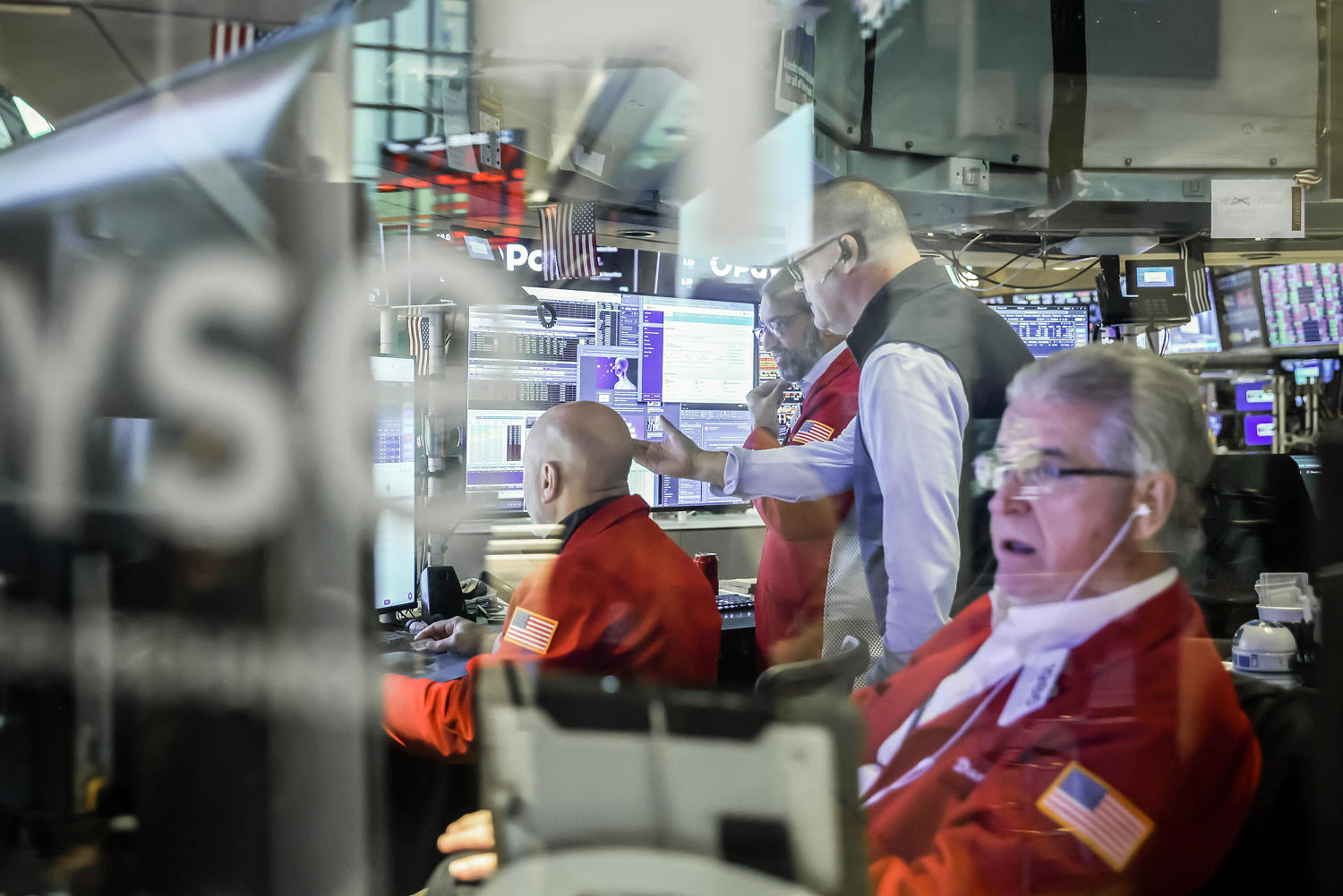
Stock futures fell after Democrats won key Senate races nationwide. The scale of the blue wave caught Wall Street off guard, as investors had expected only a ripple.

Wayne Cole previews the day ahead in European and global markets.
Asian stocks and the dollar fell as investors considered the prospect of tighter AI regulation and political gridlock in Washington. Technology shares led the losses, while oil prices also declined.
Capital Group reported that dividends at Chinese listed firms rose 5.3% on a core basis in the third quarter, below global growth of 7.5%. The gap has cast doubt on the effectiveness of Beijing’s continuing efforts to stabilise the stock market.

Tech stocks declined in overnight trading, with losses deepening as the night progressed and a blue wave appeared increasingly likely. The Texas governor result also raised concerns about data center risks.

South Korea’s ruling party wants to postpone the crypto tax by about two years while awaiting global tax-sharing rules and a new digital assets law.

Arini Capital Management grew from a start-up into a Mayfair mainstay in four years. It is now struggling to hold on to its bets.
The longer the AI investment surge and its accompanying financial engineering persist, the greater the likely negative impact when they end.
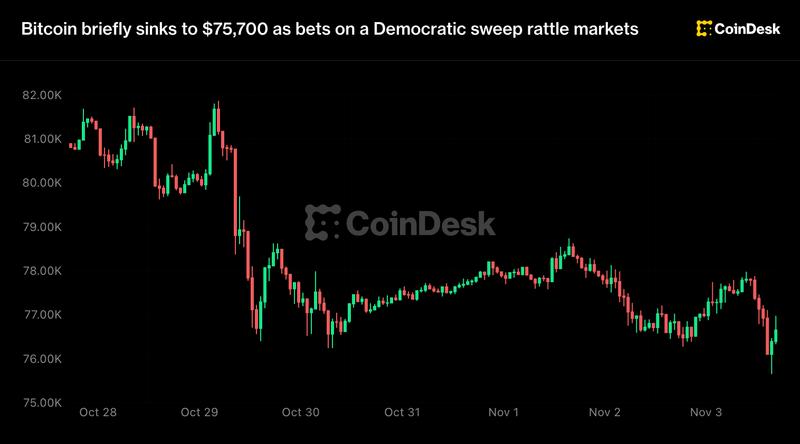
Early US midterm results pointed to Democrats taking both chambers of Congress, sending stock futures and the dollar lower and Treasuries higher. Bitcoin briefly fell to $75,700.

After early US midterm results began pointing to a decisive Democratic win, shares of Tesla and SpaceX, companies backed by prominent Republican supporter Elon Musk, fell in after-hours trading.

Democrats scored a series of early wins in Tuesday’s US midterms, capturing a Republican-held Senate seat and advancing in conservative House districts. Donald Trump faced the prospect of a damaging electoral setback, with France 24’s Douglas Herbert offering his analysis.
Global stocks and the dollar fell as Democratic victories heightened fears about AI. Traders bet the party could slow the infrastructure build-out seen as central to economic growth.
Chinese investors held back from buying stocks this week despite Beijing’s rollout of measures to bolster confidence in the world’s second-largest equity market. Leveraged traders cut holdings to a one-year low, while official data showed new stock-account openings fell by more than 30% in October.

Block raised its full-year gross profit forecast to $12.63 billion, a level that would mark 22% growth from a year earlier. Its shares rose 6% in after-hours trading.

Treasury yields declined Tuesday night as investors moved toward bonds for safety after major Democratic victories in the U.S. midterm elections sparked a sell-off in equity futures.

Julius Baer expects Asia to be an important source of near-term growth as investors diversify amid concerns about US AI risks, CEO Stefan Bollinger said. He said many investors are nervous about their AI exposure, while those long overweight the US dollar and US equities now face increased exposure.

US stock futures fell and the dollar weakened on Wednesday as investors awaited midterm election results, with attention on whether Democrats can take control of Congress from President Donald Trump’s Republicans.
Meta Platforms said Tuesday it is raising $15 billion in a five-part U.S. dollar bond offering. The Facebook parent is turning to debt markets to help pay for faster-growing investment in AI infrastructure.

Meta is seeking to raise $20 billion to $25 billion through a bond sale as it increases spending on infrastructure, AI models and services.
Cramer sees the names setting the pace among technology shares possibly shifting away from the customary frontrunners.

The writer says they cannot predict when the AI market might collapse. PIMCO CEO Emmanuel Roman warned of a downturn followed by problems and estimated that AI infrastructure could require $2 trillion in financing over five years. Apollo has also urged caution. The writer says major shocks, such as higher US rates, war or a eurozone crisis, could turn the market.

Billionaires dominate the public image of American wealth, but many of the richest people built their fortunes through private businesses far from Wall Street and Silicon Valley.
Months before several banks accused trading house Radiant World of a massive fraud involving fake invoices, a private credit fund abandoned a $750 million financing deal after asking to check the invoices.
The $6.3 billion Binance hack illustrated how fast cryptocurrencies can vanish on blockchain rails. Tokenized securities might provide better recourse after theft, but the markets around them could still fail under stress.

The Canadian dollar continued to retreat against the US dollar on Tuesday from a six-week high. Oil prices fell, while Canadian jobs data due later this week could shape expectations for further Bank of Canada rate hikes.
US tech stocks recovered on Tuesday afternoon after investors were rattled by a selloff over AI spending. The midterms appeared to have little effect on Wall Street, although anticipated Democratic gains could bring more AI regulation. The Nasdaq and S&P 500 ended higher, while the Dow fell; lower oil prices also eased pressure on investors.

A group backed by Citadel Securities and other firms sued the U.S. derivatives regulator over its move to open a path for stock perpetuals, arguing that the products fall under the SEC’s authority.

The Fed’s November 2 survey found stricter loan approvals alongside stronger demand from nonbanks. It found no evidence of forced Bitcoin sales.

AMD posted better-than-expected third-quarter results, with strong AI chip sales driving data center revenue to nearly double. Its stock rose 7%.

Jio Platforms, owned by Indian billionaire Mukesh Ambani, has discussed licensing its wireless broadband technology to several companies, including Comcast and Charter Communications, in exchange for potential stakes in their businesses, two people familiar with the talks said.
Palantir posted a huge third-quarter earnings report on Monday, saying its results were “crushing consensus expectations.” Retail investors were lukewarm the next day, however, and the stock edged down as enterprise sales, its main growth area, showed signs of slowing.

After deeming SpaceX an unacceptable governance risk, Anders Schelde says the $25 billion pension fund he oversees is ready to invest in Anthropic’s IPO.
AMD shares have been sharply pressured ahead of earnings, and the story presents one possible trading approach.

Call-option activity in solar stocks is elevated as voting gets underway.

Binance says its last reported replenishment gap was 5%, attributing it to less-liquid assets. Its November 3 withdrawal plan is set to reopen routes progressively.

Sullivan says a Democratic Congress could benefit offshore wind and solar energy.

A group of OpenAI employees left in 2021 to establish Anthropic, a lab focused on developing artificial intelligence safely. The company is now expected to make its Wall Street debut in what could rank among history’s largest IPOs.
A consortium led by US businessman Todd Boehly is preparing a securities swap to acquire Russian oil company Lukoil’s foreign assets, with a deal expected within weeks, Reuters reported, citing sources. An unnamed bank acting for the consortium has bought frozen Lukoil securities from Western investors to exchange for the assets.
A consortium led by US billionaire Todd Boehly is preparing a securities swap to buy sanctioned Russian oil major Lukoil’s international assets, with a deal expected within weeks, four people familiar with the sale process said.
As polling places across the U.S. prepare to close, prediction-market bettors are increasingly pricing in a Democratic victory in both the House and Senate.

Ukraine borrowed $18.48 billion from various sources between January and October 2026 and is seeking about $10 billion more for November and December, according to Finance Ministry documents. It met only 65.8% of its borrowing target, leaving $10 billion in planned financing unsecured.
Trump Media & Technology Group shares rose more than 5% during regular Nasdaq trading, according to market data. At 8:29 p.m. Moscow time they were up 5.12% at $5.95; by 8:40 p.m., the gain had narrowed to 4.68%, with shares at $5.93.
The MOEX Index ended Tuesday’s main trading session 0.56% lower at 2,441.99, while the dollar-denominated RTS fell 1.4% to 941.94. An analyst said sellers took control during the session, thwarting an attempt to return MOEX to 2,500 points.
Nigeria’s state oil company NNPC is likely to offer a 5% to 10% stake in an IPO aimed mainly at the domestic market, with a possible secondary listing in London or New York, CEO Bashir Bayo Ojulari told Reuters.
The Bank of Russia set the official dollar rate for November 4-5 at 81.6699 rubles, up 69.65 kopecks. The euro rate rose 113.75 kopecks to 91.601 rubles, while the yuan rate edged up 1.02 kopecks to 12.1816 rubles.
Amazon, Tesla and SpaceX have joined companies objecting to OKX and ICE’s tokenized stock venture. The objections now involve 56 companies, and nearly 80% of the venture’s initial stock selection has opted out.

Open Standard, the governance group behind OUSD, will charge a 0.1-basis-point management fee on payment volume, capped at $0.01 per payment.

FX strategists surveyed by Reuters expect the dollar to weaken in coming months and have maintained their long-held bearish view ahead of the US midterm elections. They say the main risk is that the greenback proves more resilient than they expect.
The CFTC approved US exchanges’ ability to offer perpetual futures contracts linked to individual stocks.


CFTC Chair Michael Selig said the move gives U.S. traders a regulated alternative to offshore venues, which are often unregulated.
Bitcoin failed to recover to $80,000 and fell alongside Treasury yields in a rare divergence. ETF redemptions on Nov. 2 added to demand concerns, as Bitcoin’s latest decline came after real yields fell through Oct. 30.

Bill Ackman, founder of Pershing Square Capital Management, said markets are returning to a “casino” atmosphere, recalling a period when leverage reached 95%, as speculative trading increases.

US stocks were mixed at the start of Tuesday’s regular session, with defense shares lower and major technology stocks higher. At 5:30 p.m. Moscow time, the Dow fell 0.1%, the S&P 500 rose 0.11% and the Nasdaq 100 gained 0.4%. Voting in the congressional midterms began that morning.
BNP Paribas outlined a reorganization of its corporate and investment banking activities, effective January 1, 2027, according to an internal memo seen by Reuters on Tuesday.
The headline says the new frontier of finance is being built in the United States. The accompanying phrase is “Perp talk.”
LO:TECH is backing round-the-clock tokenized stock trading but did not say whether it currently offers such trading. A World Federation of Exchanges study found that stock exchanges still set prices.

Anthropic’s revenue rose 47% to $17 billion (€15.1 billion) last quarter, but the Claude AI model developer returned to an operating loss and disclosed nearly $900 billion (€804 billion) in commitments, mostly for computing. Investors will weigh the figures ahead of its Nasdaq listing.
The Minutes Reader extension turns the original page into a focused reading view and translates articles and video subtitles on demand. It is in limited beta.