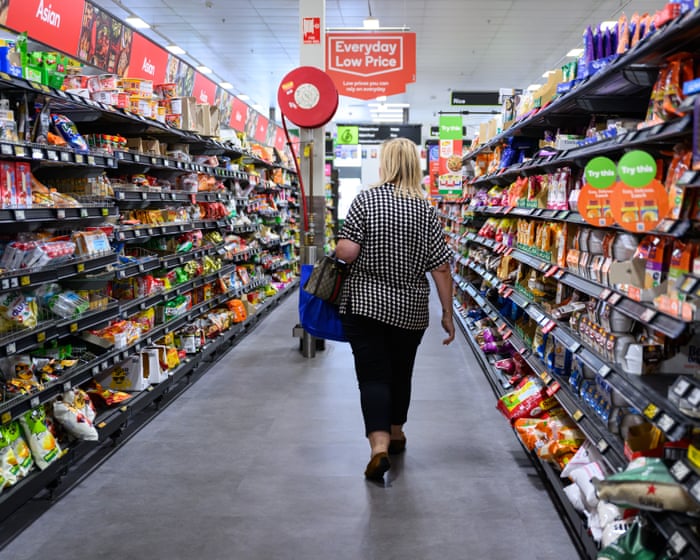
Bitcoin tops $81,000 as major tokens rally ahead of Fed decision
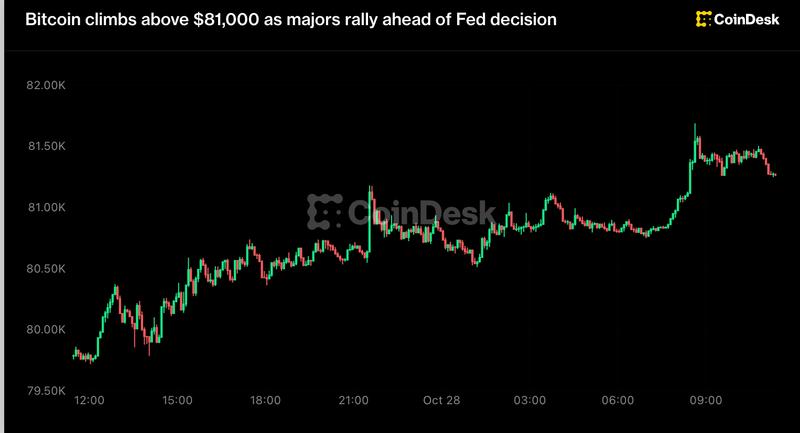
Bitcoin rose above $81,000 as crypto markets broadly bounced in the hours before the Federal Reserve’s rate decision. HYPE and ZEC led gains, with all top tokens higher.

Bitcoin rose above $81,000 as crypto markets broadly bounced in the hours before the Federal Reserve’s rate decision. HYPE and ZEC led gains, with all top tokens higher.

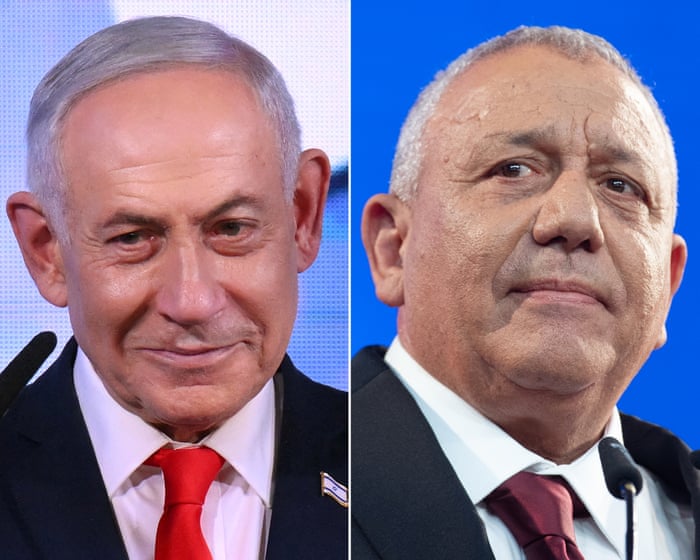
With about 70% of votes counted, both Benjamin Netanyahu’s bloc and Gadi Eisenkot’s opposition bloc appeared likely to fall short of the 61 seats needed for a majority. Palestinian parties surged and could win 16–19 seats, leaving Eisenkot’s camp to weigh an alliance with them. Counting, including absentee ballots, is continuing.


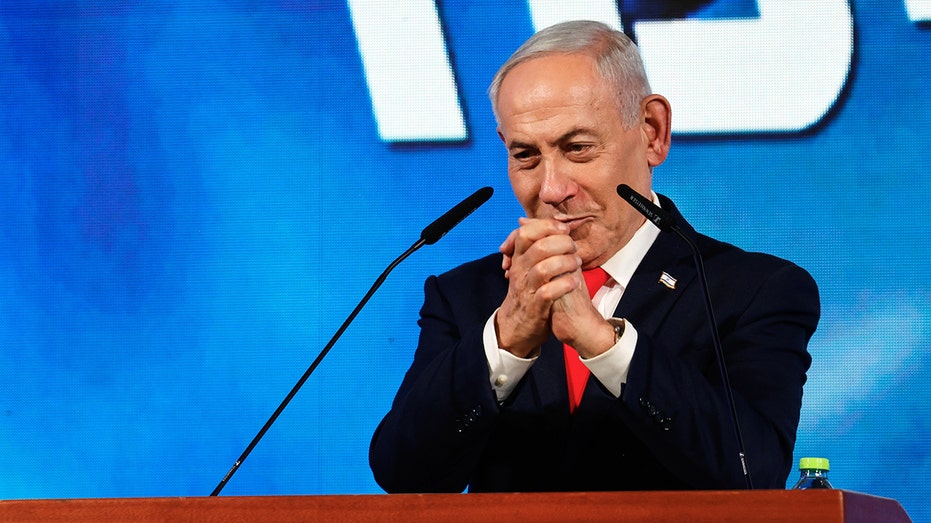
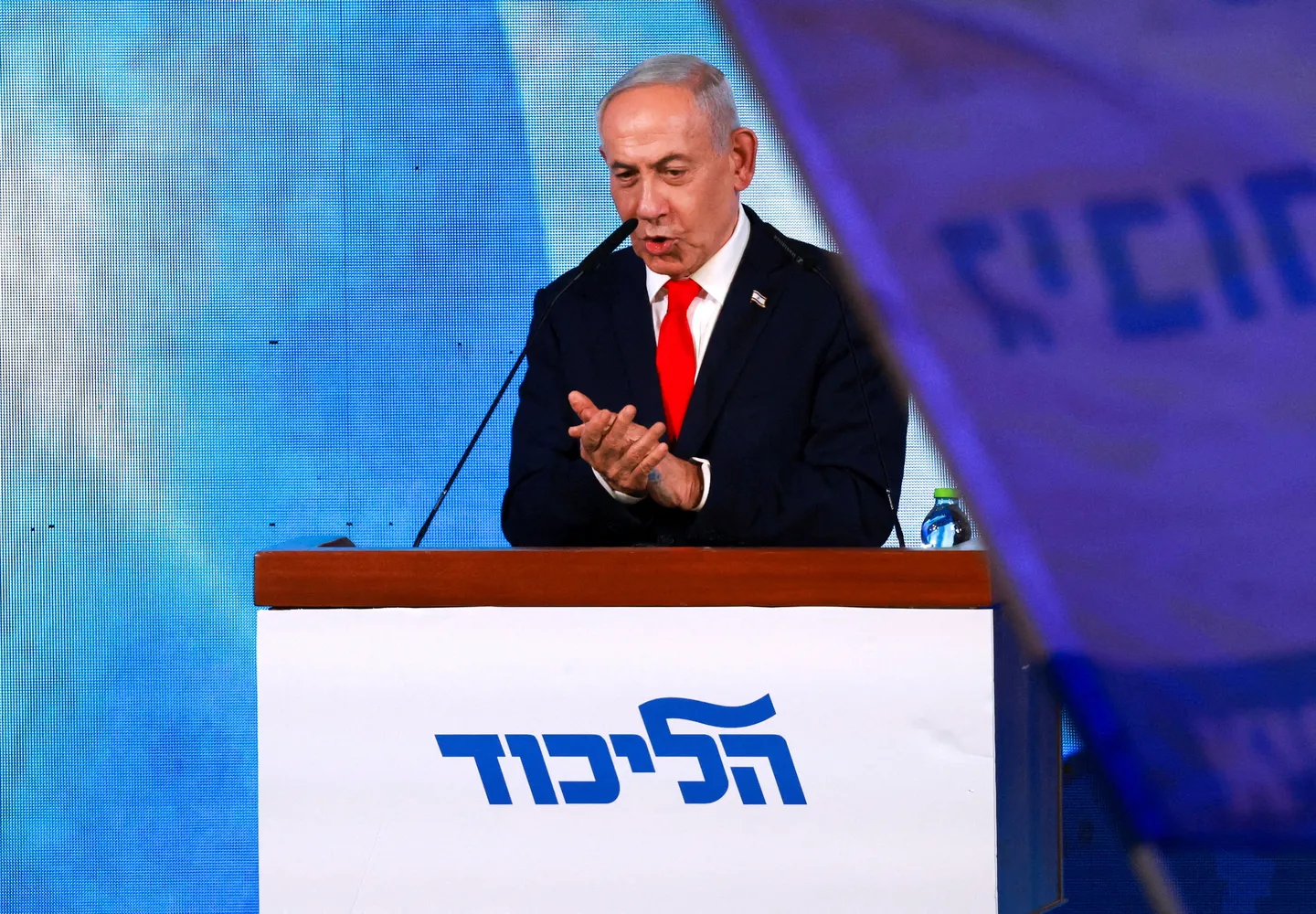
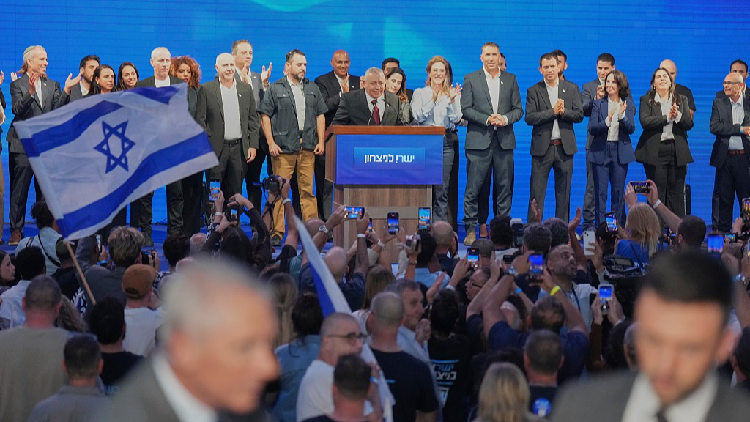
Final results are expected tonight or tomorrow morning. The outlook is increasingly favourable for Benjamin Netanyahu and his bloc, but he still lacks a clear victory and needs 61 seats for a parliamentary majority. He spoke to supporters at the National Congress Centre at around 3 a.m. local time.

Arab-led parties appear to have made a historic showing in Israel’s election, but it remains unclear whether other opponents of Benjamin Netanyahu’s government would join them in a coalition capable of winning a parliamentary majority. Issues involving Palestinians and their descendants remain highly sensitive in Israel.

With about 70% of Israel’s votes counted, Netanyahu’s right-wing and religious bloc had 54 seats, against 47 for the main opposition and 19 for Arab parties, leaving no side with a majority to form a government. Attention has shifted to coalition talks. Trump said his endorsement helped Netanyahu’s stronger-than-expected showing.

Israel’s election has produced no clear winner, and neither Benjamin Netanyahu’s nor Gadi Eisenkot’s bloc has reached the 61 seats needed for a majority in the 120-seat Knesset. Arab-led parties could hold the balance of power, but potential partnerships face political barriers as coalition talks begin.

Israel’s benchmark Tel Aviv 125 index fell as much as 3.5 percent after exit polls showed no clear winner in the parliamentary election. With more than 84 percent of votes counted, Netanyahu’s coalition was projected to win 54 seats and the opposition bloc led by Gadi Eisenkot 49; 61 seats are needed for a majority.

With more than 60% of ballots counted, Prime Minister Benjamin Netanyahu’s camp is narrowly ahead of the opposition but lacks a clear majority. The Central Elections Committee is still counting, and the partial results could change. The two leading prime ministerial candidates exchanged barbs in speeches after polls closed.

Netanyahu and Smotrich attacked Arab voters and alleged attempts to steal the election as Israel counted ballots. With neither major political camp securing a clear majority, Arab-led parties could influence who forms the next government.
Israeli Prime Minister Benjamin Netanyahu and rival Gadi Eisenkot have both vowed to form a government, with projections putting them neck and neck in Tuesday’s critical election. Exit polls indicate neither bloc has secured a parliamentary majority.
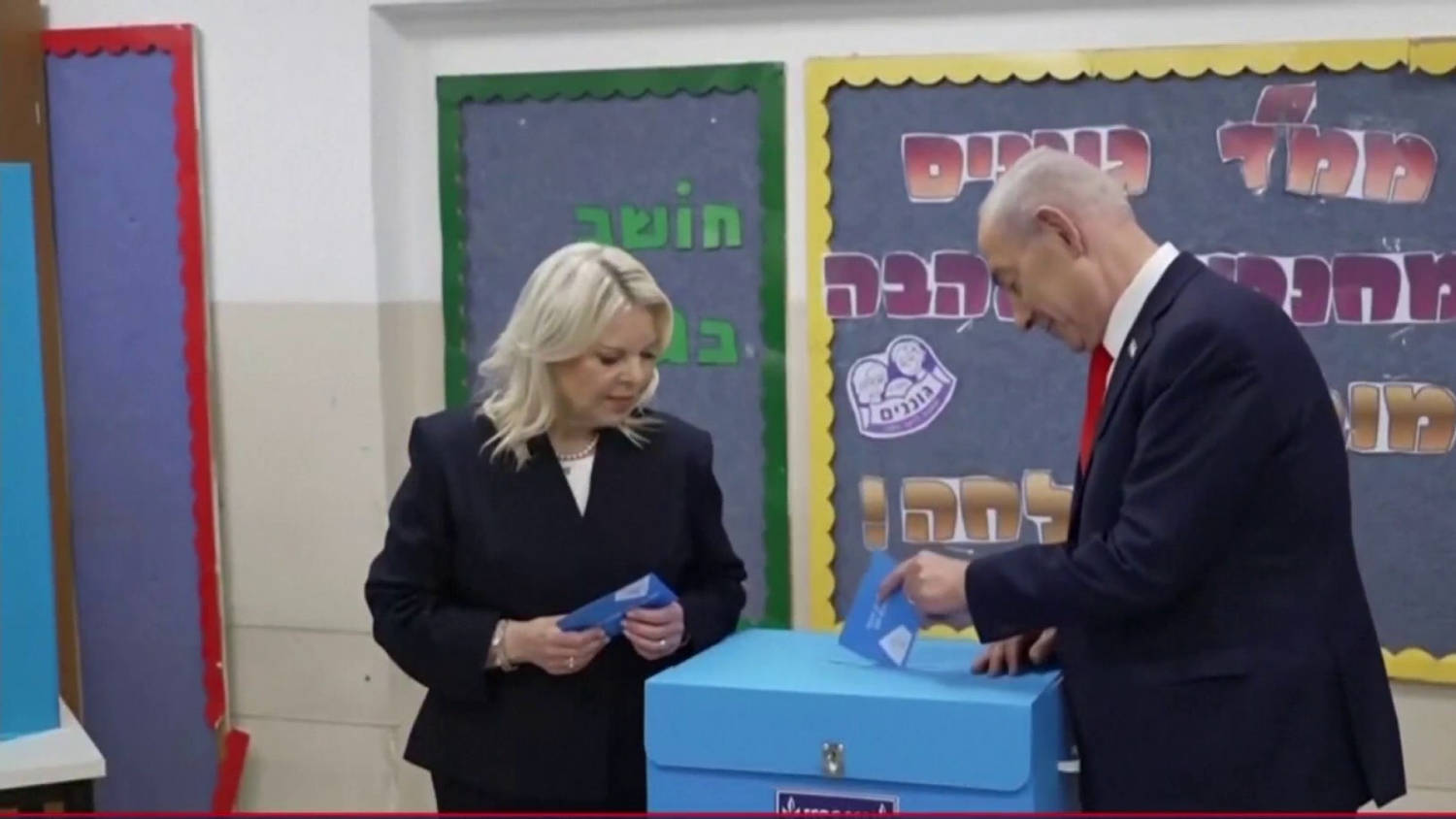
Israelis are closely watching for the final election results after voting dealt a rebuke to Prime Minister Benjamin Netanyahu’s far-right government. Netanyahu, however, is still far from defeated.
Despite the fallout from the 7 October attacks, three years of war and widespread public dissatisfaction, Benjamin Netanyahu strengthened his political position in Israel’s election. Neither political bloc is assured of a parliamentary majority.
With 57.3% of votes counted, Prime Minister Benjamin Netanyahu’s Likud party is leading Israel’s parliamentary election, projected to win 28 seats. Yashar leader Gadi Eisenkot is in second place with 21. Exit polls indicate no political force is expected to secure the 61 seats needed for a majority in the 120-seat Knesset. Turnout in Arab-populated areas reportedly reached 80%.

Early results show Benjamin Netanyahu’s Likud as the largest single party, but his bloc appears short of the 61 seats needed to form a government. His main rival, Gadi Eisenkot, may also need Arab parties to command a majority. Many absentee ballots remain uncounted, leaving the outcome uncertain.

Exit polls from Israel’s major TV networks put Benjamin Netanyahu’s governing bloc and the opposition led by Gadi Eisenkot at 51 seats apiece, below the 61 needed for a majority. Counting continues, while Palestinian parties are projected to increase their representation to as many as 18 seats from 10.
Early tallies in Israel’s election put Benjamin Netanyahu’s Likud ahead, while rival blocs have not secured a majority, leaving the route to power unclear.

Exit polls put Benjamin Netanyahu’s Likud-led bloc slightly ahead of the opposition, with neither side appearing likely to secure a governing majority. Likud was projected to win 27 seats and Arab parties 19 collectively. Preliminary official results are expected Wednesday and may differ from the polls.

Israeli Prime Minister Benjamin Netanyahu said forming a government with Arab parties would be “a disgrace and a shame.” Exit polls indicate that neither his party nor the opposition is projected to win the 61 Knesset seats required for a majority.

Exit polls indicate that neither Prime Minister Benjamin Netanyahu’s alliance nor opposition bloc leader Gadi Eisenkot’s bloc is close to the numbers required to form a governing majority.

Exit polls project that Israel’s Arab-led parties will win 18 Knesset seats, a record. Turnout among Palestinian citizens of Israel reached about 80 percent, while overall turnout was 77.7 percent, its highest since 1999. The blocs led by Gadi Eisenkot and Benjamin Netanyahu were tied at 51 seats each in updated polling.

Israeli leaders traded sharp reactions after exit polls showed the main blocs tied at 51 seats each, short of the 61 needed for a majority. Opposition figures called the projections a defeat for Netanyahu’s government, while his allies said the final results could change the balance. Unaligned Arab parties were projected to win 18 seats.
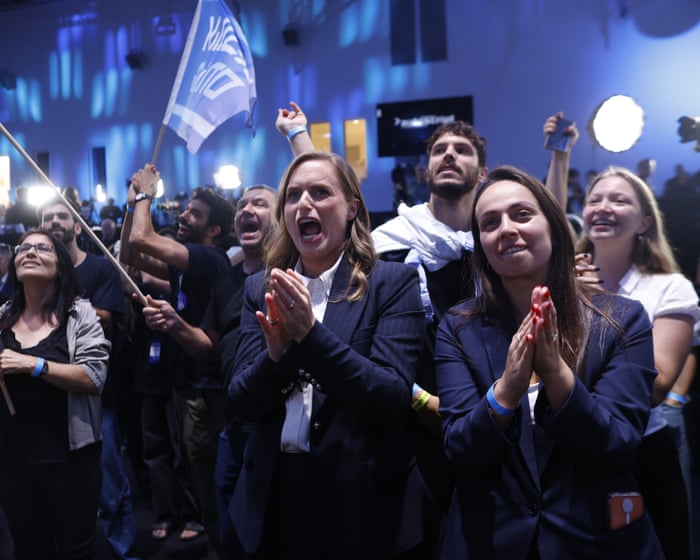
Supporters of Gadi Eisenkot celebrated in Tel Aviv after exit polls showed Israel’s opposition bloc narrowly ahead of Benjamin Netanyahu’s camp, though neither had an outright parliamentary majority.

Voting has ended in Israel’s election and ballots are being counted. Exit polls indicate Gadi Eisenkot’s bloc won the most seats but fell short of a majority, while Netanyahu’s Likud is projected to be parliament’s largest single party.

Israeli opposition leader Gadi Eisenkot said exit polls showing his bloc ahead of Benjamin Netanyahu’s coalition reflected a “complete lack of confidence” in the government, and vowed to move quickly to replace it. Polls gave neither bloc the 61 seats needed for a majority, with Arab-majority parties potentially holding the balance. Final results remain pending. The report says a change of leadership may not bring a fundamental shift in Israel’s policies toward Iran or the Palestinians.

Exit polls project Netanyahu’s coalition at 50 seats and the opposition bloc at 52, leaving both short of the 61 needed for a Knesset majority. Arab-led parties are projected to win 18 seats and could become kingmakers. After the final tally, President Isaac Herzog will designate the candidate he believes has the best chance of forming a government; failure to break the deadlock could lead to another election.

Israel's election was still deadlocked on Tuesday, according to exit polls. Opposition leader Gadi Eisenkot's bloc edged ahead of Prime Minister Benjamin Netanyahu's camp, 52 seats to 50, but neither had a clear route to forming a government. Turnout was 77.7%, the highest in more than two decades.

Israeli Prime Minister Benjamin Netanyahu’s opposition showed strength in today’s election, but not enough to take power outright. Weeks of negotiations may now follow as parties seek to form a coalition government.

Exit polls project Palestinian parties to win 17 to 18 Knesset seats, up from 10, forcing opposition leader Gadi Eisenkot to consider negotiations with Arab-Israeli leaders if he hopes to govern. Without an agreement, Benjamin Netanyahu could have a path to political survival.
Tuesday’s exit polls gave the bloc led by opposition candidate Gadi Eisenkot a narrow lead over Prime Minister Benjamin Netanyahu’s Likud bloc in the Knesset. Likud was nevertheless projected to remain the parliament’s largest single party.

Israeli exit polls indicate that neither Benjamin Netanyahu nor Gadi Eisenkot is on track to win a majority in the 120-seat Knesset. Eisenkot supporters in Tel Aviv reacted after the first results were released.

Exit polls show Gadi Eisenkot’s opposition bloc narrowly ahead of Benjamin Netanyahu’s right and far-right coalition, although Likud is projected to remain the largest party. Israeli Arab parties could win up to 18 seats and become kingmakers in potentially protracted coalition talks. The outcome remains uncertain after turnout reached its highest level in 50 years.
An exit poll from state-run broadcaster Kan-11 projects Likud will take 25 of the Knesset’s 120 seats, with Gadi Eisenkot’s Yashar party second on 21. The opposition bloc is forecast to win 53 seats against 50 for Netanyahu’s bloc. Arab parties are projected to get 17, but neither side is ready to form a coalition with them; neither bloc reaches the 61-seat majority threshold.

Exit polls project Prime Minister Benjamin Netanyahu’s bloc to win 50 seats and the bloc led by opposition candidate Gadi Eisenkot to take 52 or 53, short of the 61 needed for a majority. Arab parties are projected to win 18 seats combined. Turnout reached 74.3 percent by 8pm, and official results are due on November 4.
Exit polls indicate that Israel’s election has no clear winner. Netanyahu spent much of the day urging supporters to vote, describing the contest as a “matter of life and death.”
Russian Deputy Prime Minister Alexander Novak said Moscow is not negotiating the return of Chevron or ExxonMobil to Russian oil and gas projects. He said Russia remains open to foreign partners and investment, and any return is primarily up to the companies. Novak previously said Russia and the US could cooperate on Arctic LNG projects and mineral deposits.
Brazil's soybean industry fears the EU's new anti-deforestation rules could restrict its soymeal exports to the bloc, giving rival supplier Argentina an opportunity. Argentina says it is better positioned to meet the incoming requirements.
Gulf stocks fell in early Wednesday trading after an attack on a refinery in Saudi Arabia, a leading crude exporter, unsettled investors and revived concerns that the Middle East conflict could escalate.
Bitcoin’s recent win rate against the S&P 500 has climbed back above 50%, up from about one in five trading sessions in June, its weakest stretch in roughly six years, Glassnode says. Coinbase Institutional reported on Oct. 23 that BlackRock’s IBIT had attracted about $6 billion since Aug. 1, compared with roughly $500 million for all other funds combined.

Hong Kong’s lived-in home prices fell 0.8% in the third quarter, the first quarterly decline after five quarters of gains. Prices rose 0.19% in September from August for a second straight monthly increase, but remained 19.4% below their September 2021 peak.

Canadian oil usually trades below the North American benchmark, but the gap has widened in recent months with no clear short-term fix in sight.
Upcoming results from Alphabet and Microsoft will offer another reading on the state of AI.

The 140th Canton Fair is underway in Guangzhou, showcasing China’s full industrial chains and the premium, reliable materials they supply to fast-growing markets, particularly developing countries. The report looks at what global buyers are seeking.

The second phase of the 140th Canton Fair ended Tuesday. By 5 p.m., 278,000 overseas buyers from 218 countries and regions had attended, 13.4% more than during the same period of the previous session.
The second phase of the 140th Canton Fair ended Tuesday in Guangzhou. By 5 p.m., 278,000 overseas buyers from 218 countries and regions had attended, 13.4% more than at the same point in the previous session.
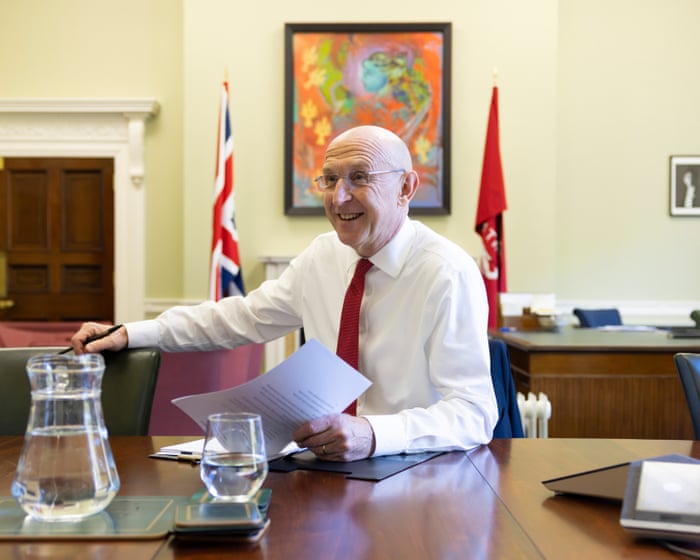
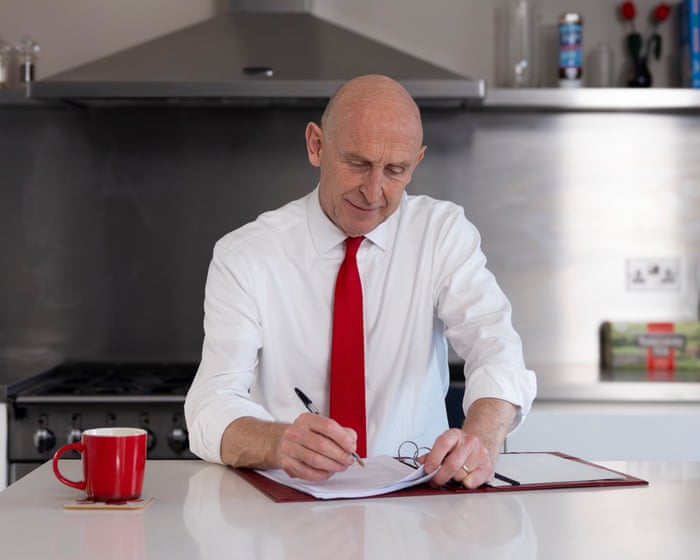
Chancellor John Healey is due to present the first autumn budget under Prime Minister Andy Burnham, setting out tax and spending plans amid rising living costs, energy bills, inflation and borrowing. The government is expected to explain how it will fund defence commitments.

British Treasury chief John Healey faces a difficult balancing act as he presents his first budget statement. Turmoil caused by the Iran war has made the economic backdrop more challenging.

Chancellor John Healey is set to unveil the Burnham government’s first budget, which the Treasury has described as low-key and aimed at easing pressure on low- and middle-income households. Healey has pledged to follow Labour’s fiscal rules. Readers and people struggling with living costs told the newsletter what they want the budget to change.

John Healey is due to present his first budget on Wednesday. Measures are expected to benefit struggling households, first-time buyers and small shops, while banks and online marketplaces could face higher levies. The plans include household support, help with energy bills and a first-home equity loan, amid pressure from debt costs and defence spending.

John Healey says his first budget will ease pressure on household costs while putting Britain on a better path. Major measures are expected to be limited, with key tax and spending decisions deferred; possible steps include temporary help for poorer families, energy market reforms and cancelling a planned fuel duty rise.
Nearly 90% of large businesses are using or planning to use tokenized cash to speed up payments, DBS says. Stablecoins lead at 63%, ahead of tokenized deposits at 53% and tokenized money market funds at 52%.

The Bank of Canada is widely expected to lift its benchmark rate by 25 basis points to 2.5% on Wednesday. Most economists see the move as a safeguard against a possible wider spread of energy inflation.
French multinational bank BNP Paribas exceeded third-quarter profit forecasts as equity-trading revenue surged 50%. It announced a €1.3 billion share buyback and played down its exposure to French debt.
The China Import and Export Fair, or Canton Fair, is China’s longest-running trade event and is now in its 70th year. CGTN recounts how three generations of Hong Kong’s Li family have witnessed its evolution, describing it as a benchmark of China’s opening up and economic development.

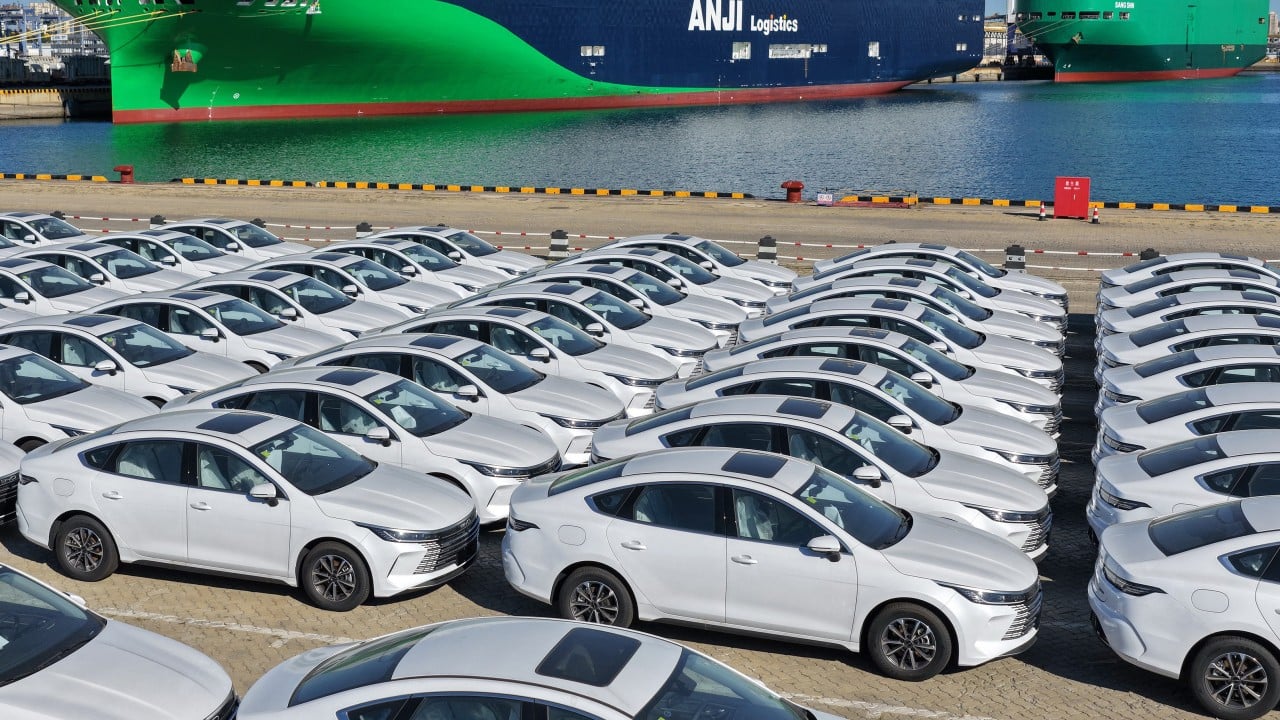
The EU's proposed Industrial Accelerator Act aims to support European carmakers against Chinese rivals by subsidizing vehicles made in Europe. But its proposed rules could exclude close supply-chain partners including Turkey, Morocco, Japan and South Korea, putting billions in trade and hundreds of thousands of European jobs at stake.

Tanzania says it has found natural gas in the southern Mnazi Bay area for the first time in a decade. Energy Minister Juma Homera called the estimated 223 billion cubic feet discovery a major milestone; the well is expected to begin production early next month to boost domestic supply.

Rosgeo has begun gold exploration in the Central African Republic. Alexey Desyatkin, who heads the company’s international operations, said it conducted predictive metallogenic mapping there from 2021 to 2023 and identified promising zones.
Itaú Unibanco disclosed its digital-asset dealing and safekeeping business to Brazil’s monetary authority on Tuesday, before the Oct. 30 cutoff.

The Federal Reserve is expected to keep rates unchanged on Wednesday, at its last rate-setting meeting before the midterms. Officials raised rates last month for the first time since 2023, citing inflation, which reached 3.7% in September. The cost of living is expected to be a major election issue.

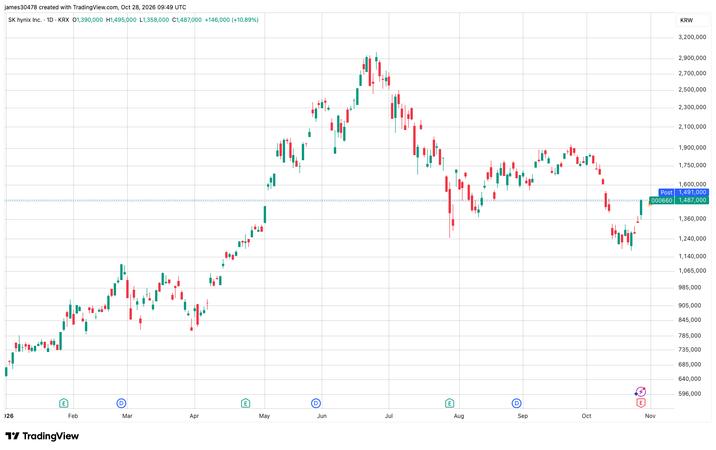
South Korean chipmakers led a wider rebound in AI-related stocks after SK Hynix reported a sevenfold profit increase and announced a further $45 billion in shareholder returns.

SK Hynix said it plans to return about $45 billion more to shareholders after profit rose seven-fold, beating expectations. The result reflects robust memory-chip demand driven by the rollout of AI infrastructure.
South Korean chipmaker SK Hynix announced a shareholder return plan worth $75 billion. It reported on Wednesday that third-quarter operating profit rose more than sevenfold to a record, beating forecasts as continued AI infrastructure demand lifted memory chip prices.

South Korean chipmaker SK Hynix reported third-quarter earnings on Wednesday, with profit sharply beating estimates as AI memory demand provided a boost.
European auto giant Stellantis said it had a 4 billion euro ($4.5 billion) cash shortfall in the third quarter as its massive turnaround plan continued.

Stellantis said Wednesday that operating income edged up in the third quarter as the automaker continued a slow turnaround, while recording a €4 billion ($4.45 billion) industrial cash outflow for the period.
John Healey is expected to use his first budget to abandon plans to reduce the annual cash Isa allowance from £20,000 to £12,000 from April. The previous chancellor, Rachel Reeves, had proposed the cut to channel more money into UK company shares.

Novatek is prepared to offer its technology and LNG to African partners and discuss specific projects, Deputy Chairman Sergey Solovyev said. Major joint projects could also receive financing from the World Bank and the African Development Bank, alongside shareholder funds.
Gazprom Deputy Chairman Vitaly Markelov said the company has established a complete technological cycle and is ready to work with African countries on hydrocarbon exploration and production, gas transport and storage, processing, and power generation. It can also offer LNG solutions at large, medium, and small scales.
Questions about Israel’s economic future are emerging after the elections. With living costs among the region’s highest and defence spending still rising, households are under increasing financial pressure.

An ETHGas-funded study models an average four-minute wait when qualified proposers hold 5% weight, offering context for ether.fi’s stake commitment in April.

Waaree Energies, India’s largest solar module maker, is expanding US manufacturing and localising supplies in a bet on rising electricity demand from data-centre growth, CFO Abhishek Pareek said.
U.S. Treasury yields rose slightly as traders awaited the Federal Reserve’s latest monetary policy decision.

Markets expect the central bank to keep interest rates unchanged for now.

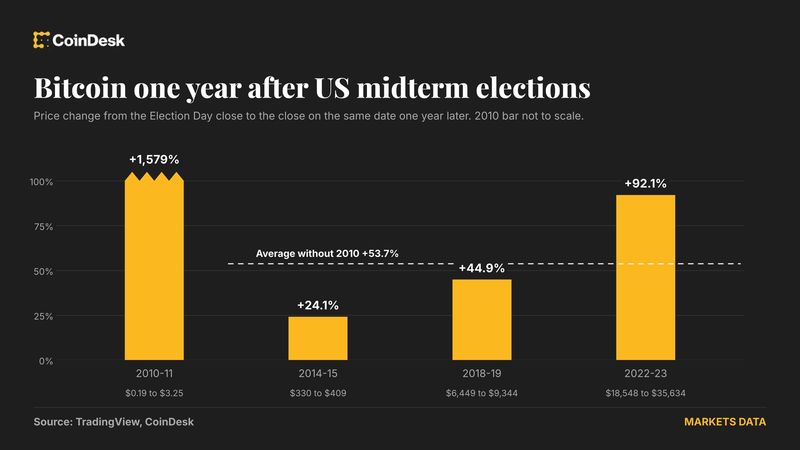
Historically, Bitcoin and the S&P 500 have both posted positive returns in the year after midterm elections. Bitcoin’s pattern may also be linked to its four-year halving cycles.

Moody’s Ratings assigned RLUSD an A2 long-term rating and a P-1 short-term rating, citing the credit quality and market value of its reserve assets.

Gold edged lower on Wednesday as high oil prices kept inflation worries simmering and investors awaited the Federal Reserve’s policy decision later in the day.
Volkswagen's all-electric car plant in Zwickau opened a component recycling facility on Wednesday, pointing to a possible future business line. The site nevertheless faces possible closure from the early 2030s as the group restructures.
India's gasoline demand is expected to reach its peak by 2035 as electric vehicles gain ground, ethanol blending continues and more cars switch to gas, the chairman of state-run refiner Indian Oil Corp said Wednesday.
A Russia-Zimbabwe joint venture exploring for diamonds in Zimbabwe has identified gold occurrences at three sites. Russian Natural Resources and Environment Minister Alexander Kozlov said reserves are being calculated to assess whether pilot-scale extraction is feasible.
Jio, the telecom and digital business run by Mukesh Ambani’s eldest son Akash, made its market debut on Wednesday. The listing capped the 35-year-old’s meteoric rise, drawing tears of pride from his father, who leads Asia’s richest family and its Reliance empire.
Securitize and the Stellar Development Foundation announced their agreement at Meridian 2026, the foundation’s annual conference in Portugal.

Canada and the UAE signed a Comprehensive Economic Partnership Agreement to lower tariffs, reduce red tape and improve businesses’ market access. The pact is part of Prime Minister Mark Carney’s drive to expand trade beyond the US and is expected to take effect in 2027. The countries also signed preliminary agreements on energy, diplomacy and defence cooperation.

Ozon estimated that drone attacks on 11 logistics centers caused 30.1 billion rubles in losses, including destroyed goods, damaged equipment and other expenses. It is negotiating with insurers over compensation. Despite the strikes, third-quarter net profit rose 25% to 3.7 billion rubles, while revenue reached 421.2 billion rubles.
Andrey Guryev, head of the Russian Fertilizer Producers Association, said Russia is ready to expand fertilizer supplies in Africa, form joint ventures for packaging and bagging, and share expertise in mineral extraction and processing. Russian products are currently available in 25 African countries, and Russia also aims to help train agricultural workers.
Volkswagen is taking technologies developed in China to overseas markets, including South America and South Africa, as it looks to strengthen its global competitiveness by relying on China as a key innovation hub.
RLUSD already trades on Bitstamp. A new agreement is expected to provide Robinhood app access and plans settlement through the XRP Ledger.

After gold fell below $4,000 an ounce, shoppers headed to Shuibei, Shenzhen’s gold and jewelry trading hub. Known as China’s “Jewelry Capital,” the area was buzzing with activity.

Russian Deputy Foreign Minister Sergey Ryabkov said the Middle East conflict and other geopolitical shocks are destabilizing food markets. Supply-chain disruptions have reduced fertilizer supplies on global markets and driven prices higher, while rising fuel prices and transport tariffs have fueled inflation and made food more expensive in African countries. He called for cooperation to achieve food sovereignty for the continent.
Gongbei Customs says imports and exports between China and other APEC economies through the bridge’s Zhuhai port totaled 1.09 trillion yuan since it opened in October 2018. Trade reached 226.33 billion yuan in the first nine months of 2026, up 52.8% year on year and representing 73.4% of the port’s foreign trade.
As Russian attacks intensify and residents worry about winter heating and power outages, long-term rental listings in Kyiv rose 66% over two months and rents fell. The average monthly rent for a one-bedroom apartment dropped to 17,000 hryvnias, while rents in western cities including Lviv now exceed Kyiv’s.

Canada could face a carbon tariff threat from the European Union within months as the bloc fully implements its Carbon Border Adjustment Mechanism, according to internal documents.
German chemicals giant BASF raised its 2026 outlook on Wednesday for the second time this year, after increasing prices for some products following the outbreak of the Iran war.
German chemicals group BASF lifted its 2026 outlook for a second time this year on Wednesday, after third-quarter core earnings exceeded market expectations. European chemical suppliers are benefiting from a demand boost linked to the Iran war.
Packaging upgrades and new processed-food offerings are helping Zhangjiakou producers expand sales abroad. By the close of 2025, the city's specialty farm and food products—including potato goods, fresh vegetables, grains and beans—were available in 84 countries and regions.
Equinor reported its strongest quarterly profit in nearly four years on Wednesday, as the Middle East war continued to disrupt global energy supplies and drive up oil and gas prices. It also raised its full-year output target.
Air China began flying from Beijing to Reykjavik via Copenhagen on Monday, creating the first scheduled Iceland passenger service operated by an airline from the Chinese mainland. The airline said it is currently the only scheduled route linking Iceland with East and Southeast Asia.
Chancellor John Healey said he will ask Great Britain’s energy regulator, Ofgem, to remove daily standing charges from gas bills in 2027 or as soon as possible after. He says the change could save about two-thirds of households an average of £45 a year; the typical household currently pays £108 annually in standing charges.

This roundup gathers electric and new-energy vehicle coverage from the past two weeks. One featured report says BYD plans to build factories in Europe to expand its market share as Chinese EVs face reduced fiscal support at home and rising trade barriers abroad.

Volkswagen grew from a single-model company that emerged after World War Two into a global automotive empire, reinventing itself repeatedly on its way to becoming the world’s second-largest automaker.
European underground gas storage was 74.93% full on October 26, down from 82.9% a year earlier and the lowest level for that date since monitoring began in 2011. Some countries have withdrawn more gas than they injected for a second week. The European Commission may lower this year’s storage target from 90% to 80%.

Germany’s trade deficit with Asia-Pacific is forecast to reach a record nearly €146 billion ($163 billion) in 2026. A Germany Trade & Invest report says falling exports to China will outweigh growing sales elsewhere in the region.
The Yulan renminbi bond structure debuted in Dubai amid geopolitical strains in the Middle East, attracting orders worth more than five times the offering as global appetite for yuan assets remained firm. Bank of China Dubai rang the listing bell at Nasdaq Dubai on Tuesday for the two-year offshore bond, sized at 2 billion yuan (US$299.6 million).

Foreign trade at the Horgos highway port is growing steadily.
Swiss dental implant maker Straumann said third-quarter sales came in slightly above expectations, with strong growth across all its key regions.
JPMorgan Asset Management expects to introduce more actively managed ETFs in mainland China after its first fund of this kind reached its 2 billion yuan (US$300 million) fundraising limit on its first day of sales. China chief Desiree Wang called the debut an opening move in a much larger game.

Danone posted better-than-expected organic sales growth of 4% in the third quarter, helped by price increases to offset rising inflation costs. Its struggling Mizone water business in China and adverse weather weighed on volume growth.
State-owned logistics company Transnet says it has tested what it calls the world's longest freight train. Made up of 696 empty wagons and measuring 7.6 kilometres, it travelled 860 kilometres from Saldanha Bay to an inland iron ore mine.
Mukesh Ambani’s Jio Platforms rose as much as 23% on its trading debut after raising a record $3.1 billion in India’s biggest IPO, putting it on course to become the country’s second-most valuable listed company.
Jio Platforms shares jumped 21% on their Mumbai debut on Wednesday, launching India’s biggest-ever IPO on a strong note and marking the first listing in two decades for Mukesh Ambani’s Reliance Industries.
The telecoms business raised $3.2bn at a $108bn valuation in India’s largest IPO, with its shares climbing 21. The listing offered relief to a stock market battered by the war in Iran.

Jio Platforms, backed by Meta and Google, rose more than 21% on its trading debut after a record IPO.
Jio Platforms Ltd. is set to begin trading Wednesday at a $107 billion valuation, putting a price on several bets: Mukesh Ambani’s belief that cheap data can underpin the digital economy of 1.5 billion people, Google and Meta Platforms Inc.’s backing of him, and Indian Prime Minister Narendra Modi’s digital push.
Jio Platforms, the telecoms and digital unit of Asia’s richest man Mukesh Ambani, is set to list in Mumbai on Wednesday. Its $3.2 billion IPO attracted $77 billion in bids, making it India’s most-subscribed offering ever.
The item says the AI bubble has already burst in China and adds a brief positive note about Chinese government bonds.
British small-business owners say tax relief expected in Wednesday’s budget will not be enough. Birmingham photographer Surpreet Suri is considering leaving his high-street premises as rent, business rates, wages, energy and materials costs weigh on earnings, while online retailers intensify competition.

Comfortable living means different things to different people. Euronews Business calculated the monthly net household income needed to reach 150% of the national median, the starting point for an upper-middle-class benchmark.
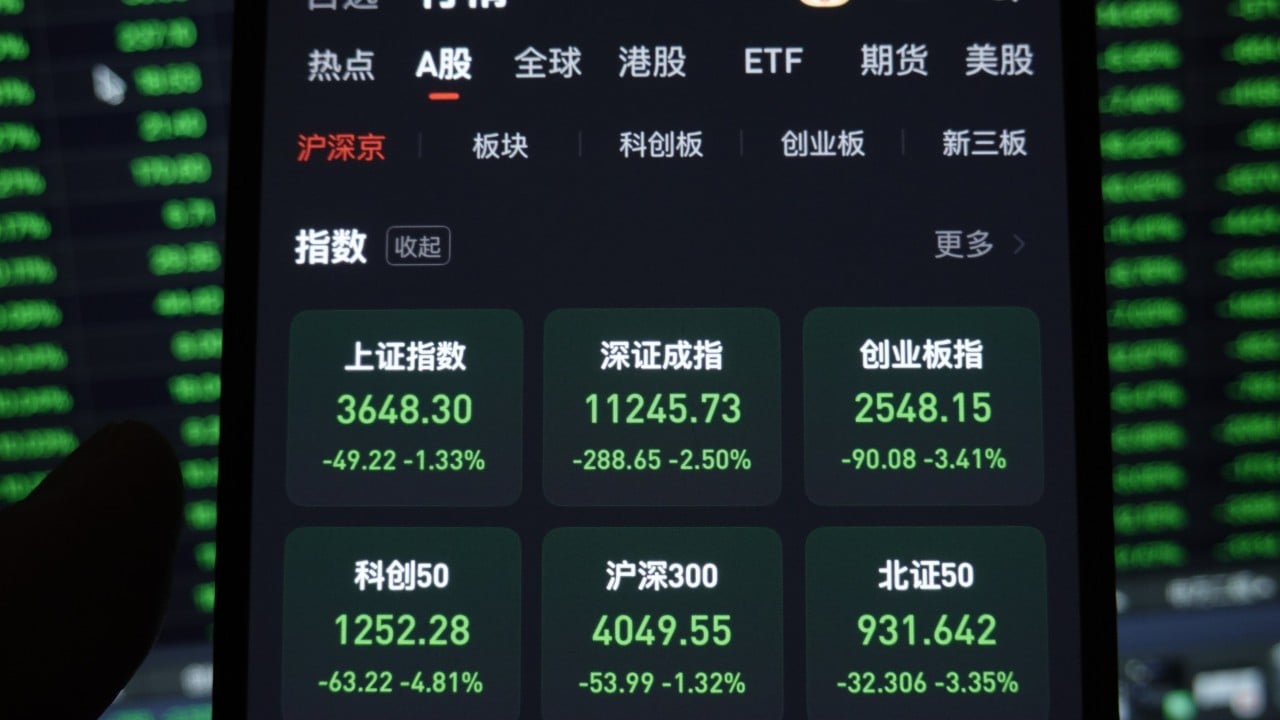
Visible state-backed buying helped lift the CSI 300 Index 0.68% on Wednesday morning, but analysts say it will not create a lasting rally in China’s struggling stock market. State entities known as the “national team” have invested as much as 170 billion yuan (US$25.5 billion) this month.

Credit hedge funds that made large bets on junk bonds are facing a crunch point.
Sovereign debt pressure and heavy bond issuance are pushing up borrowing costs for European companies, squeezing those with weaker balance sheets, Goldman said.

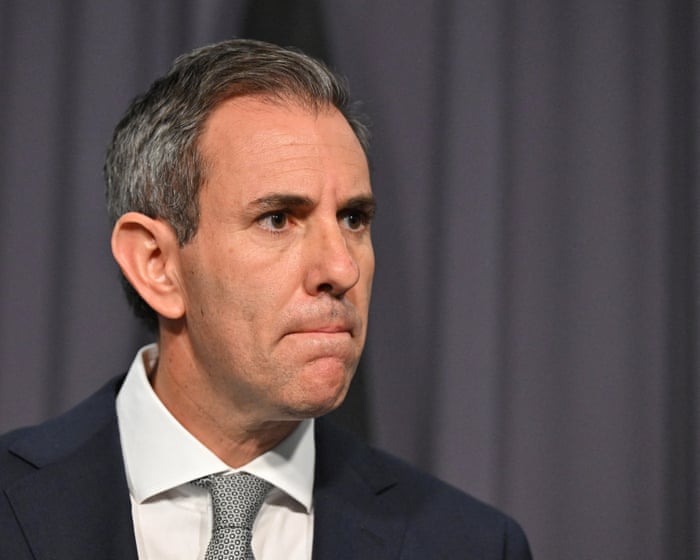
A 9.4% rise in fuel costs in September helped push Australian inflation from 4% to 4.3%. Treasurer Jim Chalmers has blamed worsening cost pressures on the Middle East conflict, but polling suggests more voters see government spending as the leading cause of the cost-of-living squeeze. The Reserve Bank is widely expected to raise rates next week, adding pressure on households and mortgage holders.


Australia’s headline inflation reached 4.3%, while underlying inflation was 3.6% in the year to September. The figures have strengthened expectations of another Reserve Bank rate rise next week. The official rate is already 4.6%, its highest in 15 years, as households face rising costs and unemployment increases.
Oil prices rose Wednesday as investors considered the risk of a prolonged Middle East conflict. Houthi attacks on a Saudi Arabian refinery added to concerns about supply.

UBS reported third-quarter pre-tax profit of $3.59 billion, a 27% increase.

Asian technology shares jumped after blockbuster earnings from SK hynix and renewed optimism about AI. Investors also weighed Israel’s election results and awaited major US tech earnings and the Federal Reserve’s policy decision.
Datavault AI said it could not withdraw bitcoin held on Biconomy. An accounting correction will reduce its reported assets at the end of 2025 by $92.2 million.


Datavault AI shares plunged 50% after the company said it could not withdraw bitcoin connected to a $150 million deal. Scilex had agreed to buy Datavault AI shares for that amount, payable in bitcoin.
A report by the Financial University, the Roscongress Foundation and Vedomosti says Russian investment should target African countries and projects with established trade flows or anticipated long-term demand. It identifies energy, nuclear technologies, fertilizers, geology, mining, metallurgy, engineering, transport solutions and education as key areas.
Ethiopia, Kenya, Tanzania, Zambia and several West African countries offer varied agricultural investment conditions for Russian investors, a report says. It identifies fertilizers, farm machinery and grain supply chains as the clearest areas of Russian interest, and highlights Ethiopia’s agricultural-processing opportunities.
The Minutes Reader extension turns the original page into a focused reading view and translates articles and video subtitles on demand. It is in limited beta.