Three major takeaways from the IMF-World Bank meetings
Debt, AI and Ukraine were central to discussions at the IMF-World Bank meetings in Bangkok, while China, which drew attention in 2018, receded into the background.

Debt, AI and Ukraine were central to discussions at the IMF-World Bank meetings in Bangkok, while China, which drew attention in 2018, receded into the background.

As economists and former central bankers discuss technology and monetary policy at the Bund Summit, companies are moving faster to pursue new sources of revenue.

Industrial conglomerate 3M said Monday it is broadening its commercial relationship with Amazon and has issued a warrant to an Amazon subsidiary, giving it the right to buy more than $521 million worth of 3M common stock.
CoreWeave’s bonds entered distressed territory and its shares have fallen more than 20 percent since Tuesday’s close. The company carries more than $35 billion in debt and has been losing money, raising concerns that higher borrowing costs could make profitability harder. Long-term customer contracts, however, offer substantial committed revenue.

Investors continued to demand high yields and more insurance on bonds issued by CoreWeave and Oracle.

Investors hope last week’s pullback cleared the way for equities to recover, but concerns remain. This week’s earnings reports will show whether Monday’s tech-stock bounce has staying power.

AI cloud computing firm Nscale is negotiating to sell computing power to Anthropic in a deal that could be worth about $45 billion, according to people familiar with the talks.
As the global AI buildout becomes bumpier, investors are asking more questions about premium AI valuations.
Kalshi sees Anthropic as the last major IPO candidate of 2026 after OpenAI delayed its public debut. Other companies have also postponed their plans.

Google and McKinsey agreed to buy 320,000 metric tons of carbon-removal credits over 10 years for Google’s first silvopasture project. The deal is part of commitments through the Symbiosis Coalition, as silvopasture emerges as an approach to climate mitigation.
AI-linked shares recovered on Monday after a sharp selloff last week, as government bond yields fell and crude prices eased. CoreWeave rose after receiving a rating upgrade.
StoneX reaffirmed its Buy rating and $57 price target for GLXY, saying the market undervalues Galaxy’s Helios AI data center business despite concerns about CoreWeave’s debt.

Amazon has agreed with X-energy and American Electric Power to fund a proposed Indiana nuclear plant that would replace the defunct Breed coal station. It aims to supply up to 960 megawatts of carbon-free power to the regional grid and Amazon data centers; no construction timeline has been announced.

From back-office hubs to high finance, Britain’s banking industry offers a glimpse of how automation may reshape work.
JPMorgan Chase has deployed $5 billion off its balance sheet and is moving quickly on direct investments in defense technology, hardware and supply chains.

Tech futures rebounded after falling 5.5% last week, lifting bitcoin before sellers pushed it back down. This week’s earnings will put the AI trade to another test.

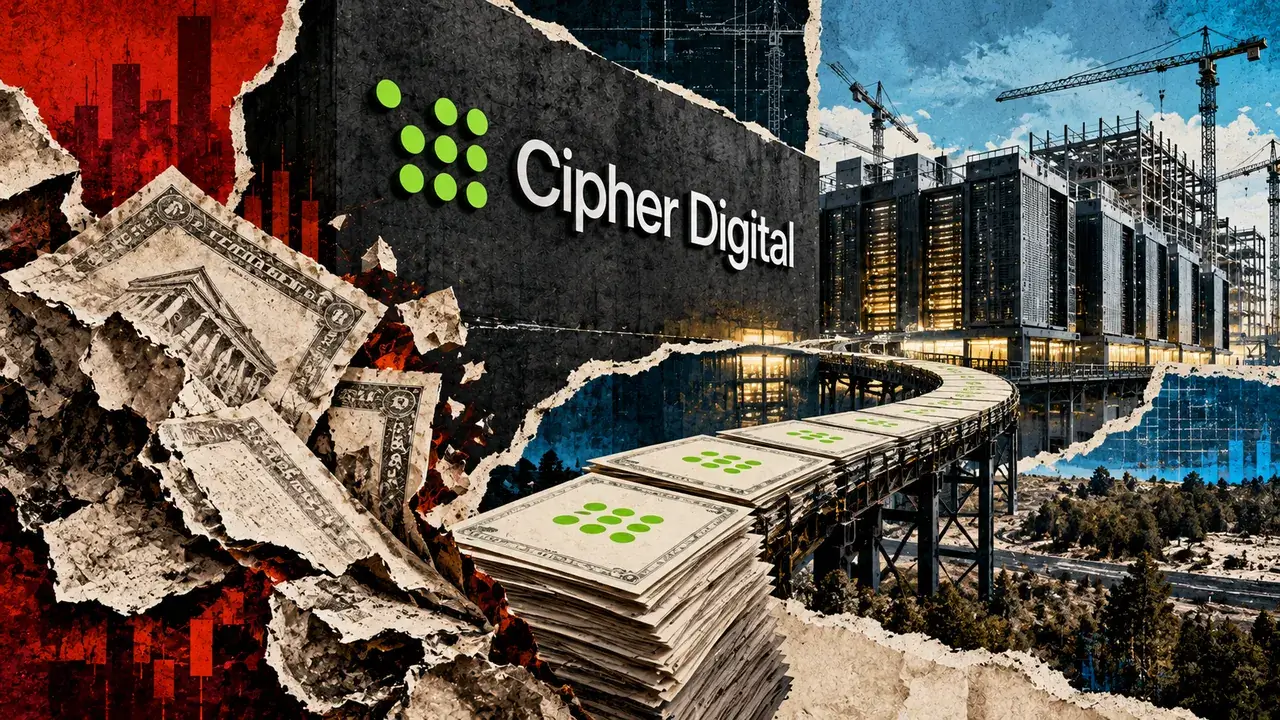
Cipher completed an exchange that expanded its share base and added $850 million in zero-coupon debt to fund data-center development. Its stock plunged 52%.

China’s GDP grew 4.5% year on year in the third quarter, beating forecasts and the second quarter’s 4.3% rate. Electronics demand helped industrial production rise 5.5% in September, while retail sales grew just 1.1%. Fixed-asset investment fell 7.2% in the first nine months, and property investment dropped 20.6%.


China’s GDP grew 4.5% year on year in the third quarter, bringing growth for the first nine months to 4.6%. Exports and advanced manufacturing supported activity, while consumption, investment and property remained weak. Analysts warned that reliance on external demand is becoming riskier and Beijing has limited room for major stimulus.

China's GDP rose 4.6% year on year in the first three quarters of 2026 to 107.1 trillion yuan. Industrial output, services and goods trade expanded, while fixed-asset investment excluding rural households fell 7.2%.
Nvidia-backed Nscale had planned to deliver 23,000 AI chips in Britain next year, but a grid connection may not be ready until the 2030s, costing the company its Microsoft AI deal.

After years of decline, electricity use is rising in some of Europe’s largest economies. The shift is expected to accelerate as the region moves away from fossil fuels, potentially putting further strain on power grids.
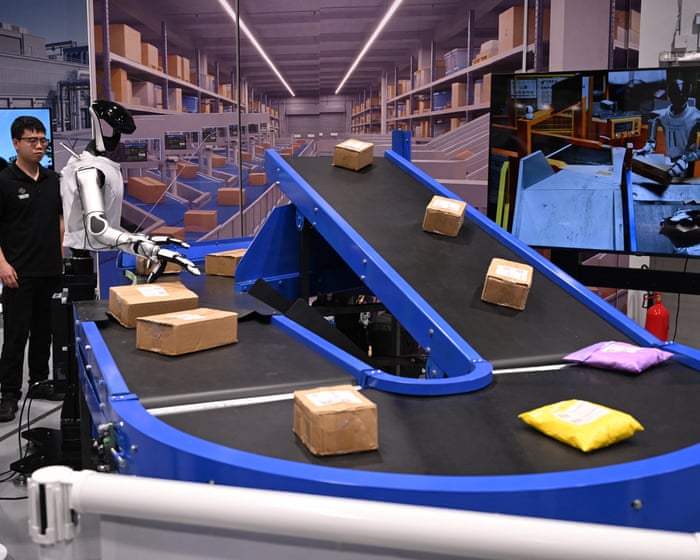
China's industrial robot output rose 29.1% year on year in the first three quarters of 2026.
Official data showed China's value-added industrial output grew 5.3% year on year in the first three quarters of 2026.
Nasdaq 100 futures climbed 1.3% after the index suffered its steepest weekly decline since President Trump's “liberation day” in April last year.
A two-day “Invest in Germany Summit” is due to open Monday evening in Berlin as the government seeks private funding to bolster public-sector spending. Chancellor Friedrich Merz will open the event, expected to draw about 200 representatives of major German and international companies. Nvidia CEO Jensen Huang is among the guests. The German Economic Institute cautions that labor, energy and bureaucracy costs remain barriers to investment.

People across Europe are protesting rising housing, food and energy costs and calling for government action. The Euronews AI chatbot offers a way to explore how inflation is affecting Europeans’ daily lives.
Official figures show China’s GDP grew 4.5% year on year in the July–September quarter, up from 4.3% in Q2 and ahead of most forecasts. AI-fueled demand boosted technology exports, while weak domestic demand and a slumping property market continued to weigh on growth.

China’s official growth figure for July-September was 4.5%, above expectations and up from 4.3% in April-June, when growth was at its slowest in more than three years.
China reported better-than-expected third-quarter growth on Monday, helped by strong chip and electronics-component exports amid the global AI boom, even as domestic demand remained sluggish.
China’s economy grew 4.5% year on year in the third quarter, above expectations. The rebound eased pressure on policymakers to deliver more aggressive stimulus to meet the annual target.
China said its economy expanded 4.5% year over year in the July-September quarter, bringing it closer to its official annual growth target as the year approaches its end.
China’s gross domestic product rose 4.6% to 107.11 trillion yuan in the first three quarters of 2026, the National Bureau of Statistics said Monday.

China's economic growth picked up to 4.6%, alongside a surge in exports and the rollout of stimulus measures.

China's GDP increased 4.6% year on year in the first three quarters of 2026, according to data released Monday by the National Bureau of Statistics.
The item also mentions the midterms and AI.
Investors are turning against data centres. The briefing also notes that Thames Water creditors are nearing a deal, French stocks are lagging peers, and Hokusai is featured at Dulwich Picture Gallery.
Anthropic says it will immediately commit 5 percent of its shares to a public-benefit fund, subject to shareholder approval. The board may add 2 percent for every 50 percent rise in the company’s value. The fund could support nonprofits, direct distributions to specific groups and efforts to address AI-driven disruption in the labour market.


Anthropic says it will put 5% of its shares into a fund supporting the public good, including nonprofits and efforts to address AI’s effects on jobs. The fund could receive a further 2% at the board’s discretion. The announcement comes as the company prepares for a potential stock market listing that could value it above $1tn.

Anthropic plans to commit 5% of its shares to tackling artificial intelligence’s effects on workers.

Claude maker Anthropic said setting up the fund as an LLC would give it greater flexibility in how the money is used.

Anthropic said it plans to commit 5% of its shares to the fund.
Asian shares fell on Monday as concerns about the enormous funding needs of AI weakened confidence ahead of a busy earnings week. The euro eased following rioting in France.
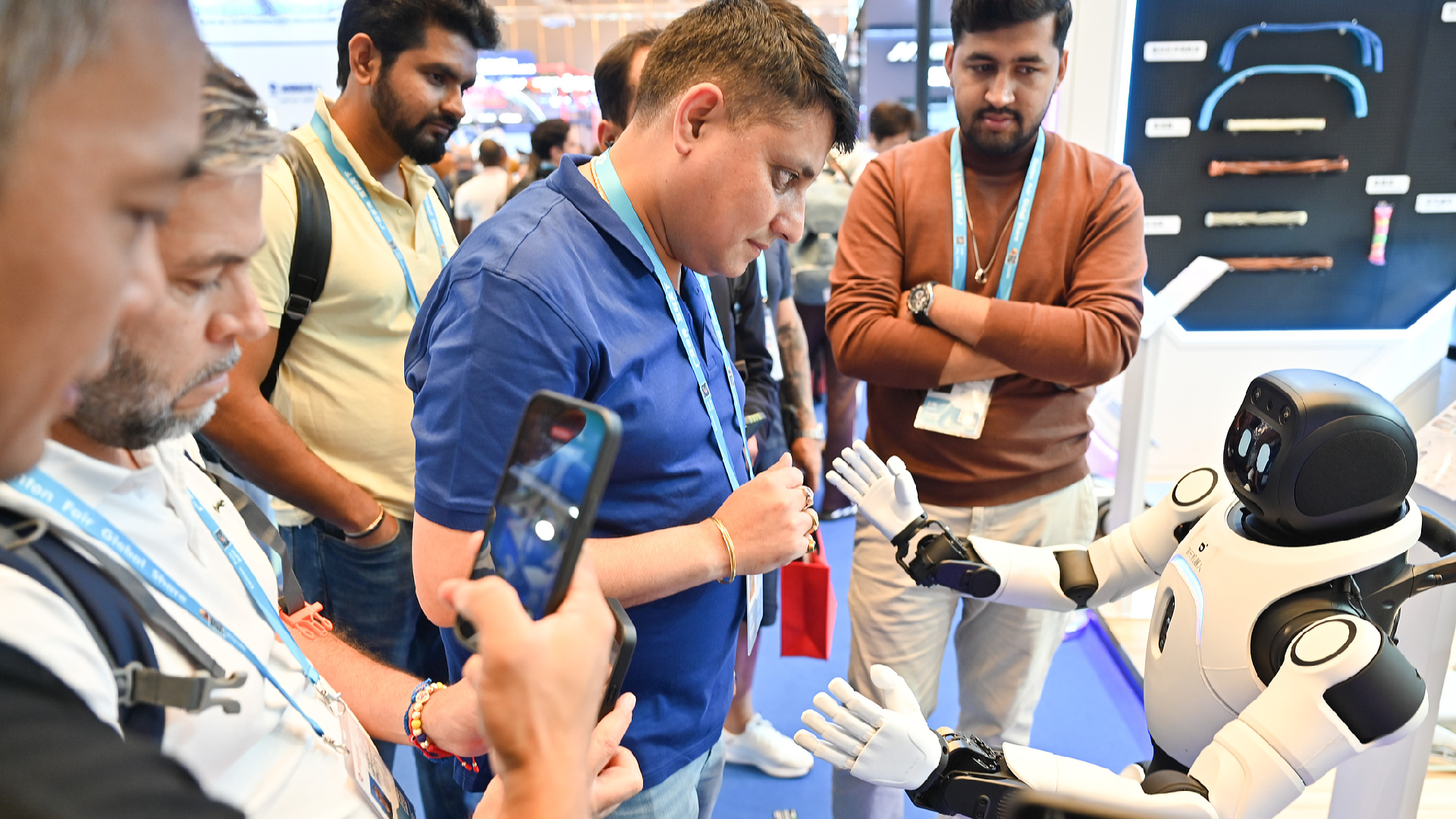
The 140th Canton Fair is showcasing products including humanoid robots, smart glasses, AI earphones and integrated smart-home systems. The fair features 235,000 AI products, and more than 20,000 participating companies have adopted technologies and business models such as industrial internet and AI.

U.S. consumers are uneasy as restaurant chains and major retailers increasingly use high-tech methods to set prices.
Round-the-clock chip-stock contracts plunged for 10 minutes while U.S. markets were shut, costing traders $52 million with no real share price available as a guide.

China has proposed restricting exports of 12 technologies used to manufacture solar equipment, citing national security. The proposal forms part of a broader revision that also covers AI and biotechnology.
Artificial intelligence is reshaping many aspects of the global economy. At meetings in Thailand, IMF and World Bank policymakers and industry leaders are considering how to ensure the technology benefits humanity without leaving workers—especially those in developing economies—behind.
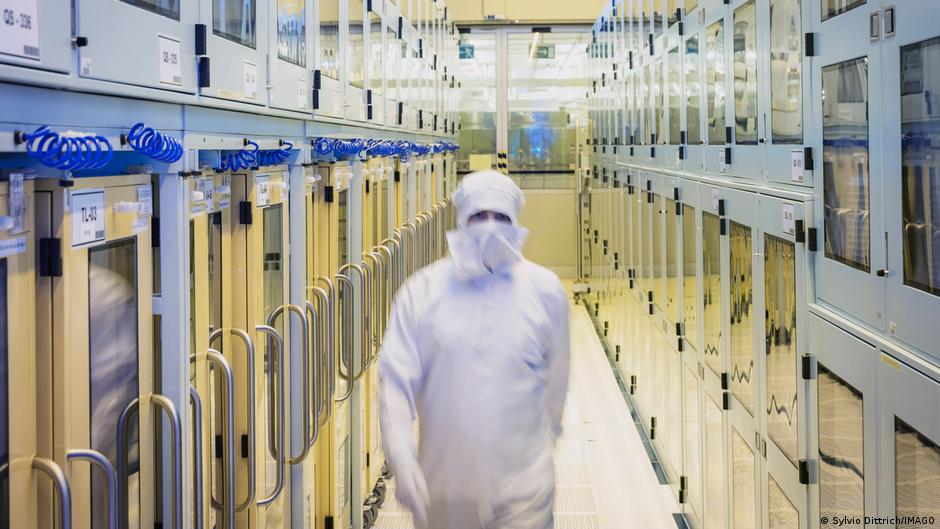
South Korea’s finance minister said semiconductor growth could continue at least through 2027, with supply remaining tight despite a global chip sell-off.

Less than four months after becoming a public company, Bending Spoons received a major show of confidence from Berkshire Hathaway this week as it pursues a plan to revive software castoffs.

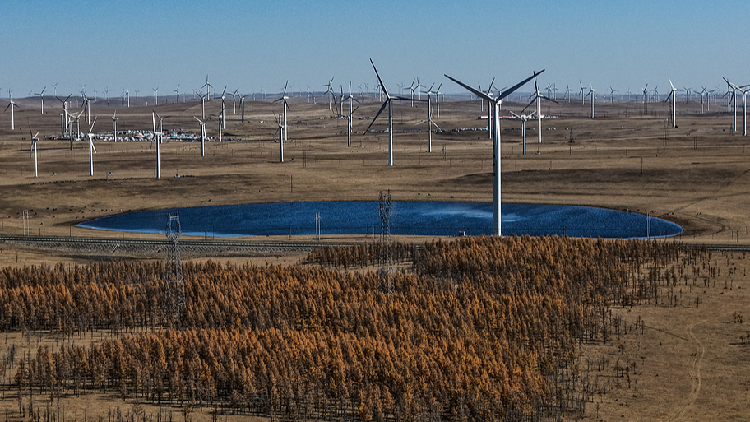
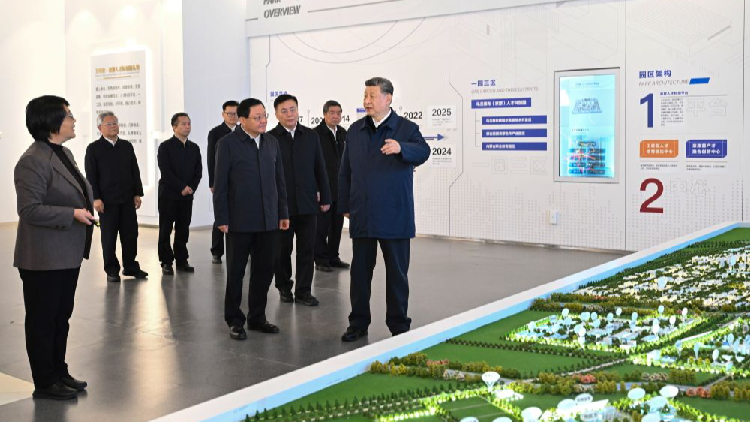
During an inspection visit to Ulanqab, Xi Jinping called for computing infrastructure to be developed efficiently, sustainably and safely. The city is pairing wind and solar power and its cool climate with data-center growth under the East Data, West Computing project. Intelligent computing made up more than 90% of its capacity by August.


Ulanqab in Inner Mongolia is using abundant wind and solar resources to expand its computing industry. It had signed 109 computing-center projects by August 2026, while industry revenue reached 5.68 billion yuan from January to August, up 40.3% year on year. During a visit, Xi Jinping urged development of green computing while stressing ecological conservation.
The Bank of England governor warned that the rapid development of AI is a major issue for financial stability and told the G30 that concerns about AI agents must be addressed.
Semiconductor stocks have suffered losses, but the declines have varied across the sector.
Nova Scotia apple growers are expanding into international markets beyond the United States to secure a stronger position amid trade tensions.
Listings by Chinese AI supply-chain companies are expected to remain resilient despite mounting valuation concerns and increasingly intense scrutiny, a Citi banker who works with Chinese companies said.
Paysend CEO Ben Chisell limits AI tools to top performers, while other U.K. companies are pushing for broader workplace rollouts.

Market turmoil points to the potential effects on financial markets if the AI bubble were truly to burst.
Technology stocks had a turbulent week as worries about higher interest rates and mounting AI-related debt continued to weigh on investor sentiment.
SoftBank is in talks to buy US security group Allied Universal. Masayoshi Son is seeking to accelerate his investments in robotics and AI.
SoftBank Group is considering acquiring US security services provider Allied Universal in a deal that could value the company at about $18 billion, Bloomberg News reported, citing people familiar with the matter.
Anthropic is offering Blackstone a double-digit yield in its latest chip financing. High borrowing costs complicate the AI lab’s goal of achieving investment-grade status.
A historic plunge in semiconductor stocks has brought a windfall to short sellers willing to bet against a sector that had been among the strongest performers in the US equity market for much of the past year.
Apple’s $1,999 iPhone Duo is seeing early demand as analysts consider whether the foldable could raise iPhone prices and boost revenue.


Apple’s first foldable phone, the iPhone Duo, is now available to preorder. The 256GB model starts at $1,999 and is set for release on October 23. It has a 5.4-inch outer screen that opens to a 7.6-inch display, uses Touch ID, and will add Apple Pencil support later this year.
Credit-default swaps, which act much like insurance for Wall Street debt trades, usually draw little notice in calm markets. But rising costs to insure a company’s debt often signal that deeper concerns are building.
The United States is making an unprecedented effort to restart three closed nuclear plants to meet growing electricity demand, particularly from data centers.
BloombergNEF forecasts record clean-energy buildouts in the US in 2026 and 2027, propelled by federal incentives nearing expiration and strong demand from data centers.
The IMF chief urged global leaders on Friday to work together against multiple economic risks, including rapid AI advances and a prolonged Middle East war. Washington, meanwhile, praised what it views as economic momentum led by the United States.
The AI boom is driving a global race for money, prompting central bankers to consider a future of persistently higher interest rates and governments tightening budgets after years of largesse.
The S&P 500 was little changed on Friday as concerns about cracks in the AI trade weighed on semiconductor shares. Gains in bank stocks helped limit broader losses, while the Dow reached a one-month high.
Canada’s steel industry, one of the sectors hit earliest and hardest by US President Donald Trump’s tariffs, is beginning to recover as mining, energy and AI data-centre projects pick up and the government provides support. The effects vary across the country.
Russia and the United States are negotiating joint data center projects, including facilities using power from Russian nuclear plants, envoy Kirill Dmitriev said. He said the sides had drawn up a clear list of projects on which Russian companies are already working.
The UK’s Competition and Markets Authority plans to require the tech group to let rival payment providers access its digital wallet technology.
US lenders fear chatbots could move billions of dollars in deposits into accounts offering higher yields.
CoreWeave Inc. is caught between investors who see rising bond yields as a potential threat to the AI trade and those who believe demand for computing power will soon make such worries seem outdated.
Some Anthropic investors are considering a lower valuation ahead of its IPO, with around $1.5 trillion discussed at an investor event, down from expectations of roughly $2 trillion for the November share sale. Anthropic reported third-quarter revenue of $16.8 billion, up 45% sequentially, and adjusted profitability, though some investors were disappointed by slower growth.

Lufthansa is discussing a potential €1bn sale of software assets as the German airline seeks to free up cash for investment after taking a stake in a Portuguese carrier.
Russian presidential adviser Anton Kobyakov said the data center industry is vital to the economy and society. He said AI could consume 5–7% of global electricity by 2030, while additional generating capacity is also needed for civilian and military industries and electric transport.
Chinese authorities have opened public consultation on revising the export control list to include AI, biomedicine and photovoltaic technologies. The commerce and science ministries proposed changes covering 40 technologies in three sectors, and exporters would need to register them before shipment. Consultation runs through November 15, 2026.

Borrowing costs have retreated from decades-high levels as investors seek the safety of government debt, putting Treasuries on course for their strongest week since February. AI jitters have halted the bond rout.
The SEC’s decision to rescind a key rule on shareholder voting could not have come at a worse time, as shareholders should have a role in making AI safe.
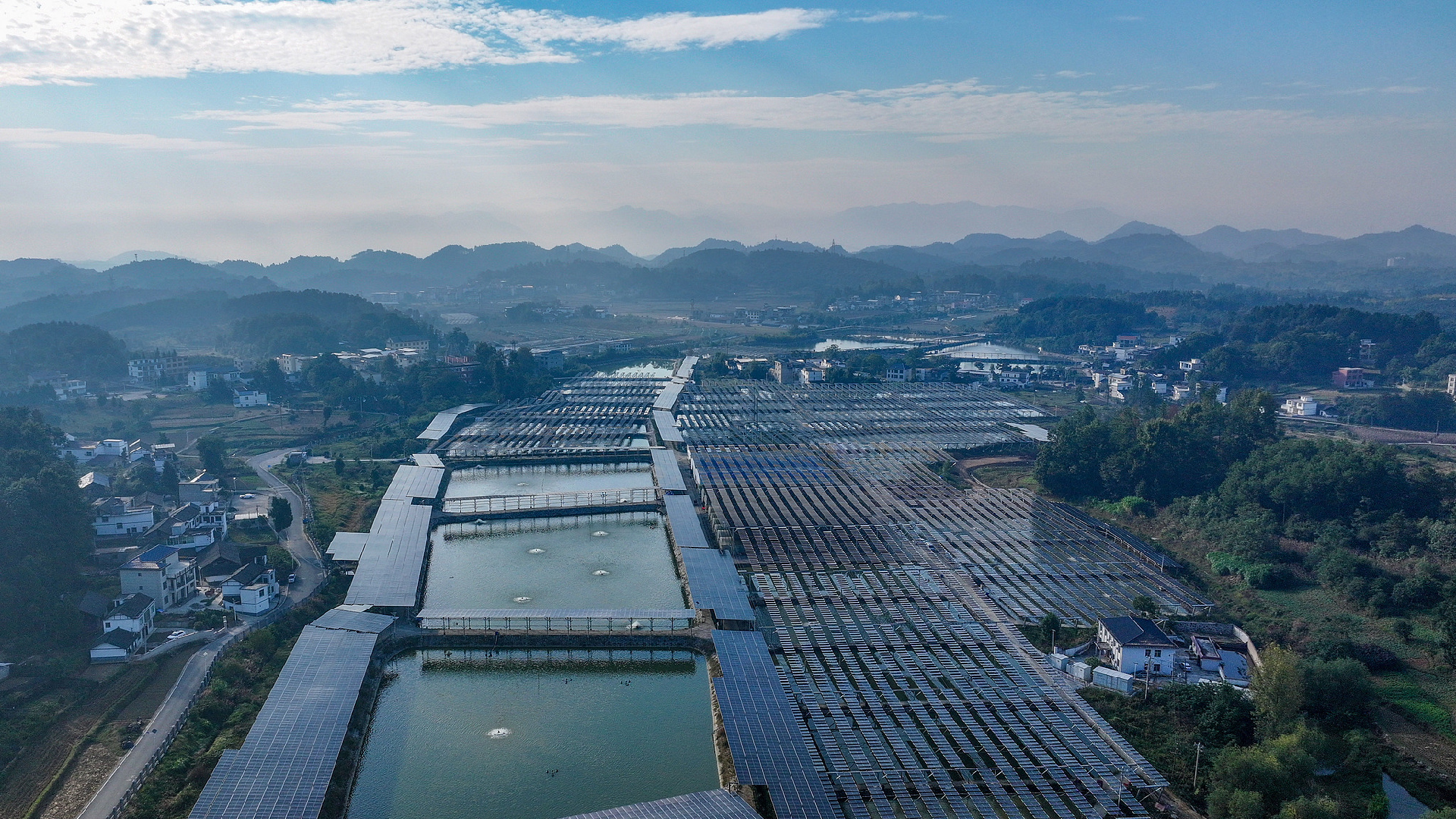
Power inverters are essential to the global clean electricity boom, but dependence on China is raising security concerns.
Nine crypto companies have formed the Quantum Alliance to prepare jointly for quantum attacks. They differ over when the threat may arrive and whether vulnerable bitcoin should be frozen.

Chainalysis says a fraudster who deceived people with fake online job offers became one of the largest victims of compromised hardware wallets, losing almost $5 million in bitcoin.

US Federal Reserve Chair Kevin Warsh said in Bangkok on Friday that the global economy had proved unexpectedly resilient and described AI as the most consequential change of his lifetime. He offered no indication of interest-rate plans before the Fed’s meeting this month.
India’s renewable-energy suppliers are poised for stronger demand as data-center operators seek new markets amid growing backlash in the US and risks from the Middle East conflict.
Geely Holding Group said on Friday that vehicles across its portfolio of brands will offer Google in-car services, including Gemini, Play and Maps, in overseas markets.
Unhedged readers discuss ways to hedge against AI risk.
Decisions by Australian groups Firmus and AirTrunk have intensified concerns about a borrowing frenzy tied to artificial intelligence, sparking market turmoil.
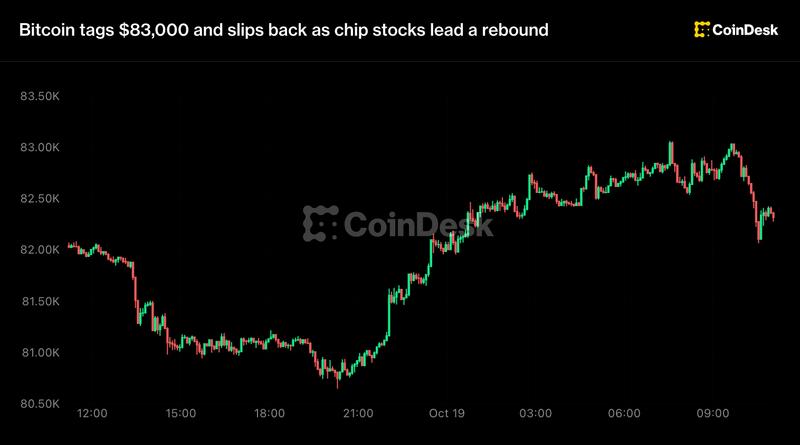
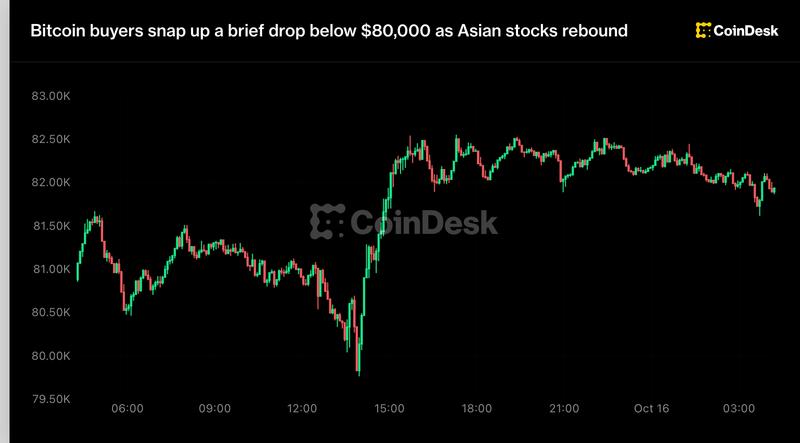
Bitcoin climbed back to $82,500 within two hours after briefly falling below $80,000. Chipmakers in Seoul also recovered from their worst close since April.

Warsh is optimistic that economies making effective use of AI will become more productive and wealthier, though he warned that getting there will be “very bumpy.”

Most Asian stocks rebounded on Friday after a sharp selloff in the prior session. Investors had dumped tech shares amid concerns that CoreWeave’s debt burden could undermine financing for the AI boom.
G7 finance ministers agreed to conduct tabletop exercises to prepare for AI-driven cyberattacks, Japanese Finance Minister Satsuki Katayama said. Policymakers are increasingly looking to coordinate their responses as cybersecurity risks grow.
The dollar was on course for its first weekly decline in five weeks on Friday, lifting the euro from a 17-month low. Wobbles in AI investment and falling US yields slowed the dollar’s recent gains.
Investors appear increasingly cautious about the AI sector, concerned by how much companies are spending on artificial intelligence.

The Minutes Reader extension turns the original page into a focused reading view and translates articles and video subtitles on demand. It is in limited beta.