Anthropic’s huge IPO will test the public benefit corporation model
The AI giant’s move to go public will subject a company structure favored by progressive retail brands to unprecedented pressure.
JPMorgan said Thursday it expects the Federal Reserve to raise rates by a quarter point in January and March next year, in addition to a previously forecast December increase. Persistent inflation keeps further tightening on the table.
The International Energy Agency warns that the Middle East conflict is the greatest threat to global energy security in history. Disrupted oil supplies through the Strait of Hormuz are raising household costs, and the agency says a prolonged crisis will make recovery for global energy markets harder.
Sanya Ribao says the resort city is evolving from an international tourist destination into a “new gateway” linking China with the Asia-Pacific, with leisure, commerce and cultural exchanges reinforcing one another and supporting Hainan Free Trade Port development. It says repeat visits by foreign tourists could raise Sanya’s international standing.
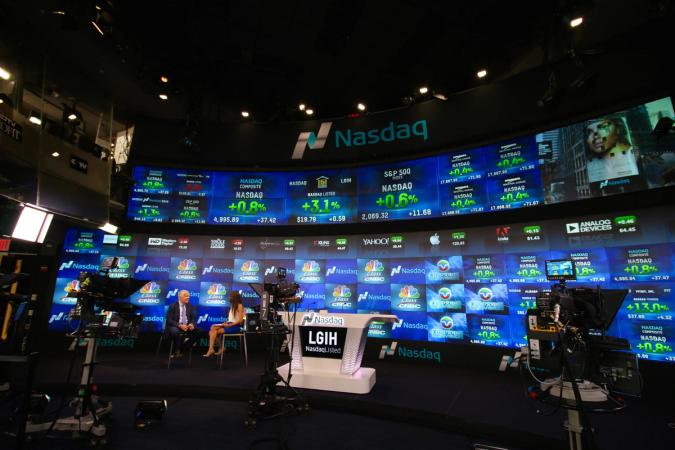
Anthropic opened at $111.50 in its Nasdaq debut on Thursday, 34% above its $83 IPO price. The Claude maker is on track for a $2 trillion valuation after raising $81.3 billion in the largest IPO in history.
Artificial intelligence giant Anthropic began public trading in the largest stock offering ever, even as investors worry about a possible AI bubble and the public fears the technology could threaten lives and livelihoods.

Anthropic opened at $111.50, 34% above its IPO price. At that opening price, the company would be valued at more than $2 trillion.

Anthropic shares reached $110 on Nasdaq, $27 above the IPO price of $83. The offering price represented more than $80 billion in capital raised.

Anthropic began trading on Nasdaq under the ticker ANT at $111.50 per share, above its $83 initial price, valuing the company at about $1.5 trillion. Its filing reported $16.3 billion in first-half revenue and an $80.7 billion net loss, mostly from an accounting charge that does not reflect its business. CEO Dario Amodei said the company would pace AI training and deployment until confident systems are safe and remain under human control, resisting business or political pressure.
Anthropic PBC awarded $550 million to the Wall Street banks working on its blockbuster IPO, more than the banks earned from SpaceX’s previous record-setting debut.

Anthropic shares began trading on Nasdaq after the company raised a record $81 billion in its IPO, valuing it at $1.5 trillion. The stock’s performance is expected to test investor confidence in AI amid concerns that the boom could be a bubble.
Anthropic’s revised IPO pricing has made the offering the largest ever and pushed the combined wealth of its seven co-founders above $140 billion.

Anthropic’s public-market debut comes with major computing obligations. Amazon and Google, among its biggest infrastructure partners, could keep earning from AI even if Anthropic is overtaken.
AI company Anthropic has begun trading on Nasdaq, aiming to raise $81 billion in what would be the largest IPO on record.

Anthropic’s long-planned IPO raised $81.3 billion, surpassing SpaceX to become the most valuable IPO ever. The company was founded on prioritizing safety, but executives say it needs to lead the AI race to fulfill that mission. Going public and its unusual governance structure add further questions about checks on leadership power.

Anthropic priced its $81 billion IPO at $83 a share on Wednesday and said trading was expected to begin on Nasdaq on Nov. 19. Investors allocated shares would show an immediate paper gain if the stock opened above $83, but that rise would bring no additional cash to Anthropic.

Investors betting on a $107 billion valuation will weigh whether Anthropic’s AI safety strategy and growing public anger over data centers could hurt its growth.
Anthropic’s record $81 billion IPO will bring Wall Street a symbol of a sector that supporters hail as an economic panacea. Critics warn AI has fueled a market bubble and could ultimately threaten humanity.

Claude maker Anthropic priced its Nasdaq debut at a fully diluted valuation of $1.5 trillion, while the Nasdaq 100 stood 14% below its record high.

Anthropic has become the first pure-play AI lab to go public, at a striking $1.5 trillion valuation. The listing is a bellwether moment as concerns grow about a financial bubble in the sector. Separately, a scientific study says US data centres emit as much greenhouse gas as entire nations.
Anthropic’s blockbuster IPO raised a record $81bn. Today’s newsletter also includes the Trump-Xi-Putin trilateral meeting.
A tour of central banks’ foreign-exchange reserve policies, illustrated in 248 charts.
As Anthropic approaches its high-profile market debut, brokerages including Needham and Melius Research initiated coverage with bullish recommendations, betting the AI company will become the “real AI disruptor.”
Anthropic, the AI company behind Claude, is set to start trading following a record-breaking IPO. CNN is providing live updates.
Live coverage follows debt trading after Anthropic’s IPO.
Bitwise’s proposal would allow eligible firms to receive ZEC, while Grayscale’s quarterly filing says its ETF requires cash redemptions. Bitwise’s CIO predicts a rotation from Bitcoin into ZEC.

Generative AI has driven economic growth and drawn huge investment into expanding global computing capacity. But signs of slower spending are emerging as companies assess whether their investments are paying off and how much AI they really need.

State-backed industrial parks overseas are helping Chinese companies establish a presence in locations with cheaper labor and lower tariffs.
Gas prices are falling at a historic pace, making them a major flashpoint in the midterm election.
Palo Alto Networks reported first-quarter results that topped expectations and signed a $4.5 billion deal with AI startup Applied Compute, as the company bets on securing open-weight models.

AMD shares were slumping Wednesday after a short-seller alleged that the company’s firmware showed up at a blacklisted Chinese company.

In late 2020, senior OpenAI employees who felt the company was not giving AI ethics and safety enough priority left to establish Anthropic PBC. Within a few years, the young company had become an AI giant and completed the largest IPO in history.
JPMorgan Chase says a cyberattack targeted third-party vendors and may have exposed marketing data, including customer names and email addresses. The bank says the breach is unrelated to an outage earlier this week that it attributed to a software bug. Cybernews reported that a ransomware group leaked email addresses linked to about 16,000 customers.

Falling prices led institutional crypto exposure to decline by 10% in October.

Ukraine’s National Bank and National Securities and Stock Market Commission have agreed on a draft law regulating virtual assets. The bill still needs parliamentary approval and would divide oversight between the two bodies, align rules with the EU’s crypto framework and take effect on July 1, 2027, if passed.

Hill and Moreno criticize delays to the Clarity Act that caused it to miss a legislative window, but disagree over how much crypto regulators can accomplish through rulemaking.

Accenture aims to eliminate about 950 jobs in Portugal by January through a voluntary exit scheme for staff serving Meta Platforms. The Facebook owner is pursuing an efficiency drive tied to artificial intelligence.
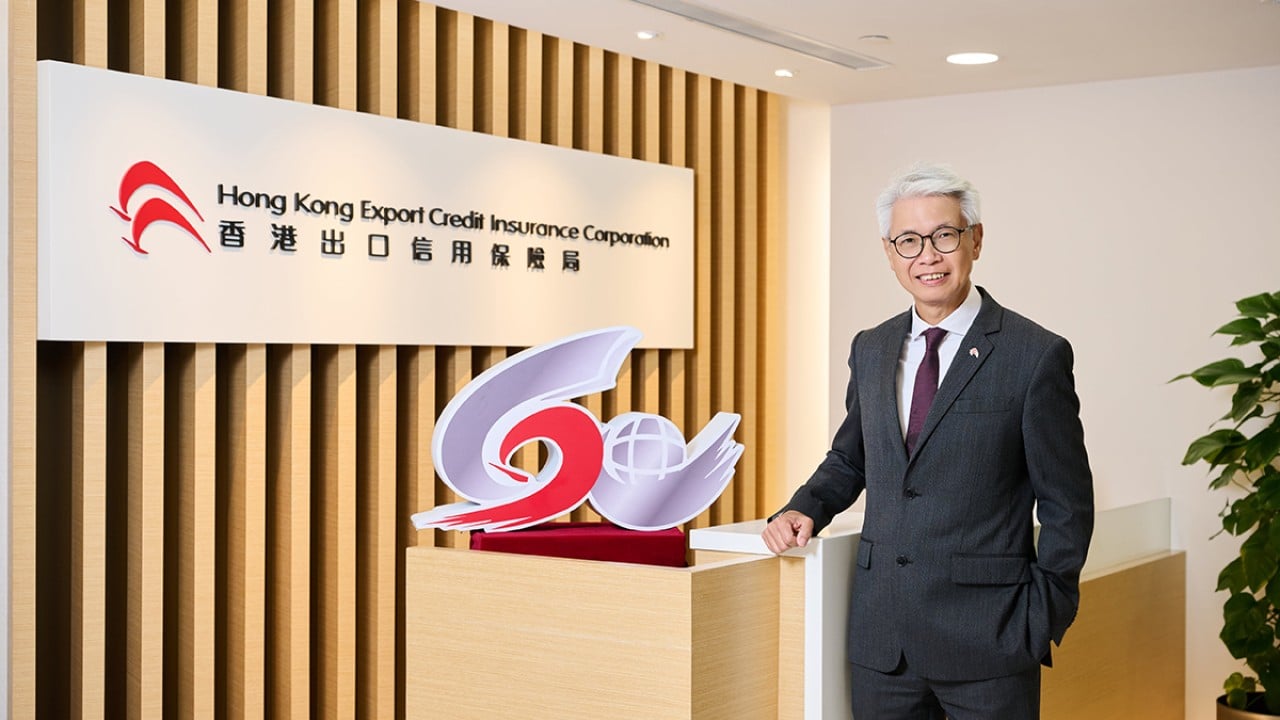
For Hong Kong exporters, winning an overseas order is only part of the deal; getting paid determines whether it pays off. HKECIC commissioner Terence Chiu says businesses cannot overlook this as international commerce becomes more complex.

Celebrations are underway for the 2026 Beaujolais nouveau vintage, described this year as fruity, light and easy to drink—a combination that could help people forget the sector’s crisis.

Each year on the third Thursday of November, France celebrates Beaujolais Nouveau. This Thursday, millions of bottles of the 2026 young red wine will be opened around the world, from Lyon to New York. Wine expert Olivier Badoureaux, director of the French trade organisation Inter Beaujolais, discusses what to expect from this year's vintage.
The White House said US President Donald Trump announced more than $17 billion in commercial deals and strategic investments for US companies in Southeast Asia after a two-day working visit to the Philippines for the ASEAN Summit.
Royal Mail delivered 82.5% of first-class mail on time in the second quarter and 87.2% of second-class mail within three working days. It says it does not expect to meet its targets until next April. Citizens Advice called the service “pot luck”; parent company IDS reported a 6.3% revenue increase. Royal Mail said its improvement plan was broadly on track.

Members of the European Parliament are urging the European Commission to ease regulatory burdens on EU companies and use horizontal trade-defence tools to address competition from China.
Taittinger is outperforming the sparkling wine industry and bucking a broader slowdown in luxury spending.
The AI boom is pushing some of the world’s biggest technology companies into sourcing electricity themselves for their data centers.
The International Energy Agency forecasts that the Middle East conflict will drive global oil demand down by about 2.7 million barrels per day in 2026, the first drop since 2020. It says oil and gas supply disruptions at their peak cut global oil supplies by 16 million barrels per day and created wider risks to energy security and industry.
As European SMEs adopt AI, Alibaba.com’s Accio illustrates how agentic tools can help close the productivity gap, support expansion and handle routine e-commerce tasks.
A new report estimates that sickness absence costs the EU up to €810 billion a year, underscoring the need for better prevention and earlier treatment to limit the economic impact.
Crypto futures tied to Anthropic traded about 25% above the company’s IPO price on Thursday, with bets increasing during a Bitcoin selloff. Block Scholes research suggests a broader retreat from risk, rather than clear evidence investors sold Bitcoin to buy Anthropic. The company priced 980 million shares at $83 on Nov. 18.


Nasdaq futures rose nearly 2%, while Anthropic shares were indicated up as much as 24%. An analyst said IPO funds could flow back into crypto.
Nasdaq futures climbed nearly 2% early Thursday after Anthropic set its IPO price above the marketed range, raising hopes for a strong debut and lifting sentiment toward battered AI stocks.
JPMorganChase said Thursday morning that third parties providing services to the banking giant were targeted in a cyberattack.

Trade Minister Ömer Bolat said on Thursday that excluding Turkey from the “Made in Europe” rules would harm, rather than protect, the European automotive industry. Turkish companies are competing for access to future EU incentives.
The Nvidia-backed start-up says its $35bn IPO plans have been hit by links to suppliers that risk being placed on Washington’s entity list.
Russian Prime Minister Mikhail Mishustin said total freight turnover at the country’s seaports had risen to more than twice its previous level. He said stronger logistics capacity makes it possible to increase exports to Asia, the Middle East and the Global South, and that the sector is performing well this year.
Amazon said on Thursday that legislation under consideration by the New York City Council could raise the cost of each order by as much as $5. The company added that passage might force it to consider moving operations outside the city.
Slightly more people applied for U.S. unemployment benefits last week, but layoffs remain limited and most American workers continue to have solid job security.

Cecilia Yang, a consultant in Hangzhou, says Claude has become an essential work companion. After Anthropic priced its high-profile IPO on Wednesday, she decided to buy a small stake despite judging the valuation too high.

Hashi has opened on Sui’s main network, where it handles bitcoin deposits. Its hBTC is being used for Fluid lending and in HoneyB vaults on Upshift.

Under the International Energy Agency’s Stated Policies Scenario, data centres could consume around 1,000 terawatt-hours of electricity each year by 2030.
Russian President Vladimir Putin said trade turnover between Russia and China reached $240 billion last year and is expected to set a new record of $280 billion this year. He described economic ties as a key area of interaction between the two countries.
The later rebound ended with less strength, while loss figures shift attention to the level of demand in spot markets.

Crypto exchange OKX plans to launch tokenized Anthropic shares. The company’s pre-IPO futures are trading about 24% above its $83 offering price.

Russia’s Interior Ministry will charge organizations 50 rubles for each session accessing its databases. First Deputy Prime Minister Denis Manturov announced the plan. The central bank and financial monitoring service had opposed the fees, while banking representatives warned they could result in less thorough customer checks.
Tesla CEO Elon Musk pledged to raise production at the Shanghai Gigafactory as the company’s mainland China sales fell to a four-year low amid an economic slowdown. Analysts said his upbeat remarks could ease concerns about Tesla’s future in Shanghai, following speculation that it might cut production if sales keep declining.

Tesla CEO Elon Musk said on Thursday the company would keep raising production at its China factory, according to Yuyuan Tantian, a social media account affiliated with Chinese state broadcaster CCTV.
The US-led Frontier Minerals consortium beat seven bidders, including Chinese and Australian companies, to win the tender to develop Kenya’s Mrima Hill project, whose critical-mineral deposits are valued at more than $60bn. The project still needs a prospecting licence and regulatory approvals. Rival bidders plan to challenge the selection, while local residents fear damage to the forest and their ancestral heritage.

IMF managing director Kristalina Georgieva warned that strong demand for AI hardware and related products is adding to inflation, alongside the energy shock from the war in the Middle East. She said the pressures could prompt monetary tightening and push global inflation to 4.7% this year, urging countries to prepare for AI adoption.

Truth Social owner Trump Media bought back $100 million in convertible notes this week. Holders of the remaining notes can demand cash on Nov. 30, while the company’s bitcoin is valued at just under $1 billion.

Walmart reported solid fiscal-quarter sales and lifted its outlook for the year for a third time. As prices rise, more customers across the income spectrum are turning to the discounter to save money.

Hainan is broadening trade and investment cooperation with APEC economies, aided by a new customs regime across the island, Hainan Ribao reported. The process has attracted Asia-Pacific resources and boosted the volume and quality of foreign trade and foreign direct investment. Hainan plans to deepen practical cooperation in healthcare, digitalization and the green, low-carbon economy.
More than 100,000 UK retail investors sought Anthropic shares in the blockbuster IPO. Nearly two-thirds received their full allocation.
The European Union reached a tentative deal Thursday to postpone methane rules for oil and natural gas importers by two years. The delay exceeds the one-year reprieve proposed by the bloc’s regulator and is intended to protect energy security after disruptions linked to the war in Iran.
MEPs and EU governments agreed to delay key methane emissions requirements by two years, following pressure from the fossil fuel industry and growing concerns about energy security and affordability.

The EU has agreed to postpone methane rules for energy importers by two years. The European Commission proposed a one-year delay in October amid concerns about energy supplies and fuel prices.
The EU's new rules will not take effect for at least two years, following sustained lobbying by the US, Qatar and the wider oil and gas sector.
Russia’s Defense Ministry said Kalashnikov Group completed its contract to produce and deliver Chukavin sniper rifles on schedule. Production volumes for the model rose several-fold compared with 2025.
Outflows from Bitcoin ETFs suggest waning interest in crypto as Anthropic prepares for its Nasdaq debut.

Hyunsu Jung, who leads Hyperion DeFi, sees firms quoting on separate order books as a possible way to bring prices on the planned US market closer to those on overseas platforms.

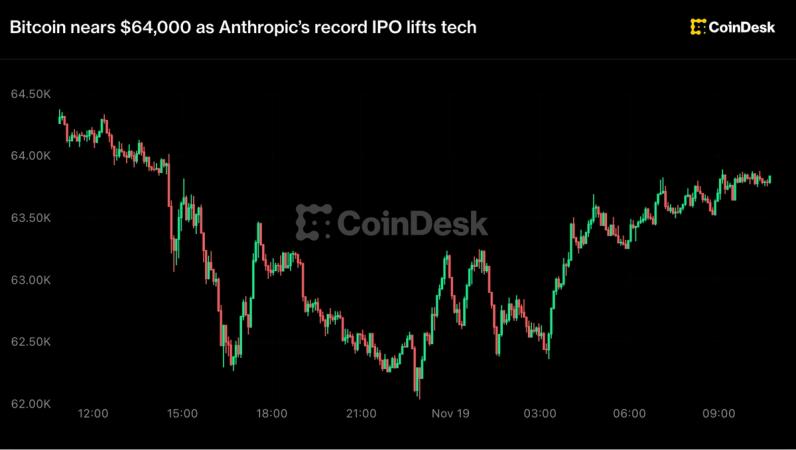
Bitcoin stayed above $63,750, while Bitcoin ETFs recorded more than $300 million in outflows on Wednesday. Attention is now shifting to Anthropic’s $100 billion IPO.

The International Energy Agency says electricity demand for cooling buildings has surpassed demand for heating for the first time, as rising incomes and temperatures drive a surge in air-conditioning use.
Britain’s inflation rate rose slightly in October to its highest level in 12 months, official data showed Wednesday, as the Middle East conflict pushed up motor fuel costs.

A blockchain investigation traced $518 million in activity linked to illicit dealings, including the 2025 Bybit hack, through a key reserve backing DAI and USDS tokens. The findings put Sky’s institutional-finance ambitions on a collision course with its open design.

Idealista’s analysis finds that housing pressure on Portuguese families is growing. Faro has the highest rental burden, Funchal the highest burden for buying, while Lisbon faces very high costs for both renting and buying.
APEC leaders said economies aim to strengthen security across energy sectors and technologies, ensuring uninterrupted, reliable and affordable access to energy. They encouraged cooperation on resilient supply chains, secure cross-border infrastructure links and risk assessment, as well as sharing experience in infrastructure restoration, emergency response and strategic reserves.
The APEC summit leaders’ declaration stresses the need for secure, uninterrupted energy flows and mutually beneficial cooperation throughout the supply chain. Leaders also called for stronger supply-chain resilience, secure cross-border infrastructure links and risk assessment to bolster energy security.
APEC leaders said they would promote the use of digital and other emerging technologies in agriculture, and support science- and evidence-based, technology-enabled farming. They also reaffirmed a commitment to expanding economic opportunities in rural areas and strengthening food security and regional food-system resilience.
APEC leaders said credible, flexible fiscal, monetary and financial policy frameworks can help manage shocks and preserve macroeconomic and financial stability. They noted persistent global imbalances pose risks to growth and stability and agreed to strengthen cooperation on global rebalancing.
Commerzbank welcomed UniCredit’s pledges to keep the German lender listed and headquartered in Frankfurt. Berlin and UniCredit have agreed on key terms for a deal that could be one of Europe’s biggest cross-border banking transactions in years.
Traders had already priced in a December rate increase. Minutes from the October meeting described how forced selling could intensify a severe market shock, renewing pressure on Bitcoin around $60,000.

The Minutes Reader extension turns the original page into a focused reading view and translates articles and video subtitles on demand. It is in limited beta.