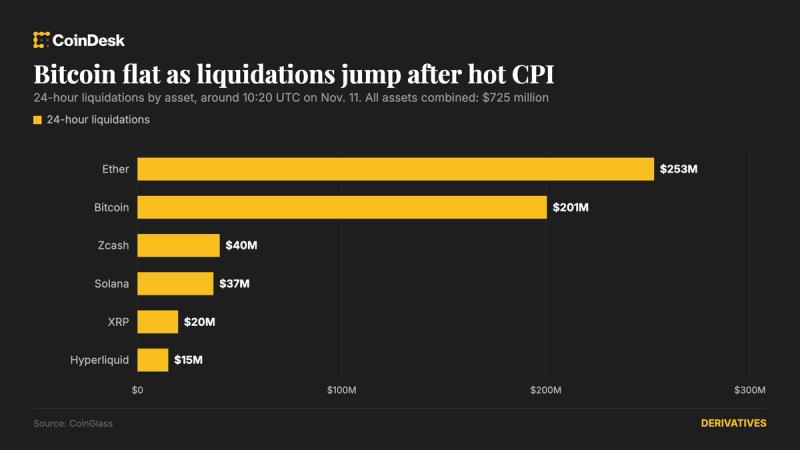
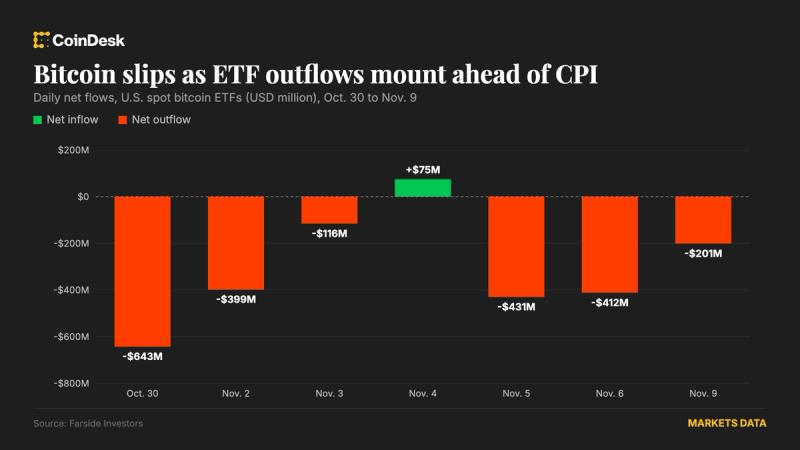
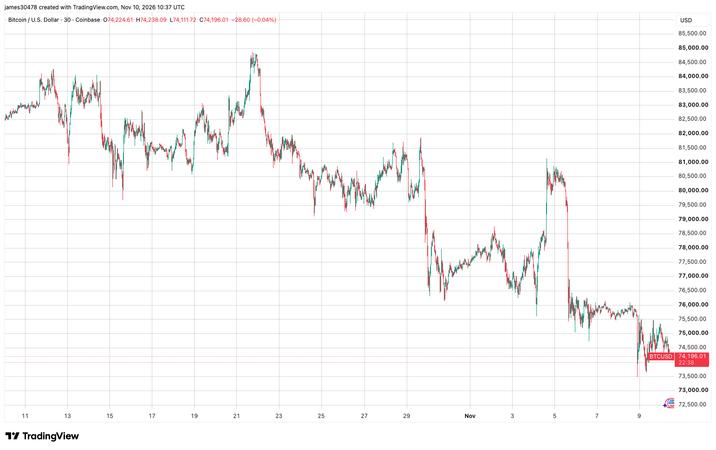
Bitcoin held near $74,000 after Tuesday’s hotter-than-expected inflation reading raised the implied odds of a U.S. rate increase to about 90%. ETF outflows continued for a fourth day, while liquidations rose.
Moody’s cited broad-based growth and resilience to the energy supply shock from the Iran war in raising its forecast for India’s fiscal year ending March 2027 to 7%, from 6.5%.
CoreWeave’s revenue surge boosted AI infrastructure stocks and Nasdaq futures, while bitcoin was little changed over 24 hours. Anthropic was reportedly raising its IPO valuation.
A technology sell-off has revived concerns about AI spending and the effects on jobs and global growth. Hundreds of billions of dollars are flowing into AI, well ahead of potential profits, prompting some experts to fear a crash. Worries about slower infrastructure expansion erased trillions from stock markets, which have only partly recovered. Pensions and economic growth are also exposed to the boom.
A growing number of retirees with ample resources could help lift economic growth, but they represent only a small share of China’s hundreds of millions of retirees.
Goldman Sachs forecast on Tuesday that the Federal Reserve will raise rates by 25 basis points in March. October inflation came in hotter than expected, leading the bank to drop its call that the hiking cycle would end in December.

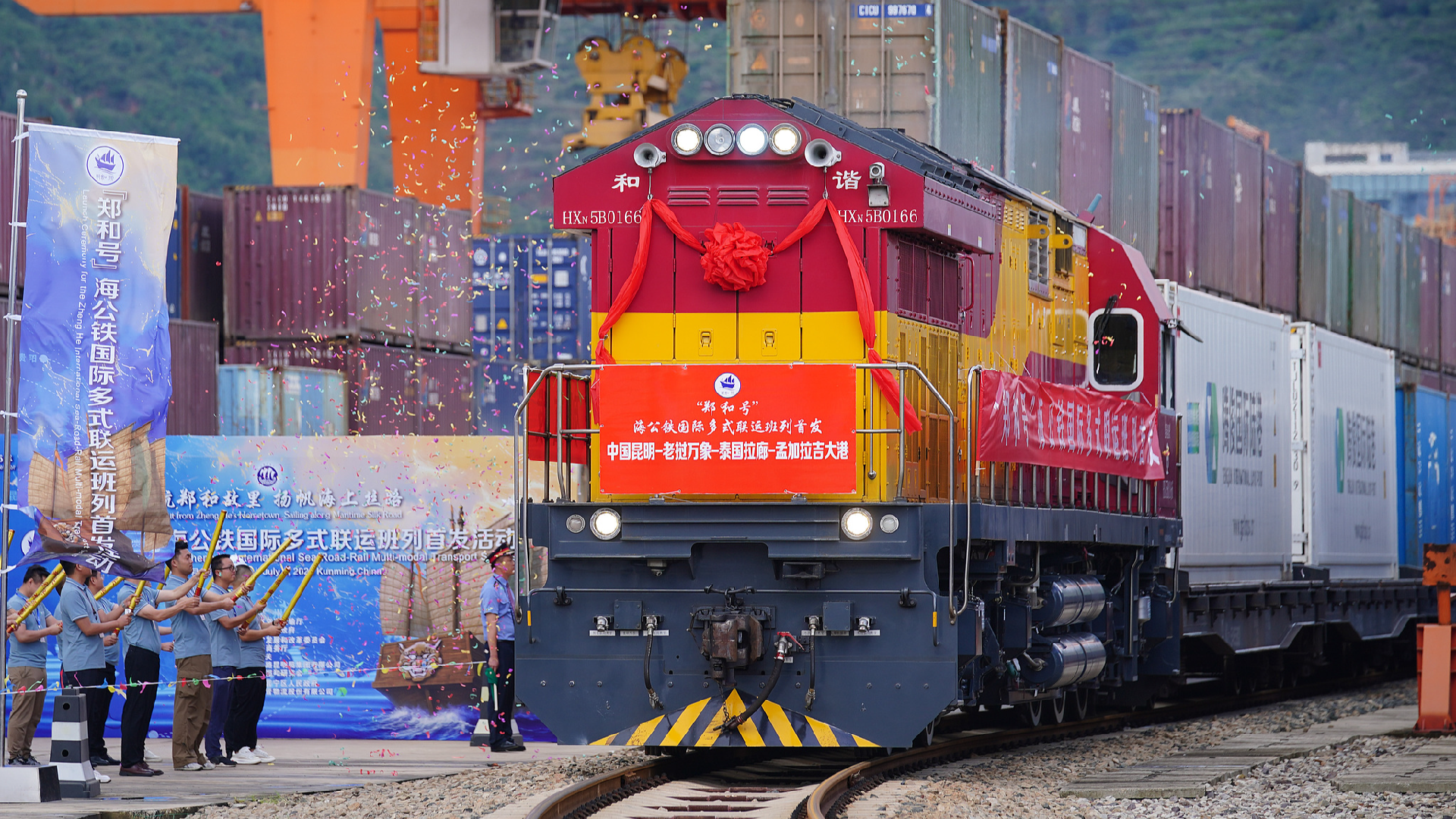
As China prepares to host the 2026 APEC leaders’ meeting, the report examines how physical infrastructure and digital systems are drawing Asia-Pacific economies closer. The China-Laos Railway, railway cooperation and a cold-chain shipping route support cargo flows, while a digital free trade zone in Thailand’s Eastern Economic Corridor has cut China-Thailand e-commerce fulfillment from 10 days to three.

Vladimir Putin has reportedly told the government to ensure Russian consumer electricity prices remain 20 percent below China’s in a long-term power infrastructure plan. The current plan through 2042 calls for 88.5 gigawatts of new capacity and upgrades to 66.4 gigawatts, costing about 40 trillion rubles, with another 17 trillion needed for power lines and distribution networks. The Energy Ministry says prices could double by 2042 if the current funding scheme continues.
China’s $1.04 trillion trade surplus in the first 10 months reflects booming exports, but also structural weaknesses. High household savings and weak domestic demand may undermine long-term growth, while growing reliance on exports risks provoking more trade barriers overseas.
The Bank of Russia bought yuan on the domestic market worth 15.1 billion rubles ($182 million), with settlements on November 10. Purchases settled on November 9 amounted to 12.1 billion rubles. The transactions are conducted through the yuan-ruble instrument on the Moscow Exchange.
Taliya Khabrieva, head of the Russian government’s Institute of Legislation and Comparative Law, said a bill for a Unified Advanced-Development Territory would replace classical tax benefits with incentive privileges. Business support would be linked to creating high-paying jobs and meeting social obligations. The regime is planned to run from January 1, 2027, through December 31, 2100, to diversify the economies of the Far East and Arctic and increase added value.
Southeast Asian countries will need $7.1 trillion for infrastructure through 2040, but face an annual financing shortfall of $264 billion at current investment levels, according to an Asian Development Bank report. Electricity and transport account for 85% of needs. The ADB urged stronger project preparation, predictable regulation and transparent procurement.
Investors showed weak demand at the latest 10-year US Treasury auction after hotter inflation data and a Federal Reserve official’s warning of a potentially aggressive rate increase triggered the sharpest bond sell-off in months. The US$42 billion batch sold at a 5.02% yield, above the 5.01% yield on comparable long-term debt in the secondary market. The episode may also bolster China’s push to internationalise its currency and reduce reliance on the dollar.
New lending to Australian property investors plunged by nearly a third in the September quarter, the steepest fall in official records dating to 2002. Commonwealth Bank said the share of borrowers at least 90 days behind on repayments rose to 0.8%, its highest level in 12 years. Analysts said arrears were rising, though one said there was not yet significant stress across the banking sector.
Bitmine posted a $6.3 billion net loss for its latest fiscal year. Its SEC filing attributed nearly $6.23 billion of the losses to unrealized fair value declines in digital asset holdings.
Asian stocks moved in different directions ahead of European trading on Wednesday. Renewed optimism about the AI trade was offset by US inflation data that exceeded forecasts and the prospect of a large interest rate increase next month.
Singapore is stepping up efforts to become a major player in the global gold market, betting that vaulting services and tax incentives can attract flows.
Global bonds fell and the dollar held firm after hotter-than-expected U.S. inflation and hawkish central bank rhetoric heightened the risk of a half-point Federal Reserve rate hike next month. Stocks remained resilient.
Federal Reserve officials opened the door to more aggressive rate increases in the coming months after October inflation exceeded expectations, adding urgency to the central bank’s effort to contain prices.
During an inspection in Shanghai, Chinese Vice Premier Zhang Guoqing called for closer integration of technological and industrial innovation to support high-quality development. He also urged stronger basic research, faster research commercialization, upgrading traditional industries, boosting consumption and advancing a unified national market while curbing “involution-style” competition.
Experts and executives say China’s rising foreign trade is supporting growth late in the year, with exports moving up the value chain and the domestic market opening further to imports. Goods trade rose 20% year on year in the first 10 months of 2026, as exports and imports climbed and AI investment boosted shipments of chips and related products.
China’s goods trade rose 20% year on year to 44.81 trillion yuan in the first 10 months of 2026. Imports climbed 23.6% and exports 17.6%, with the global AI investment boom boosting shipments of chips and other electronic components. Mechanical, electrical and green products also posted strong export gains.
China tradeimports and exportsartificial intelligenceelectronics
Officials from China and Canada co-chaired their second Strategic Economic and Financial Dialogue in Vancouver, agreeing to deepen economic cooperation and extend some market-access and tariff arrangements through 2028. Market watchers and business leaders said the steps could benefit companies in both countries and support global trade stability amid rising protectionism.
The National Institute of Economic and Social Research said the Bank of England’s modest rate rise from 3.75% to 4% last week could leave inflation above its 2% target until at least 2030. It warned inflation may exceed 4% in the new year without tougher action, and forecast UK growth of 1.6% this year and 0.9% in 2028.
Federal Reserve Governor Michelle Bowman said financial markets pose several risks to economic activity, including a sharp fall in stock prices if returns on artificial intelligence investments fail to meet expectations.
US consumer prices rose faster than expected, sending the bond market lower and short-term yields up by the most in 19 months. Federal Reserve officials warned that the central bank may need to raise interest rates more aggressively.
Bank of Canada officials said major uncertainties caused by higher oil prices and the ongoing trade war with the US would not necessarily prevent them from raising interest rates.
Bitcoin dropped below $74,000 after October CPI came in above forecasts. Analysts identified $73,000 as support and warned the price could fall toward $69,000.
Russia’s federal budget deficit totaled 5.2 trillion rubles, or 2.3% of GDP, in January-October 2026, the Finance Ministry said. Revenue rose 11% year over year to 33.176 trillion rubles, while spending increased 13.4% to 38.4 trillion rubles.
US consumer prices rose 0.4 percent in October, above forecasts, while housing and food costs also increased. Petrol prices eased as concerns about the long-term effects of the Strait of Hormuz closure subsided, but remained well above a year earlier. The article says the Iran war and its economic impact figured among voters’ key concerns in the midterm elections.
Expectations that the Federal Reserve could raise rates by half a percentage point at its December meeting rose Tuesday, after new data showed prices climbing faster than expected and policymakers signaled openness to the move.
The overall amount of troubled borrowing in the U.S. economy increased in the third quarter, but did not appear to point to a notable decline in overall credit quality, a New York Fed report said Tuesday.
Consumer prices rose 0.4% in October, more than expected. The report comes as the Federal Reserve considers its next move on interest rates, adding complexity to its fight against inflation.
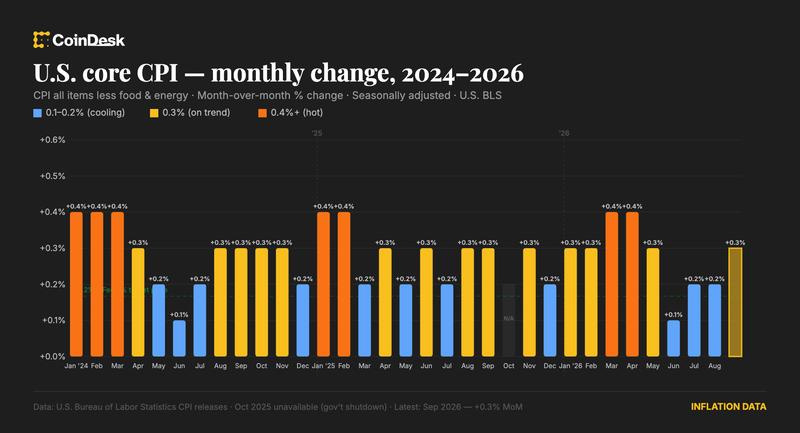
U.S. consumer prices increased 0.4% in October, exceeding expectations, while the core rate rose 0.3%. Before the data release, traders had fully priced in a Federal Reserve rate hike at its December meeting.
Core CPI remained at 0.3% for a third consecutive month, roughly matching the level in Waller’s conditional discussion of December policy before the data release.
The Bank of Russia set the official dollar rate for November 11 at 82.5486 rubles, down 20.5 kopecks from the previous figure. The euro rate rose 0.22 kopeck to 92.3966 rubles, while the yuan rate climbed 7.47 kopecks to 12.3845 rubles.
U.S. inflation exceeded expectations last month. The rising prices that helped fuel sweeping Democratic victories in last week’s midterm elections are set to remain a challenge for the White House and the Federal Reserve.
US consumer prices rose 0.4% from September to October, a slower pace as gasoline costs fell. The Bureau of Labor Statistics omitted its usual year-over-year figure because October 2025 data was not collected during the government shutdown. Energy prices remained a driver of inflation amid the Iran war, while the close link between energy costs and inflation makes the effect of another rate hike uncertain.
Inflation rose 0.4% month over month in October, its slowest increase in three months. Easing energy prices during the month offered some relief to consumers who have faced high prices for much of the year.
A trade fair in southwest China is bringing together Chinese and Vietnamese businesses to explore trade and investment opportunities. The event also highlights cross-border connectivity and regional cooperation as economic ties between the two countries grow.
Bitcoin fell even as U.S. stocks rebounded on Monday. Spot ETFs saw $201 million in outflows as traders awaited October inflation data due later in the day.
Bitcoin fell before the US inflation report as traders priced in a Fed rate increase. Fed Governor Waller supported tightening in December even if inflation cools; lower oil prices offered some relief, while Anthropic withdrew IPO pricing details.
Ahead of US inflation data, markets are pricing in a Federal Reserve rate hike in December. Bitcoin and gold are falling, while oil retreats as tensions with Iran ease.
The Bank of Russia bought yuan worth 12.1 billion rubles ($146.2 million) on the domestic market, with settlements on November 9, 2026. Sales with settlements on November 6 totaled 12.2 billion rubles ($147.4 million). The regulator trades foreign exchange using the yuan-ruble instrument on the Moscow Exchange.
Guangzhou’s rail transit industry is expected to produce 320 billion yuan, or about $45 billion, in 2026. The target was announced during Rail Transit Week. The city had over 1,300 kilometers of metro and intercity rail in operation by 2026, with more than 300 kilometers under construction.
The Pinglu Canal began operating in September 2026, becoming China’s first waterway to link an inland river system with the sea. Running from the Xijiang River in Guangxi to the Beibu Gulf, it lets bulk cargo from southwestern China reach the ocean without the longer route via Guangzhou Port.
China Water Environment Group, one of China’s largest sewage-treatment firms, is seeking to restructure about $410 million in offshore loans, people familiar with the matter said. It adds to the growing number of Chinese state-backed firms grappling with debt challenges.
Adults have become a new favourite customer for the toy industry. Those without children have more disposable income to spend and are helping sustain the market through nostalgia-driven purchases.
US consumer prices likely rose at a moderate pace in October, while inflation probably remained stubbornly high, keeping the Federal Reserve on course to raise interest rates next month.
Bank of England deputy governor Clare Lombardelli said the Iran war has driven up energy prices and clouded the economic outlook, prompting employers to delay hiring. Young people are bearing the brunt as youth unemployment rises. She said another interest-rate increase in December was possible, depending on the conflict, energy prices and wider economic data.
MWC26 returned to Doha as the industry faces two challenges: building networks to support artificial intelligence and narrowing a digital divide that still leaves millions without mobile internet.
A Westpac survey found confidence among Australian households with mortgages at its lowest since 1994, while overall consumer sentiment fell to a four-year low. Pessimism over the economy and cost-of-living pressures are growing, even as markets increasingly anticipate a rate cut next year and the government faces pressure to curb spending.
Offshore duty-free sales in Hainan reached 27.66 billion yuan (about $3.9 billion) in the first 10 months of 2026, up 12.5% year on year, Haikou Customs said. Some 4.101 million shoppers bought 23.11 million items, increases of 8.9% and 4.4%, respectively.
Bitcoin is trading below $75,000 ahead of October inflation data. Analysts warn that a sustained recovery depends on better liquidity and spot ETF demand, not temporary macroeconomic relief.
The Canadian dollar held steady against the U.S. dollar on Monday but lagged most G10 currencies. Falling oil prices and recent Canadian jobs data that kept expectations of Bank of Canada rate hikes in check weighed on the currency.
Last week’s election results showed that Americans are tired of inflation, but lower prices for gasoline, diesel and jet fuel likely brought some relief last month.
Shareholders and creditors of Brazilian petrochemical company Braskem are seeking to wrap up out-of-court restructuring talks by Wednesday, two people close to the negotiations said. The deal is worth multiple billions of dollars.
Irish Finance Minister Simon Harris said on Monday that the EU was close to full agreement on minimum taxation of tobacco products, viewed as an important new source of revenue.
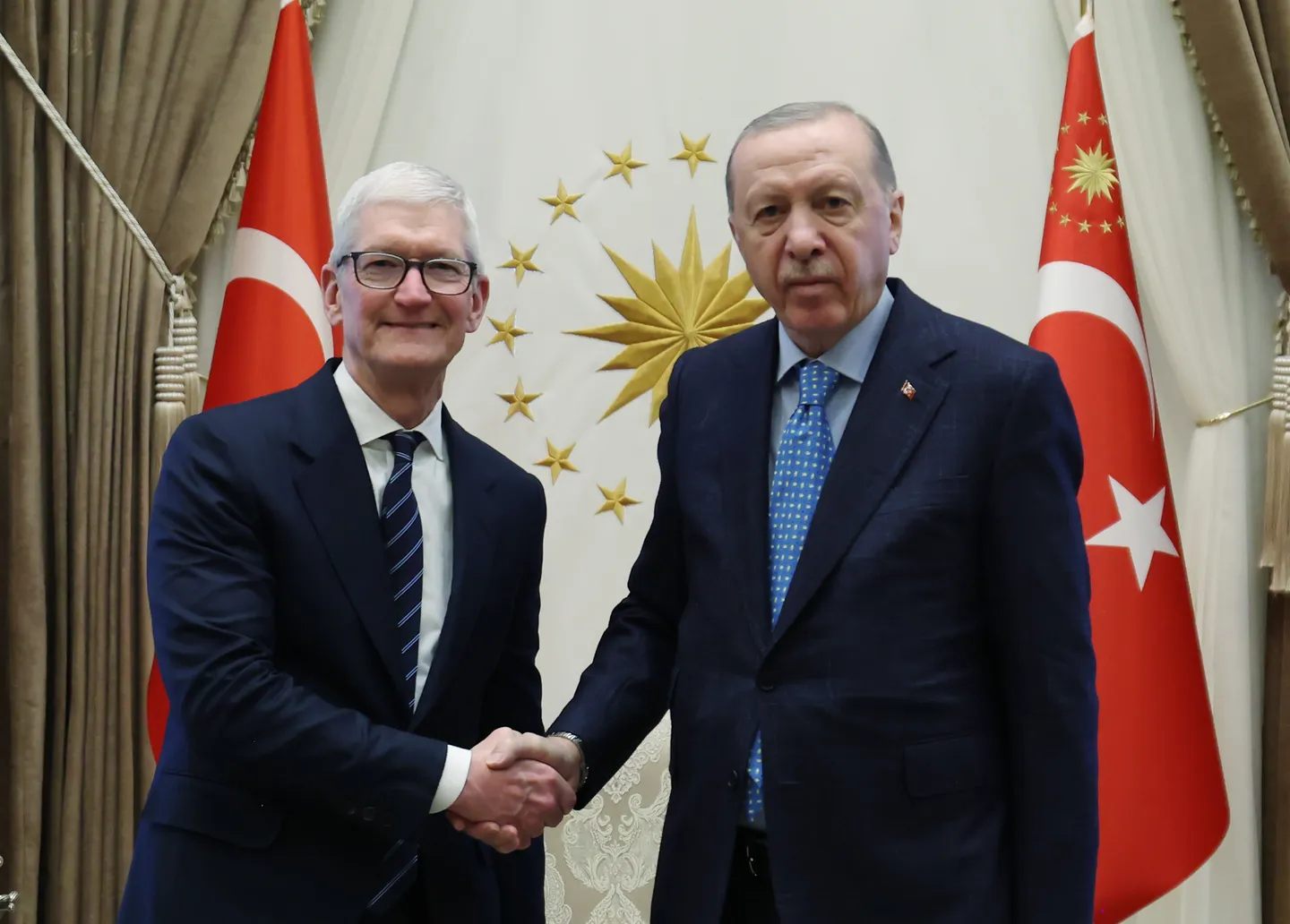
Erdogan and Apple’s executive chairman discussed digital economy opportunities in Ankara. Erdogan said he hoped the meeting would benefit both Türkiye and Apple.
Paraguay's legislature placed economist Jorge Schreiner in charge of its central bank on Monday. His appointment follows a political and economic crisis set off by the intervention and collapse of digital bank ueno.
Paraguayan President Pedro Alliana nominated economist Jorge Schreiner on Monday to head the central bank, after the intervention in digital bank ueno triggered a crisis.
Official data released on Monday showed Mexico’s annual inflation rate accelerated for a third straight month in October, supporting a cautious approach to monetary policy.
Americans became more concerned about the labor market outlook last month, according to a survey released Monday by the Federal Reserve Bank of New York.
Ten years after India withdrew high-denomination banknotes in 2016, the policy’s economic impact and success in curbing black money remain disputed. Prime Minister Narendra Modi said the move would tackle illicit cash, corruption, counterfeit currency and terrorist financing, but 99.3% of the withdrawn notes returned to the banking system. Economists cited real costs for cash-dependent informal businesses and limited evidence of lasting gains.
The Bank of Russia bought yuan worth 12.2 billion rubles ($147.8 million) in domestic-market transactions settled on November 6, according to data on the regulator’s website. It also bought 12.2 billion rubles’ worth of yuan in transactions settled on November 5. The operations are conducted through the yuan-ruble instrument on the Moscow Exchange.
Russian Central Bank Governor Elvira Nabiullina told the State Duma that officials should not rush to cut the key rate, warning that doing so could damage the economy and push prices higher. She called sharp price increases the most unfair form of tax. The bank’s baseline outlook has the rate declining in 2027 while remaining in double digits throughout the year.
The Minutes Reader extension turns the original page into a focused reading view and translates articles and video subtitles on demand. It is in limited beta.