MINUTES
About Minutes
MINUTES
About Minutes Content Preferences Settings
Europe Today: Israel faces post-election deadlock as Nordic leaders make rare Putin callWorld

Israel’s election appears to have produced a deadlock, with neither Benjamin Netanyahu nor Gadi Eisenkot on course to win a majority. As Europe seeks a place at the table, Finland’s and Norway’s leaders have called Vladimir Putin. The programme also covers Serbia’s vote, the upcoming US midterms and the row involving Mbappé in China.

Eeuronews
Israel’s election leaves Netanyahu in limboPolitics

Bloomberg Israel Bureau Chief Ethan Bronner says neither Benjamin Netanyahu nor the opposition has a clear route to forming a government after the election. The result could mean difficult coalition talks or another vote. Bronner also discusses Netanyahu’s political durability, greater Arab voter participation and how renewed conflict with Iran might affect coalition calculations.

BBloomberg Television
What’s Next After the Israeli Election; Min Jin Lee Questions the Education SystemWorld

Israeli election results show that neither Prime Minister Benjamin Netanyahu nor rival Gadi Eisenkot has enough seats to form a majority government. Both have ruled out coalition deals with Arab-majority parties, whose representation nearly doubled. NBC correspondent Matt Bradley explains the possible impact on coalition talks. Award-winning author Min Jin Lee’s new novel, “American Hagwon,” addresses the education system.

NNBC News
Jewish and Palestinian citizens of Israel react to election resultsPolitics

Israel’s final election tally confirmed that Prime Minister Benjamin Netanyahu’s bloc lost its parliamentary majority. Weeks of difficult negotiations lie ahead among parties spanning ultra-Orthodox Jewish, secular and Arab-led groups.

TThe Associated Press
'Nothing will change for us': Palestinians react to Israeli electionsWorld

Palestinians in Gaza, the West Bank and Israel held on to hope, though many doubted the election outcome would change anything. Benjamin Netanyahu’s far-right coalition lost its majority after four years in power, while the main Jewish opposition bloc also fell short, leaving the Joint List and Ra’am with the balance of power. Netanyahu was accused of smearing Arab voters to retain power.

GGuardian News
Why is Netanyahu accusing Palestinian Israeli parties of fraud?World

Israel has finished counting votes in its general election. Netanyahu accuses Palestinian Israeli parties of stealing the polls and taking Qatari funding; the parties deny wrongdoing, the electoral commission says it found no evidence of fraud, and Qatar denies involvement. The programme asks whether the accusations aim to block the parties from joining the opposition to oust Likud.

AAl Jazeera English
What comes next for Arab-led parties amid Israel’s political deadlock?Politics

Israel’s Central Elections Committee says all ballots from Tuesday’s election have been counted, but neither major bloc won the 61 seats required to form a government. Prime Minister Benjamin Netanyahu’s Likud party accuses Arab parties of stealing the election. Human rights lawyer Hassan Jabareen offers his perspective.

TTRT World
Israel’s election results draw reactions across the Middle EastWorld

Residents of Iran, Lebanon, Gaza and the West Bank reacted Friday after Israel’s final results showed Prime Minister Benjamin Netanyahu’s bloc falling short of a parliamentary majority. It won 53 of the Knesset’s 120 seats, while the main opposition bloc took 48.

TThe Associated Press
Netanyahu accuses Israel’s Arab parties of ‘stealing the vote’Politics

Benjamin Netanyahu’s Likud party and its allies lost their parliamentary majority in Israel’s election, while Arab-led parties doubled their share of seats. Netanyahu alleges the gains resulted from vote fraud, and Israel’s domestic intelligence agency, Shin Bet, is investigating.

DDW News
Israeli election: Barak says Netanyahu “did not win” but “lost dramatically”World

Former Israeli prime minister Ehud Barak told FRANCE 24 that Benjamin Netanyahu did not win this week’s election but “lost dramatically,” and urged rival Gadi Eisenkot to ally with Arab parties. Barak said claims of Qatari funding for an Arab party were meant to distract from an ongoing corruption scandal and warned Netanyahu was ready to strike Iran to stay in power.

FFrance 24 English
Israel election ends in deadlock, final results show no clear winnerWorld

Exit polls on Tuesday showed Israel’s wartime election deadlocked, with Gadi Eisenkot’s opposition bloc running neck and neck with Prime Minister Benjamin Netanyahu’s camp. Neither side had a clear route to power, pointing to a setback for Netanyahu’s coalition and potentially weeks of negotiations to form a government.

FFrance 24 English
Difficult negotiations ahead in Israel after Netanyahu’s bloc loses parliamentary majorityPolitics

Benjamin Netanyahu remains in power, but coalition talks are expected to be difficult. The president will appoint someone to try to form a government next week; if no one succeeds, an election could take place early next year. Netanyahu’s party has made unsubstantiated allegations that Arab-led parties interfered in the election.

TThe Associated Press
What does Israel’s political deadlock mean for Netanyahu?Politics

Israel has finished counting votes in a record-turnout election, but no clear winner has emerged. Official results are expected next week. Forming a coalition may require major compromises: Benjamin Netanyahu’s bloc has 53 seats and Gadi Eisenkot’s 48, short of the 61 needed to control the Knesset. Analyst Amir Oren explains the implications.

TTRT World
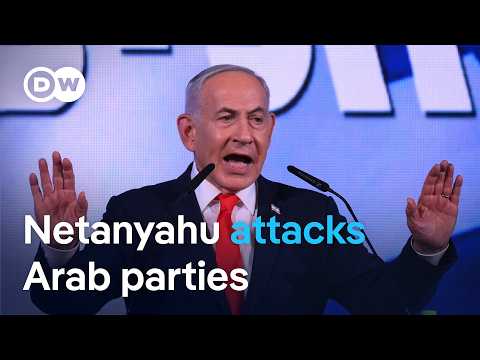
Israel elections: Netanyahu attacks Arab parties as they emerge as potential kingmakersPolitics

Arab-led parties made a historic showing in this week’s election and could become kingmakers in forming the next government. On Thursday, Benjamin Netanyahu’s Likud party alleged, without evidence, that voter fraud partly drove their record gains, escalating anti-Arab rhetoric by Netanyahu and his far-right partners.

FFrance 24 English
Israel elections: Difficult talks ahead after Netanyahu’s bloc loses majorityWorld

Final results confirmed that Prime Minister Benjamin Netanyahu’s bloc fell short of a parliamentary majority, winning 53 seats in Tuesday’s election. The main opposition bloc took 48. Weeks of difficult negotiations are expected among parties ranging from ultra-Orthodox Jewish and secular groups to Arab-led parties.

FFrance 24 English
Israel and Germany: What comes next after the election?Politics

Israel’s election is over, but political uncertainty is only beginning. As coalition talks start, questions remain about Benjamin Netanyahu’s future, the role of far-right parties and whether a more centrist government could reshape relations with Germany. DW’s Giulia Saudelli spoke with CDU/CSU foreign policy spokesman Jürgen Hardt about coalition scenarios, settlements in the occupied West Bank, Germany’s criticism of Netanyahu’s government and the prospects ahead.

DDW News
How Arab parties could shape Israel’s election and Netanyahu’s futurePolitics

Arab-led parties may hold the balance in Israel’s election. Neither Benjamin Netanyahu nor his main rival, Gadi Eisenkot, has enough backing to form a government. Netanyahu’s bloc is ahead, but Eisenkot could seek a parliamentary majority with Arab parties, following record turnout among Arab Israeli voters.

BBBC News
Can Israel’s opposition parties work with Palestinians to oust Netanyahu?Politics

Israel’s election left Benjamin Netanyahu’s far-right coalition without a majority after four years in power. Palestinian-led Israeli parties have voiced a clear wish for Jewish-Arab partnership, but most opposition parties have ruled out a coalition. Former general Gadi Eisenkot, leader of the largest opposition party, has not explicitly ruled out governing with Palestinians, but set conditions that made their participation politically impossible.

GGuardian News
What could Israel’s election mean for Gaza and beyond?Politics

After Israel’s parliamentary election left the country in political deadlock, many Palestinians say it makes little difference whether Benjamin Netanyahu or Gadi Eisenkot wins. The program examines whether that view is justified and what the result could mean for Palestinians, regional security and the conflict’s future.

DDW News
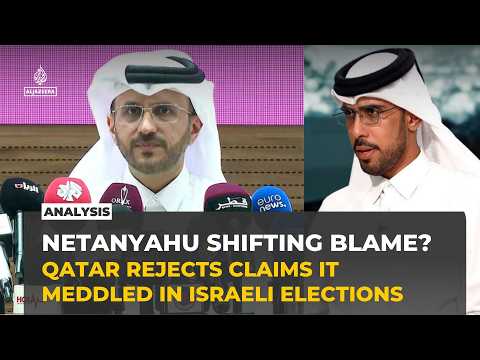
Qatar rejects Israeli election interference claims as analyst questions Netanyahu’s motivesPolitics

Qatar categorically denied interfering in Israeli elections or funding efforts to influence their outcome. Foreign Ministry spokesperson Majed al-Ansari called accusations by Israeli politicians and media a disinformation campaign designed to pull Qatar into Israel’s domestic political disputes. Qatar University assistant professor Abdulla Bandar al-Etaibi spoke to Al Jazeera.

AAl Jazeera English
Older items