 Politics
Israel’s election deadlock could lead to weeks or months of political bargaining. Any route to forming a government is likely to require difficult compromises and broken campaign promises.
B Bloomberg Television
PoliticsIsrael’s election deadlock could lead to weeks or months of political bargaining. Any route to forming a government is likely to require difficult compromises and broken campaign promises.
Bloomberg Television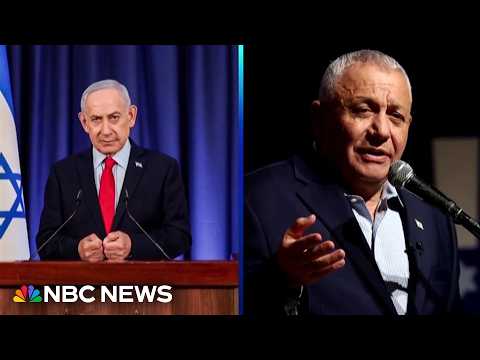 World
With more than 90% of the vote counted, projections show neither Prime Minister Benjamin Netanyahu nor challenger Gadi Eisenkot winning an outright parliamentary majority.
 NBC News
 World
Israelis waited on Thursday for the final election count, which was expected to confirm that neither Prime Minister Benjamin Netanyahu and his allies nor the parties seeking to unseat him would likely win a parliamentary majority.
 Politics
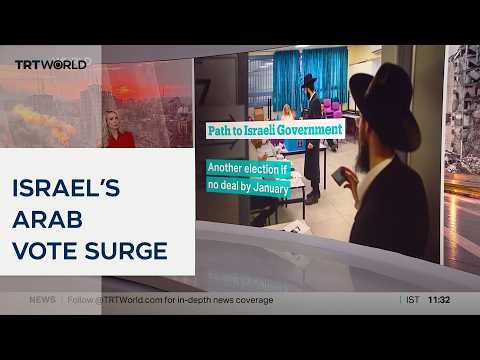
Israeli Prime Minister Benjamin Netanyahu’s Likud party accused Arab-led parties of stealing the election. A deadlocked result left them potentially pivotal in forming a new government. Middle East affairs analyst Antony Loewenstein offered his analysis.
 Politics
Israel is moving into coalition talks after Netanyahu’s bloc came first but fell short of the 61 seats needed for a majority. Arab parties could prove decisive, while Gadi Eisenkot remains central to post-election discussions. Diplomacy involving Iran is also gaining momentum: Tehran says it is still giving negotiations a chance, with Saudi Arabia, Turkey, Pakistan and Qatar involved in regional talks. Trump says JD Vance offered medical supplies to Iran and denies directing him to do so.
Bloomberg Television World
Israel’s inconclusive election left neither Benjamin Netanyahu’s right-wing bloc nor Gadi Eisenkot’s opposition camp with a parliamentary majority. Arab-led parties, projected to win a record 19 seats, may break the deadlock. Political science professor Mira Sucharov says Eisenkot’s camp still has a route to power if it is willing to work with them.
 World
Israel’s general election left neither incumbent Prime Minister Benjamin Netanyahu nor challenger Gadi Eisenkot with enough seats to form a majority government. The vote was the country’s first since Hamas’ Oct. 7 attacks and the ensuing war in Gaza.
 Global News
 Politics
David Mednicoff, a professor of Middle Eastern Studies and Public Policy at UMass-Amherst, analyses Israel’s elections. The headline says Netanyahu alleged fraud as Arab-led parties made gains.
 World
Residents in Arab capitals across the Middle East voiced doubt on Wednesday that Israel’s election would bring positive change to the region. By Wednesday morning, 77.6% of votes had been counted. Israeli media projected 54 seats for Prime Minister Benjamin Netanyahu’s right-wing, far-right and ultra-Orthodox bloc, compared with 49 for Gadi Eisenkot’s opposition bloc.
Global News World
Al Jazeera’s Marwan Bishara examines what Israel’s 2026 election results mean for Palestinians and whether an opposition alliance can keep Benjamin Netanyahu in power. Against continued Israeli military operations, violence in Hebron and Gaza’s devastating situation, he considers a possible Jewish-Arab party alliance and the political impact of Gadi Eisenkot’s military record.
 World
Fox News correspondent Jeff Paul reports on preparations for possible U.S.-Israeli operations in Iran following elections in both countries. Israel’s U.N. Ambassador Danny Danon joins the program to offer analysis.
 Fox News
 World
Israel’s election count has yet to show a clear winner between Netanyahu and his opponent. Other trending stories include Tampa Bay beating Milwaukee in World Series Game 4, an FDA recall of plant-based butter over possible E. coli and mold contamination, and new holiday drinks and Halloween doughnuts.
 ABC News
 World
Israeli Prime Minister Benjamin Netanyahu is likely to lead a caretaker government after the election deadlock, while he and rival Gadi Eisenkot each assert a claim to lead the country.
 Reuters
 Politics
Two Arab-majority parties are projected to win a record 19 seats combined in Israel’s Tuesday election, amid record turnout. The community, about 20% of the population, descends from Palestinians who stayed after Israel’s creation and is angered by the Netanyahu government’s ultra-nationalist Jewish vision for Israel and the Palestinian territories.
 Politics
Israel is still counting ballots after a vote with the highest turnout in decades. Arab parties made historic gains, while Benjamin Netanyahu recorded his worst result since 1999; nevertheless, the country’s longest-serving prime minister still has a route to staying in power. The next parliament’s final makeup is pending, and the panel considers how he might survive politically.
 World
Votes are still being counted in Israel's parliamentary election. The contest was framed as a choice between continuity and change, but neither side secured a clear mandate. Benjamin Netanyahu's right-wing bloc is projected to take the most seats, short of a Knesset majority; challenger Gadi Eisenkot's opposition bloc would need an alliance with Arab-led parties to govern.
 Politics
Anxious Israelis followed the nearly completed vote count on Wednesday, but no clear winner had emerged. Prime Minister Benjamin Netanyahu and opposition parties seeking to oust him could face weeks of negotiations.
 The Associated Press
 World
After Israel’s most consequential elections in decades, Prime Minister Benjamin Netanyahu’s right-wing and far-right alliance fell short of a majority. The main opposition bloc led by former military chief Gadi Eisenkot also lacks enough seats to govern alone, while Palestinian Israeli parties made unprecedented gains.
 Politics
Israel's election produced no clear winner. Rival camps led by Benjamin Netanyahu and Gadi Eisenkot are competing for power, with coalition negotiations set to determine who leads the next government.
Reuters Politics
With most votes counted, Netanyahu’s bloc is narrowly ahead, but neither it nor the opposition is on course for a majority. Netanyahu is urging a strong right-wing government, while Likud is set to be the largest party. Rival Gadi Eisenkot says voters chose to end Netanyahu’s term. Forming a coalition and determining the country’s direction could take days or weeks.
 BBC News
 World
Benjamin Netanyahu is expected to face tighter constraints as caretaker prime minister after Tuesday’s election. Experts say his government may still retain significant powers, including the authority to wage war against Iran. France 24 international affairs editor Angela Diffley discusses what the vote could mean for Israel’s approach to Iran.
 Politics
Amid political uncertainty in Israel’s election, unusually high turnout and strong mobilisation of Arab voters, Yedioth Ahronoth correspondent Tamar Sebok says the key question may be which leader can assemble a viable governing coalition, rather than which party wins the most seats.
 World
The war in the Middle East has never truly stopped, but Lebanon expects Israel’s policy to change little after the election. With votes still being counted, no clear winner has emerged.
 Politics
Israeli Prime Minister Benjamin Netanyahu leads opposition leader Gadi Eisenkot in a close election, with more than 70% of votes counted. Neither side has a clear route to forming a government: Netanyahu’s bloc is projected to win 54 of the Knesset’s 120 seats, Eisenkot’s 47, while Arab parties take 19.
Bloomberg Television