The Israeli army demolished Farouq Ramadan’s apartment on Tuesday. The apartment is in the West Bank village of Tell, near Nablus. Tell is located in the occupied West Bank. The demolition involved the home of a Palestinian described as having been killed by Israeli soldiers.
Israel has rejected Donald Trump’s Gaza peace plan, exposing a major public break between Trump and Benjamin Netanyahu. Netanyahu says Israel cannot proceed unless Hamas disarms. Trump, meanwhile, has been pressing for a wider framework to end the war and determine Gaza’s future. The rejection follows months of rising tension between the White House and Israel’s leadership over Iran. The dispute raises the question of whether the two sides merely differ over the terms of a Gaza agreement or whether their alliance is coming under deeper strain.
Israeli forces are demolishing Palestinian homes in villages including Al-Zweidin, displacing families and destroying essential infrastructure such as water wells. An average of 122 Palestinian structures are demolished each month. Settlers and soldiers also jointly attack communities such as Al-Mughayyir, burning fields and targeting homes. Up to 60 percent of village land has been confiscated, while at least 11 illegal outposts have been established. In all, 119 communities have been uprooted, leaving Palestinians treated as trespassers on their own land.
Attacks by Israeli settlers in the occupied West Bank have reached record levels this year. Violence, arson and fighting have caused widespread displacement across the territory. Al Jazeera’s Um-e-Kulsoom Shariff explains the escalation and its effects on residents. The report focuses on the growing level of settler violence and the resulting disruption to communities.
The United Nations Security Council is meeting over the situation in the West Bank. Israel’s military has closed the village of Taybeh to people who do not live there. Israel says the measure was intended to prevent attacks by Israeli settlers against Palestinians across the West Bank from increasing. The council session follows that move.
Israel’s security establishment says illegal settler violence in the occupied West Bank rose by 63 percent during the first half of 2026 compared with the same period last year. Home demolitions have also increased across the territory. The reported surge comes amid a worsening pattern of pressure on Palestinians in the occupied area. Michael Lynk, a former UN special rapporteur on human rights in the occupied Palestinian territory, offers further comment on the developments.
Dozens of settlers, under the protection of Israeli forces, attacked Palestinian residents working in the fields of al-Mughayyir village. The village lies northeast of Ramallah in the occupied West Bank. The residents were ploughing their land when the settlers fired tear gas at them. Al Jazeera correspondent Nour Odeh reported live from Ramallah.
Israeli Knesset member Ofer Cassif says attacks against Palestinians in the occupied West Bank amount to “state terrorism.” He describes settlers as proxies for the government and occupation forces, arguing that authorities finance, support and encourage their actions. Cassif points to recent assaults on Palestinian communities, including a fire allegedly set by settlers in Um al-Khair last Wednesday. He says people there were “almost burnt to death.”
Israel has closed the West Bank village of Taybeh to people who do not live there. The authorities say the restriction is intended to prevent attacks on Palestinians by Israeli settlers in the area. The move places access to the Christian village under tighter control while officials frame it as a measure to deter further violence.
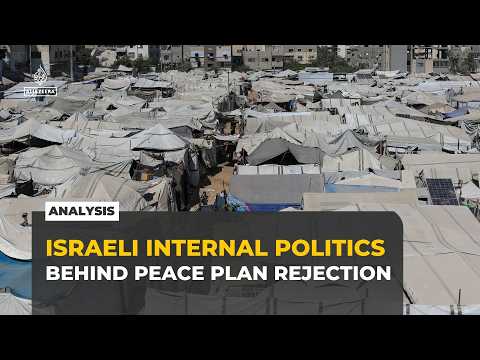
Israeli Prime Minister Benjamin Netanyahu has rejected the US-brokered 15-point peace plan for Gaza. The programme examines the consequences of that decision for Palestinians and the risks Netanyahu may face by defying Donald Trump. Presenter Per Nyberg discusses the dispute with Mitchell Barak, a former Netanyahu aide, and Adnan Joulani, a Palestinian international-affairs specialist. The discussion focuses on the political stakes surrounding the rejected proposal.
Illegal Israeli settler attacks in the occupied West Bank rose sharply during the first half of 2026, according to a report by Israeli Public Broadcaster KAN. The report says at least 660 attacks were recorded in the first six months of the year, compared with 405 during the same period in 2025. Xavier Abu Eid, a former adviser to the Palestine Liberation Organisation, weighs in on the findings and the reported increase.
Israeli residents are expressing mixed reactions after Benjamin Netanyahu rejected Donald Trump’s latest proposal for Gaza. The US plan presents a path toward lasting peace and says Israeli forces would leave the territory once Hamas completes its disarmament. Many Israelis view the proposal with mistrust and suspicion. The debate reflects uncertainty over whether the arrangement could bring a durable end to the conflict.
Israeli Prime Minister Benjamin Netanyahu said on Sunday that Israel’s military would not withdraw from Gaza before Hamas was genuinely disarmed. His statement rejects a withdrawal while Hamas retains its armed capabilities. The White House has not commented on Netanyahu’s dismissal of Donald Trump’s Gaza deal. The remarks keep Hamas disarmament at the centre of the dispute over any Israeli pullback.
Israeli Prime Minister Benjamin Netanyahu has rejected the latest Gaza security plan put forward by US President Donald Trump. Michael Lynk, an associate professor emeritus of law at Western University in London, Ontario, offers an analysis of Netanyahu’s decision. Lynk previously served as the UN special rapporteur on human rights in the Palestinian Territory. His assessment examines the rejection and its implications for the plan.
Israeli Prime Minister Benjamin Netanyahu has turned down President Donald Trump’s Gaza proposal. Netanyahu says Israel will not pull out until Hamas has been completely disarmed. Yossi Mekelberg, a senior consulting fellow with Chatham House’s Middle East and North Africa Programme, offers his analysis of the situation and considers how Trump may respond to the rejection.
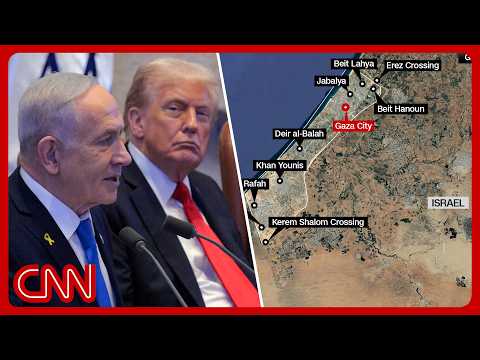
Israeli Prime Minister Benjamin Netanyahu said Sunday that Israel rejects the latest US-backed peace proposal for Gaza. He is demanding Hamas fully disarm before any Israeli forces withdraw from the territory. The statement came more than a week after Donald Trump declared a breakthrough in negotiations. Trump’s Board of Peace has since issued a 15-point plan intended to establish lasting peace in Gaza. CNN’s Jeremy Diamond reports the latest developments from Jerusalem, while analysts assess Netanyahu’s response.
Israeli settler attacks on Palestinians in the occupied West Bank have reached their highest level ever, according to United Nations records. More than 3,000 incidents have been documented since January last year. The violence is being driven by the expansion of illegal Israeli settlements and backing from the Israeli government. Al Jazeera’s Julide Ayger provides an explanation of the developing situation.
Israeli Prime Minister Benjamin Netanyahu rejected a US-led Gaza proposal that Hamas had endorsed. With closely fought elections ahead, he is seeking to shore up support among his political base while creating distance from President Donald Trump. France 24 international affairs editor Philip Turle said Netanyahu was prepared to risk a break with Trump over the 15-point Gaza peace deal in order to win backing from far-right members of his coalition. The dispute highlights the political pressure surrounding the plan.
Israeli Prime Minister Benjamin Netanyahu has turned down the Gaza peace plan announced last month by the US President’s Board of Peace. He says Israel will not withdraw until Hamas has been completely disarmed. Middle East specialist Phyllis Bennis described the decision as unsurprising, arguing that US pressure has so far remained mainly “in the arena of words”. She said Washington would need to cut off military aid and arms to exert meaningful pressure on Israel.
Israel has rejected a United States-backed peace proposal for Gaza. Prime Minister Benjamin Netanyahu says Hamas must be completely disarmed before Israeli forces withdraw, and he rules out a Palestinian state while he remains in office. Politics professor Stephen Zunes says Netanyahu may be counting on US President Donald Trump to alter the proposal or retreat from it. The analyst also believes Netanyahu could turn his rejection of the plan into a political advantage inside Israel.
The Israeli military has stepped up raids across the occupied West Bank. At the same time, violence by Israeli settler groups continues with little apparent restraint. Palestinians are responding by creating volunteer groups to protect their villages. The developments point to growing pressure on communities already facing intensified military activity and settler attacks.
Israeli Prime Minister Benjamin Netanyahu has turned down Donald Trump’s 15-point plan for Gaza. Netanyahu says Israel will not withdraw its forces unless Hamas is “genuinely” disarmed. Trump’s Board of Peace said last month that an agreement had been reached for the “complete disarmament” of Hamas and other armed groups in Gaza. Hamas says surrendering its heavy weapons depends on Israel ending “all forms of aggression” and pulling its forces out of Gaza.
Al Jazeera senior political analyst Marwan Bishara says Benjamin Netanyahu’s rejection of the Gaza peace plan is shaped by domestic political calculations. Bishara stresses that Netanyahu is demanding Hamas’s complete surrender, rather than reciprocal disarmament alongside an Israeli withdrawal. He also suggests that the Israeli government wants to preserve its control over Gaza instead of pursuing a transitional peace process.
Palestinians across the Gaza Strip continue to endure suffering after Israel rejected a 15-point peace plan supported by the United States. The report examines how that decision is affecting people throughout Gaza. Al Jazeera correspondent Ibrahim al Khalili reports from Gaza City on the consequences for Palestinians across the Strip. His coverage focuses on the ongoing hardship following the rejection.