


The latest five surveys as each pollster published them, compiled by VoteHub (CC BY 4.0) and retrieved 2026-11-05. We only display them — no calculation, weighting or editing. A single survey often reports all adults and registered voters separately, so the same pollster and dates can appear twice; where approve and disapprove add up to less than 100%, the rest were unsure or did not answer.
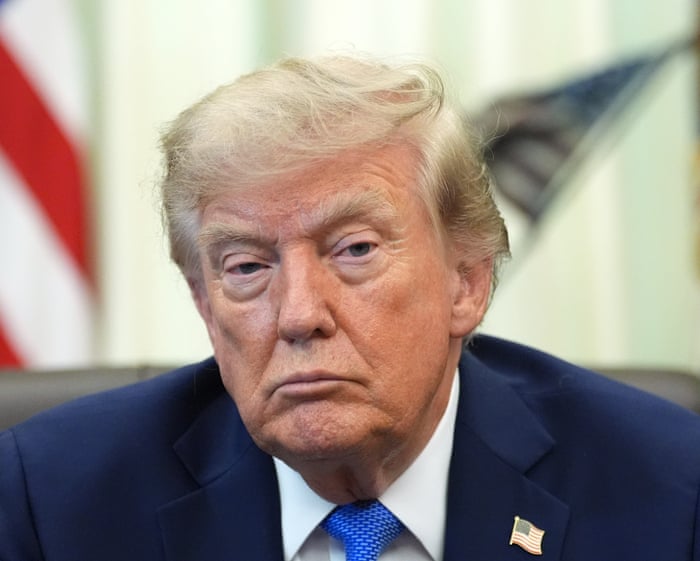
After Republicans suffered major losses in the midterm elections, US President Donald Trump warned that impeaching him would damage the Democratic Party.
After the US midterm elections, Trump said it was “largely true” that the war had led to the loss. Glenn Alexander Crowther, a senior fellow at the Center for European Policy Analysis, analyzed the midterms.
Donald Trump said the war in Iran likely contributed to Republican setbacks in the midterm elections, with higher gasoline prices affecting voters. Despite the political fallout, he remained defiant, saying he would “do it again” regarding Iran.
Bloomberg’s Jeff Mason discusses the White House response to Republican midterm losses, Trump’s focus on the ballroom, and his acknowledgment that higher gasoline prices linked to the Iran war contributed to the defeat.
Donald Trump made his first in-person appearance since Democrats’ landslide midterm victory at the site of his White House ballroom project, where he spoke at length about his renovation work in Washington.
Donald Trump said it was “largely true” that the Iran war was responsible for sweeping Republican losses in the US midterms. Vice-President JD Vance had earlier written on social media that “the reason we lost is the war.” Trump said he has no plans for immediate strikes on Iran after the vote, while the region remains alert to possible further military action.
President Donald Trump is taking part in an American mining industry roundtable at the State Department. The event is being carried live as Trump hosts the discussion with participants from the mining sector.
Tehran has laid out a protracted timetable for negotiations, seeking to keep Donald Trump tied to the Iran conflict through the midterm elections. The strategy is intended to inflict a politically ruinous blow on his presidency, echoing the damage Jimmy Carter suffered during the 1979-81 US embassy hostage crisis. Many people in Iran view meaningful revenge against Trump as a legitimate war aim in its own right. Yet some fear that a politically bruised and weakened Trump could respond by prolonging the conflict instead.

The Trump administration has suffered its 21st court defeat this year in its effort to obtain voter rolls from U.S. states. Courts have repeatedly blocked the push, which is described as an unprecedented attempt to assert federal control over elections. The dispute comes ahead of the November 3 midterm elections. The setbacks mark a continuing legal challenge to the administration’s campaign for state voter information.
Donald Trump says the war cannot continue for much longer. Reports indicate that Tehran is considering legislation to bar vessels from the United States and Israel from crossing the Strait of Hormuz. The reported proposal places the strategic waterway at the centre of the latest developments surrounding talks. It also points to continuing tension over access to the route.
President Donald Trump responded to Ukrainian President Volodymyr Zelensky’s public appeals for additional Patriot interceptor missiles. Trump said that the United States wants missiles as well. His comments focused on the possibility of sending more Patriot interceptors to Ukraine. The remarks came in response to Zelensky’s public requests.
University of Chicago professor Robert Pape explains why US President Trump is described as being caught in an “escalation trap” with Iran. The analysis focuses on the predicament facing Trump as tensions with Iran escalate. It frames the situation as a self-reinforcing cycle of escalation rather than a settled outcome. The explanation centers on the relationship between the US president and Iran.
The Trump administration has agreed to about $4 billion in settlements this year to terminate planned offshore wind projects in the United States. A deal announced Thursday will pay German utility RWE AG $1.22 billion. Billions of dollars in additional projects remain at risk of cancellation.
President Trump responds to reports about the condition of U.S. weapons stockpiles. A former Navy SEAL discusses defense production, drone warfare and America’s ability to mobilize. The discussion comes before a tribute to those lost in the Extortion 17 tragedy. Iran, military affairs and defense are also part of the coverage.
Donald TrumpUS weapons stockpilesIran conflictdefense production